Life After Loss
Learning the Things Your Spouse Always Did
Every household divides tasks, and the division is invisible until one person is doing all of it.

This guide covers a decision that is easy to make quickly and expensive to make wrongly. Every household divides tasks, and the division is invisible until one person is doing all of it.
The tasks a spouse handled become visible only when they stop happening. Whether it is investments, the boiler, or the car, the remedy is instruction rather than aptitude.
Not knowing how to do something is a gap in information, and information is the easiest kind of gap to close.
What this is, and what it is not
Begin with what can be said with confidence, and treat everything beyond it as still to be established. NIA states that older adults retain the ability to learn new things and improve performance in many skills. That does not mean every task should be attempted alone: electrical, gas, structural, legal, tax, and investment work may require a licensed or regulated professional.
Some tasks are better bought in than learned, and deciding which is part of the exercise. Asking a provider to explain its own product or service is entirely ordinary.
A workable order for this
A workable order follows. Each step assumes the last one is done.
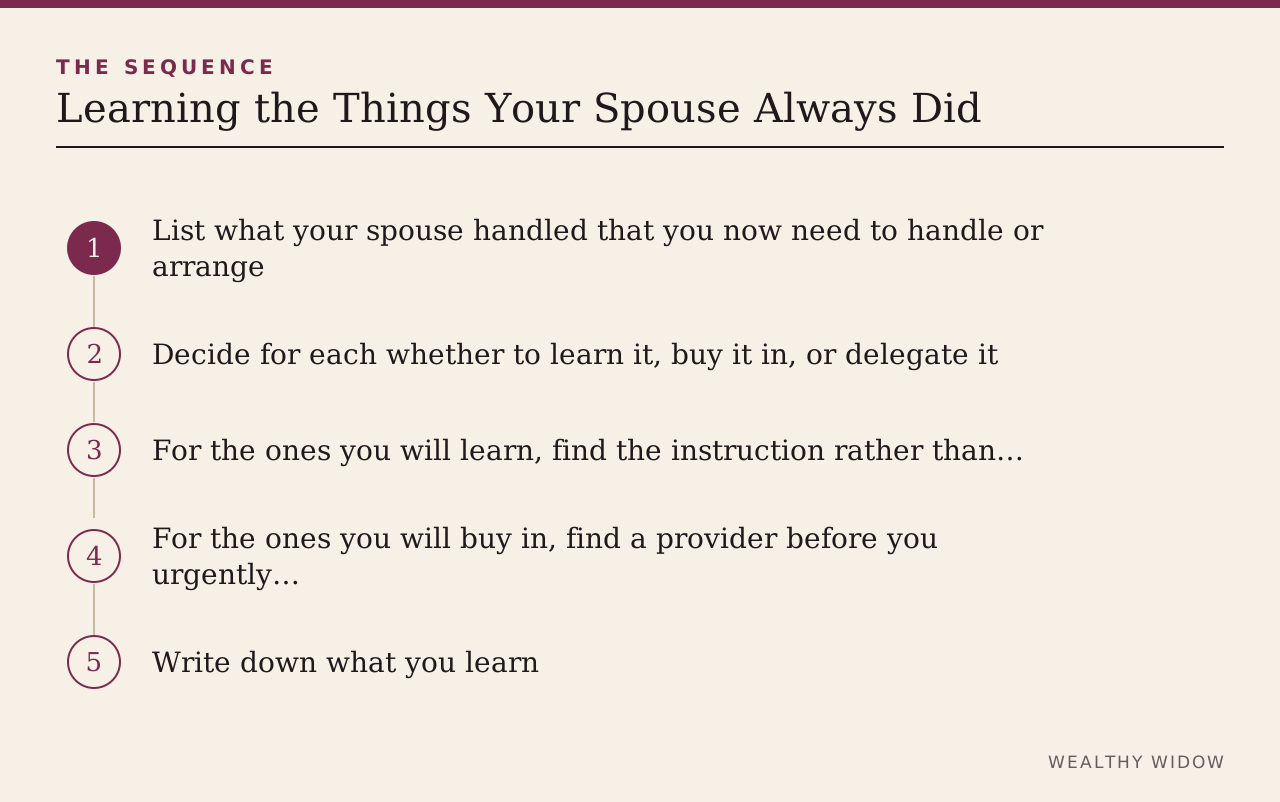
- List what your spouse handled that you now need to handle or arrange.
- Decide for each whether to learn it, buy it in, or delegate it.
- For the ones you will learn, find the instruction rather than improvising.
- For the ones you will buy in, find a provider before you urgently need one.
- Write down what you learn, so it does not have to be relearned.
Where good intentions go wrong
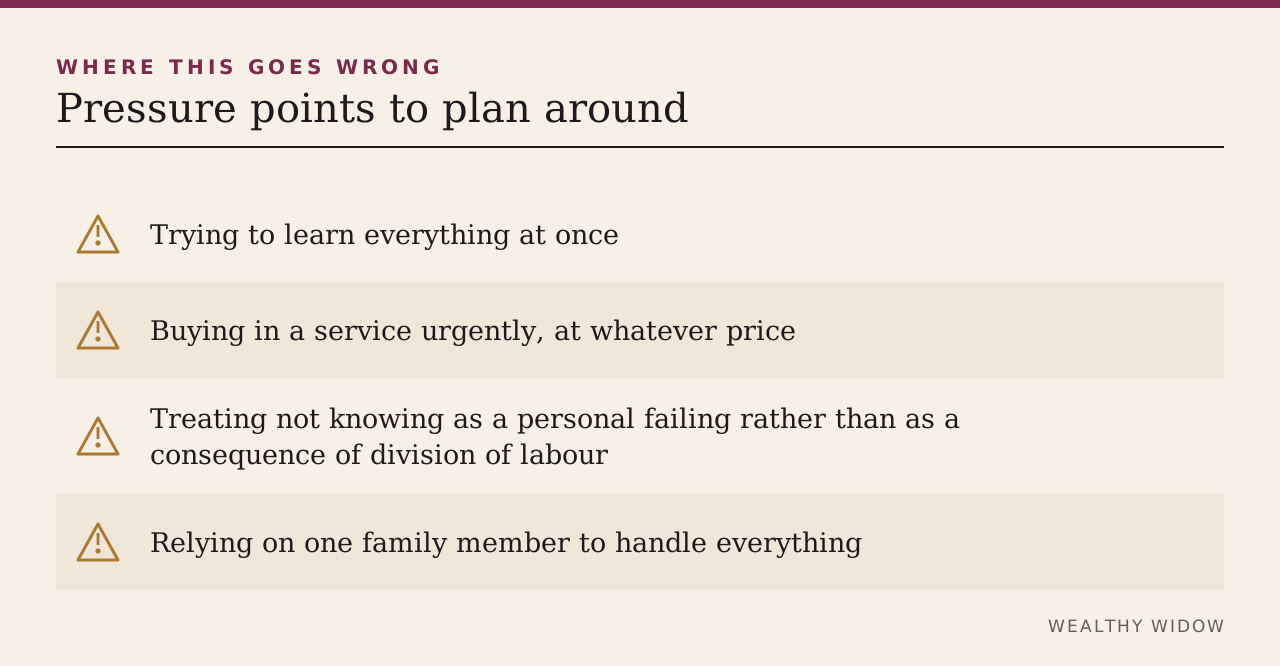
These are the places where readers most often lose ground. Trying to learn everything at once, which is exhausting and unnecessary.
Buying in a service urgently, at whatever price, because no provider was found in advance. Treating not knowing as a personal failing rather than as a consequence of division of labour. Relying on one family member to handle everything, which is a different dependency.
Documents this decision needs
Organisations will ask for these repeatedly, so assemble them once and keep them together.
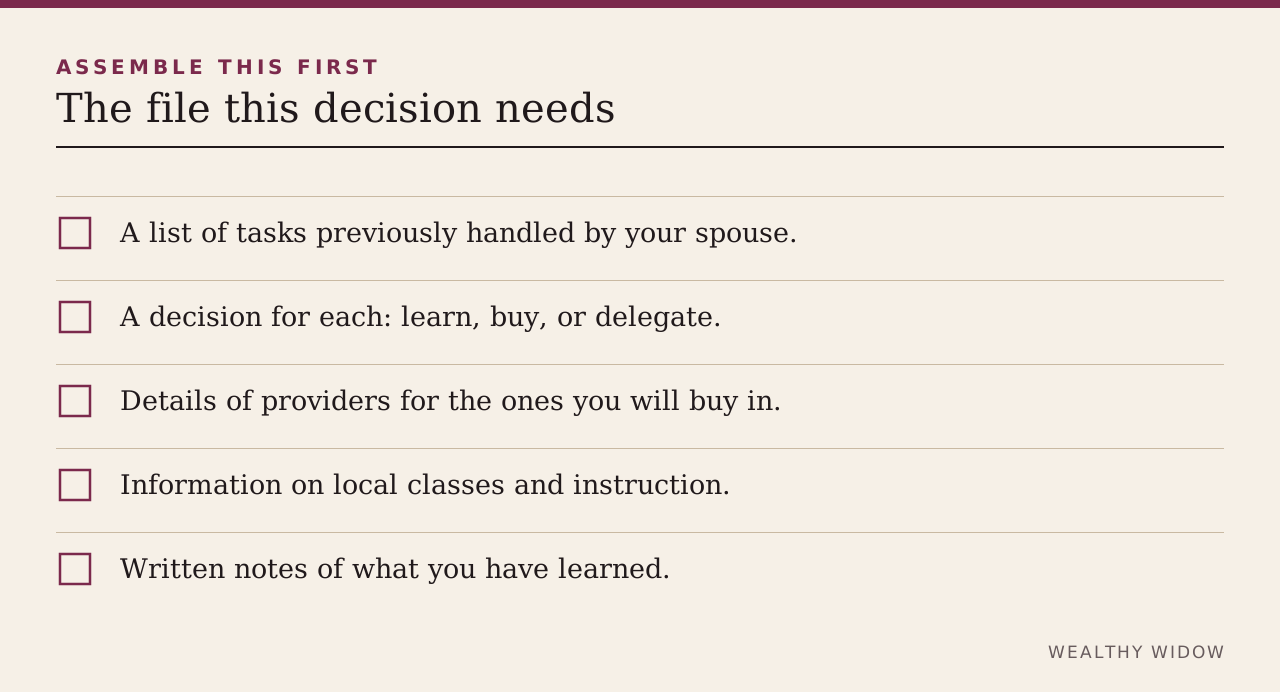
- A list of tasks previously handled by your spouse.
- A decision for each: learn, buy, or delegate.
- Details of providers for the ones you will buy in.
- Information on local classes and instruction.
- Written notes of what you have learned.
Make the plan reusable
Keep enough detail that you or a trusted person can repeat the task without starting the research again.
- That every task on the list has a decision against it.
- That providers are identified before they are urgently needed.
- What instruction is available locally.
- That you are not simply transferring the dependency to one person.
Questions for a provider or instructor
Use the questions that fit the task and the professional responsible for it.
- Can you explain how this works, from the beginning?
- What classes or instruction are available locally?
- Would you recommend learning this or paying someone?
- Who would you use for this, and why?
The primary sources for this guide
These sources support continued learning and provide starting points for local services and investor education. The relevant provider, regulator, or professional governs the task itself.
- National Institute on Aging — Common misconceptions about aging
- National Institute on Aging — Participating in activities you enjoy
- Administration for Community Living — Eldercare Locator
- U.S. Securities and Exchange Commission — Investor.gov
What this leaves open
A guide can set out the structure of a decision. It cannot read your documents, and your documents govern. It cannot teach anything, and the specific instruction you need is available from providers and local services rather than from an article.
The part worth remembering
List the tasks, decide learn, delegate, or hire for each, and identify qualified help before an emergency. Learning the system may be valuable even when a professional performs the work, because it leaves you able to ask questions and inspect the result.
If this raised a further question, Declining Things Without Providing a Justification takes it further.
Primary sources
- National Institute on Aging — Common misconceptions about aging
- National Institute on Aging — Participating in activities you enjoy
- Administration for Community Living — Eldercare Locator
- U.S. Securities and Exchange Commission — Investor.gov
This article provides general education, not individualized legal, tax, investment, insurance, or benefits advice. Rules and deadlines change; verify the current requirement with the agency and a qualified professional.