Estate
The Review Schedule That Keeps a Plan From Going Stale
Estate documents decay quietly. They are drafted once and then outlived by moves, deaths, marriages, and changes in the law.

You may be told this is simply a form to sign. It is a decision with consequences. Estate documents decay quietly. They are drafted once and then outlived by moves, deaths, marriages, and changes in the law.
You have just seen what an out-of-date plan produces. A short review discipline prevents the same experience being handed on, and it takes very little time once established.
An estate plan is a snapshot of a moment, and the moment passes without anyone noticing.
The decision behind the form
A handful of accurate points does most of the work here, and the rest is noise generated by other people’s urgency. Documents drafted in one state may not operate as intended after a move. Named executors, trustees, and guardians die, move, or become unsuitable. Beneficiary designations are held separately and drift out of line with the will.
Changes in tax law can alter the effect of a structure that was sound when drafted. A review is substantially cheaper and quicker than an original drafting exercise.
Step by step, in this order
The order below keeps your options open for as long as possible.
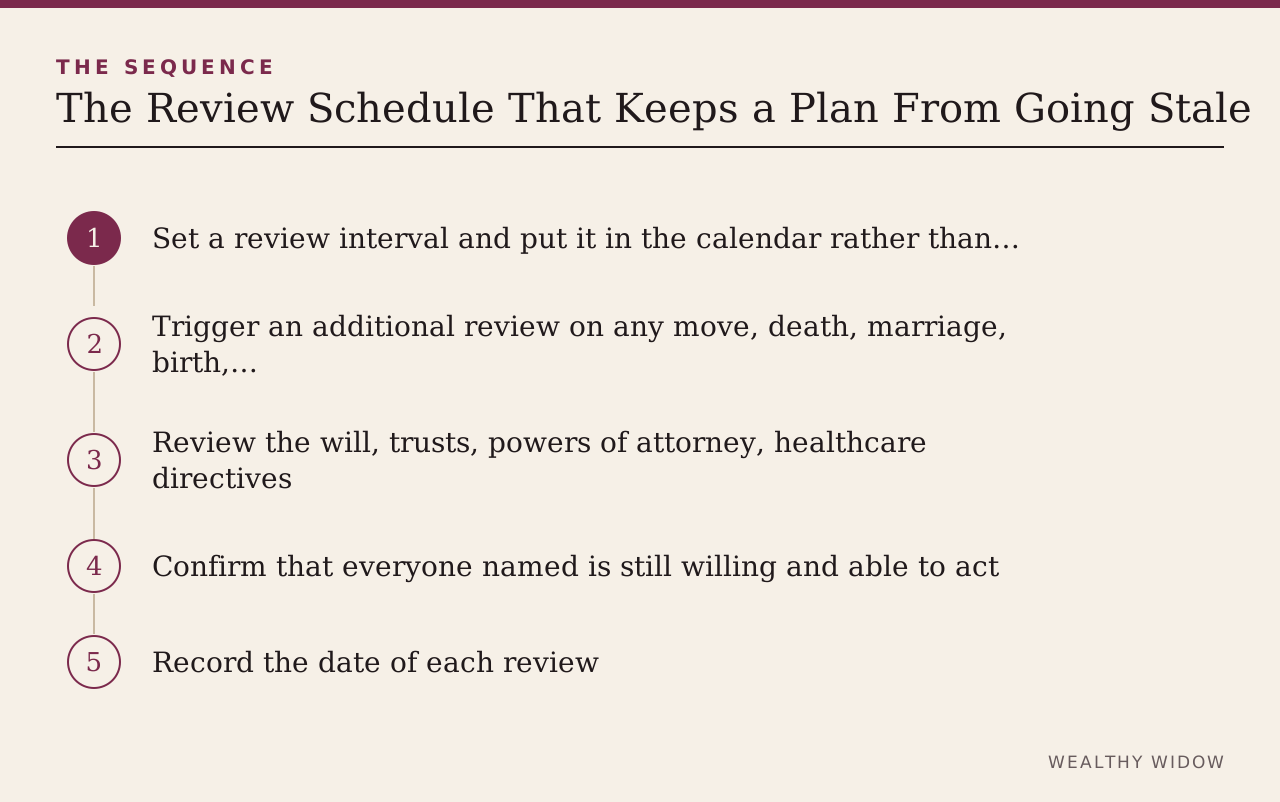
- Set a review interval and put it in the calendar rather than relying on prompts.
- Trigger an additional review on any move, death, marriage, birth, or major asset change.
- Review the will, trusts, powers of attorney, healthcare directives, and designations together.
- Confirm that everyone named is still willing and able to act.
- Record the date of each review, so the next one is easy to scope.
The costly misreadings
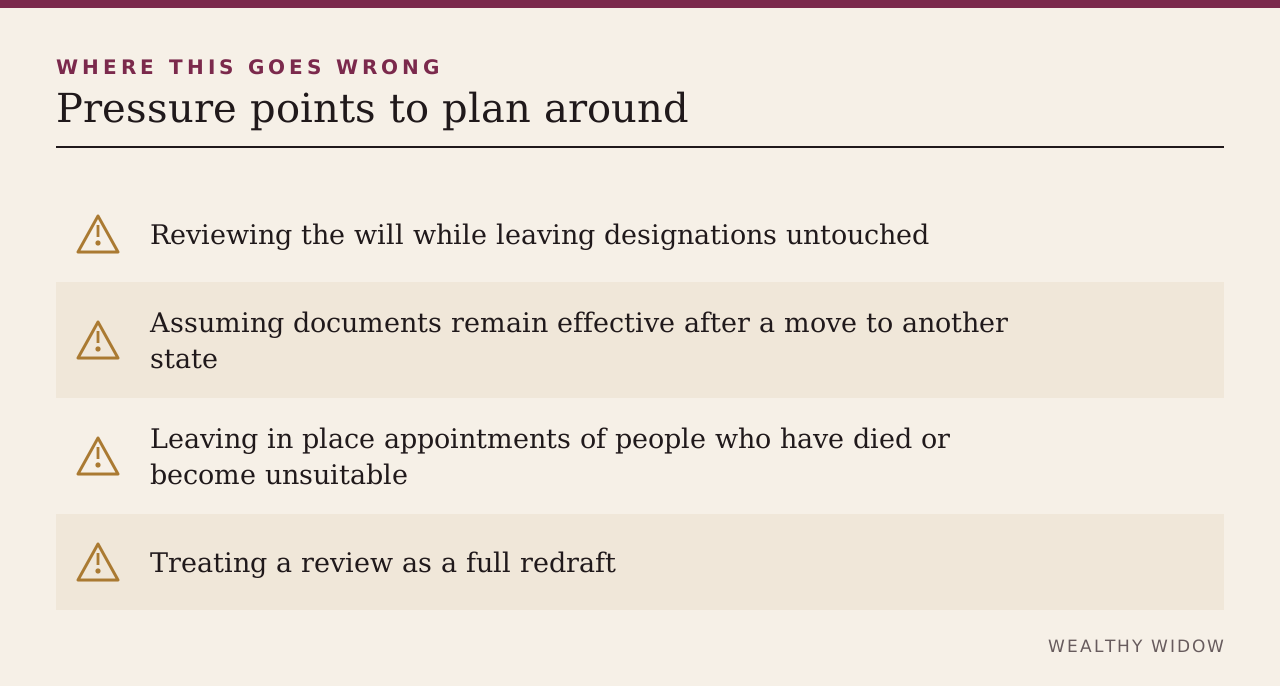
Treat each of the following as a reason to slow down. Reviewing the will while leaving designations untouched, which is the most common failure.
Assuming documents remain effective after a move to another state. Leaving in place appointments of people who have died or become unsuitable. Treating a review as a full redraft, and postponing it because of the anticipated cost.
The file this decision needs
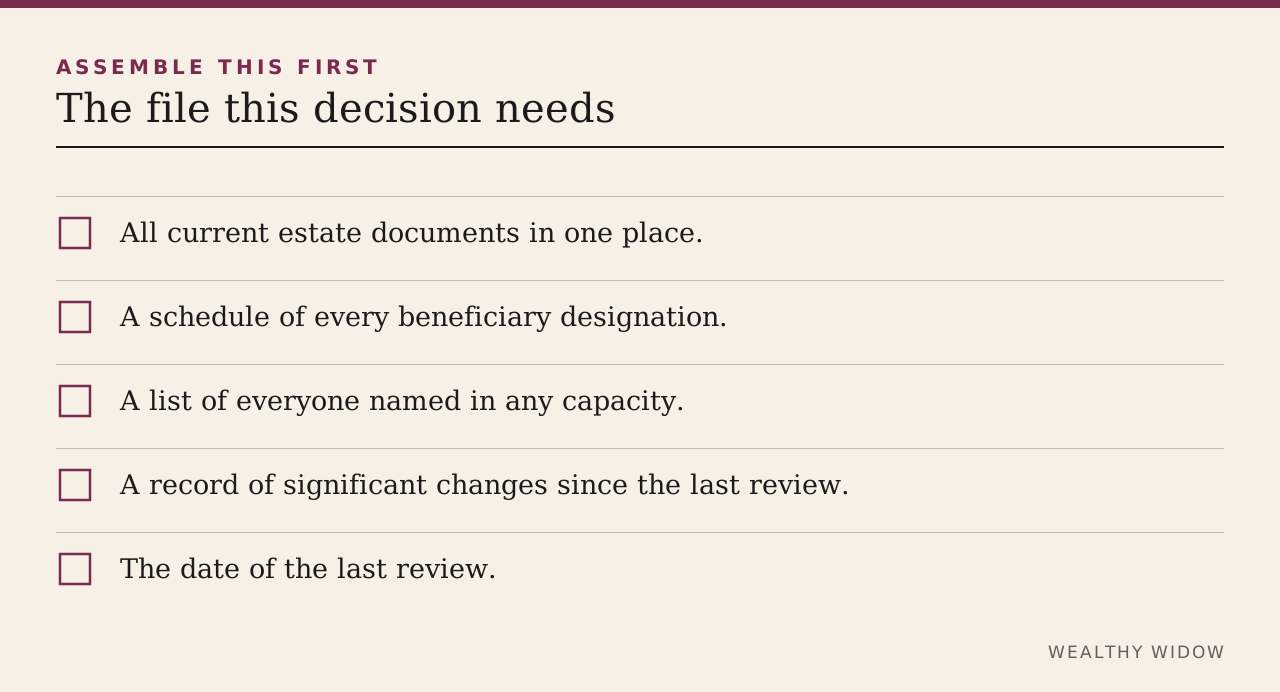
Keep these together in one place, and note where every copy goes and on what date it was sent.
- All current estate documents in one place.
- A schedule of every beneficiary designation.
- A list of everyone named in any capacity.
- A record of significant changes since the last review.
- The date of the last review.
The record to build as you go
A verbal answer is a starting point, not a record. Get each of these documented.
- That the documents are valid in your current state.
- That every appointed person is still willing and able.
- That designations and the will point the same way.
- The date of the next scheduled review.
Ask these before anyone is paid
Vagueness on any of these is itself an answer, and it is worth treating as one.
- Do these documents still work in this state?
- What has changed in the law that affects my plan?
- Which of my designations are inconsistent with the will?
- What would you review annually rather than every few years?
Read the agency, not this summary
Treat these as the authority and this guide as an index to them.
- Legal Services Corporation — I need legal help
- American Bar Association — Find legal help
- National Institute on Aging — Advance care planning and advance directives
- Internal Revenue Service — Retirement topics, beneficiary
What only your documents can answer
This is where a guide stops being useful and your own paperwork takes over. It cannot review your documents, and a review by a lawyer in your current state is what confirms they still operate as intended.
The last word on this
Put the review in the calendar and include the designations every time. You have seen precisely what a stale plan costs; a short recurring appointment is what prevents it happening twice.
Read Does This Estate Need Probate At All? next; the two decisions interact.
Primary sources
- Legal Services Corporation — I need legal help
- American Bar Association — Find legal help
- National Institute on Aging — Advance care planning and advance directives
- Internal Revenue Service — Retirement topics, beneficiary
This article provides general education, not individualized legal, tax, investment, insurance, or benefits advice. Rules and deadlines change; verify the current requirement with the agency and a qualified professional.