Taxes
Which Tax Records to Keep, and For How Long
A house clearance after a death routinely destroys records that a later tax question would have needed, and they cannot be recreated.

The difficulty here is rarely the paperwork. It is knowing what is actually being asked. A house clearance after a death routinely destroys records that a later tax question would have needed, and they cannot be recreated.
Standard retention advice is framed around ordinary returns. After a death, some records need keeping far longer, particularly anything that establishes what an asset cost or was worth.
Basis records have no expiry date, because the question they answer arises whenever the asset is finally sold.
The substance beneath the process
A handful of accurate points does most of the work here, and the rest is noise generated by other people’s urgency. Records supporting basis should be kept for as long as the asset is held, plus the period afterwards during which a return can be examined. Date of death valuations may be needed decades later when an inherited asset is finally sold. Improvement records for property increase basis and are frequently discarded during clearances.
Estate tax returns, where filed, should be kept permanently. Records supporting an election, such as a preserved exclusion, must survive until the election is used.
The order that protects you
The order below keeps your options open for as long as possible.
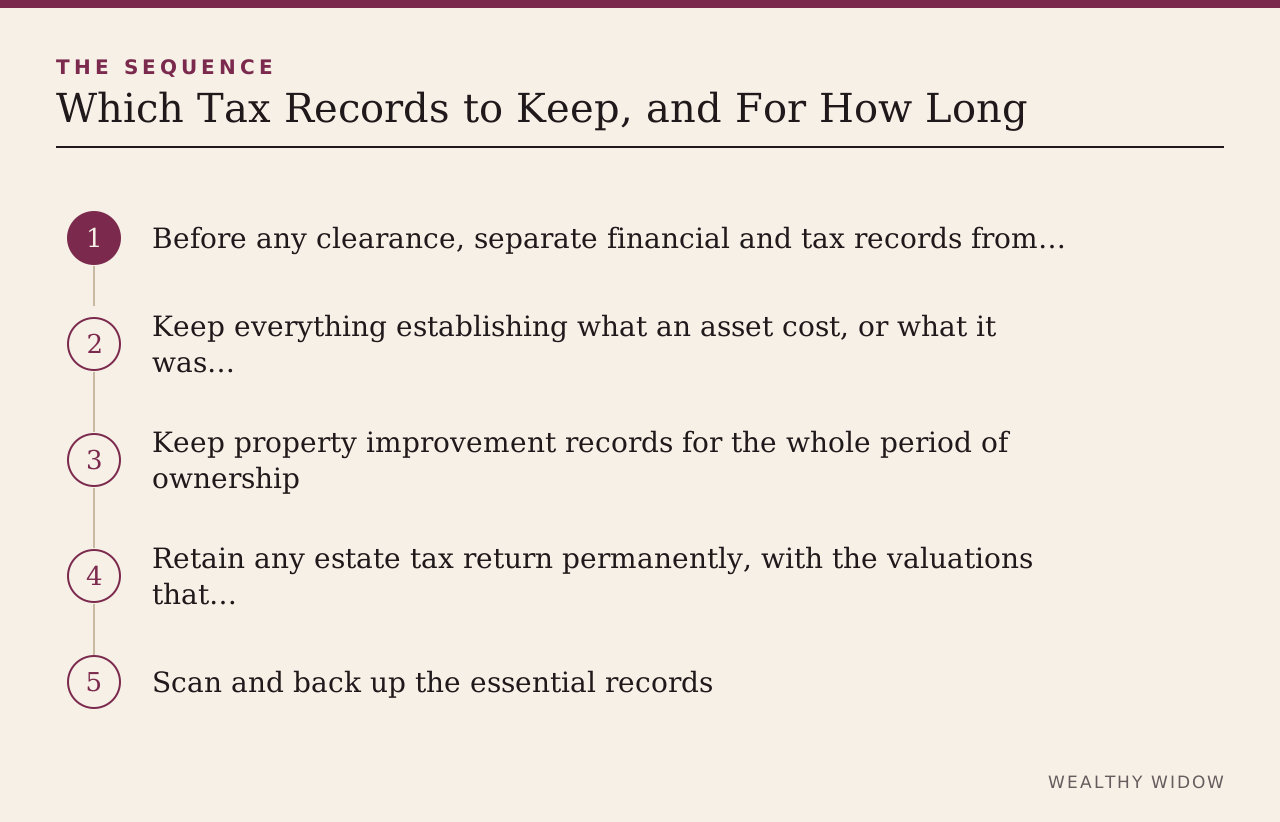
- Before any clearance, separate financial and tax records from general paperwork.
- Keep everything establishing what an asset cost, or what it was worth at the date of death.
- Keep property improvement records for the whole period of ownership.
- Retain any estate tax return permanently, with the valuations that supported it.
- Scan and back up the essential records, and tell someone where they are.
What tends to go wrong here
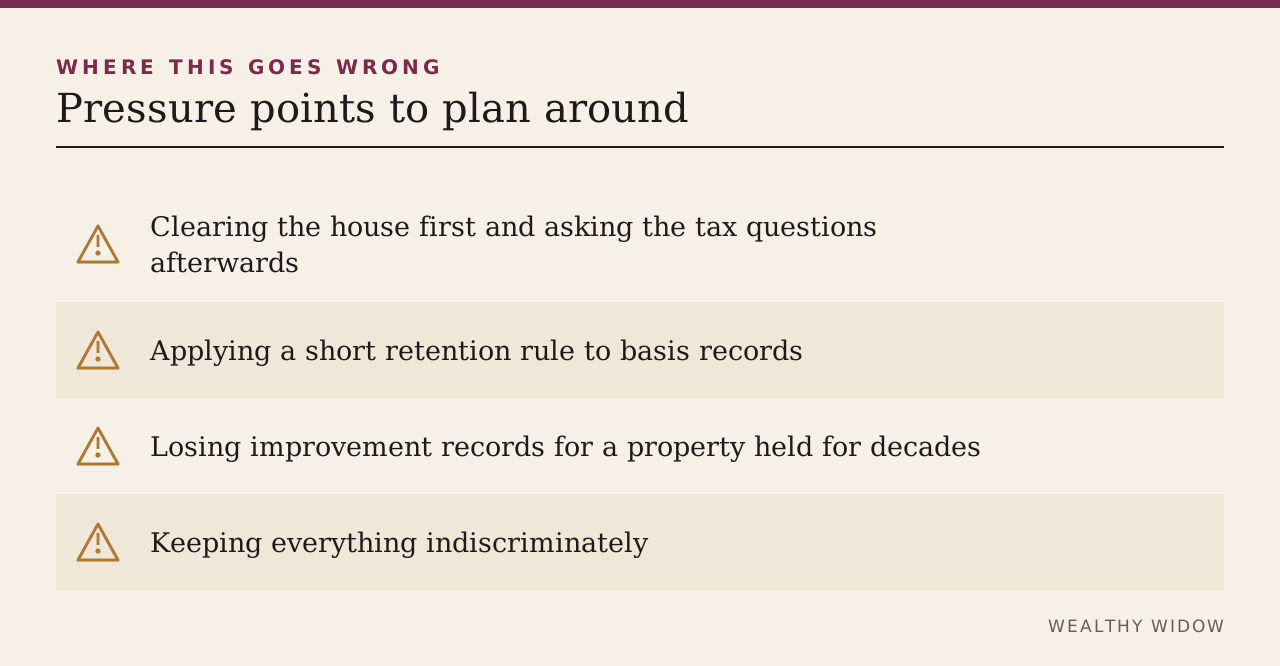
Treat each of the following as a reason to slow down. Clearing the house first and asking the tax questions afterwards.
Applying a short retention rule to basis records, which have a much longer life. Losing improvement records for a property held for decades. Keeping everything indiscriminately, so the important documents cannot be found.
The file this decision needs
Keep these together in one place, and note where every copy goes and on what date it was sent.
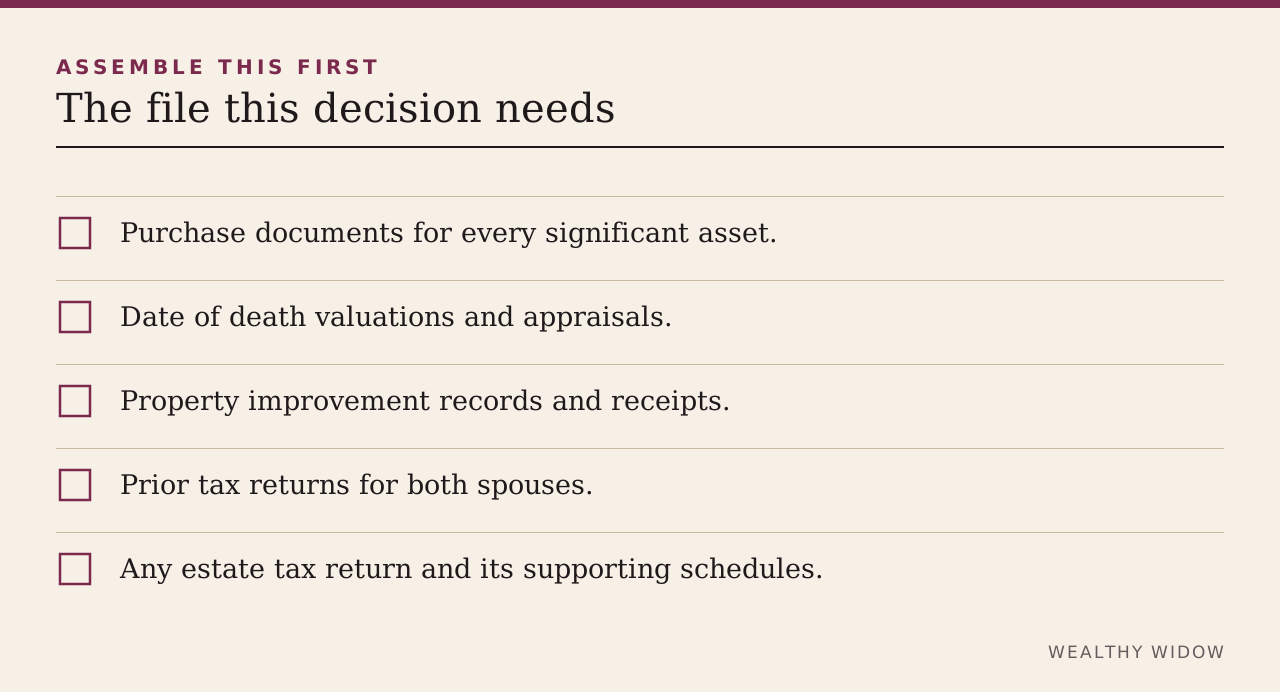
- Purchase documents for every significant asset.
- Date of death valuations and appraisals.
- Property improvement records and receipts.
- Prior tax returns for both spouses.
- Any estate tax return and its supporting schedules.
What belongs in your decision log
Get each of the following documented rather than described.
- Which records support basis and must be kept long term.
- What retention period applies to ordinary returns.
- That any estate tax return is stored permanently.
- That backups exist and someone else knows where.
Questions that reveal the answer
Each of the following is both a fair question and a revealing one, and no competent adviser will resent it.
- Which of these records support basis and should be kept indefinitely?
- What retention period applies to the ordinary returns?
- What supporting documentation will be needed if an election is used decades from now?
- What can safely be disposed of?
Read the agency, not this summary
Treat these as the authority and this guide as an index to them.
- Internal Revenue Service — Publication 551, basis of assets
- Internal Revenue Service — About Publication 559, survivors, executors, and administrators
- Internal Revenue Service — Information for executors
- Internal Revenue Service — Property, basis, and sale of home FAQs
What only your documents can answer
This is where a guide stops being useful and your own paperwork takes over. It cannot state retention periods, which depend on the type of return and the circumstances, and should be confirmed against current guidance.
The last word on this
Separate tax records before any clearance begins. Basis and valuation documents are the ones that cannot be recreated, and they are exactly the ones that look like old paperwork.
Our related guide Helping Family: When a Gift Has to Be Reported covers the adjacent problem.
Primary sources
- Internal Revenue Service — Publication 551, basis of assets
- Internal Revenue Service — About Publication 559, survivors, executors, and administrators
- Internal Revenue Service — Information for executors
- Internal Revenue Service — Property, basis, and sale of home FAQs
This article provides general education, not individualized legal, tax, investment, insurance, or benefits advice. Rules and deadlines change; verify the current requirement with the agency and a qualified professional.