Money
Cover That Was Bought for a Household of Two
Some insurance becomes unnecessary after a death, and some becomes more important, and reviewing both is worth an afternoon.

This guide covers a decision that is easy to make quickly and expensive to make wrongly. Some insurance becomes unnecessary after a death, and some becomes more important, and reviewing both is worth an afternoon.
Insurance is bought for a set of circumstances and rarely reviewed when they change. A death changes several of those circumstances at once.
Cover bought to protect a two-income household against one death may no longer be protecting anything.
The decision behind the form
Take the ground facts first, because most of the difficulty here dissolves once they are stated plainly. Life insurance bought to protect a surviving spouse may no longer serve that purpose. It may still serve an estate or legacy purpose, which is a different question. Disability and income protection cover relate to earnings that may have ended.
Health, property, and liability cover generally remain necessary and may need increasing. Cancelling cover takes a phone call, and reinstating it later may be expensive, medically underwritten, or simply refused.
Step by step, in this order
Take these in order. Reversing them tends to create work rather than save it.
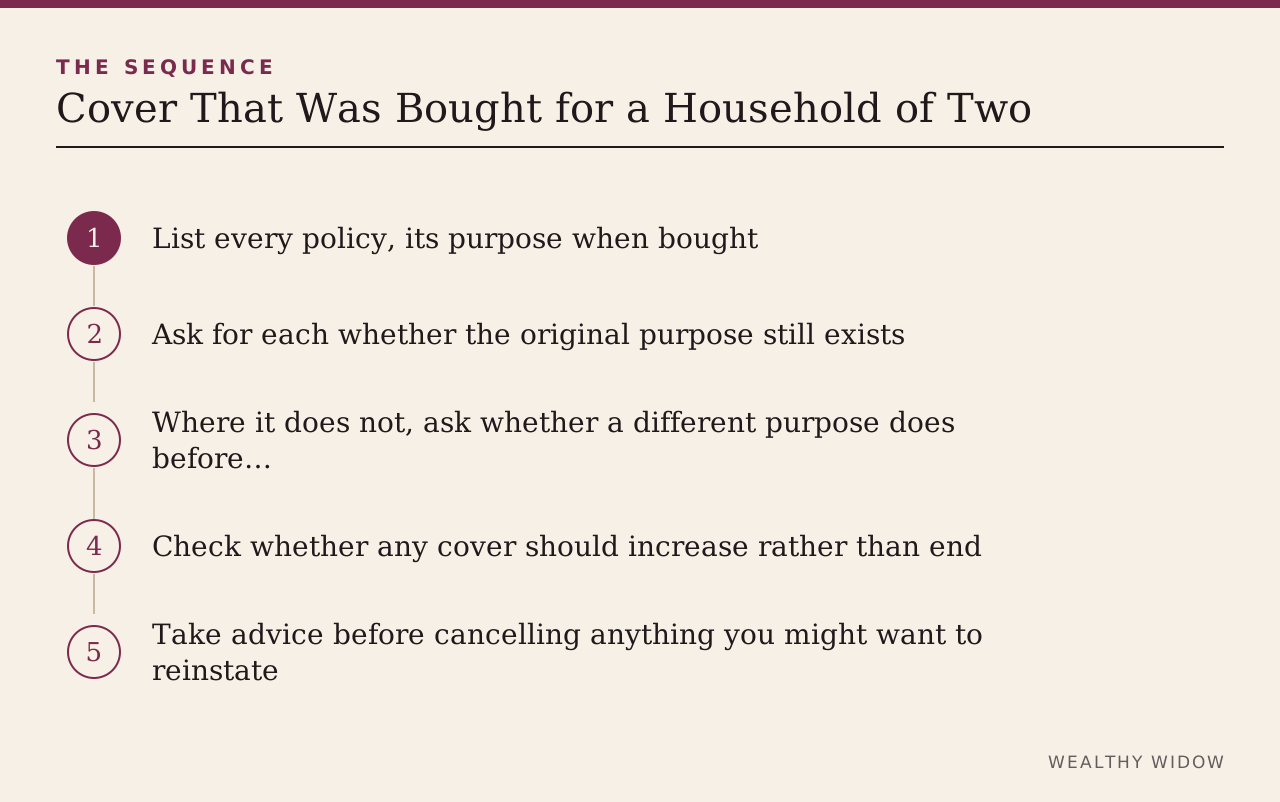
- List every policy, its purpose when bought, and its cost.
- Ask for each whether the original purpose still exists.
- Where it does not, ask whether a different purpose does before cancelling.
- Check whether any cover should increase rather than end.
- Take advice before cancelling anything you might want to reinstate.
The costly misreadings
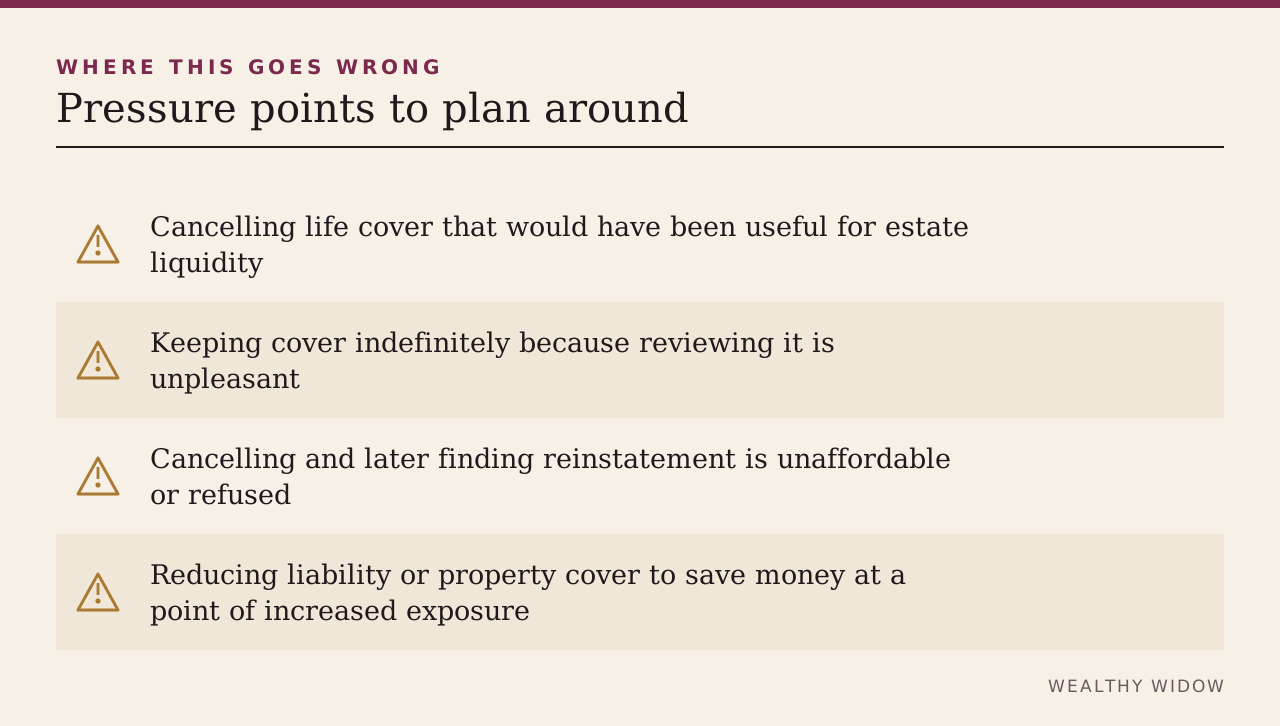
The failure modes below are predictable rather than unlucky, which is precisely what makes them avoidable. Cancelling life cover that would have been useful for estate liquidity.
Keeping cover indefinitely because reviewing it is unpleasant. Cancelling and later finding reinstatement is unaffordable or refused. Reducing liability or property cover to save money at a point of increased exposure.
Gather these before the first call
Every organisation involved will want some combination of the following, and several will want it more than once.
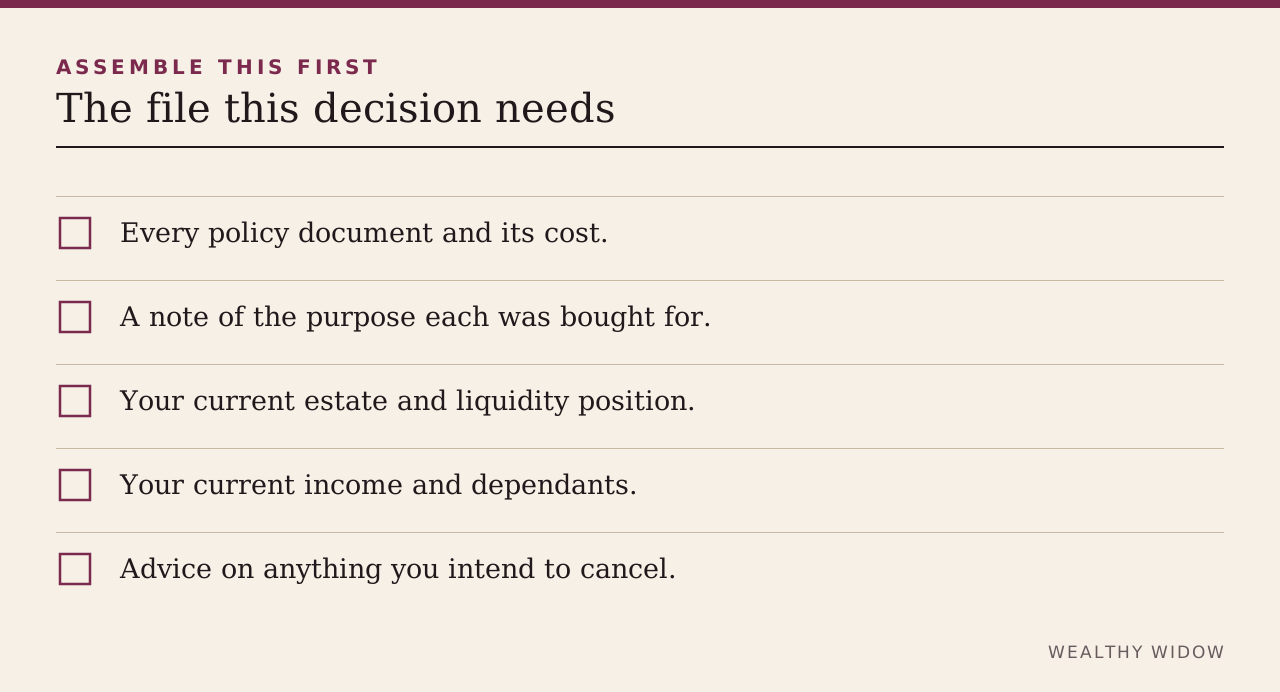
- Every policy document and its cost.
- A note of the purpose each was bought for.
- Your current estate and liquidity position.
- Your current income and dependants.
- Advice on anything you intend to cancel.
The written trail to keep
Written confirmation is ordinary practice, not suspicion.
- Whether the original purpose of each policy still exists.
- Whether any alternative purpose applies.
- Whether reinstatement would be possible later.
- Which cover should increase rather than end.
Questions to take to a professional
If an answer to any of these is vague, that is your answer about the adviser.
- What purpose does this policy serve now?
- Could this be useful for estate liquidity rather than income replacement?
- Could I reinstate this later, and at what cost?
- What cover should I be increasing rather than reducing?
Check it at source
These are the pages that change when the rules change, which is why they and not this guide are the authority.
- National Association of Insurance Commissioners — Consumer resources
- National Association of Insurance Commissioners — Consumer life company locator
- U.S. Securities and Exchange Commission — Annuities
- Medicare.gov — Get help with costs
What still needs a professional
Be clear about what remains outside anything written for a general readership. It cannot review your policies, and the question of whether a policy still serves a purpose needs your full financial picture.
The working conclusion
Ask of each policy what it is for now rather than what it was for when it was bought. Some will have no answer at all and can go. A few will have a better answer than the one they were originally sold against, and those are worth keeping for the new reason rather than the old one.
Read The Records That Make Professional Advice Cheaper next; the two decisions interact.
Primary sources
- National Association of Insurance Commissioners — Consumer resources
- National Association of Insurance Commissioners — Consumer life company locator
- U.S. Securities and Exchange Commission — Annuities
- Medicare.gov — Get help with costs
This article provides general education, not individualized legal, tax, investment, insurance, or benefits advice. Rules and deadlines change; verify the current requirement with the agency and a qualified professional.