Home
A Property Inherited Jointly: Deciding With People You Cannot Fire
Shared inheritance of a property forces joint decisions between people with different finances, different attachments, and different timescales.

You may be told this is simply a form to sign. It is a decision with consequences. Shared inheritance of a property forces joint decisions between people with different finances, different attachments, and different timescales.
Jointly inherited property is a common source of long-running family disputes, largely because ongoing costs continue while the decision is deferred and resentment accumulates quietly.
Agree the exit before you agree anything else, because the disagreement will be about the exit.
What you are really being asked
The facts that govern this are narrower than the anxiety around it. Co-owners generally share both the benefits and the ongoing costs of a property. One owner paying more than their share may or may not create a claim, depending on state law and any agreement. Where co-owners cannot agree, a court action to force a sale or division may be available.
Occupation by one co-owner can raise questions about rent or credit to the others. The basis position of each owner may differ, which affects the tax on an eventual sale.
The sequence that keeps options open
Follow it in order, and leave anything requiring a signature until the end rather than the beginning.
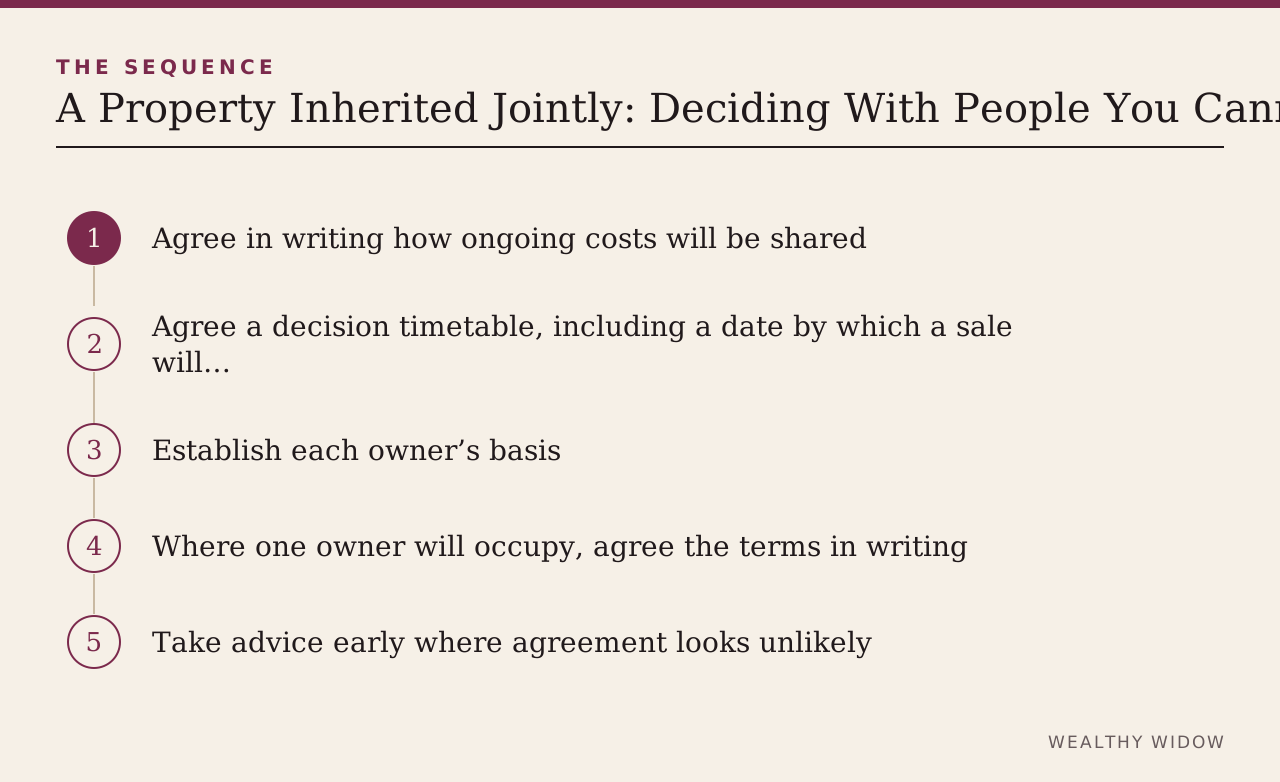
- Agree in writing how ongoing costs will be shared, before any of them fall due.
- Agree a decision timetable, including a date by which a sale will occur if there is no agreement.
- Establish each owner’s basis, since it affects each of them differently on a sale.
- Where one owner will occupy, agree the terms in writing.
- Take advice early where agreement looks unlikely, rather than after positions harden.
The failure modes to plan around
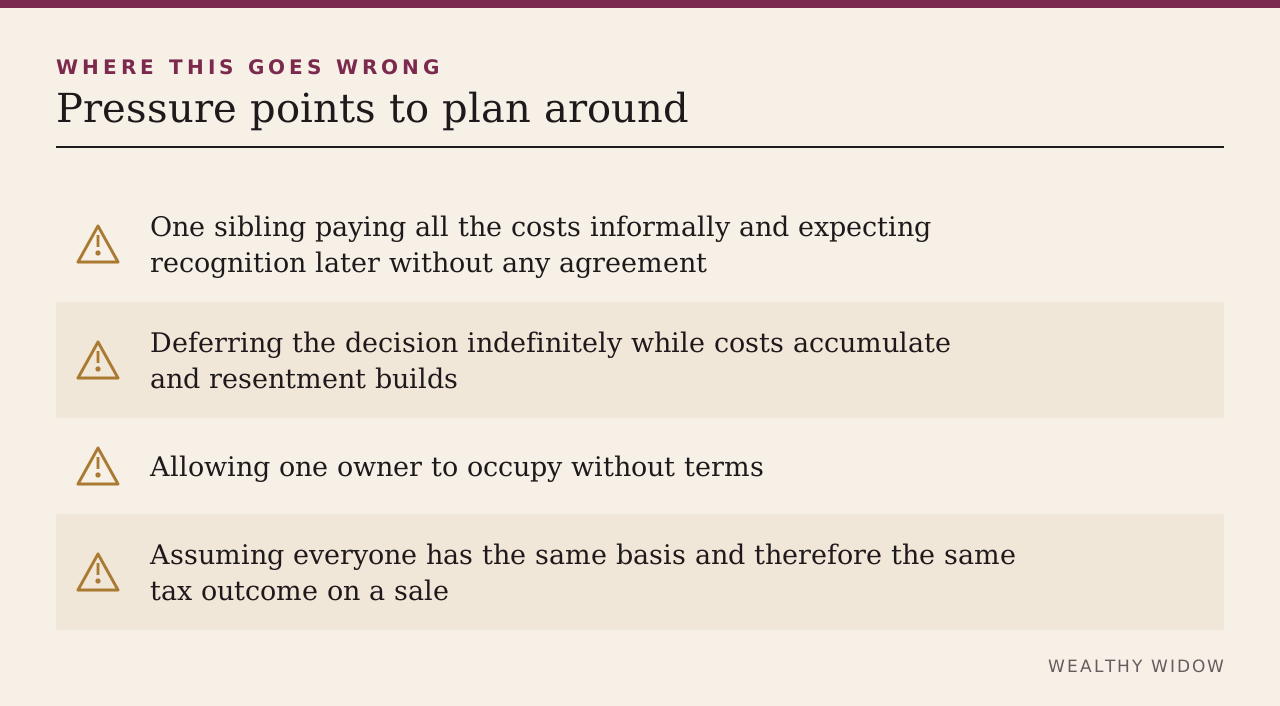
Each of the following is a signal to pause and confirm rather than to proceed on the assumption that it is fine. One sibling paying all the costs informally and expecting recognition later without any agreement.
Deferring the decision indefinitely while costs accumulate and resentment builds. Allowing one owner to occupy without terms, which becomes very difficult to change. Assuming everyone has the same basis and therefore the same tax outcome on a sale.
The documents to assemble first
The evidence below does most of the work of establishing who you are and what you may do.
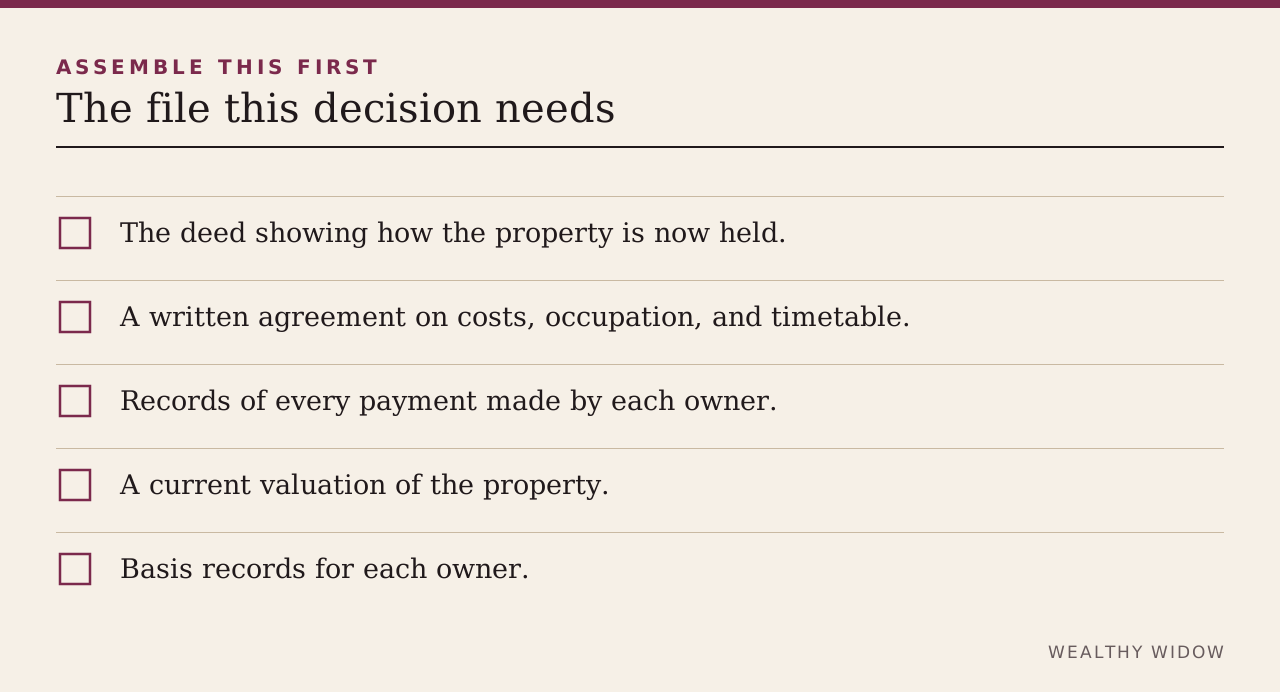
- The deed showing how the property is now held.
- A written agreement on costs, occupation, and timetable.
- Records of every payment made by each owner.
- A current valuation of the property.
- Basis records for each owner.
Do not proceed on a verbal answer
Ask for each of these in a form you can save, date, and produce again months later if it is questioned.
- How the property is now titled between the owners.
- The agreed position on costs and occupation, in writing.
- Each owner’s basis and likely tax on a sale.
- What happens if no agreement is reached by the agreed date.
Put these questions directly
A competent professional will welcome these questions. Hesitation is itself information.
- What are my rights if the other owners will not agree to sell?
- Can I recover costs I have paid beyond my share?
- What terms should apply if one of us occupies the property?
- How does each owner’s tax position differ on a sale?
The sources behind this
Anything that will drive a decision should be checked here rather than here-abouts.
- Legal Services Corporation — I need legal help
- American Bar Association — Find legal help
- Internal Revenue Service — Publication 551, basis of assets
- U.S. Department of Housing and Urban Development — Find a housing counselor
Where this guide stops
The boundary matters, because the wrong assumption here is expensive. It cannot resolve a family disagreement, and where one is developing a lawyer is a cheaper intervention than a court action later.
In practice
Put the cost sharing, the occupation terms, and the decision deadline in writing at the start. Almost every dispute about inherited property is a dispute that could have been settled by a one-page agreement in the first month.
Read An Empty House: The Risks That Accumulate Quietly next; the two decisions interact.
Primary sources
- Legal Services Corporation — I need legal help
- American Bar Association — Find legal help
- Internal Revenue Service — Publication 551, basis of assets
- U.S. Department of Housing and Urban Development — Find a housing counselor
This article provides general education, not individualized legal, tax, investment, insurance, or benefits advice. Rules and deadlines change; verify the current requirement with the agency and a qualified professional.