Money
Inherited Retirement Accounts: The Options Only a Spouse Has
A surviving spouse has choices with inherited retirement accounts that no other beneficiary has, and some of them close permanently once another is taken.

There is a version of this decision that takes ten minutes and a version that takes a season. A surviving spouse has choices with inherited retirement accounts that no other beneficiary has, and some of them close permanently once another is taken. The difference is whether the facts were assembled first.
Retirement account rules distinguish sharply between a surviving spouse and every other kind of beneficiary. The distinction is valuable, and it is lost by taking a step that reclassifies the account before the options have been understood.
Spousal options are unusually generous and unusually easy to forfeit by acting quickly on generic advice.
Getting the question right first
Most of the confusion here clears once a few things are stated plainly. A surviving spouse who is the sole beneficiary generally has options, including treating the account as their own, that other beneficiaries do not. Non-spouse beneficiaries are subject to different distribution timetables introduced by more recent legislation. The choice affects when distributions must begin, how they are taxed, and what happens on your own death.
Some elections are effectively irreversible once a distribution has been taken or an account retitled. The rules distinguish between accounts inherited before and after certain statutory changes, so older guidance may not apply.
Where to start, and what follows
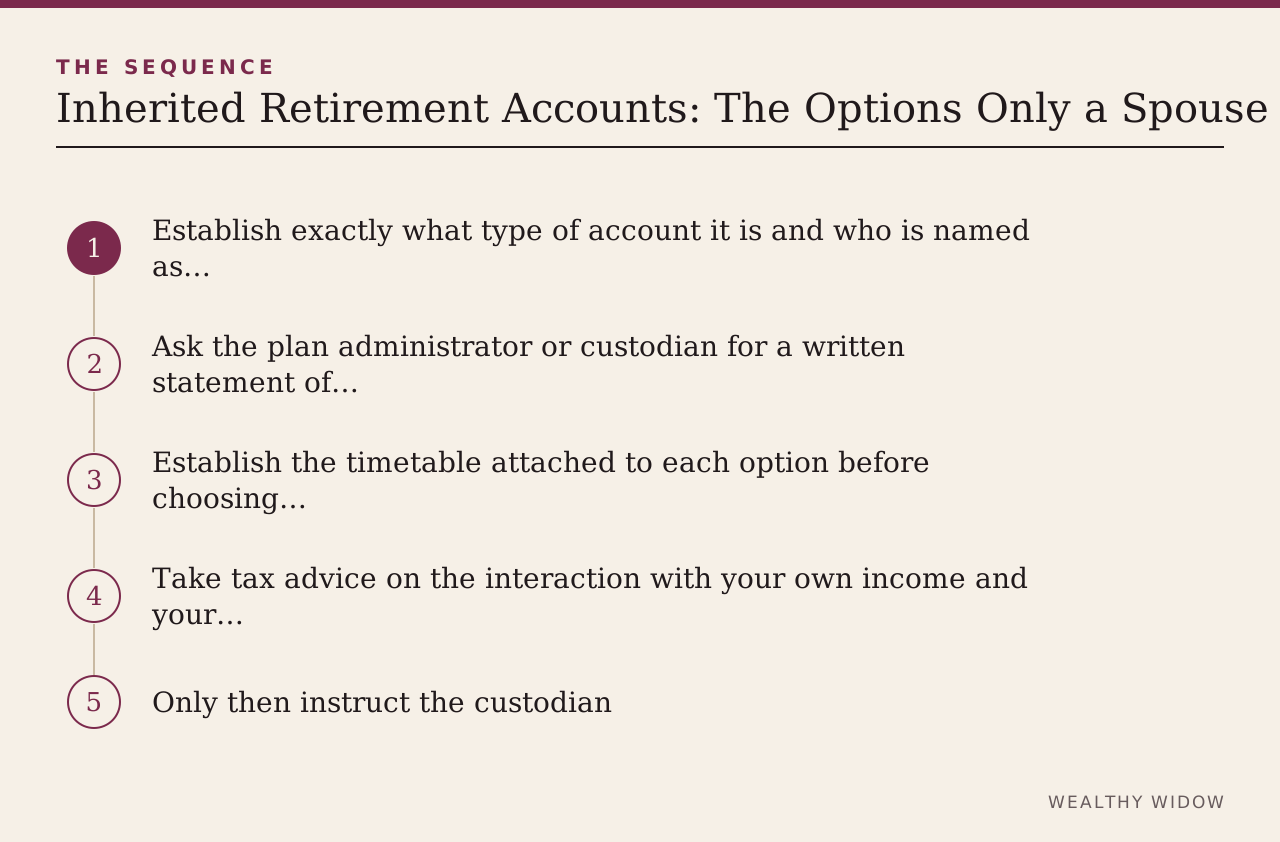
Work deliberately, one step at a time, and treat each as complete before the next one starts.
- Establish exactly what type of account it is and who is named as beneficiary.
- Ask the plan administrator or custodian for a written statement of every option available to a surviving spouse.
- Establish the timetable attached to each option before choosing between them.
- Take tax advice on the interaction with your own income and your own retirement accounts.
- Only then instruct the custodian, and keep written confirmation of what was elected.
Where this commonly goes wrong
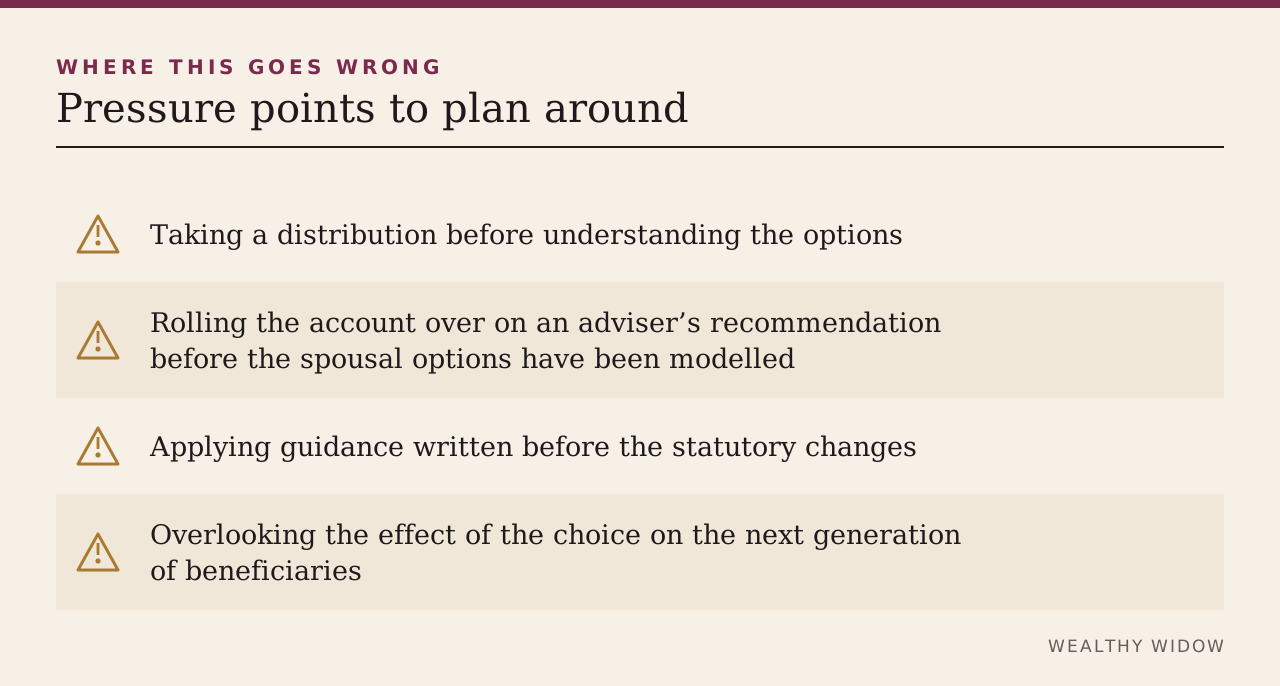
Knowing the failure modes is half of it; the following are the usual ways this goes wrong. Taking a distribution before understanding the options, which can foreclose the more favourable ones.
Rolling the account over on an adviser’s recommendation before the spousal options have been modelled. Applying guidance written before the statutory changes, which is still widely circulated. Overlooking the effect of the choice on the next generation of beneficiaries.
Assemble this evidence before you start
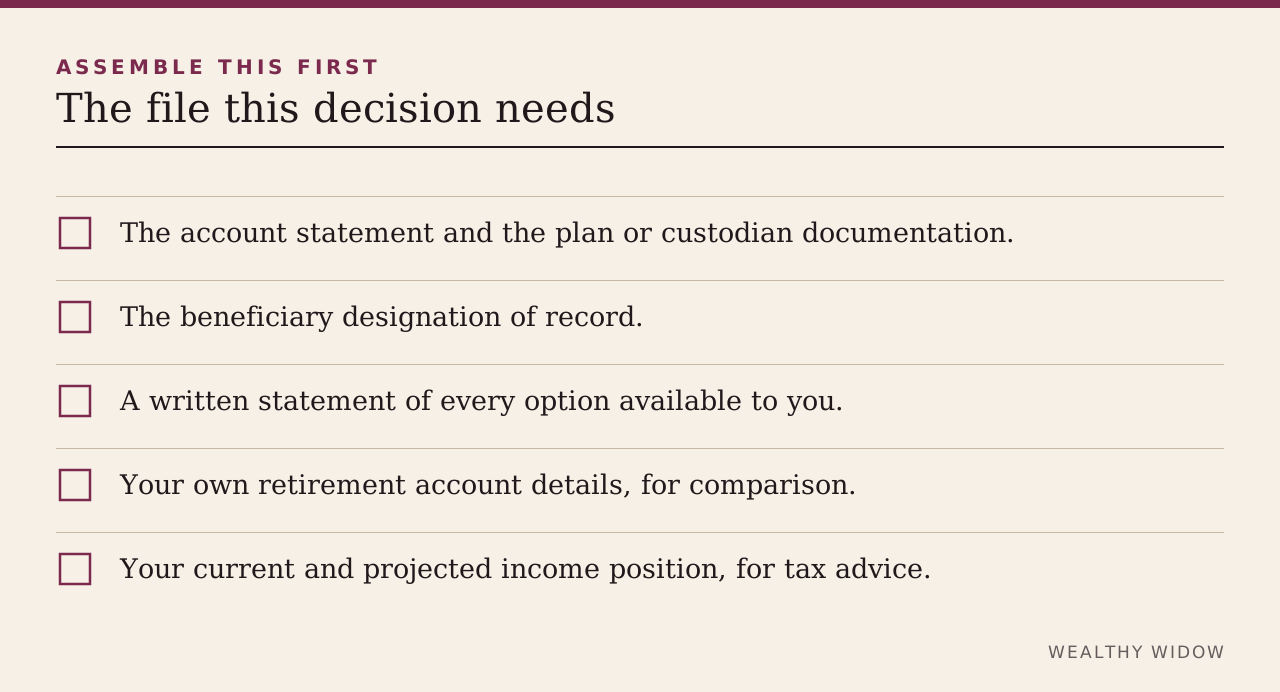
A call made without these usually has to be made again.
- The account statement and the plan or custodian documentation.
- The beneficiary designation of record.
- A written statement of every option available to you.
- Your own retirement account details, for comparison.
- Your current and projected income position, for tax advice.
Do not proceed on a verbal answer
Ask for each of these in a form you can save, date, and produce again months later if it is questioned.
- The account type and the designation of record.
- Every option available to you as a surviving spouse, in writing.
- The distribution timetable attached to each option.
- Which elections cannot be reversed.
Put these questions directly
A competent professional will welcome these questions. Hesitation is itself information.
- What options do I have here as a spouse that another beneficiary would not?
- What is the distribution timetable under each option?
- Which of these choices cannot be undone, and at what point does it become fixed?
- How does each option interact with my own retirement accounts and my current tax position?
Where the current rule lives
Read the source directly for any figure, date, or threshold that will actually drive a decision you make.
- Internal Revenue Service — Publication 590-B, distributions from IRAs
- Internal Revenue Service — Required minimum distributions for IRA beneficiaries
- Internal Revenue Service — Retirement topics, beneficiary
- Internal Revenue Service — Retirement plan and IRA required minimum distributions FAQs
What this cannot decide for you
General guidance sets out the shape of a decision. Your documents settle it. It cannot recommend an option. The right choice depends on your age, your income, your other accounts, and who you intend to benefit next.
Before you move on
Get every option in writing before any money moves. The spousal treatment of retirement accounts is genuinely valuable, and it is most often lost by a well-intentioned instruction given before anyone modelled the alternatives.
If this raised a further question, One Large Holding: Concentration You Inherited Rather Than Chose takes it further.
Primary sources
- Internal Revenue Service — Publication 590-B, distributions from IRAs
- Internal Revenue Service — Required minimum distributions for IRA beneficiaries
- Internal Revenue Service — Retirement topics, beneficiary
- Internal Revenue Service — Retirement plan and IRA required minimum distributions FAQs
This article provides general education, not individualized legal, tax, investment, insurance, or benefits advice. Rules and deadlines change; verify the current requirement with the agency and a qualified professional.