Money
Fixed Income, Rising Costs: The Slow Risk
A widow’s income is often more fixed than it was, which makes the gradual erosion of purchasing power a structural risk rather than a background worry.

Some decisions after a death are reversible. This one deserves more care than most. A widow’s income is often more fixed than it was, which makes the gradual erosion of purchasing power a structural risk rather than a background worry.
Where household income shifts toward pensions, annuities, and benefits, the proportion that adjusts with prices matters enormously over a retirement that may last decades.
A risk that arrives slowly is still a risk, and it is the one most likely to be ignored until it has already done its work.
Name the decision before you make it
Begin with what can be said with confidence, and treat everything beyond it as still to be established. Some income sources adjust with prices and some do not, and the difference compounds over long periods. A pension without an inflation adjustment loses purchasing power every year of retirement. Holding everything in cash is safe against market movement and unprotected against price rises.
Costs faced by older households, particularly care and health costs, may rise differently from general prices. The relevant horizon is your full remaining lifespan, which is frequently longer than people plan for.
How to work through it
A workable order follows. Each step assumes the last one is done.
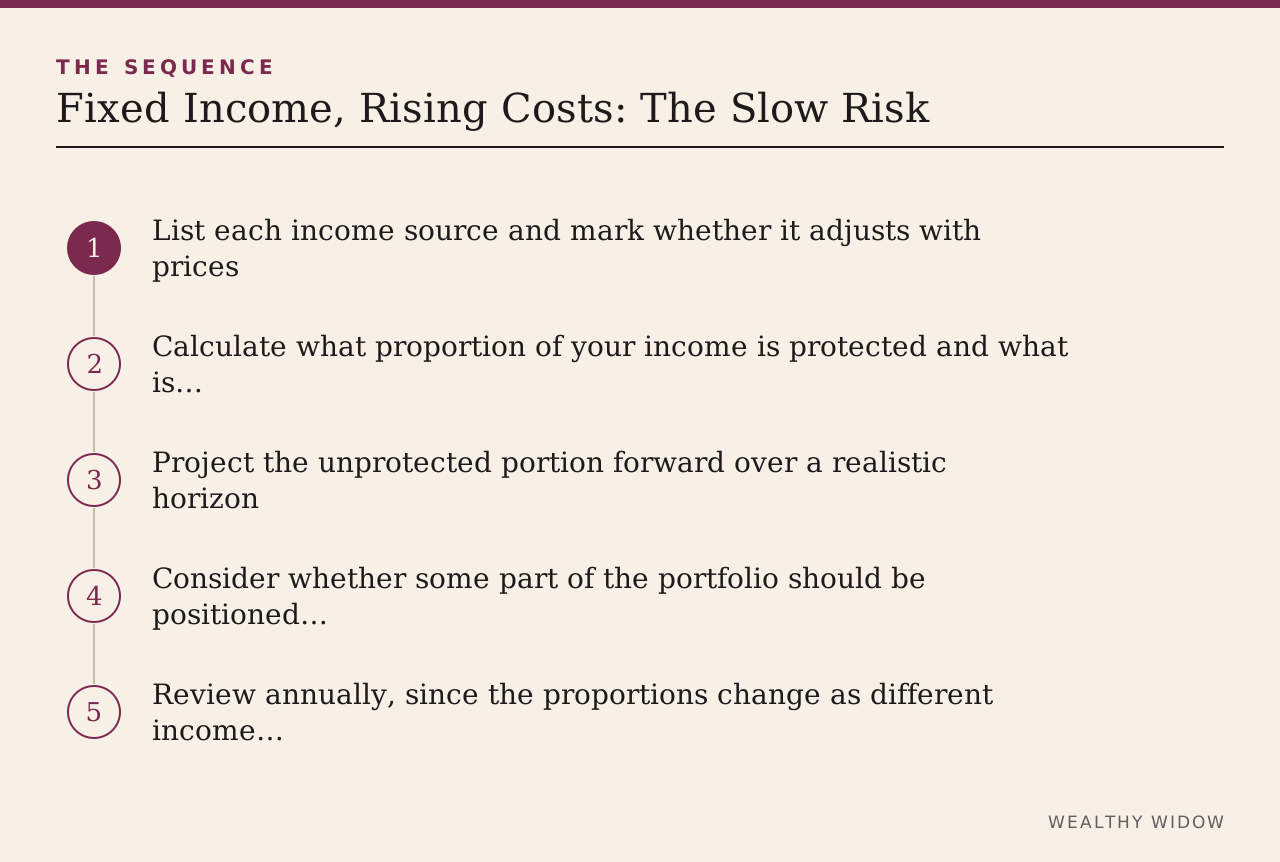
- List each income source and mark whether it adjusts with prices.
- Calculate what proportion of your income is protected and what is not.
- Project the unprotected portion forward over a realistic horizon.
- Consider whether some part of the portfolio should be positioned for growth rather than only for safety.
- Review annually, since the proportions change as different income streams start and stop.
Known hazards
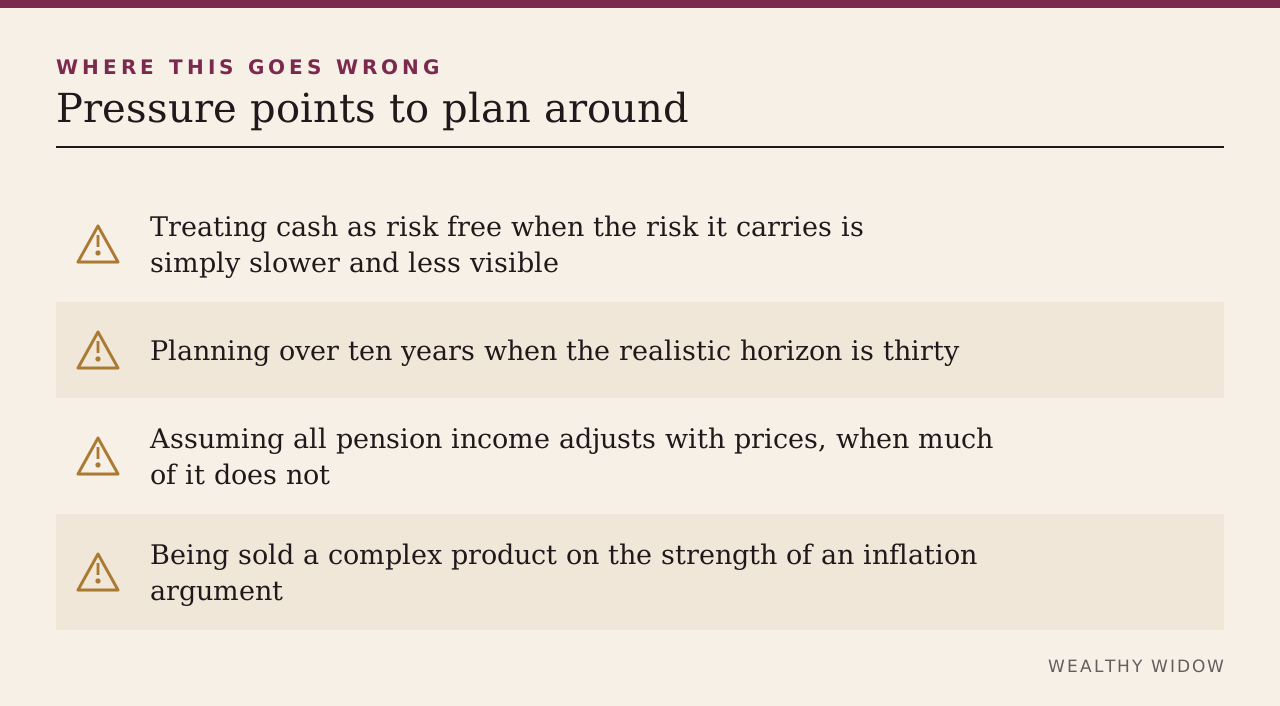
These are the places where readers most often lose ground. Treating cash as risk free when the risk it carries is simply slower and less visible.
Planning over ten years when the realistic horizon is thirty. Assuming all pension income adjusts with prices, when much of it does not. Being sold a complex product on the strength of an inflation argument, without comparing simpler alternatives.
Documents this decision needs
Organisations will ask for these repeatedly, so assemble them once and keep them together.
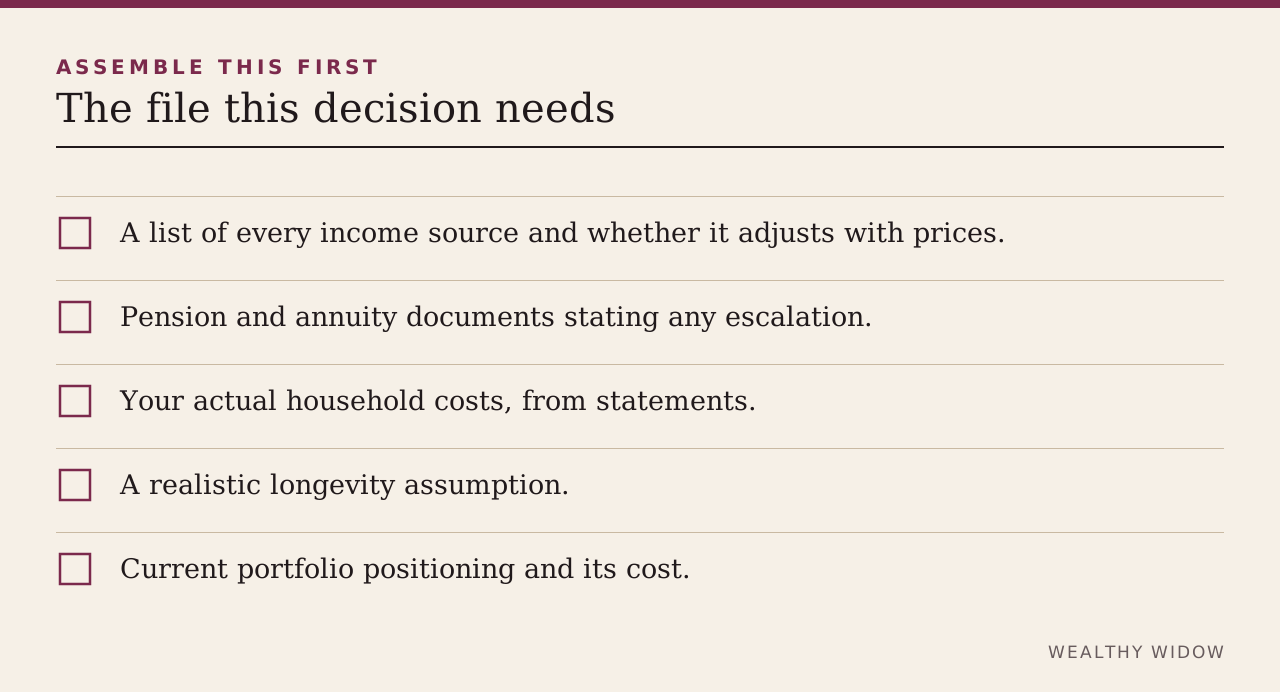
- A list of every income source and whether it adjusts with prices.
- Pension and annuity documents stating any escalation.
- Your actual household costs, from statements.
- A realistic longevity assumption.
- Current portfolio positioning and its cost.
Do not proceed on a verbal answer
Ask for each of these in a form you can save, date, and produce again months later if it is questioned.
- Which income sources adjust with prices, and by what measure.
- The proportion of your income that is unprotected.
- Your planning horizon.
- What the portfolio is currently positioned to do.
Put these questions directly
A competent professional will welcome these questions. Hesitation is itself information.
- What proportion of my income is protected against rising prices?
- What horizon are you planning over, and why that one?
- What is the simplest way to address this, and what would it cost?
- What happens to my plan if costs rise faster than expected for a decade?
Read the rule yourself
The sources below govern. This guide only summarises them.
- U.S. Securities and Exchange Commission — Compound interest calculator
- U.S. Securities and Exchange Commission — Investor.gov
- Social Security Administration — What you could get from survivor benefits
- U.S. Securities and Exchange Commission — Understanding fees
The limits of this guide
This is where general guidance ends and your own paperwork takes over. It cannot forecast prices. It can ensure you know which part of your income is exposed, which is the part that needs a plan.
What to hold on to
Mark each income source as protected or not, and look at the proportion. It is a five-minute exercise that reframes what the portfolio is actually for over the decades ahead.
Our related guide The File Your Executor Will Need, Built While You Can covers the adjacent problem.
Primary sources
- U.S. Securities and Exchange Commission — Compound interest calculator
- U.S. Securities and Exchange Commission — Investor.gov
- Social Security Administration — What you could get from survivor benefits
- U.S. Securities and Exchange Commission — Understanding fees
This article provides general education, not individualized legal, tax, investment, insurance, or benefits advice. Rules and deadlines change; verify the current requirement with the agency and a qualified professional.