Taxes
The Income That Was Earned But Never Received
Some income belonged to the person who died but arrived afterwards, and it carries a distinctive tax treatment that catches families out.

Institutions will describe this as routine. For you it is not routine, and the stakes are not symmetrical. Some income belonged to the person who died but arrived afterwards, and it carries a distinctive tax treatment that catches families out.
Income earned before death but paid afterwards sits in its own category. It is taxed to whoever receives it and does not benefit from the basis treatment that applies to many other inherited assets.
This category of income does not receive the basis adjustment that other inherited assets may, which surprises almost every family that meets it.
What this is, and what it is not
Begin with what can be said with confidence, and treat everything beyond it as still to be established. Income earned by the person who died but received after death is taxed to the recipient. It generally does not receive a basis adjustment, unlike many other inherited assets. Common examples include unpaid salary, accrued interest, and amounts held in retirement accounts.
Where estate tax was paid on the same amount, a deduction may be available to the recipient. The recipient may be the estate or a beneficiary, depending on how the amount is paid.
A workable order for this
A workable order follows. Each step assumes the last one is done.
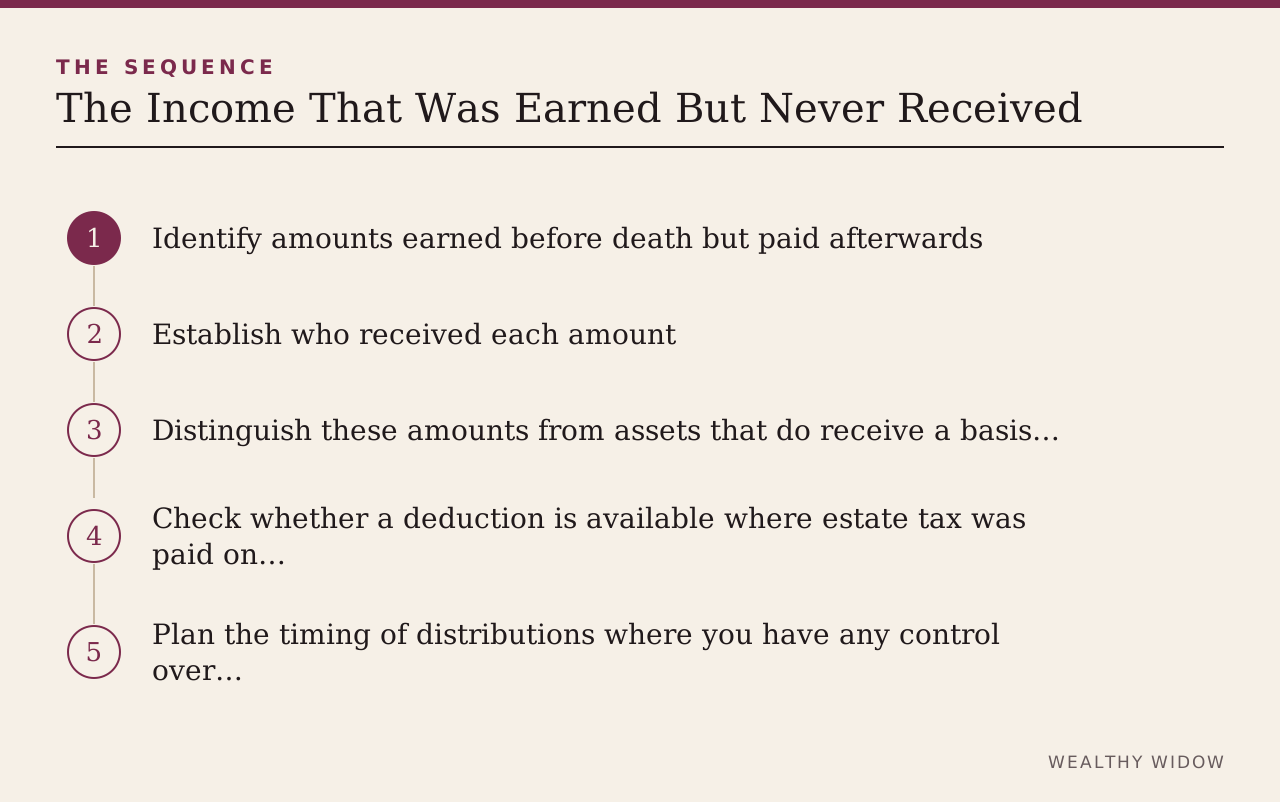
- Identify amounts earned before death but paid afterwards.
- Establish who received each amount, since that determines who is taxed.
- Distinguish these amounts from assets that do receive a basis adjustment.
- Check whether a deduction is available where estate tax was paid on the same amount.
- Plan the timing of distributions where you have any control over when they are received.
Where good intentions go wrong
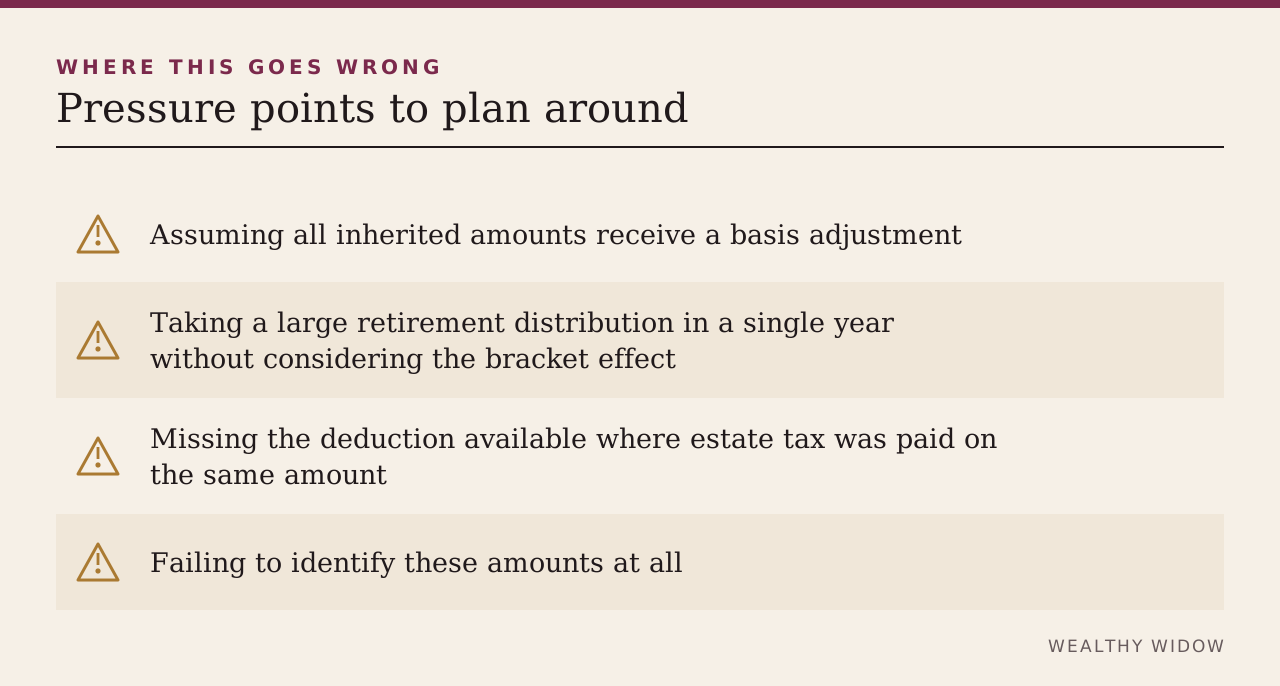
These are the places where readers most often lose ground. Assuming all inherited amounts receive a basis adjustment, and being surprised by the tax.
Taking a large retirement distribution in a single year without considering the bracket effect. Missing the deduction available where estate tax was paid on the same amount. Failing to identify these amounts at all, and reporting them incorrectly.
Documents this decision needs
Organisations will ask for these repeatedly, so assemble them once and keep them together.
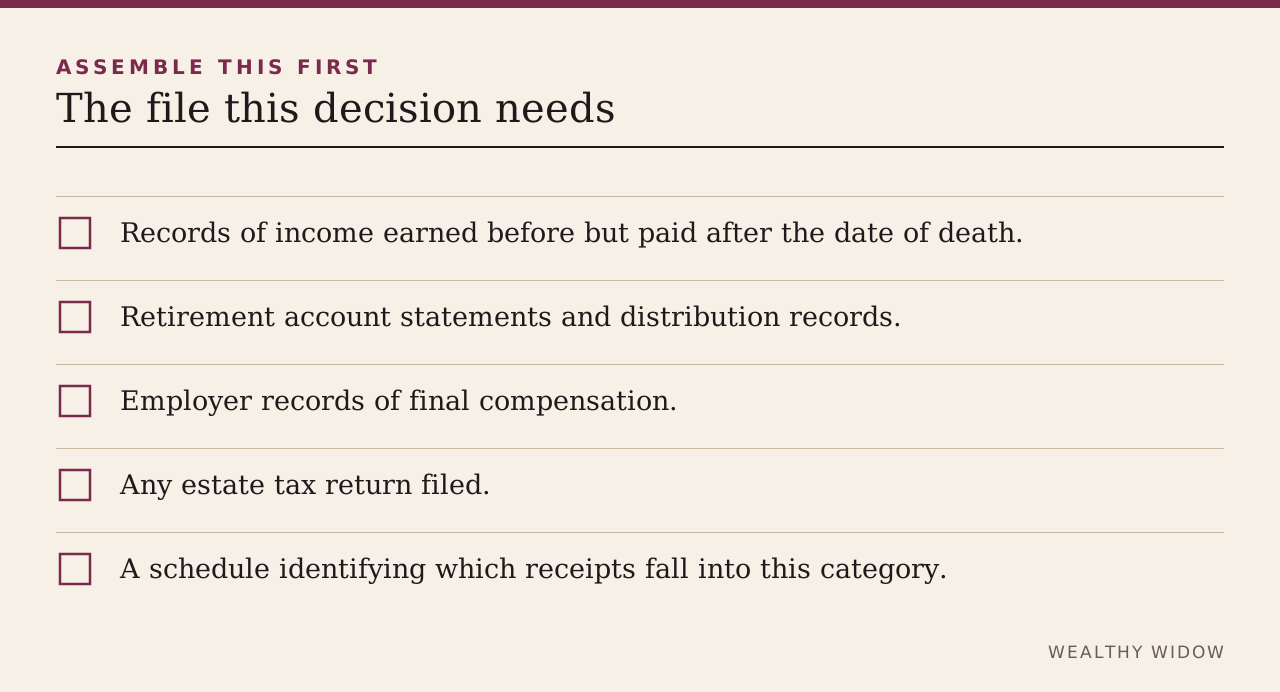
- Records of income earned before but paid after the date of death.
- Retirement account statements and distribution records.
- Employer records of final compensation.
- Any estate tax return filed.
- A schedule identifying which receipts fall into this category.
Ask for this in writing
Each item below should exist somewhere other than your memory, because memory is not evidence in a dispute.
- Which amounts fall into this category.
- Who is taxed on each amount.
- Whether a deduction for estate tax paid is available.
- The bracket effect of receiving these amounts in a single year.
The questions to bring to the meeting
Take these to the attorney, tax professional, or planner handling this work.
- Which of these receipts fall into this category?
- Is a deduction available for estate tax paid on the same amounts?
- Would spreading these receipts across years reduce the total tax?
- Who should receive these amounts, the estate or the beneficiaries?
The primary material
Each load-bearing point above traces to one of the following, and they are the versions that stay current.
- Internal Revenue Service — About Publication 559, survivors, executors, and administrators
- Internal Revenue Service — Publication 559, survivors, executors, and administrators
- Internal Revenue Service — File an estate tax income tax return
- Internal Revenue Service — Publication 590-B, distributions from IRAs
Where general guidance ends
Here is the line between what can usefully be written for a general readership and what cannot be written at all. It cannot classify your receipts, which requires seeing the underlying entitlements and the dates on which they arose.
What this comes down to
Identify these amounts early and plan the timing where you can. It is the category most likely to produce an unexpected tax bill, precisely because families assume inheritance arrives untaxed.
If this raised a further question, Estimated Payments: The Obligation That Appears Without Warning takes it further.
Primary sources
- Internal Revenue Service — About Publication 559, survivors, executors, and administrators
- Internal Revenue Service — Publication 559, survivors, executors, and administrators
- Internal Revenue Service — File an estate tax income tax return
- Internal Revenue Service — Publication 590-B, distributions from IRAs
This article provides general education, not individualized legal, tax, investment, insurance, or benefits advice. Rules and deadlines change; verify the current requirement with the agency and a qualified professional.