Life After Loss
When Caregiving Ends: The Loss Underneath the Loss
For those who cared for a spouse through illness, the death ends a role as well as a marriage, and the second loss is rarely acknowledged.

For someone who cared for a spouse through illness, a death can end both a marriage and a daily role. The newly empty hours, changed relationships, and deferred personal needs deserve attention without forcing them into a single “normal” account of grief.
SAMHSA describes grief as personal and notes that it may include sadness, guilt, confusion, relief, anxiety, numbness, or fatigue. Relief can coexist with love and grief; it is one possible response, not a verdict on the relationship.
A structure that filled every day has ended alongside the marriage, and the absence of that structure is its own experience.
Name the decision before you make it
NIA advises caregivers to seek help, maintain social contact and interests, attend regular medical care, and keep personal records current. After caregiving ends, review which of those needs were postponed rather than assuming they were. SAMHSA’s list of possible grief reactions includes both relief and guilt, while emphasizing that each person’s experience differs.
Social circles narrow substantially during caregiving and do not automatically widen again. Caregiver support services exist and remain relevant after the caregiving ends.
How to work through it
Work through it deliberately rather than all at once, and stop at any point where an answer is missing.
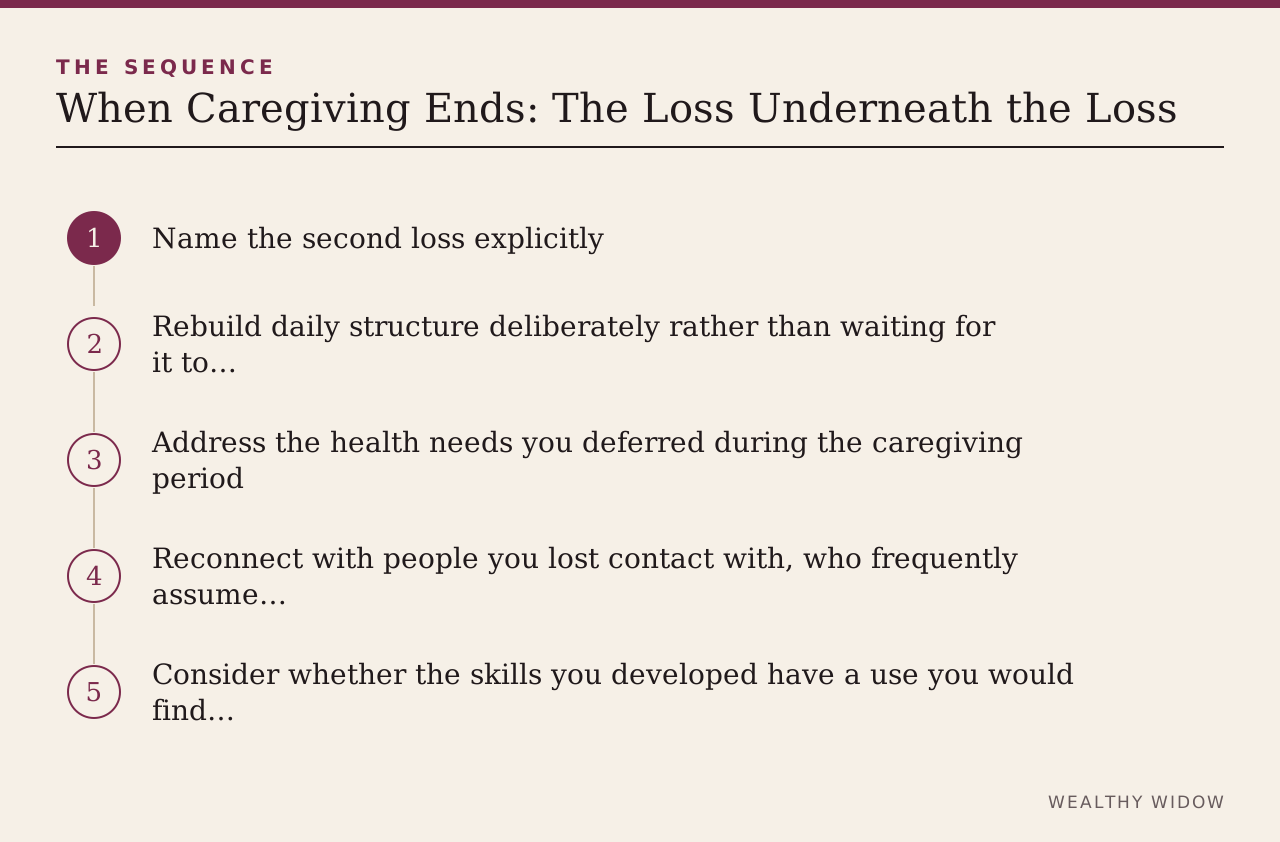
- Name the second loss explicitly, since it is rarely acknowledged by others.
- Rebuild daily structure deliberately rather than waiting for it to return.
- Address the health needs you deferred during the caregiving period.
- Reconnect selectively with people you want back in your life, without assuming what they think or can offer.
- Consider whether the skills you developed have a use you would find meaningful.
Known hazards
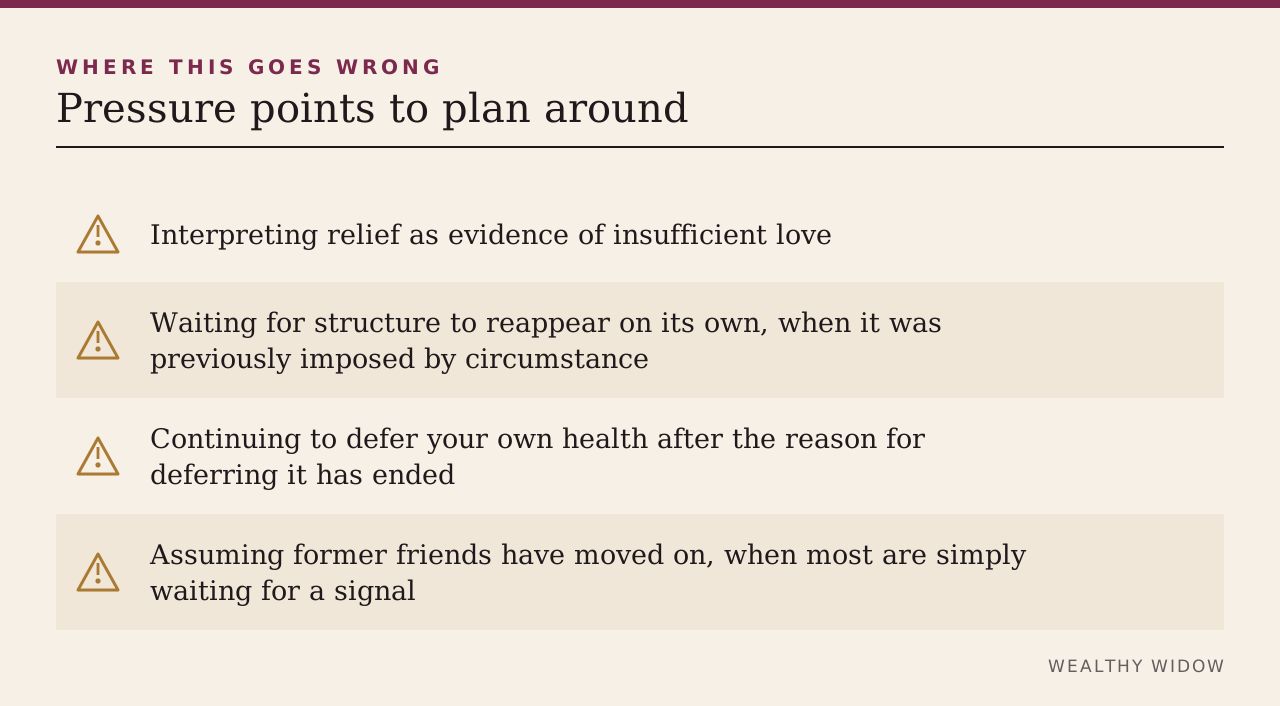
Each of these is a signal to stop and confirm rather than proceed. Interpreting relief as evidence of insufficient love, which is a very common and very unfair conclusion.
Waiting for structure to reappear on its own, when it was previously imposed by circumstance. Continuing to defer your own health after the reason for deferring it has ended. Assuming former friends have moved on, when most are simply waiting for a signal.
The evidence to gather
You will be asked for these in some combination by almost everyone involved.
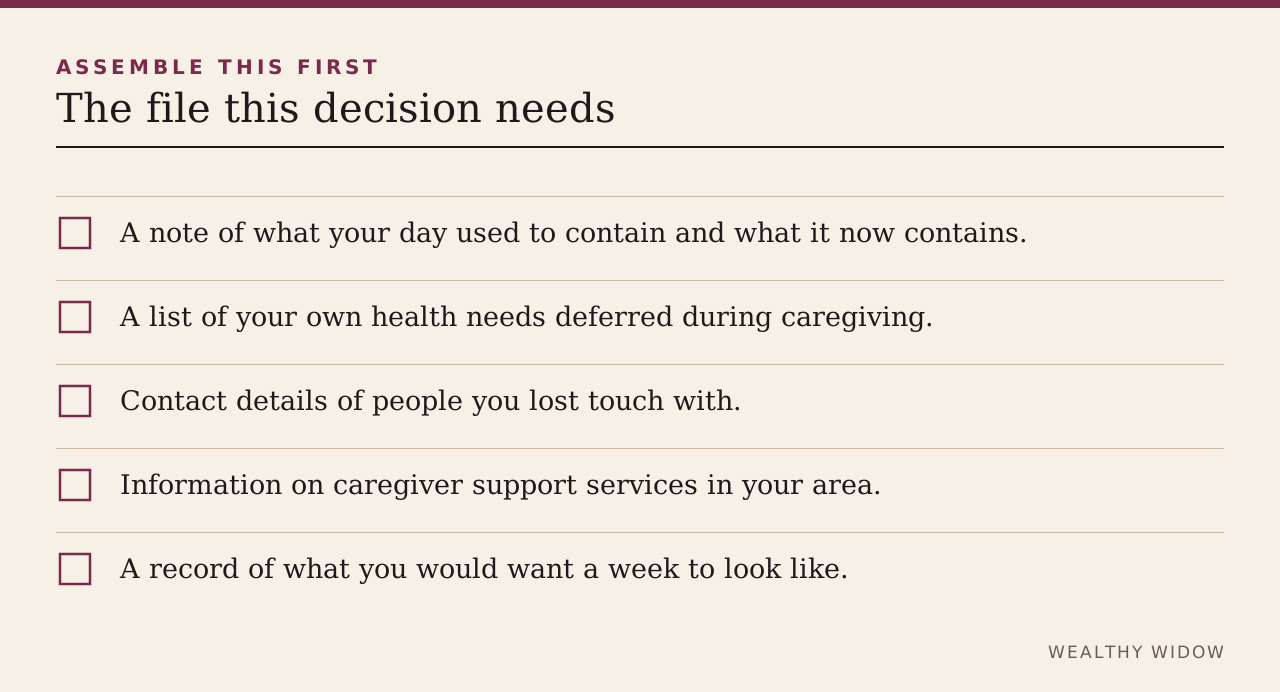
- A note of what your day used to contain and what it now contains.
- A list of your own health needs deferred during caregiving.
- Contact details of people you lost touch with.
- Information on caregiver support services in your area.
- A record of what you would want a week to look like.
Do not proceed on a verbal answer
Ask for each of these in a form you can save, date, and produce again months later if it is questioned.
- What caregiver support remains available to you.
- That your own deferred health needs are being addressed.
- That some structure has been deliberately rebuilt.
- That you have reconnected with at least one person.
Put these questions directly
A competent professional will welcome these questions. Hesitation is itself information.
- What support is available for former caregivers?
- What health matters should I now catch up on?
- What did you find helped when your caregiving ended?
- What is happening locally that might suit me?
Check this against the source
These are the primary sources behind this guide. They are the ones that change, and the ones worth checking before you act.
- National Institute on Aging — Coping with grief and loss
- National Institute on Aging — Caregiving
- National Institute on Aging — Alzheimer’s caregiving: caring for yourself
- Substance Abuse and Mental Health Services Administration — Coping with bereavement and grief
The questions this cannot reach
No account written for a general readership can reach the following, and it should not pretend to. It cannot rebuild a life, and the useful specifics here are local and personal rather than general.
Taking it from here
Name the role change, review your own health and daily structure, and let mixed feelings exist without treating any one of them as a verdict on the marriage. Seek professional help if grief is becoming hard to manage or safety is at risk.
Our related guide Telling People, Repeatedly, to People Who Do Not Know covers the adjacent problem.
Primary sources
- National Institute on Aging — Coping with grief and loss
- National Institute on Aging — Caregiving
- National Institute on Aging — Alzheimer's caregiving: caring for yourself
- Substance Abuse and Mental Health Services Administration — Coping with bereavement and grief
This article provides general education, not individualized legal, tax, investment, insurance, or benefits advice. Rules and deadlines change; verify the current requirement with the agency and a qualified professional.