Taxes
When Social Security Becomes Taxable Income
Benefits can be partly taxable depending on other income, and the interaction catches out widows whose income mix has just changed.

You may be told this is simply a form to sign. It is a decision with consequences. Benefits can be partly taxable depending on other income, and the interaction catches out widows whose income mix has just changed.
The taxation of benefits depends on other income, which means an unrelated decision such as a retirement withdrawal can raise the tax on income you were already receiving.
A distribution taken to cover an expense can increase the tax on your benefits as well, which is a cost most people do not see coming.
The shape of this decision
The position is narrower than it looks once it is stated plainly. A portion of Social Security benefits may be included in taxable income depending on total income. The calculation uses a measure of income that includes certain otherwise untaxed items. Additional income from distributions, work, or investments can increase the taxable proportion.
Withholding can be requested on benefit payments, which avoids an estimated payment obligation. The thresholds used in the calculation are not indexed in the way many other tax figures are.
Order of play
This is the working order most readers find keeps them in control.
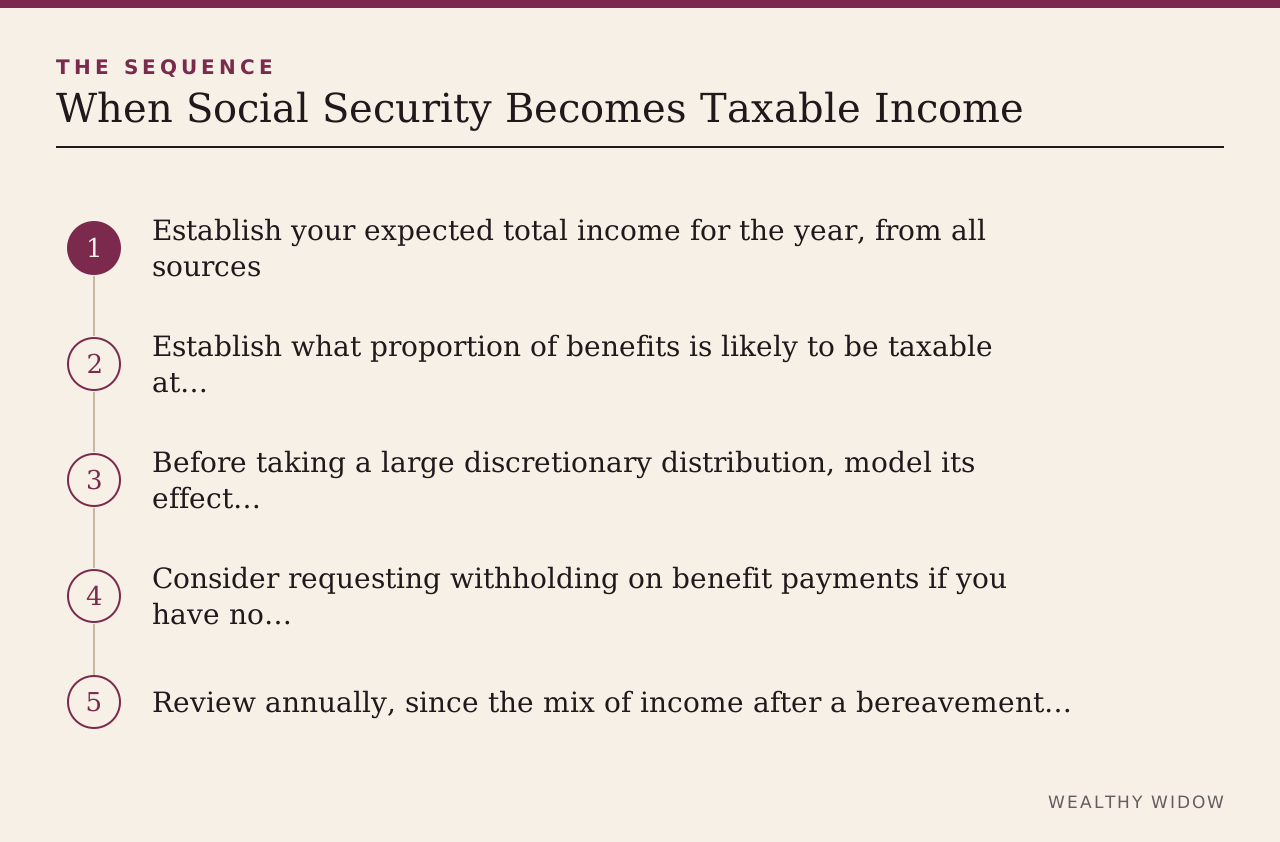
- Establish your expected total income for the year, from all sources.
- Establish what proportion of benefits is likely to be taxable at that level.
- Before taking a large discretionary distribution, model its effect on benefit taxation.
- Consider requesting withholding on benefit payments if you have no other withholding.
- Review annually, since the mix of income after a bereavement changes over the first years.
The errors worth naming in advance
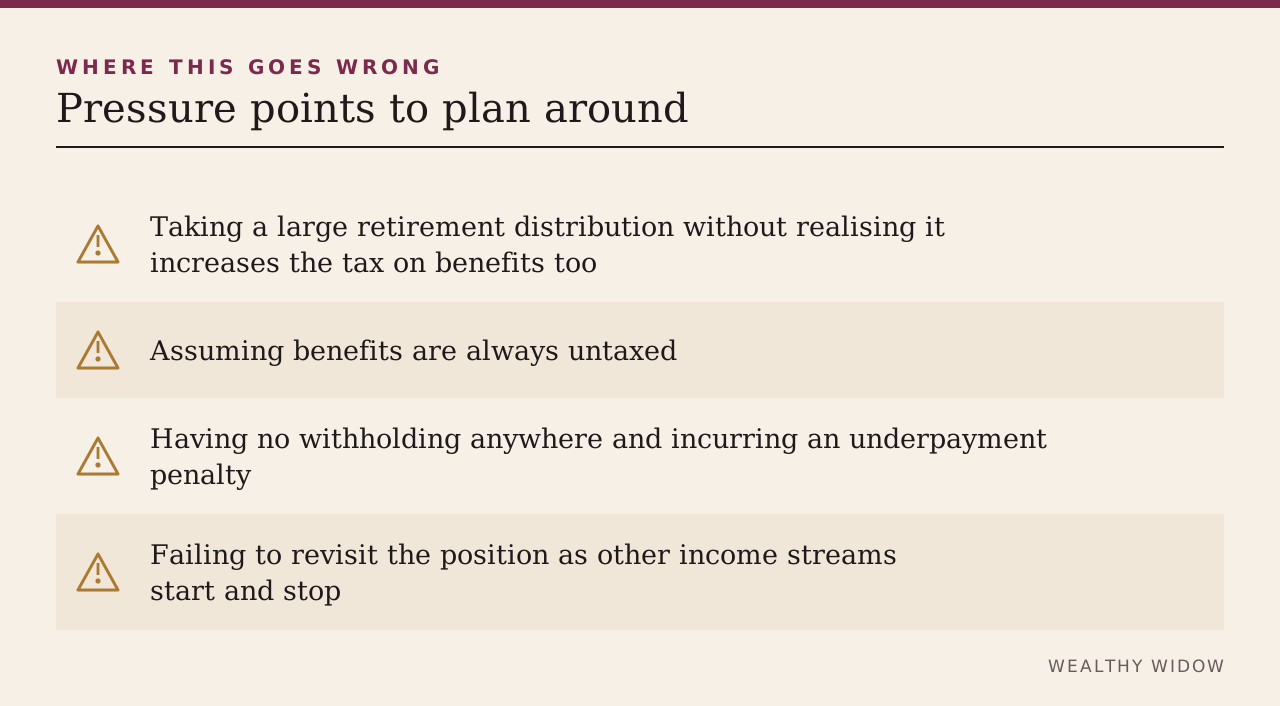
Knowing the failure modes in advance is most of the protection. Taking a large retirement distribution without realising it increases the tax on benefits too.
Assuming benefits are always untaxed, which is a widespread misunderstanding. Having no withholding anywhere and incurring an underpayment penalty. Failing to revisit the position as other income streams start and stop.
The paperwork to collect first
Gather these first and the rest of the process moves considerably faster, because most delays are missing paperwork.
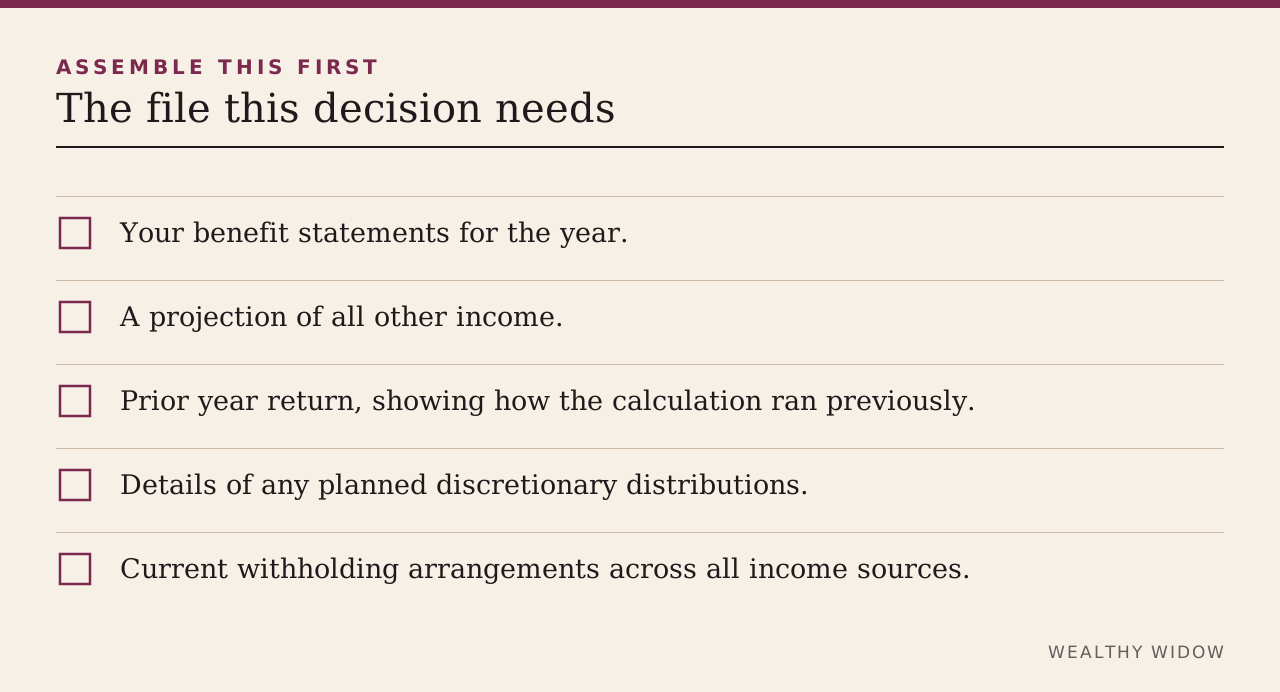
- Your benefit statements for the year.
- A projection of all other income.
- Prior year return, showing how the calculation ran previously.
- Details of any planned discretionary distributions.
- Current withholding arrangements across all income sources.
The written record you should hold
Hold written confirmation of each of these points before you rely on any of them to make a decision.
- The proportion of benefits likely to be taxable at your income level.
- The marginal effect of a further distribution.
- Whether withholding on benefits is appropriate.
- Whether an estimated payment obligation arises.
What a good adviser will answer plainly
Whoever advises you should be able to answer each of these plainly and in writing.
- What proportion of my benefits is taxable at this income level?
- What would a distribution of this size do to that proportion?
- Should I request withholding on my benefit payments?
- Is there a better year to take this distribution?
Read the agency, not this summary
Treat these as the authority and this guide as an index to them.
- Social Security Administration — Survivor benefits
- Internal Revenue Service — Tax withholding estimator
- Internal Revenue Service — Estimated taxes
- Internal Revenue Service — Publication 505, tax withholding and estimated tax
What only your documents can answer
This is where a guide stops being useful and your own paperwork takes over. It cannot run the calculation, which depends on current thresholds and on your complete income picture.
The last word on this
Model the interaction before taking a discretionary distribution rather than after. The additional tax on benefits is the part that people find genuinely unfair, largely because nobody warned them it existed.
A companion guide, A Notice Arrives: Reading It Before Reacting To It, covers the decision that sits alongside this one.
Primary sources
- Social Security Administration — Survivor benefits
- Internal Revenue Service — Tax withholding estimator
- Internal Revenue Service — Estimated taxes
- Internal Revenue Service — Publication 505, tax withholding and estimated tax
This article provides general education, not individualized legal, tax, investment, insurance, or benefits advice. Rules and deadlines change; verify the current requirement with the agency and a qualified professional.