Home
The Insurance Policy Still Names Someone Who Has Died
A policy in the name of the person who died may not protect you as you assume, and a vacant or transitional property changes the risk considerably.

You may be told this is simply a form to sign. It is a decision with consequences. A policy in the name of the person who died may not protect you as you assume, and a vacant or transitional property changes the risk considerably.
Property insurance is routinely left unchanged after a death because nobody thinks of it. The circumstances that follow a death, particularly a property standing empty, are precisely those where cover is most often restricted.
Insurance follows the insured interest, and a change in who owns and occupies a property is exactly the change insurers care about.
The substance beneath the process
Before any advice, the ground facts. A policy names an insured party, and a change in ownership can affect who is actually covered. Most policies restrict or exclude cover for a property left vacant beyond a stated period. A property under estate administration may need a specific form of cover.
Failing to notify a material change can give an insurer grounds to decline a claim. Contents cover may be affected when belongings are removed or distributed.
The order that protects you
Work through this deliberately. Each step assumes the one before it is done.
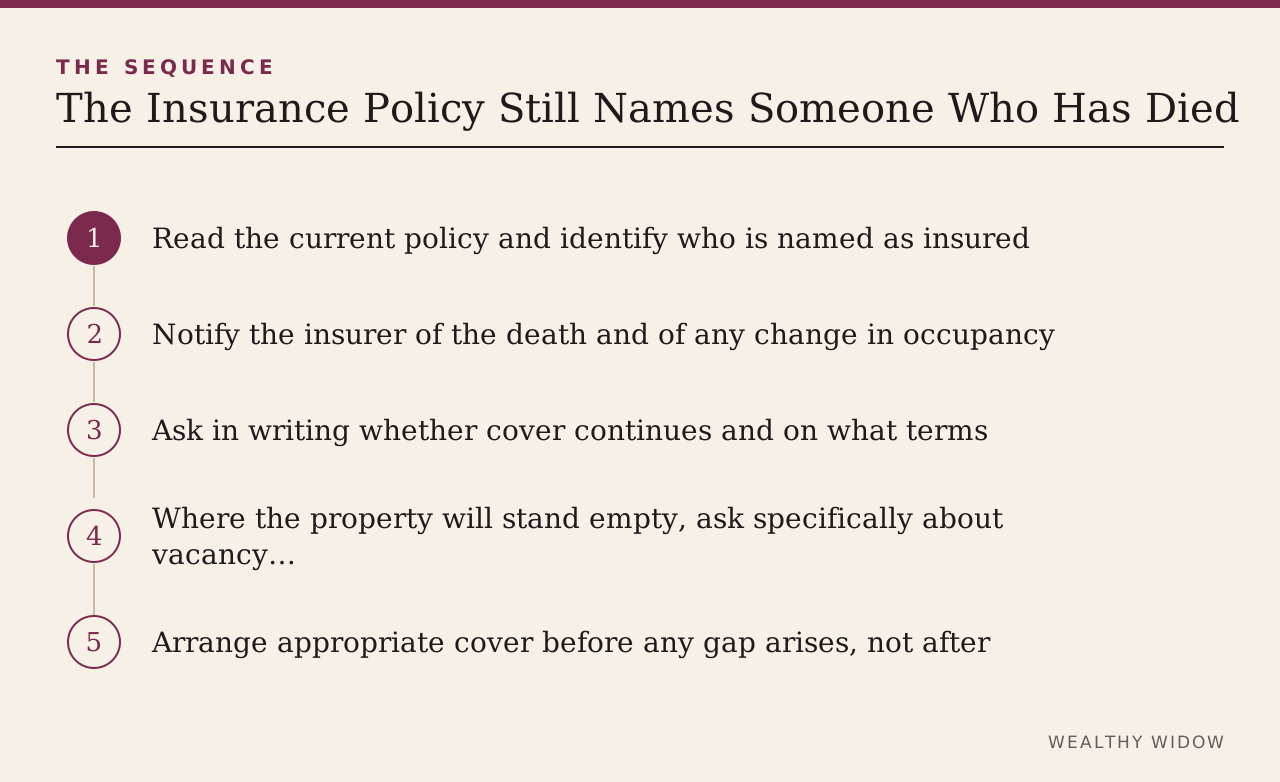
- Read the current policy and identify who is named as insured.
- Notify the insurer of the death and of any change in occupancy.
- Ask in writing whether cover continues and on what terms.
- Where the property will stand empty, ask specifically about vacancy conditions.
- Arrange appropriate cover before any gap arises, not after.
What tends to go wrong here
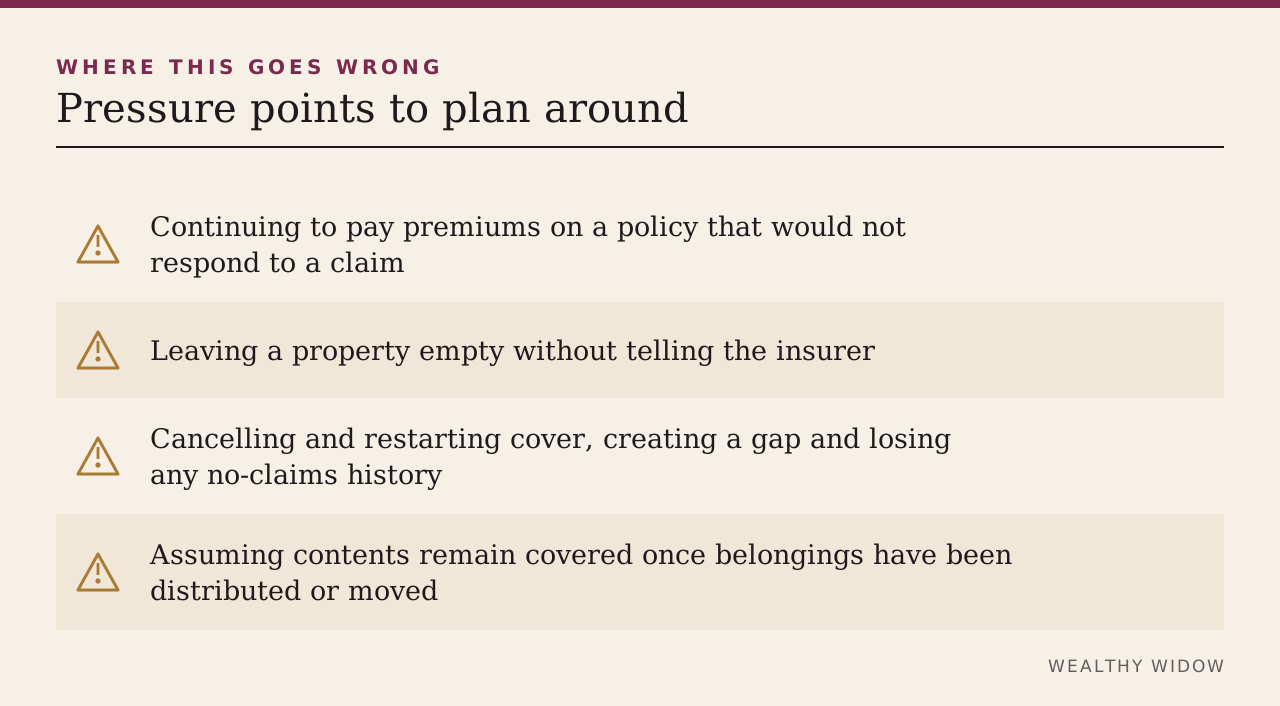
Anticipating these is most of the protection available to you, and it costs nothing but attention. Continuing to pay premiums on a policy that would not respond to a claim.
Leaving a property empty without telling the insurer, which commonly voids cover. Cancelling and restarting cover, creating a gap and losing any no-claims history. Assuming contents remain covered once belongings have been distributed or moved.
What you will be asked to produce
Assemble this before the first conversation rather than during it.
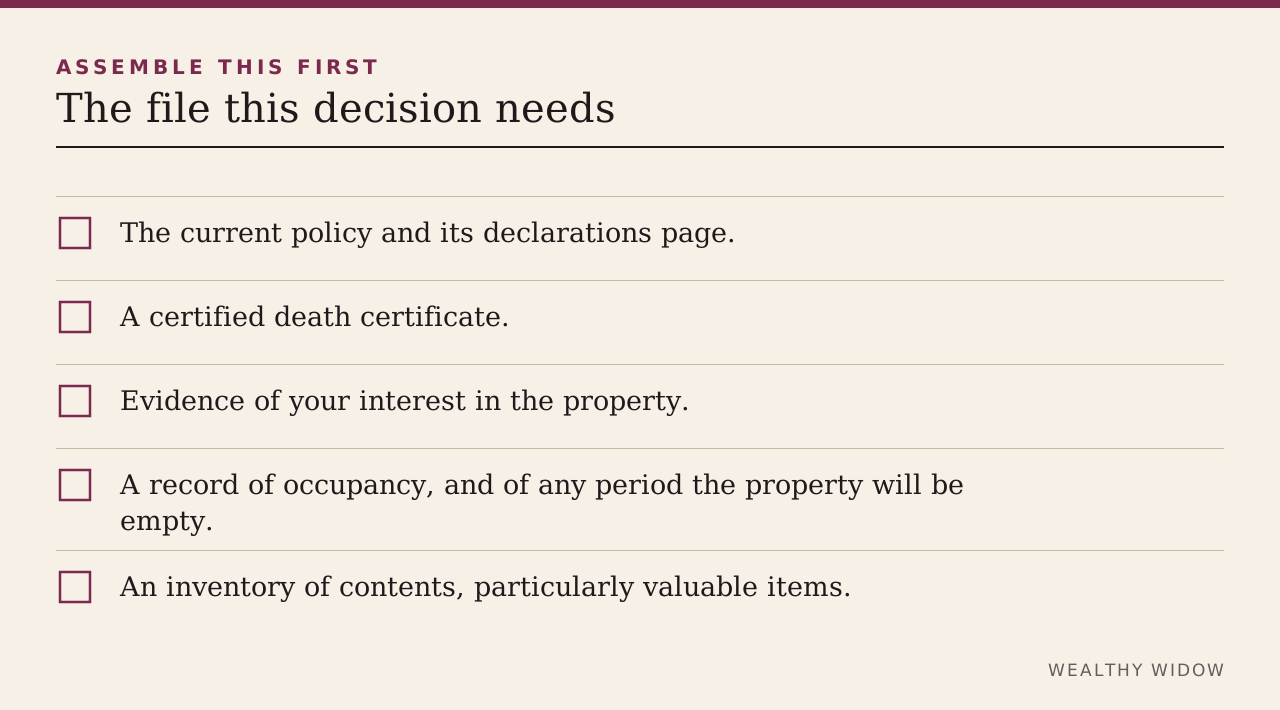
- The current policy and its declarations page.
- A certified death certificate.
- Evidence of your interest in the property.
- A record of occupancy, and of any period the property will be empty.
- An inventory of contents, particularly valuable items.
Put these in writing, then proceed
A conversation is a starting point. These belong on paper.
- Who is covered under the policy now.
- The vacancy conditions and the period they allow.
- What cover applies during estate administration.
- That any change has been confirmed by the insurer in writing.
Before anyone is engaged, ask these
Ask them plainly; the response tells you as much as the answer.
- Who is covered under this policy now that the named insured has died?
- What are your vacancy conditions, and when do they bite?
- What cover do you offer for a property under estate administration?
- What would cause you to decline a claim in these circumstances?
Read the agency, not this summary
Treat these as the authority and this guide as an index to them.
- National Association of Insurance Commissioners — Consumer resources
- National Association of Insurance Commissioners — Consumer life company locator
- Consumer Financial Protection Bureau — Help for surviving spouses
- U.S. Department of Housing and Urban Development — Find a housing counselor
What only your documents can answer
This is where a guide stops being useful and your own paperwork takes over. It cannot read your policy, and vacancy and occupancy conditions differ substantially between insurers.
The last word on this
Notify the insurer, ask about vacancy in writing, and confirm who is actually covered. An uninsured loss at an empty property is one of the more painful outcomes available in this period, and it is entirely preventable.
Our related guide When the Mortgage Becomes Unaffordable covers the adjacent problem.
Primary sources
- National Association of Insurance Commissioners — Consumer resources
- National Association of Insurance Commissioners — Consumer life company locator
- Consumer Financial Protection Bureau — Help for surviving spouses
- U.S. Department of Housing and Urban Development — Find a housing counselor
This article provides general education, not individualized legal, tax, investment, insurance, or benefits advice. Rules and deadlines change; verify the current requirement with the agency and a qualified professional.