Estate
A Business in the Estate: Valuation, Control, and Time
A business interest is the estate asset that loses value while you wait, and the one most likely to be undervalued in a hurry.

There is a version of this decision that takes ten minutes and a version that takes a season. A business interest is the estate asset that loses value while you wait, and the one most likely to be undervalued in a hurry. The difference is whether the facts were assembled first.
A business in an estate combines an operating asset, a valuation problem, and usually other people with their own interests. Each of the three moves faster than ordinary estate administration.
Control and valuation are decided in the first weeks, and both are difficult to revisit afterwards.
The decision behind the form
These are the points the rest of the decision rests on, so it is worth being sure of them before going further. Business interests generally require a qualified valuation rather than an estimate. Governing agreements may fix a price or a formula that applies on death. Minority interests may be valued differently from controlling ones.
The business has its own continuing tax and payroll obligations regardless of the estate. Co-owners may have interests directly opposed to the estate’s on valuation.
Step by step, in this order
Take it in this sequence. Reversing the order tends to create work rather than save it, and occasionally forecloses a choice.
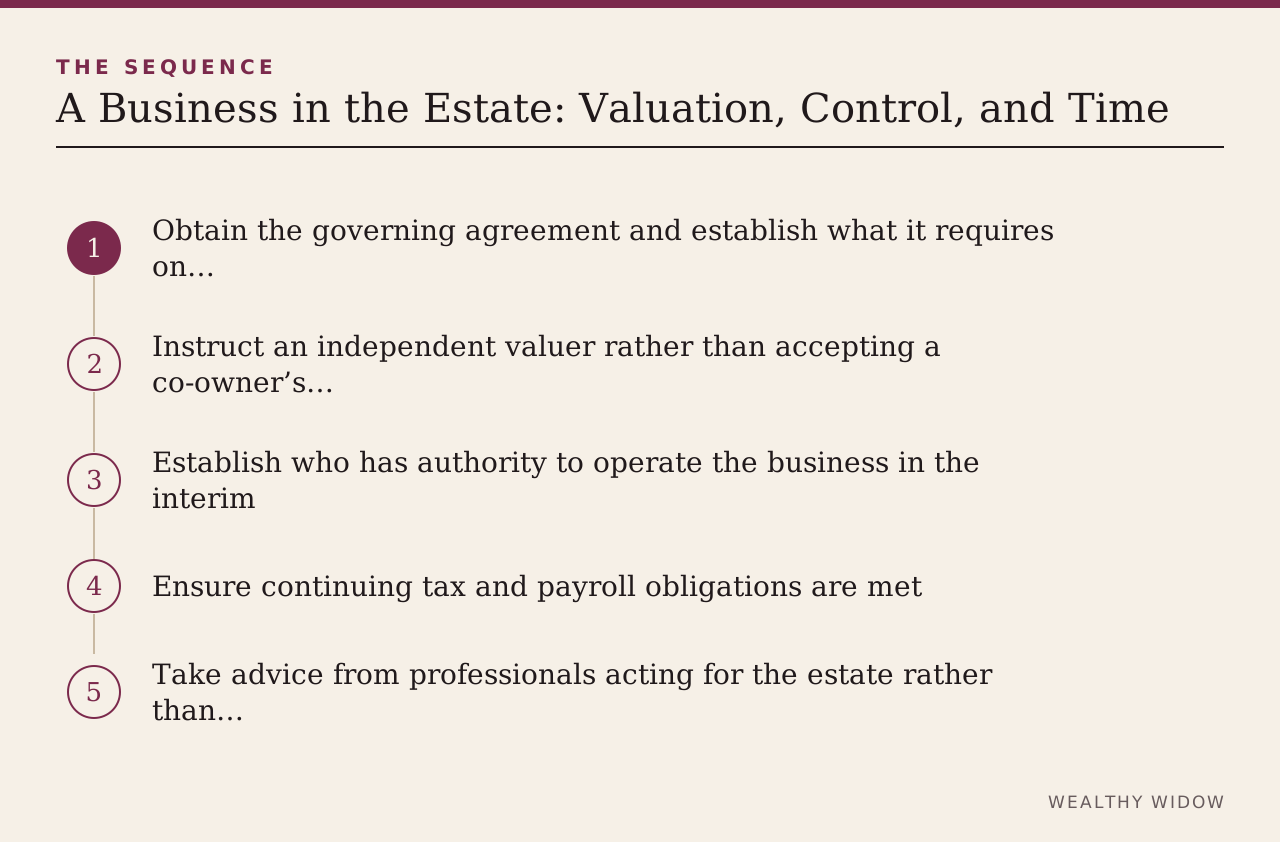
- Obtain the governing agreement and establish what it requires on death.
- Instruct an independent valuer rather than accepting a co-owner’s figure.
- Establish who has authority to operate the business in the interim.
- Ensure continuing tax and payroll obligations are met.
- Take advice from professionals acting for the estate rather than for the business.
The costly misreadings
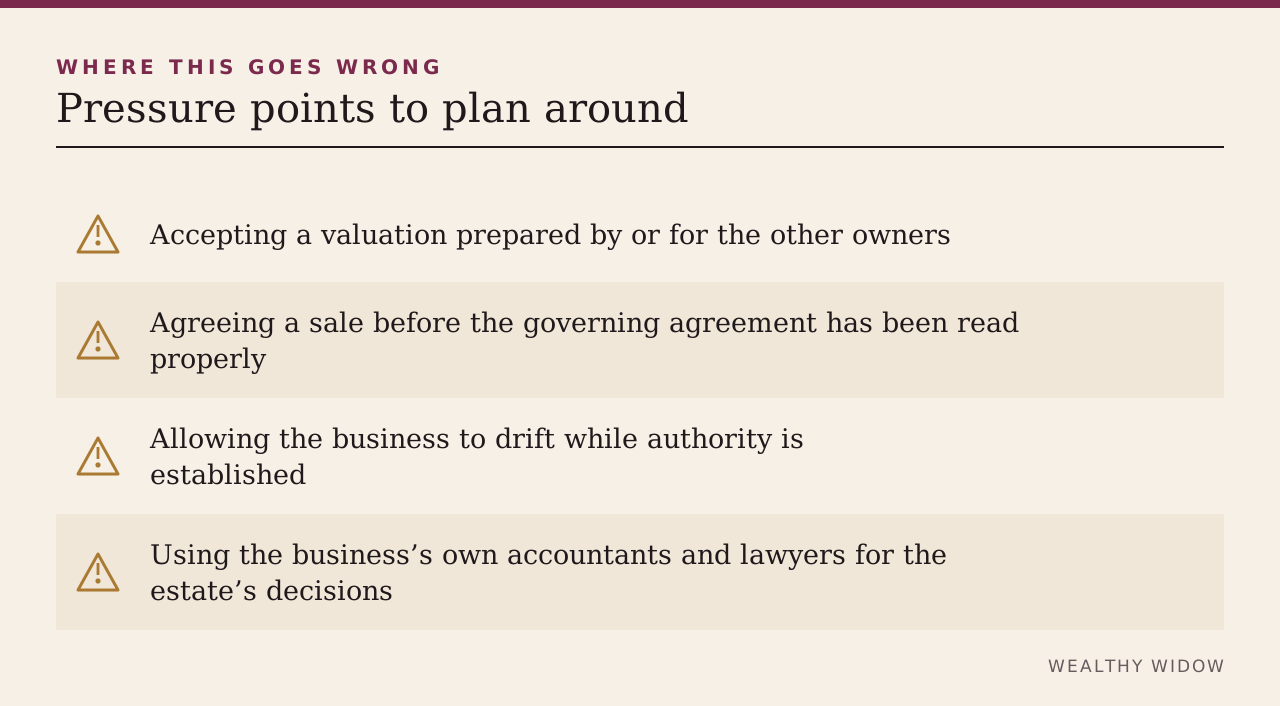
Watch for the following, and treat each as a reason to slow down. Accepting a valuation prepared by or for the other owners.
Agreeing a sale before the governing agreement has been read properly. Allowing the business to drift while authority is established. Using the business’s own accountants and lawyers for the estate’s decisions.
Assemble the file
Having the file complete before the first call removes most of the back and forth that follows.
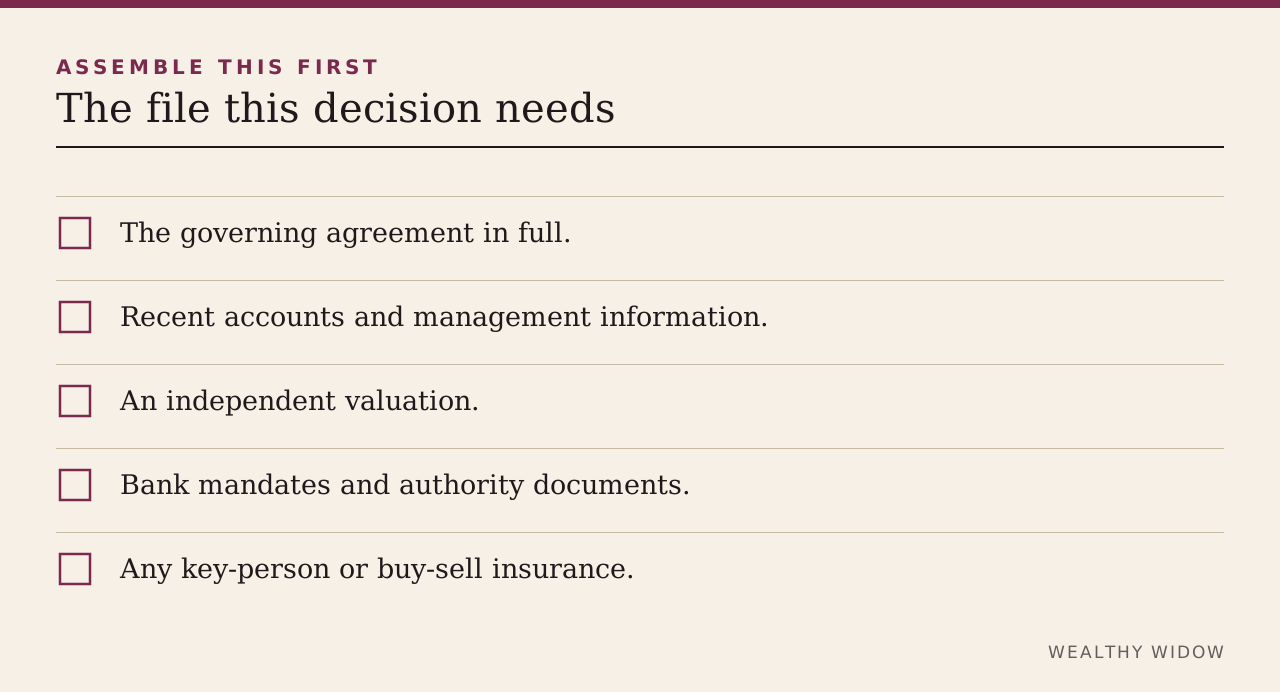
- The governing agreement in full.
- Recent accounts and management information.
- An independent valuation.
- Bank mandates and authority documents.
- Any key-person or buy-sell insurance.
Do not proceed on a verbal answer
Ask for each of these in a form you can save, date, and produce again months later if it is questioned.
- What the agreement requires on death, and by when.
- The independent valuation, and its basis.
- Who has authority to operate the business now.
- That continuing obligations are being met.
Put these questions directly
A competent professional will welcome these questions. Hesitation is itself information.
- What does the agreement require, and what is the deadline?
- On what basis has this valuation been prepared?
- Whose interests do you act for in this matter?
- What happens to the business while authority is established?
Verify each point at source
Check anything that will drive a decision against the source itself, not against this summary of it.
- Internal Revenue Service — Information for executors
- Internal Revenue Service — File an estate tax income tax return
- Internal Revenue Service — Publication 551, basis of assets
- Legal Services Corporation — I need legal help
What this guide does not settle
What follows is the shape of the problem, not an answer to your version of it. It cannot value a business or interpret an agreement, and both need professionals instructed by the estate rather than by the other owners.
Closing the loop
Read the agreement, get an independent valuation, and use advisers who act for the estate. Every one of those three is harder to insist on after a figure has been discussed.
Read Something Turns Up After the Estate Is Closed next; the two decisions interact.
Primary sources
- Internal Revenue Service — Information for executors
- Internal Revenue Service — File an estate tax income tax return
- Internal Revenue Service — Publication 551, basis of assets
- Legal Services Corporation — I need legal help
This article provides general education, not individualized legal, tax, investment, insurance, or benefits advice. Rules and deadlines change; verify the current requirement with the agency and a qualified professional.