Estate
Guardianship: The Appointment That Assumed Two Parents
Where minor children are involved, existing guardianship provisions were probably drafted assuming one parent would survive.

Some decisions after a death are reversible. This one deserves more care than most. Where minor children are involved, existing guardianship provisions were probably drafted assuming one parent would survive.
Guardianship provisions are frequently treated as a formality when both parents are alive. For a sole surviving parent they become the operative provision, and they deserve a fresh decision.
A guardianship clause written for the unlikely event of both parents dying is now a clause for a single, ordinary event.
Getting the question right first
Begin with what can be said with confidence, and treat everything beyond it as still to be established. A guardian named in a will is generally a nomination that a court considers rather than an automatic appointment. Courts consider the child’s best interests, and a nomination carries weight without being binding. Guardianship of the person and management of a child’s property can be separated.
Naming a successor guardian matters, since circumstances change over a childhood. A separate arrangement is usually needed for money left to a minor.
Where to start, and what follows
A workable order follows. Each step assumes the last one is done.
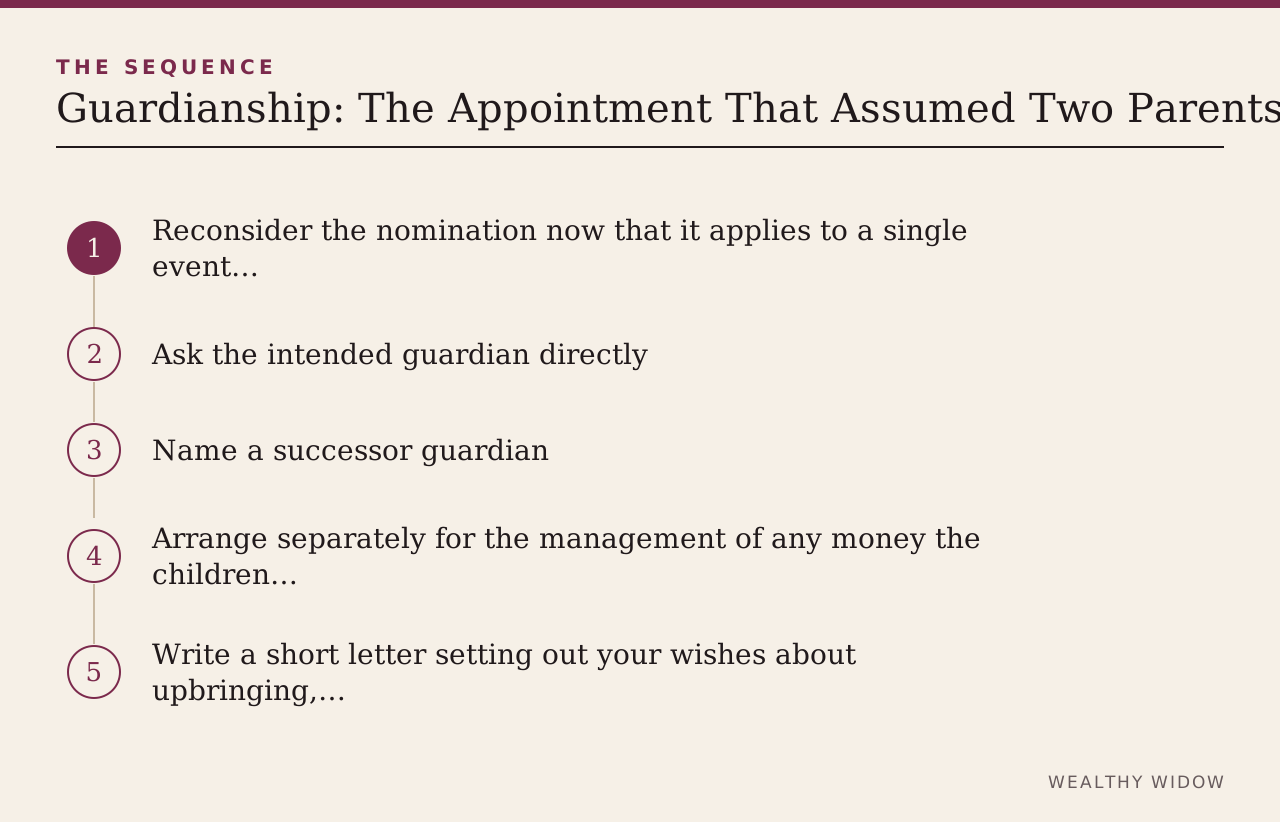
- Reconsider the nomination now that it applies to a single event rather than a double one.
- Ask the intended guardian directly, and tell them what would be involved.
- Name a successor guardian.
- Arrange separately for the management of any money the children would receive.
- Write a short letter setting out your wishes about upbringing, alongside the will.
Where this commonly goes wrong
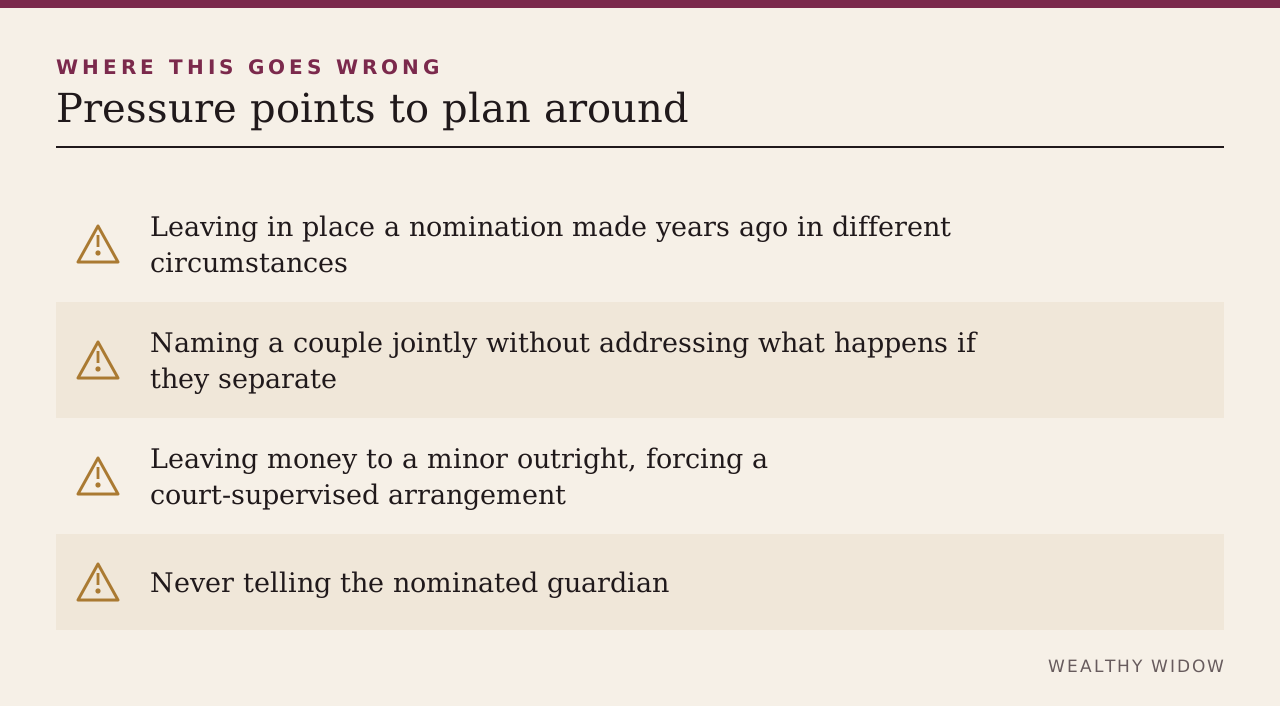
These are the places where readers most often lose ground. Leaving in place a nomination made years ago in different circumstances.
Naming a couple jointly without addressing what happens if they separate. Leaving money to a minor outright, forcing a court-supervised arrangement. Never telling the nominated guardian, so the first they hear of it is at the worst moment.
Documents this decision needs
Organisations will ask for these repeatedly, so assemble them once and keep them together.
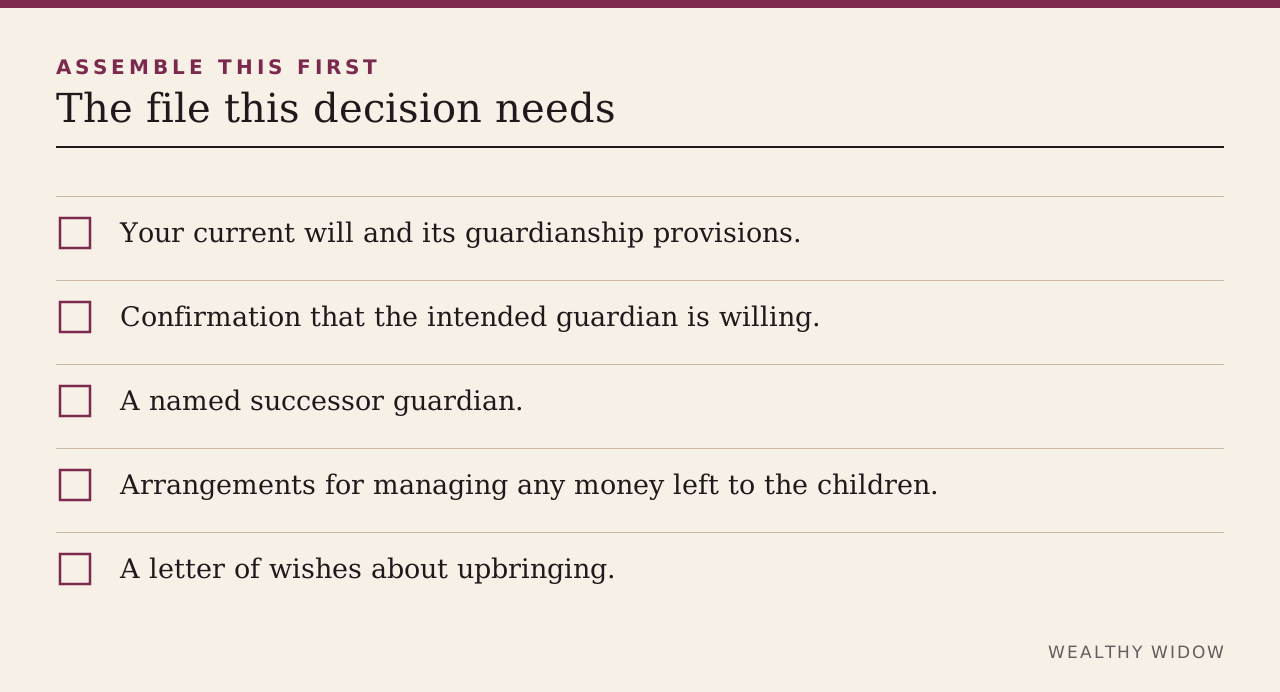
- Your current will and its guardianship provisions.
- Confirmation that the intended guardian is willing.
- A named successor guardian.
- Arrangements for managing any money left to the children.
- A letter of wishes about upbringing.
The record to build as you go
A verbal answer is a starting point, not a record. Get each of these documented.
- That the nomination reflects your current view.
- That the guardian and successor have both agreed.
- That money for the children is properly structured.
- What weight a nomination carries in your state.
Ask these before anyone is paid
Vagueness on any of these is itself an answer, and it is worth treating as one.
- What weight does a guardianship nomination carry here?
- How should money for the children be structured?
- What happens if the nominated couple separate?
- Should guardianship of the person and of property be separated?
Read the rule yourself
The sources below govern. This guide only summarises them.
- Legal Services Corporation — I need legal help
- American Bar Association — Find legal help
- American Bar Association — Free Legal Answers
- National Institute on Aging — Advance care planning and advance directives
The limits of this guide
This is where general guidance ends and your own paperwork takes over. It cannot make the nomination or predict a court’s decision, both of which turn on circumstances at the time.
What to hold on to
Revisit the nomination deliberately, ask the person, name a successor, and structure the money separately. What was a remote contingency is now the provision that would actually operate.
If this raised a further question, Leaving Something to a Charity, Effectively takes it further.
Primary sources
- Legal Services Corporation — I need legal help
- American Bar Association — Find legal help
- American Bar Association — Free Legal Answers
- National Institute on Aging — Advance care planning and advance directives
This article provides general education, not individualized legal, tax, investment, insurance, or benefits advice. Rules and deadlines change; verify the current requirement with the agency and a qualified professional.