Money
Charitable Giving: Doing It Deliberately Rather Than Reactively
Memorial giving often begins immediately and continues informally for years. A little structure gives more to the causes and less to the mailing lists.

You may be told this is simply a form to sign. It is a decision with consequences. Memorial giving often begins immediately and continues informally for years. A little structure gives more to the causes and less to the mailing lists.
Giving in memory of a spouse is meaningful and frequently begins in the first weeks. What starts as one gift often becomes a stream of solicitations, and a small amount of structure protects both the intention and the household.
Structured giving directs more money to the cause and attracts fewer of the approaches that follow a single generous gift.
What is really being decided here
These are the points the rest of the decision rests on, so it is worth being sure of them before going further. Only gifts to qualifying organisations are deductible, and qualification is publicly searchable. A deduction is generally available only where you itemise, which not every household does. Donor lists are frequently shared or sold, so one gift reliably produces many further approaches.
Giving appreciated assets rather than cash can be more efficient in some circumstances. Substantiation requirements apply, and a receipt is needed to support a deduction.
What to do, and in what order
Take it in this sequence. Reversing the order tends to create work rather than save it, and occasionally forecloses a choice.
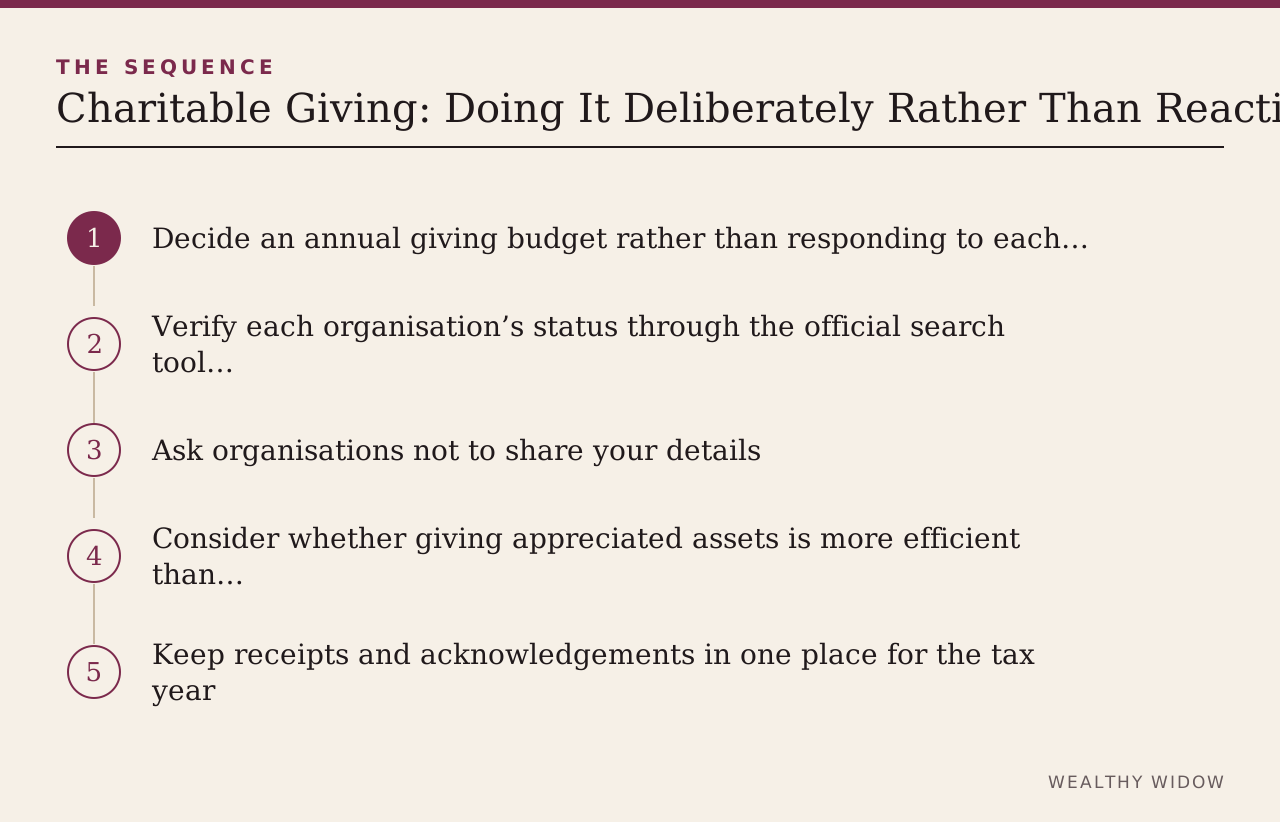
- Decide an annual giving budget rather than responding to each request as it arrives.
- Verify each organisation’s status through the official search tool before giving.
- Ask organisations not to share your details, and record that you asked.
- Consider whether giving appreciated assets is more efficient than giving cash in your position.
- Keep receipts and acknowledgements in one place for the tax year.
The mistakes that are hard to reverse
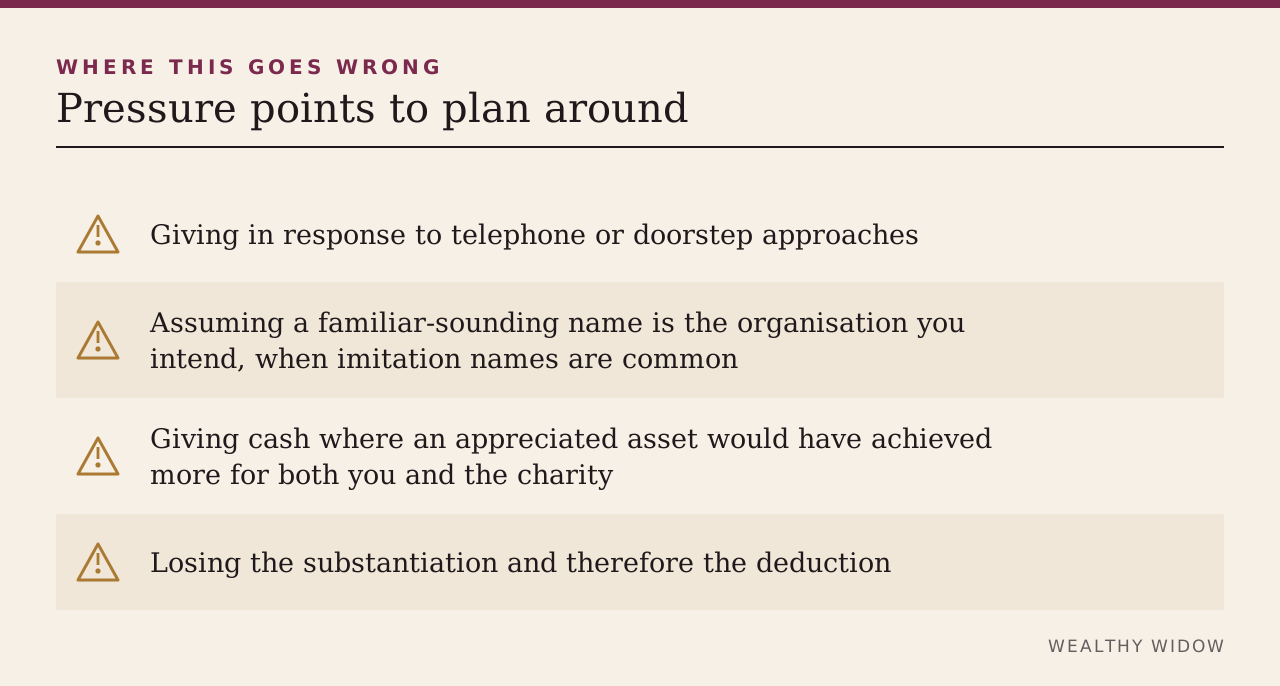
Watch for the following, and treat each as a reason to slow down. Giving in response to telephone or doorstep approaches, which is where most charity fraud operates.
Assuming a familiar-sounding name is the organisation you intend, when imitation names are common. Giving cash where an appreciated asset would have achieved more for both you and the charity. Losing the substantiation and therefore the deduction.
Assemble the file
Having the file complete before the first call removes most of the back and forth that follows.
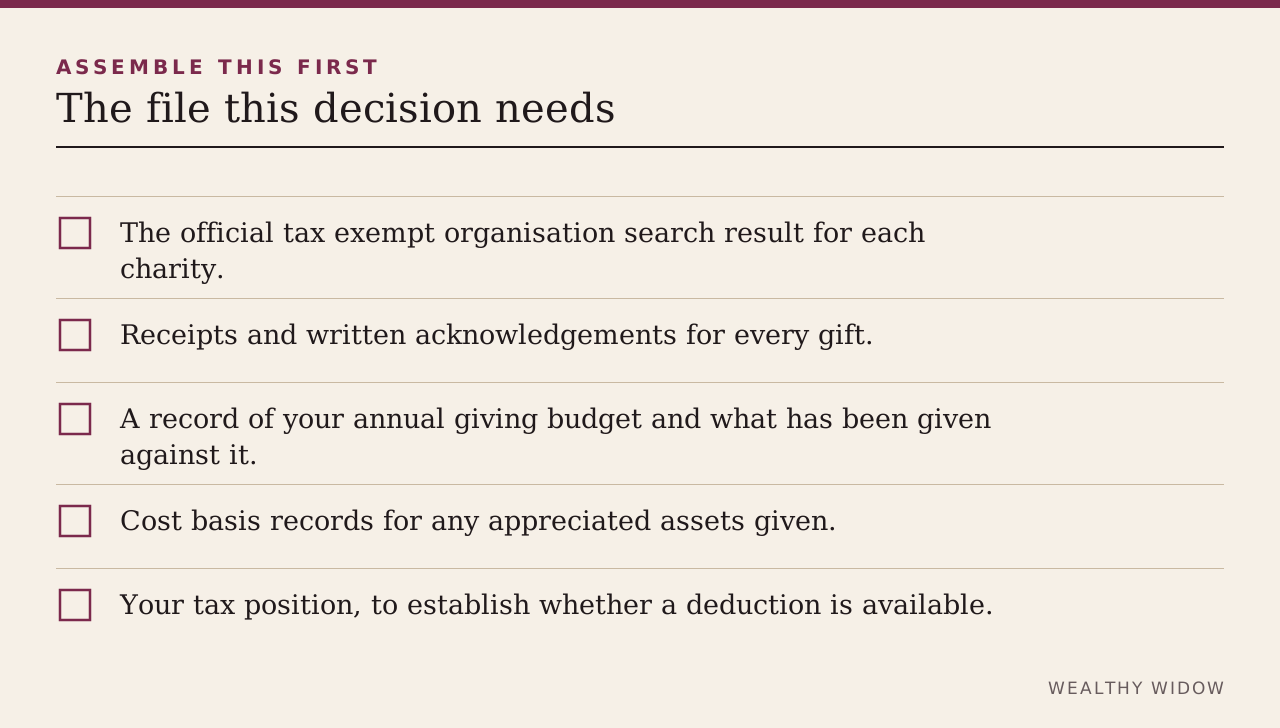
- The official tax exempt organisation search result for each charity.
- Receipts and written acknowledgements for every gift.
- A record of your annual giving budget and what has been given against it.
- Cost basis records for any appreciated assets given.
- Your tax position, to establish whether a deduction is available.
Get these in writing
Put each item below in your file with a date and a named source.
- That each organisation qualifies, checked at source.
- That you hold the required substantiation for each gift.
- Whether a deduction is available to you at all this year.
- That you have asked each organisation not to share your details.
The questions worth asking
These are the questions whose answers change what you decide, rather than merely confirming what you assumed.
- Does giving appreciated assets work better than cash in my position?
- Will I be itemising this year, and does that change the timing of my giving?
- What substantiation do I need for a gift of this size?
- How should recurring giving be structured for my circumstances?
The sources behind this
Anything that will drive a decision should be checked here rather than here-abouts.
- Internal Revenue Service — Tax exempt organization search
- Internal Revenue Service — Charitable contribution deductions
- Internal Revenue Service — Topic no. 506, charitable contributions
- Internal Revenue Service — Publication 526, charitable contributions
Where this guide stops
The boundary matters, because the wrong assumption here is expensive. It cannot tell you what to give or to whom. It can ensure the organisation is real, the record is kept, and the method suits your tax position.
In practice
Set a budget, verify each organisation at source, and keep the receipts together. Structure does not make giving less generous; it makes more of the generosity reach the cause you intended.
Our related guide Who Would Act If You Could Not: The Question Widows Now Face Alone covers the adjacent problem.
Primary sources
- Internal Revenue Service — Tax exempt organization search
- Internal Revenue Service — Charitable contribution deductions
- Internal Revenue Service — Topic no. 506, charitable contributions
- Internal Revenue Service — Publication 526, charitable contributions
This article provides general education, not individualized legal, tax, investment, insurance, or benefits advice. Rules and deadlines change; verify the current requirement with the agency and a qualified professional.