Estate
Creditor Notice: The Step That Closes the Door
Most states provide a formal way to notify creditors and to close the window for claims. Skipping it leaves the estate open far longer.

This guide covers a decision that is easy to make quickly and expensive to make wrongly. Most states provide a formal way to notify creditors and to close the window for claims. Skipping it leaves the estate open far longer.
Creditor notice looks like a formality and functions as a protection. Without it, the period during which claims can be brought may run far longer, and distributions made meanwhile can leave a representative exposed.
A creditor period that has been properly opened is one that can properly close, and closing it is what lets you distribute safely.
The decision behind the form
Take the ground facts first, because most of the difficulty here dissolves once they are stated plainly. Many states require or permit publication of a notice to creditors, which starts a claim period. Known creditors may need direct notice in addition to any publication. Once the period closes, late claims are generally barred, subject to exceptions.
Distributing before the period closes can leave the representative personally liable for a valid late claim. The procedure, timing, and publication requirements are set by state law.
Step by step, in this order
Take these in order. Reversing them tends to create work rather than save it.
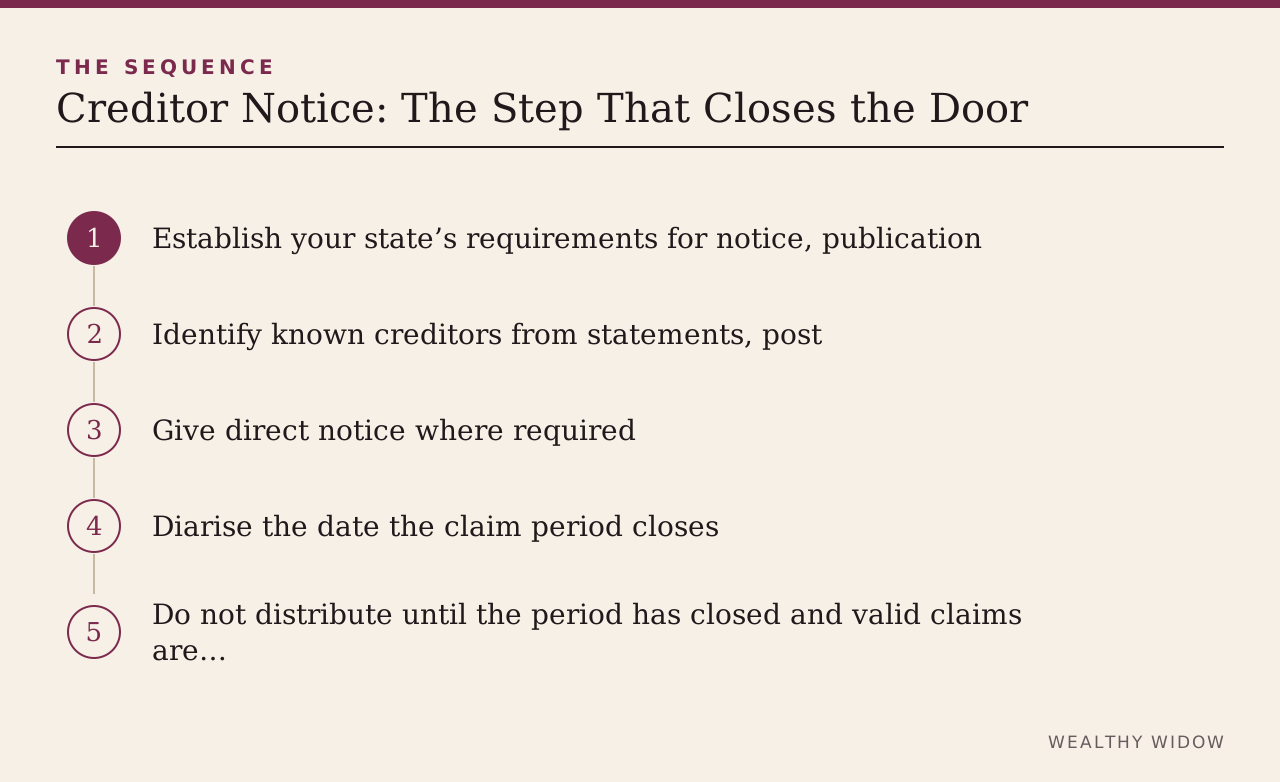
- Establish your state’s requirements for notice, publication, and the claim period.
- Identify known creditors from statements, post, and the recurring payment list.
- Give direct notice where required, and publish where required, keeping proof of both.
- Diarise the date the claim period closes.
- Do not distribute until the period has closed and valid claims are resolved.
The costly misreadings
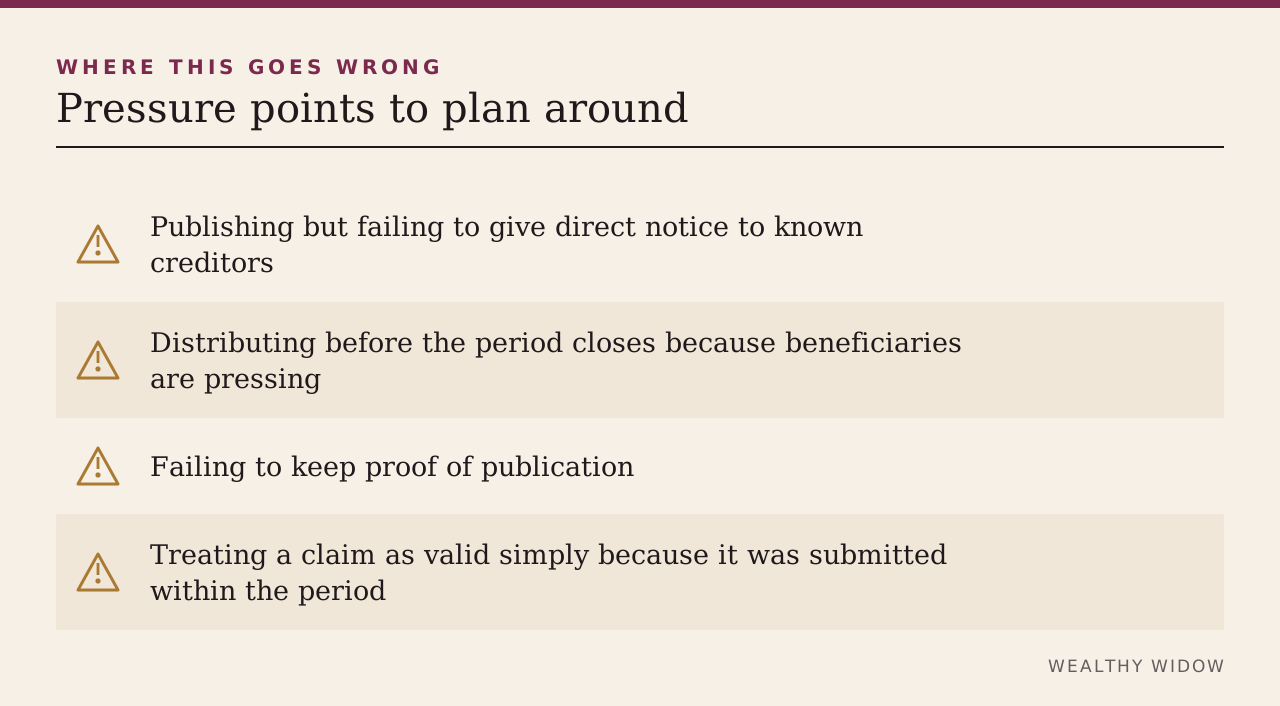
The failure modes below are predictable rather than unlucky, which is precisely what makes them avoidable. Publishing but failing to give direct notice to known creditors, which can leave the period open as to them.
Distributing before the period closes because beneficiaries are pressing. Failing to keep proof of publication, which is what evidences the period running. Treating a claim as valid simply because it was submitted within the period.
Gather these before the first call
Every organisation involved will want some combination of the following, and several will want it more than once.
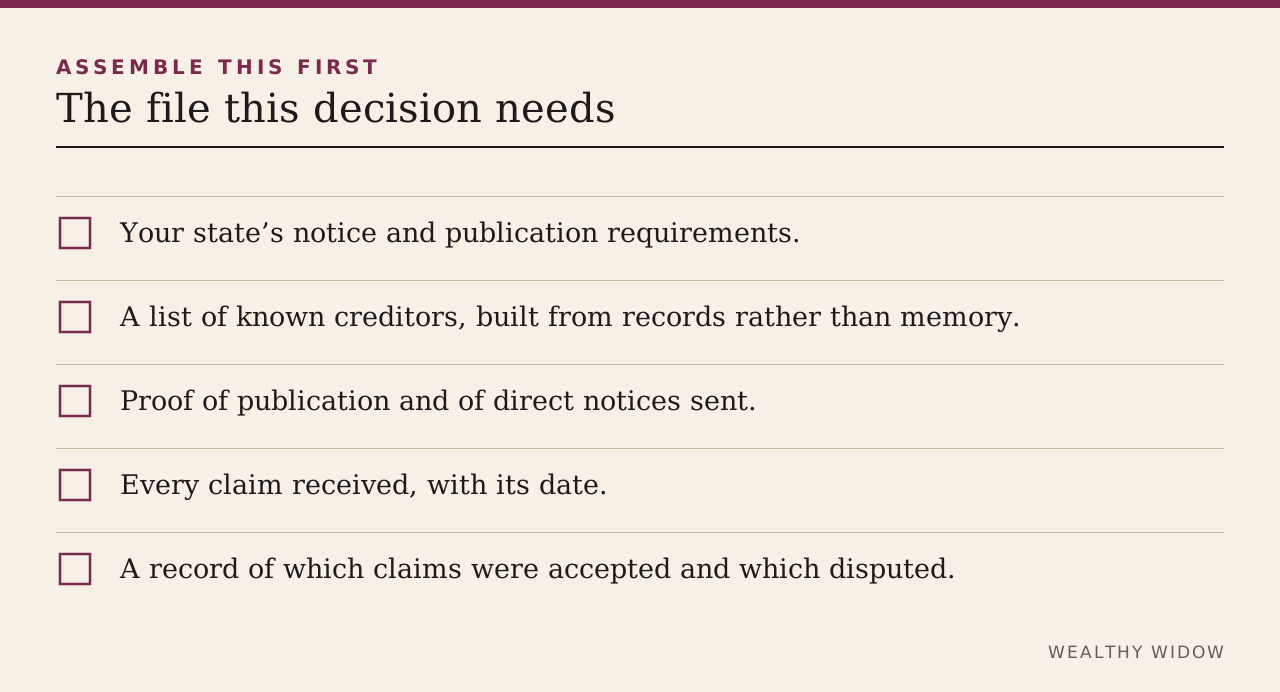
- Your state’s notice and publication requirements.
- A list of known creditors, built from records rather than memory.
- Proof of publication and of direct notices sent.
- Every claim received, with its date.
- A record of which claims were accepted and which disputed.
Confirm these in writing before you act
Written confirmation is not distrust. It is ordinary governance. Ask for each of these.
- The notice your state requires, and to whom.
- The date the claim period closes.
- That proof of publication and notice is on file.
- That every claim received has been assessed rather than simply paid.
What to put to your adviser
Take these to whoever is advising you, in writing if you can.
- What notice must I give, to whom, and in what form?
- When does the claim period close?
- What is my exposure if I distribute before it closes?
- How should I handle a claim I believe is invalid?
Check it at source
These are the pages that change when the rules change, which is why they and not this guide are the authority.
- Federal Trade Commission — Debts and deceased relatives
- Consumer Financial Protection Bureau — Does a person’s debt go away when they die?
- Internal Revenue Service — Information for executors
- Legal Services Corporation — I need legal help
What still needs a professional
Be clear about what remains outside anything written for a general readership. It cannot state your state’s procedure. Publication requirements, claim periods, and the treatment of late claims are all set locally.
The working conclusion
Open the period properly, notify known creditors directly, keep the proof, and wait. It is the step that turns distribution from an exposure into a safe conclusion.
Read Digital Assets: Property, Content, and Things That Are Neither next; the two decisions interact.
Primary sources
- Federal Trade Commission — Debts and deceased relatives
- Consumer Financial Protection Bureau — Does a person’s debt go away when they die?
- Internal Revenue Service — Information for executors
- Legal Services Corporation — I need legal help
This article provides general education, not individualized legal, tax, investment, insurance, or benefits advice. Rules and deadlines change; verify the current requirement with the agency and a qualified professional.