Taxes
Reconstructing Records You Cannot Find
Where prior returns and income records are missing, transcripts and third-party records can rebuild most of what is needed.

The pressure to resolve this quickly usually comes from outside you. Where prior returns and income records are missing, transcripts and third-party records can rebuild most of what is needed.
Where one spouse handled the finances, the survivor may face preparing returns without the underlying records. Most of it can be rebuilt from official and third-party sources.
Missing paperwork is an obstacle rather than a barrier, because most of it exists somewhere else as well.
Separate the label from the decision
Start with what is actually true of this decision. Tax transcripts summarise information reported to the tax authority and can substitute for missing documents. Employers, banks, and brokers hold copies of the information they reported. Prior year returns can often be obtained where copies have been lost.
Proof of authority is generally required before records for a person who has died will be released. Reconstruction takes weeks rather than days, because each institution has its own request process and turnaround, which is a reason to start well before a deadline is close.
A working sequence for this decision
The sequence below is the one that keeps you in control of the pace.
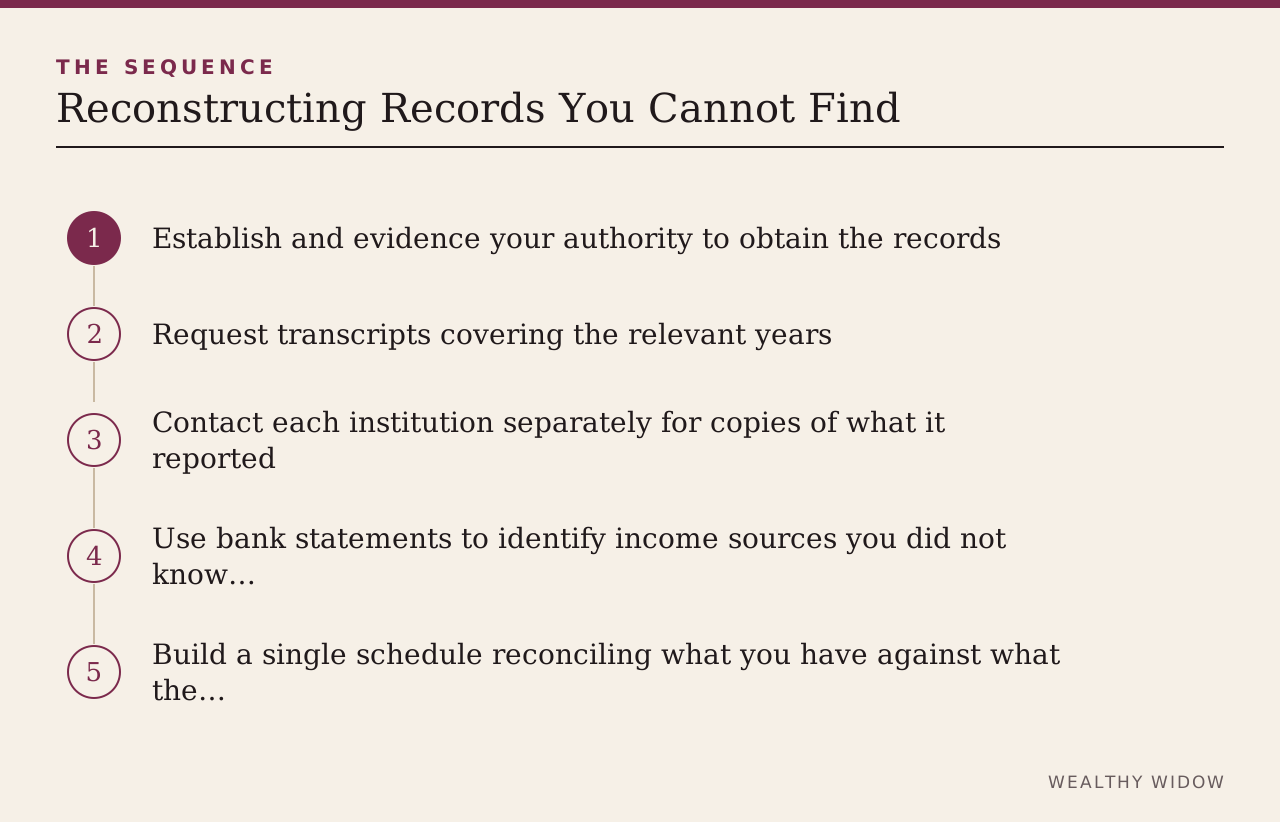
- Establish and evidence your authority to obtain the records.
- Request transcripts covering the relevant years.
- Contact each institution separately for copies of what it reported.
- Use bank statements to identify income sources you did not know about.
- Build a single schedule reconciling what you have against what the transcripts show.
The predictable errors
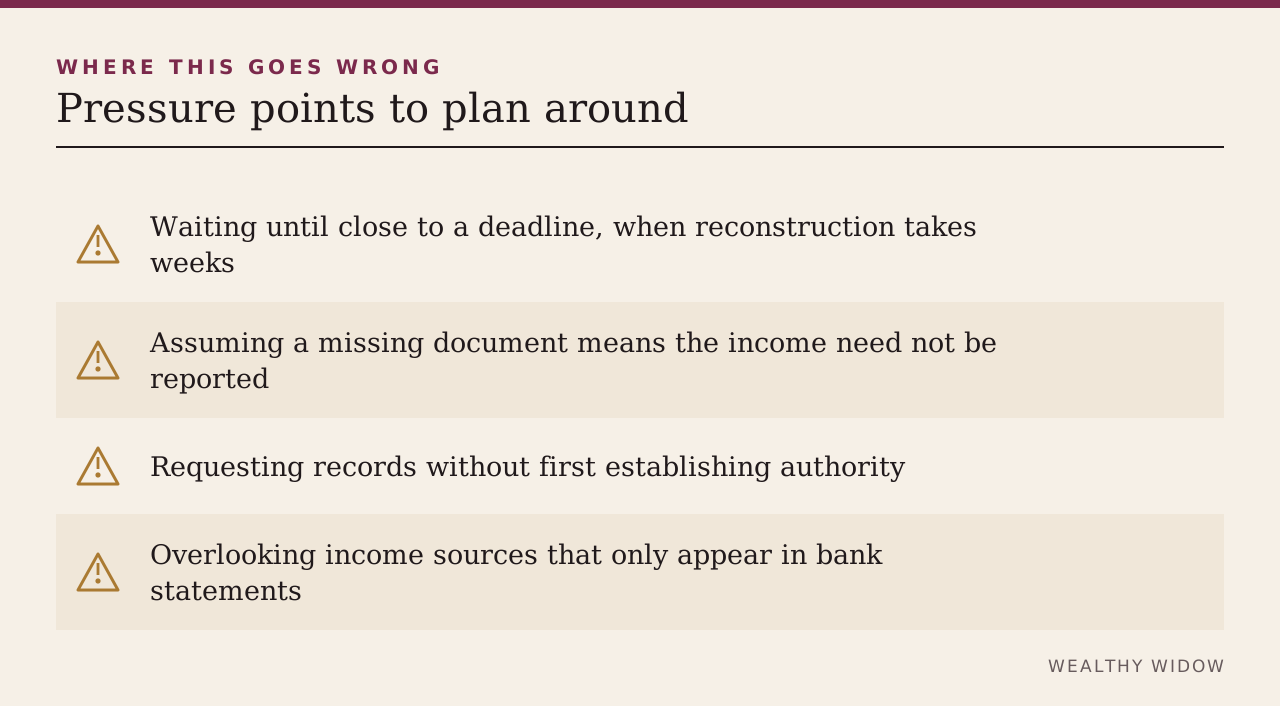
These recur often enough across households to be planned around rather than discovered one at a time. Waiting until close to a deadline, when reconstruction takes weeks.
Assuming a missing document means the income need not be reported. Requesting records without first establishing authority, which delays everything. Overlooking income sources that only appear in bank statements.
Before the first call, collect these
Gather these first. A call made without them usually has to be made again.
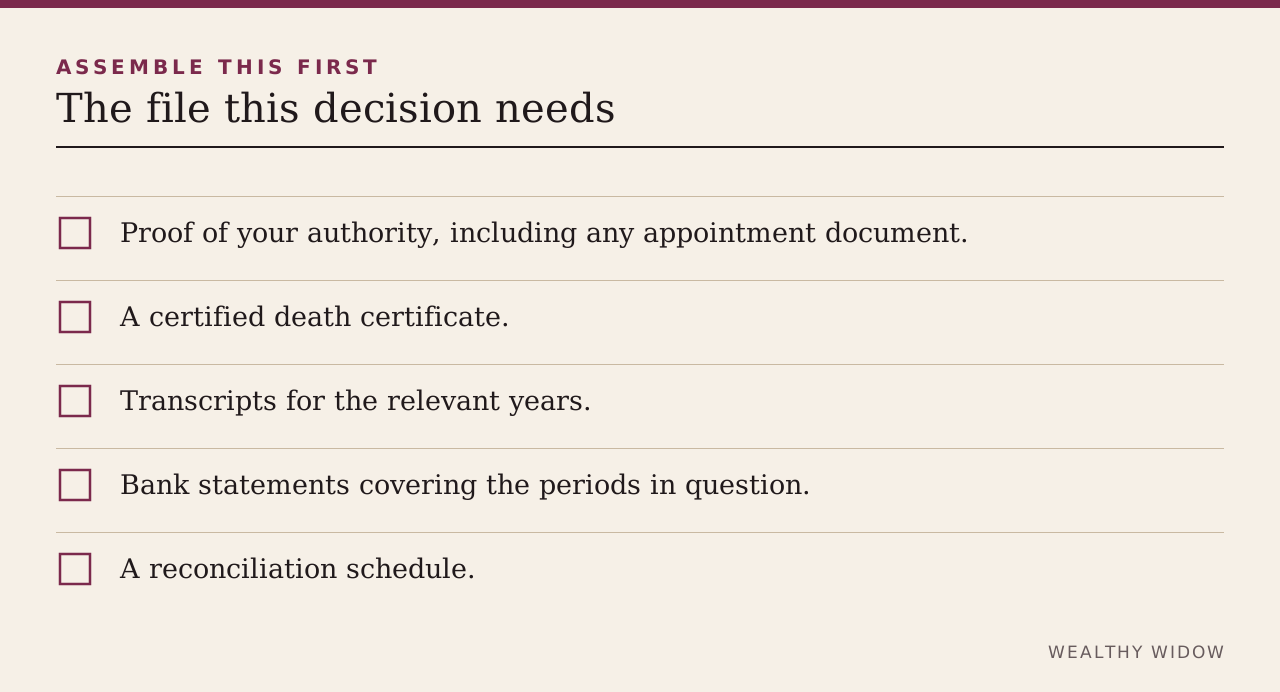
- Proof of your authority, including any appointment document.
- A certified death certificate.
- Transcripts for the relevant years.
- Bank statements covering the periods in question.
- A reconciliation schedule.
Nothing here on a verbal answer
None of the following should rest on a phone call alone, however clear the call felt at the time.
- What authority is required to obtain each record.
- Which years you need to cover.
- That the transcripts reconcile with what you hold.
- The expected timescale for each request.
The questions that change the answer
A competent professional answers each of these without hesitation.
- What authority do you need before releasing these records?
- What years can be obtained, and how long does it take?
- What do transcripts show, and what do they omit?
- How should I report income where the original document cannot be found?
Check it at source
These are the pages that change when the rules change, which is why they and not this guide are the authority.
- Taxpayer Advocate Service — An independent organization within the IRS
- Internal Revenue Service — About Publication 559, survivors, executors, and administrators
- Internal Revenue Service — File the final income tax returns of a deceased person
- Internal Revenue Service — Information for executors
What still needs a professional
Be clear about what remains outside anything written for a general readership. It cannot obtain records for you, and the authority requirements differ between the tax authority and private institutions.
The working conclusion
Establish authority, request transcripts early, and reconcile against bank statements. Missing paperwork feels like an insurmountable obstacle and is usually a few weeks of routine requests, most of which can run in parallel rather than one after another.
For the step that usually comes next, read Free and Low-Cost Help With a Complicated Year.
Primary sources
- Taxpayer Advocate Service — An independent organization within the IRS
- Internal Revenue Service — About Publication 559, survivors, executors, and administrators
- Internal Revenue Service — File the final income tax returns of a deceased person
- Internal Revenue Service — Information for executors
This article provides general education, not individualized legal, tax, investment, insurance, or benefits advice. Rules and deadlines change; verify the current requirement with the agency and a qualified professional.