Home
The Risks Your Policy Does Not Cover
Standard property insurance excludes several major risks, and households frequently discover which ones only after an event.

You may be told this is simply a form to sign. It is a decision with consequences. Standard property insurance excludes several major risks, and households frequently discover which ones only after an event.
Reviewing property insurance is rarely urgent until it is. A change in ownership after a death is a natural point to check what is actually covered, particularly where a spouse handled it previously.
Standard cover is defined as much by what it excludes as by what it includes, and the exclusions are where the large losses sit.
Establish what this is
The position is narrower than it looks once it is stated plainly. Standard homeowners policies commonly exclude flood damage, which requires separate cover. Earthquake and certain other risks are also typically excluded or separately rated. Cover limits may not reflect current rebuilding costs, which can rise faster than the policy is updated.
Contents cover for high-value items is frequently subject to sub-limits. State insurance departments provide consumer assistance and complaint routes.
A sequence, not a scramble
This is the working order most readers find keeps them in control.
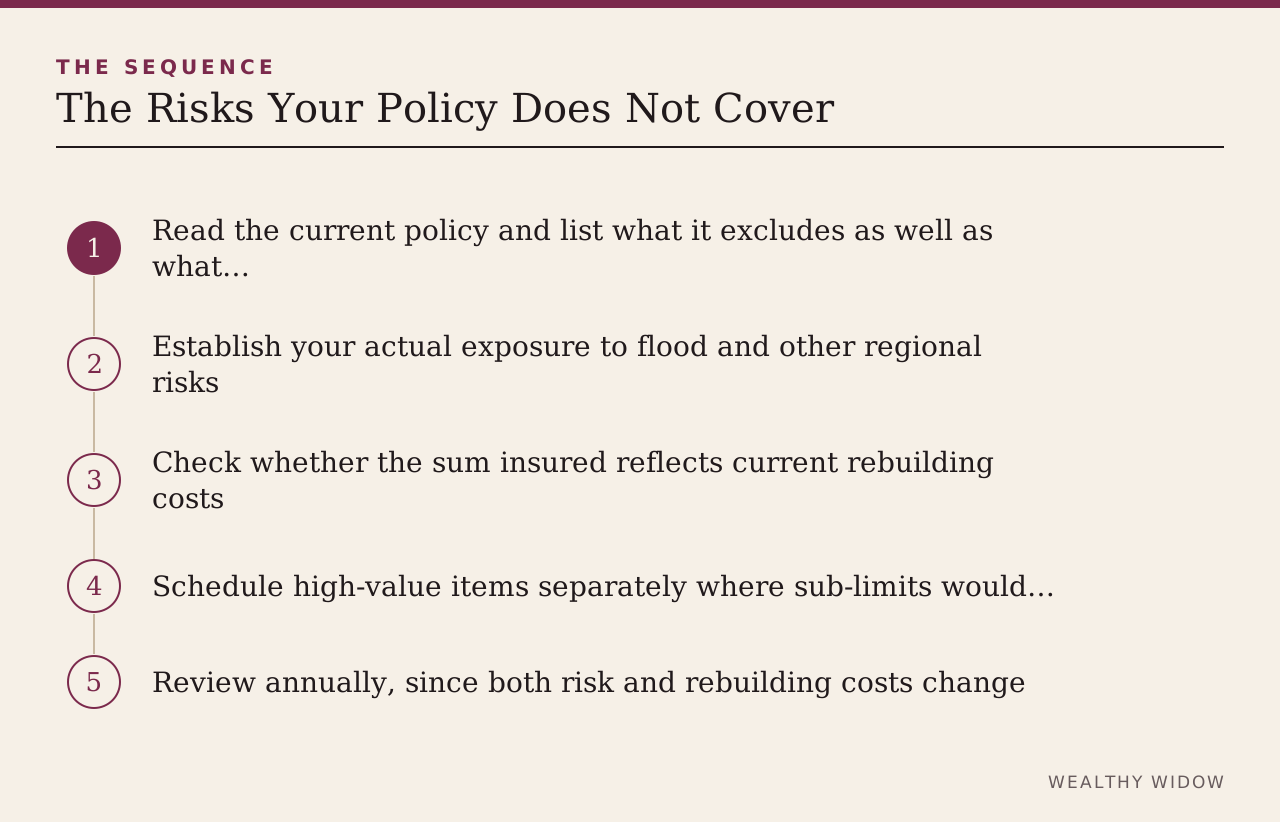
- Read the current policy and list what it excludes as well as what it covers.
- Establish your actual exposure to flood and other regional risks.
- Check whether the sum insured reflects current rebuilding costs.
- Schedule high-value items separately where sub-limits would otherwise apply.
- Review annually, since both risk and rebuilding costs change.
Common ways this decision is lost
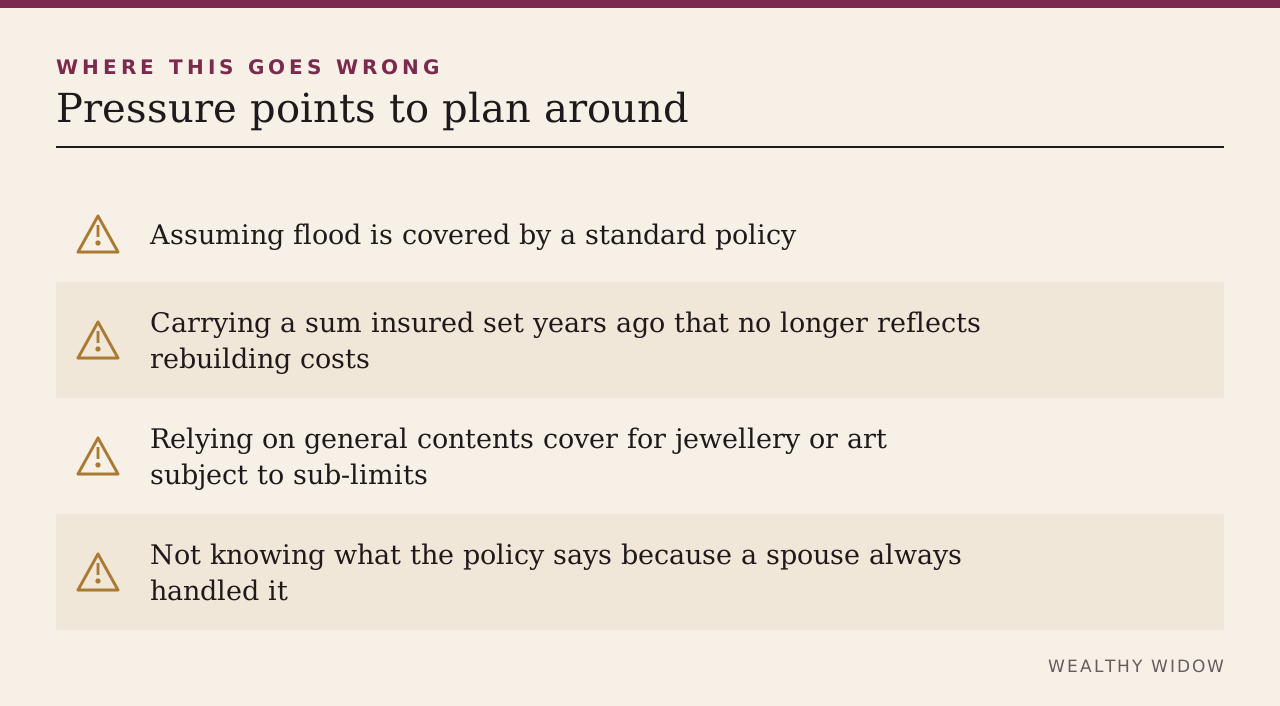
Knowing the failure modes in advance is most of the protection. Assuming flood is covered by a standard policy, which it usually is not.
Carrying a sum insured set years ago that no longer reflects rebuilding costs. Relying on general contents cover for jewellery or art subject to sub-limits. Not knowing what the policy says because a spouse always handled it.
The paperwork to collect first
Gather these first and the rest of the process moves considerably faster, because most delays are missing paperwork.
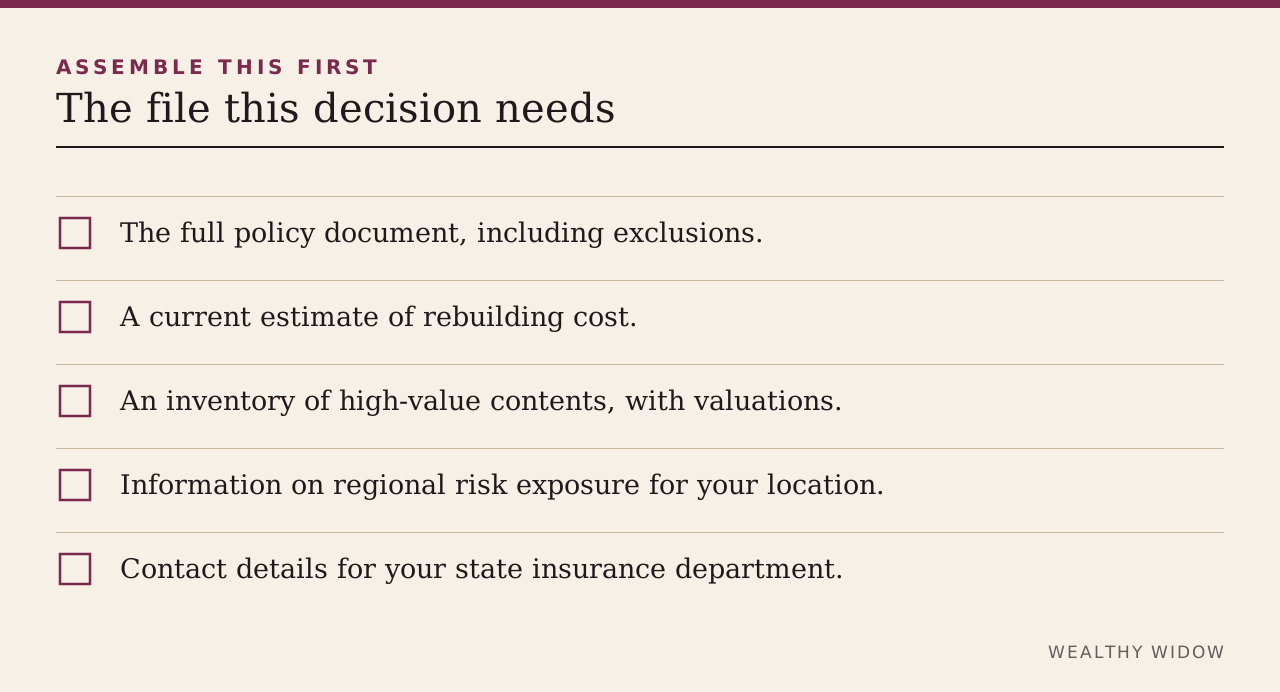
- The full policy document, including exclusions.
- A current estimate of rebuilding cost.
- An inventory of high-value contents, with valuations.
- Information on regional risk exposure for your location.
- Contact details for your state insurance department.
The written record you should hold
Hold written confirmation of each of these points before you rely on any of them to make a decision.
- What the policy excludes.
- That the sum insured reflects current rebuilding cost.
- What sub-limits apply to contents.
- Whether separate cover is needed for regional risks.
What a good adviser will answer plainly
Whoever advises you should be able to answer each of these plainly and in writing.
- What does this policy exclude that I should be concerned about?
- Does the sum insured reflect current rebuilding costs?
- What sub-limits apply to my contents?
- What separate cover would you recommend for this location?
Check this against the source
These are the primary sources behind this guide. They are the ones that change, and the ones worth checking before you act.
- National Association of Insurance Commissioners — Consumer resources
- National Association of Insurance Commissioners — Consumer life company locator
- U.S. Department of Housing and Urban Development — Find a housing counselor
- Consumer Financial Protection Bureau — Help for surviving spouses
The questions this cannot reach
No account written for a general readership can reach the following, and it should not pretend to. It cannot read your policy or assess your exposure, and your state insurance department can help with both.
Taking it from here
Read the exclusions, check the sum insured, and schedule the valuable items. A change of ownership is the natural moment to do this, and it is far cheaper than discovering the gaps after a loss.
For the step that usually comes next, read Looking After Property That Is Not Yet Yours.
Primary sources
- National Association of Insurance Commissioners — Consumer resources
- National Association of Insurance Commissioners — Consumer life company locator
- U.S. Department of Housing and Urban Development — Find a housing counselor
- Consumer Financial Protection Bureau — Help for surviving spouses
This article provides general education, not individualized legal, tax, investment, insurance, or benefits advice. Rules and deadlines change; verify the current requirement with the agency and a qualified professional.