Taxes
Filing Status in the Year a Spouse Dies
The year of death is treated differently from the years that follow, and the status available then is usually the most favourable one you will have.

This guide covers a decision that is easy to make quickly and expensive to make wrongly. The year of death is treated differently from the years that follow, and the status available then is usually the most favourable one you will have.
Filing status drives rates, the standard deduction, and eligibility for several provisions. Getting it right in the year of death and in the years immediately after is one of the larger levers available.
The year of death, the two years after, and every year beyond are three different tax regimes for the same household.
The decision behind the form
Start with what is actually true of this decision. A surviving spouse is generally treated as married for the entire year in which the spouse died, provided they do not remarry that year. That usually permits a joint return for the year of death, covering income up to the date of death and the survivor’s income for the whole year. A qualifying surviving spouse status may be available for a limited number of later years where a dependent child is maintained.
Once neither status applies, the survivor generally files as single or, if eligible, as head of household. Each status carries a different standard deduction and different rate thresholds.
Step by step, in this order
The sequence below is the one that keeps you in control of the pace.
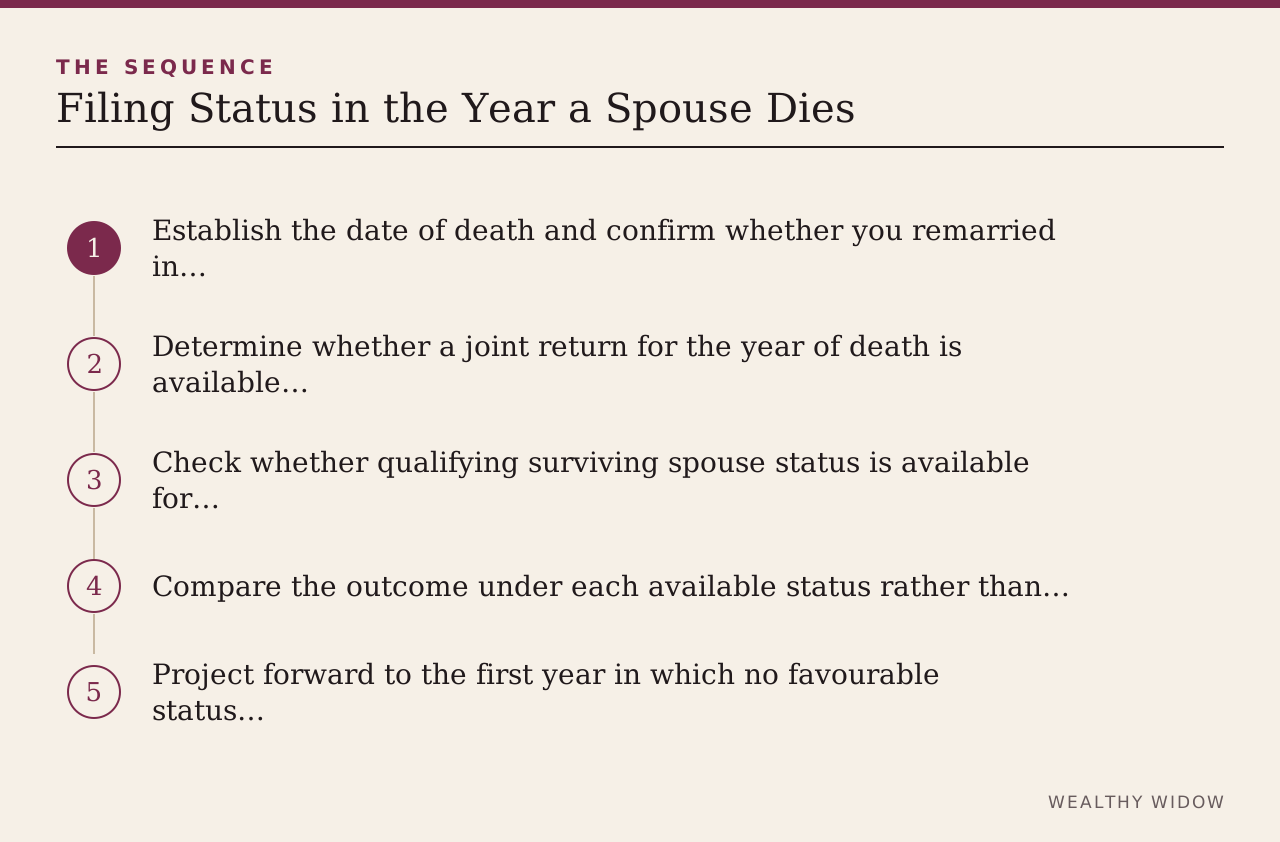
- Establish the date of death and confirm whether you remarried in that calendar year.
- Determine whether a joint return for the year of death is available and advantageous.
- Check whether qualifying surviving spouse status is available for the following years.
- Compare the outcome under each available status rather than assuming one is better.
- Project forward to the first year in which no favourable status applies, so it is not a surprise.
The costly misreadings
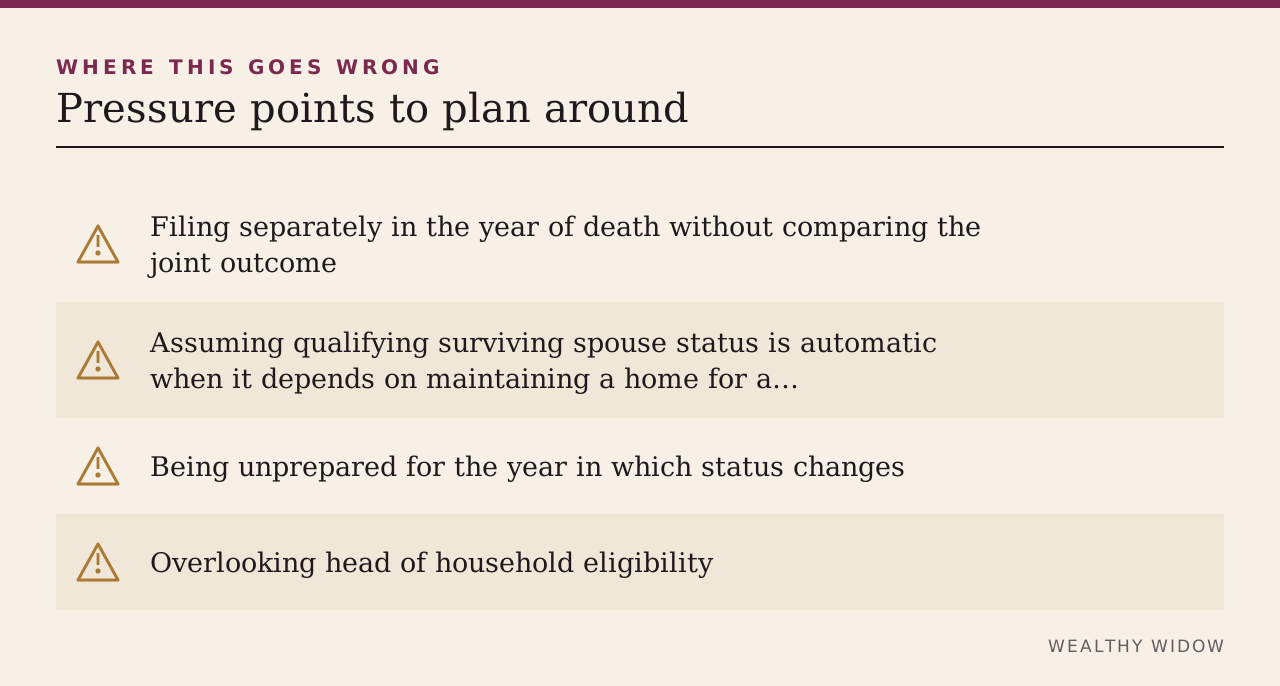
These recur often enough across households to be planned around rather than discovered one at a time. Filing separately in the year of death without comparing the joint outcome.
Assuming qualifying surviving spouse status is automatic when it depends on maintaining a home for a dependent child. Being unprepared for the year in which status changes, which frequently increases the bill materially. Overlooking head of household eligibility, which can be available where the surviving spouse status is not.
Before the first call, collect these
Gather these first. A call made without them usually has to be made again.
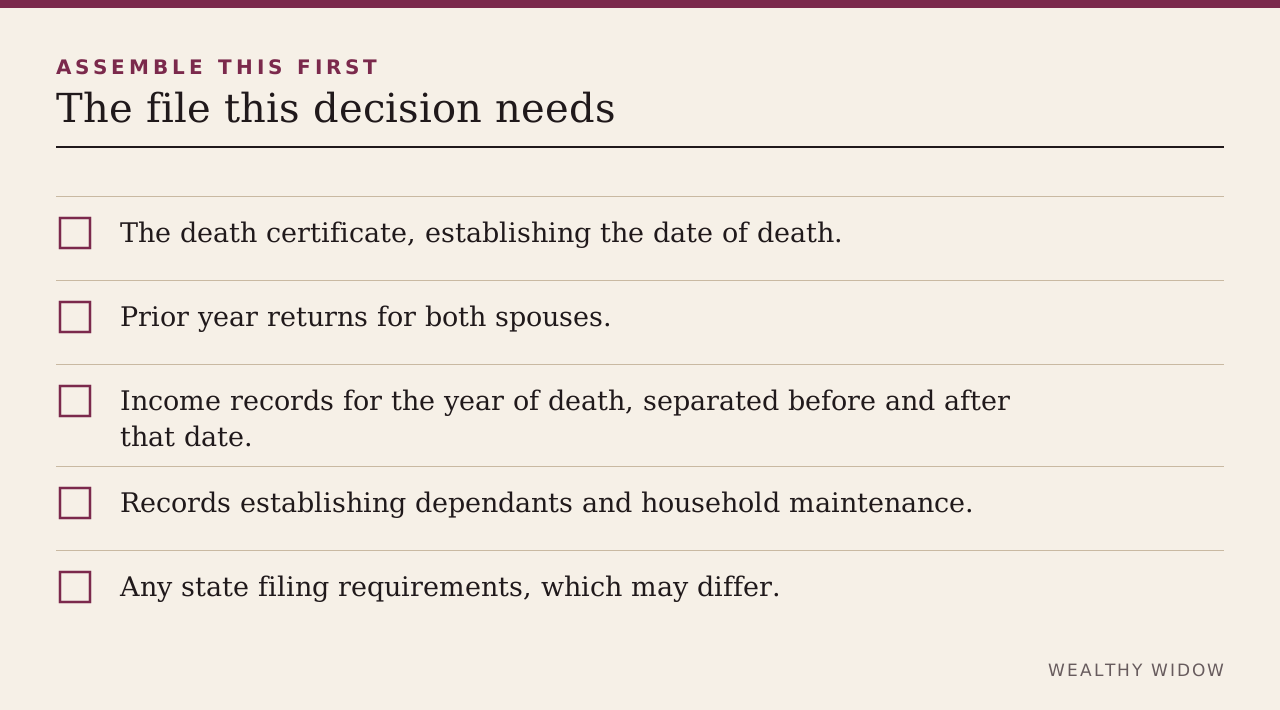
- The death certificate, establishing the date of death.
- Prior year returns for both spouses.
- Income records for the year of death, separated before and after that date.
- Records establishing dependants and household maintenance.
- Any state filing requirements, which may differ.
Confirm these in writing before you act
Written confirmation is not distrust. It is ordinary governance. Ask for each of these.
- Which filing statuses are available to you for each year.
- Whether a joint return may be filed for the year of death.
- The first year in which no favourable status applies.
- Whether your state follows the federal treatment.
What to put to your adviser
Take these to whoever is advising you, in writing if you can.
- Which filing status is available and which is most favourable in each year?
- Do I qualify as a surviving spouse or as head of household after this year?
- What changes in the first year neither status applies, and by how much?
- Does my state follow the federal rules on this?
Check it at source
These are the pages that change when the rules change, which is why they and not this guide are the authority.
- Internal Revenue Service — Deceased person
- Internal Revenue Service — File the final income tax returns of a deceased person
- Internal Revenue Service — About Publication 559, survivors, executors, and administrators
- Internal Revenue Service — Topic no. 356, decedents
What still needs a professional
Be clear about what remains outside anything written for a general readership. It cannot state rates, deductions, or thresholds, which change annually and must be taken from the current year guidance.
The working conclusion
Establish which statuses are available across the next several years, and model the year in which the favourable ones end. That single projection prevents the most common unwelcome tax surprise after a bereavement.
Read The Final Return: What It Covers and Who Signs It next; the two decisions interact.
Primary sources
- Internal Revenue Service — Deceased person
- Internal Revenue Service — File the final income tax returns of a deceased person
- Internal Revenue Service — About Publication 559, survivors, executors, and administrators
- Internal Revenue Service — Topic no. 356, decedents
This article provides general education, not individualized legal, tax, investment, insurance, or benefits advice. Rules and deadlines change; verify the current requirement with the agency and a qualified professional.