Money
The Annuity Conversation: Slowing Down a Fast Sale
Annuities are frequently presented to widows as safety. Some are genuinely useful, many are expensive, and almost none need deciding this month.

Widowhood arrives with a queue of decisions that all look equally urgent. Annuities are frequently presented to widows as safety. Some are genuinely useful, many are expensive, and almost none need deciding this month. They are not the same task, and treating them as one is how good decisions get made badly.
Annuities are a broad family of contracts rather than a single product, and the differences between them are enormous. They are also among the most heavily commissioned products commonly sold to recently widowed clients.
A product that is right for you next quarter is still right for you next quarter. Urgency is a sales technique, not a feature.
Start by naming the decision correctly
Before any advice, the ground facts. Annuity is a category covering very different contracts, from simple income products to complex indexed and variable structures. Many carry surrender charges that fall over a period of years, restricting access to your own money. Commission on annuity sales can be substantial, which is a legitimate reason to scrutinise the recommendation.
Guarantees within a contract depend on the financial strength of the issuing insurer. Some contracts contain riders with separate ongoing charges that materially reduce the return.
The order of operations
Work through this deliberately. Each step assumes the one before it is done.
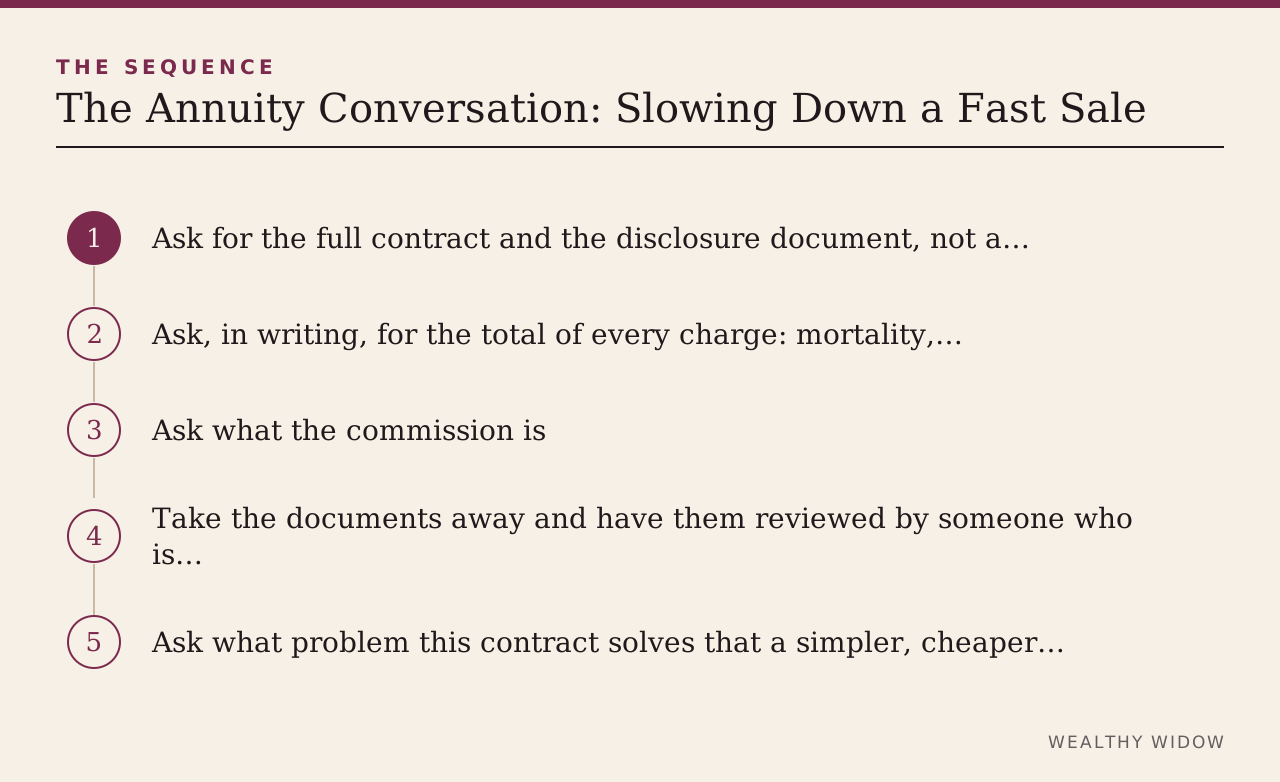
- Ask for the full contract and the disclosure document, not a brochure or an illustration.
- Ask, in writing, for the total of every charge: mortality, administration, fund, and rider.
- Ask what the commission is, and over what period any surrender charge applies.
- Take the documents away and have them reviewed by someone who is not paid on the sale.
- Ask what problem this contract solves that a simpler, cheaper arrangement would not.
Where readers most often get hurt
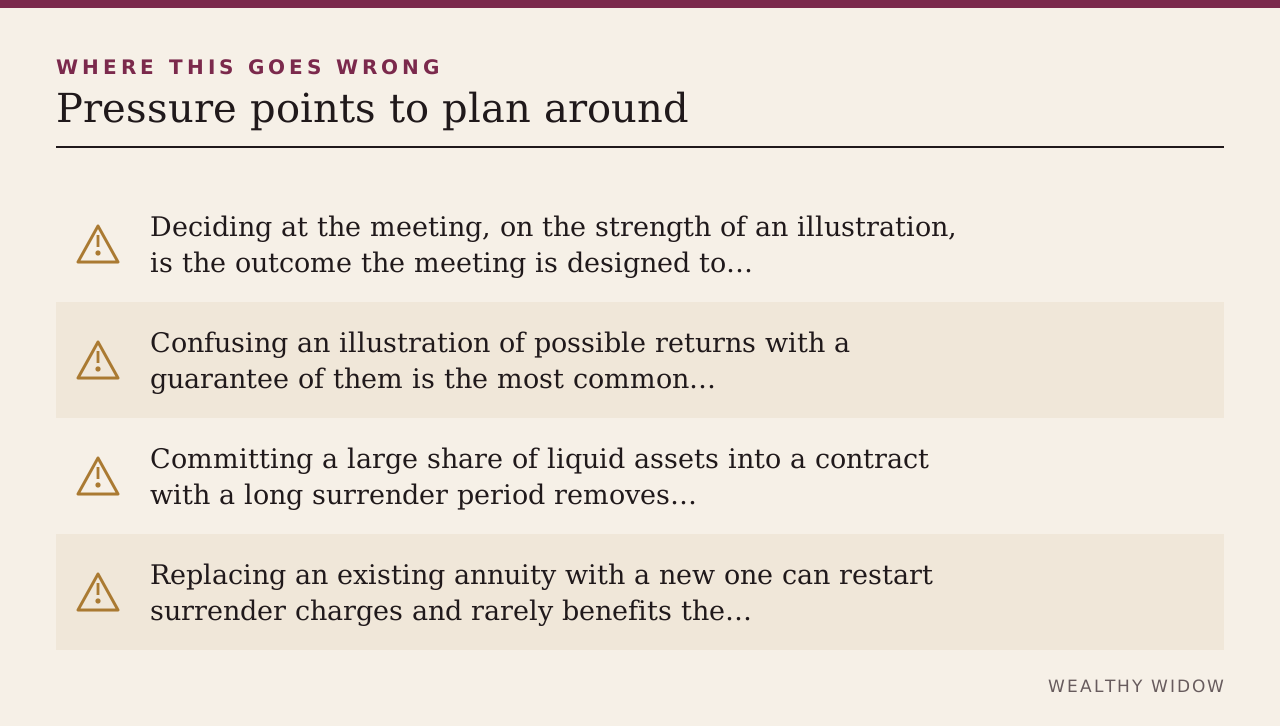
Anticipating these is most of the protection available to you, and it costs nothing but attention. Deciding at the meeting, on the strength of an illustration, is the outcome the meeting is designed to produce.
Confusing an illustration of possible returns with a guarantee of them is the most common misunderstanding in this market. Committing a large share of liquid assets into a contract with a long surrender period removes flexibility you may need. Replacing an existing annuity with a new one can restart surrender charges and rarely benefits the client.
What you will be asked to produce
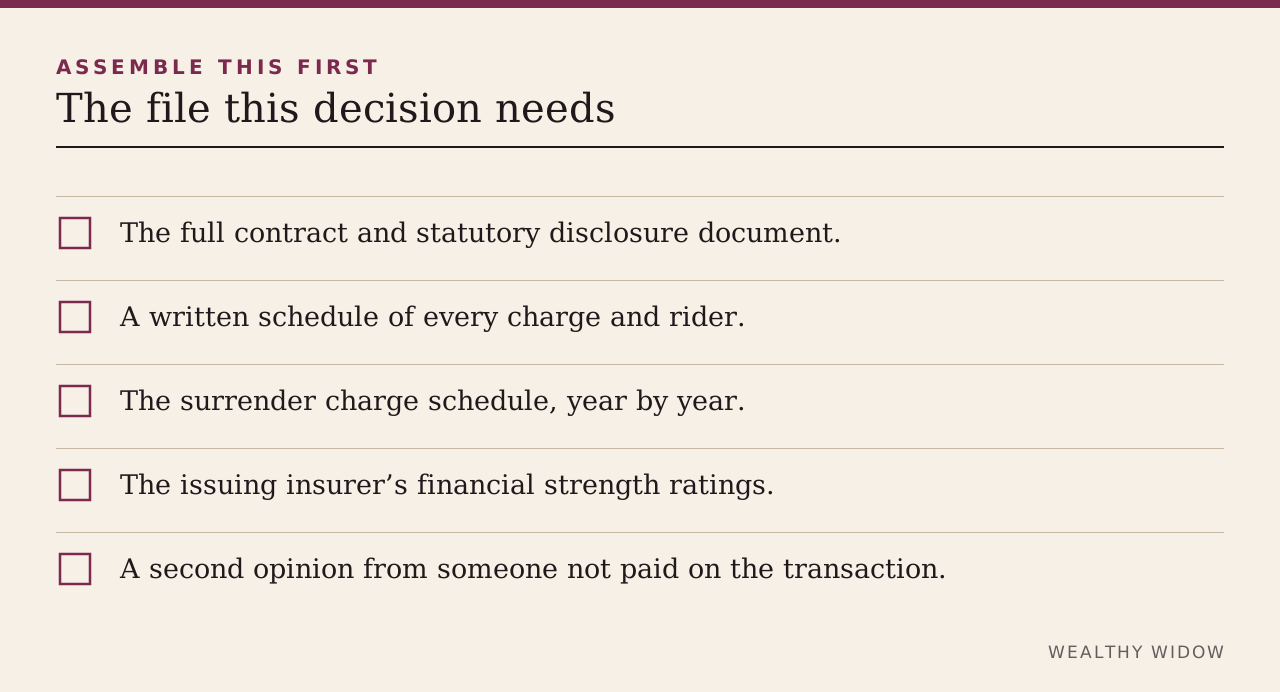
Assemble this before the first conversation rather than during it.
- The full contract and statutory disclosure document.
- A written schedule of every charge and rider.
- The surrender charge schedule, year by year.
- The issuing insurer’s financial strength ratings.
- A second opinion from someone not paid on the transaction.
What to have documented
Put each of these in the file with a date against it.
- Total annual charges, in dollars, including all riders.
- The surrender charge schedule and the date it reaches zero.
- The commission payable on the sale.
- Which figures in any illustration are guaranteed and which are not.
What to ask before you sign
Ask these before an engagement letter is signed or a product is recommended.
- What is your commission on this, and how does it compare with the alternatives you considered?
- What is guaranteed in this contract, and what is merely illustrated?
- What would I pay to exit in year one, year three, and year five?
- What simpler arrangement did you rule out, and why?
Verify each point at source
Check anything that will drive a decision against the source itself, not against this summary of it.
- U.S. Securities and Exchange Commission — Annuities
- U.S. Securities and Exchange Commission — Check out your investment professional
- U.S. Securities and Exchange Commission — Understanding fees
- National Association of Insurance Commissioners — Consumer resources
What this guide does not settle
What follows is the shape of the problem, not an answer to your version of it. It cannot tell you whether an annuity suits you. Some households genuinely benefit from guaranteed income; the question is whether this contract, at this cost, is the way to get it.
Closing the loop
Take the contract home. Any recommendation that cannot survive a fortnight and an independent reading was not a recommendation you should have accepted in the room.
If this raised a further question, Rebuilding the Budget When Both Income and Costs Have Changed takes it further.
Primary sources
- U.S. Securities and Exchange Commission — Annuities
- U.S. Securities and Exchange Commission — Check out your investment professional
- U.S. Securities and Exchange Commission — Understanding fees
- National Association of Insurance Commissioners — Consumer resources
This article provides general education, not individualized legal, tax, investment, insurance, or benefits advice. Rules and deadlines change; verify the current requirement with the agency and a qualified professional.