Taxes
Estimated Payments: The Obligation That Appears Without Warning
Where income shifts from a salary to pensions, investments, and benefits, tax may no longer be withheld, and the obligation moves to you.

You may be told this is simply a form to sign. It is a decision with consequences. Where income shifts from a salary to pensions, investments, and benefits, tax may no longer be withheld, and the obligation moves to you.
Households used to salaried income with tax withheld at source frequently do not realise that a shift toward investment and pension income moves the obligation onto them, quarterly, with penalties for shortfall.
Tax not withheld at source is tax you have to remit yourself, and the penalty for not doing so applies regardless of intention.
Name the decision before you make it
These are the points the rest of the decision rests on, so it is worth being sure of them before going further. Tax is generally payable as income is received, either through withholding or through estimated payments. An obligation to make estimated payments arises where expected tax exceeds a stated amount not covered by withholding. Penalties can apply for underpayment even where the final return is filed and paid on time.
Withholding can be requested on some income streams, including certain pension and benefit payments. Safe harbour rules may allow payments based on the prior year, which simplifies planning.
How to work through it
Take it in this sequence. Reversing the order tends to create work rather than save it, and occasionally forecloses a choice.
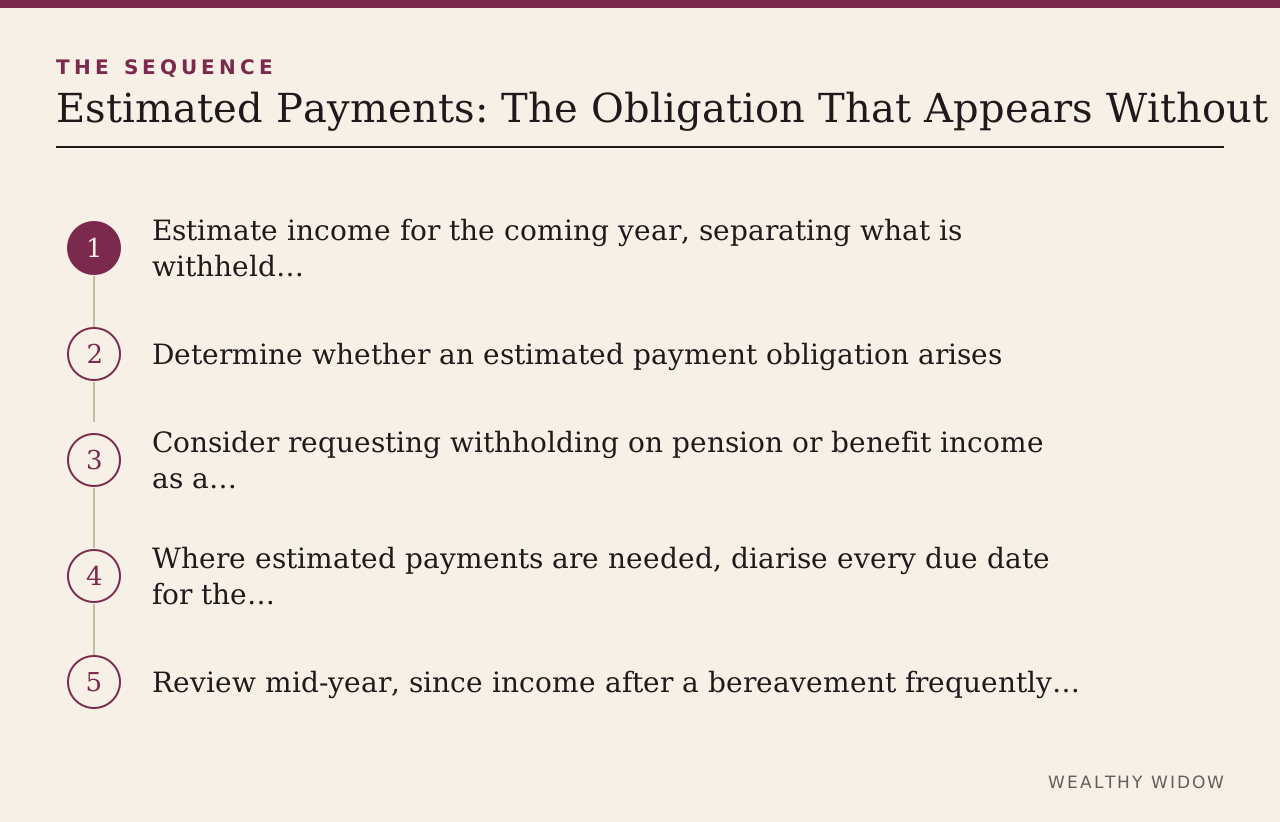
- Estimate income for the coming year, separating what is withheld from what is not.
- Determine whether an estimated payment obligation arises.
- Consider requesting withholding on pension or benefit income as a simpler alternative.
- Where estimated payments are needed, diarise every due date for the year.
- Review mid-year, since income after a bereavement frequently differs from the projection.
Known hazards
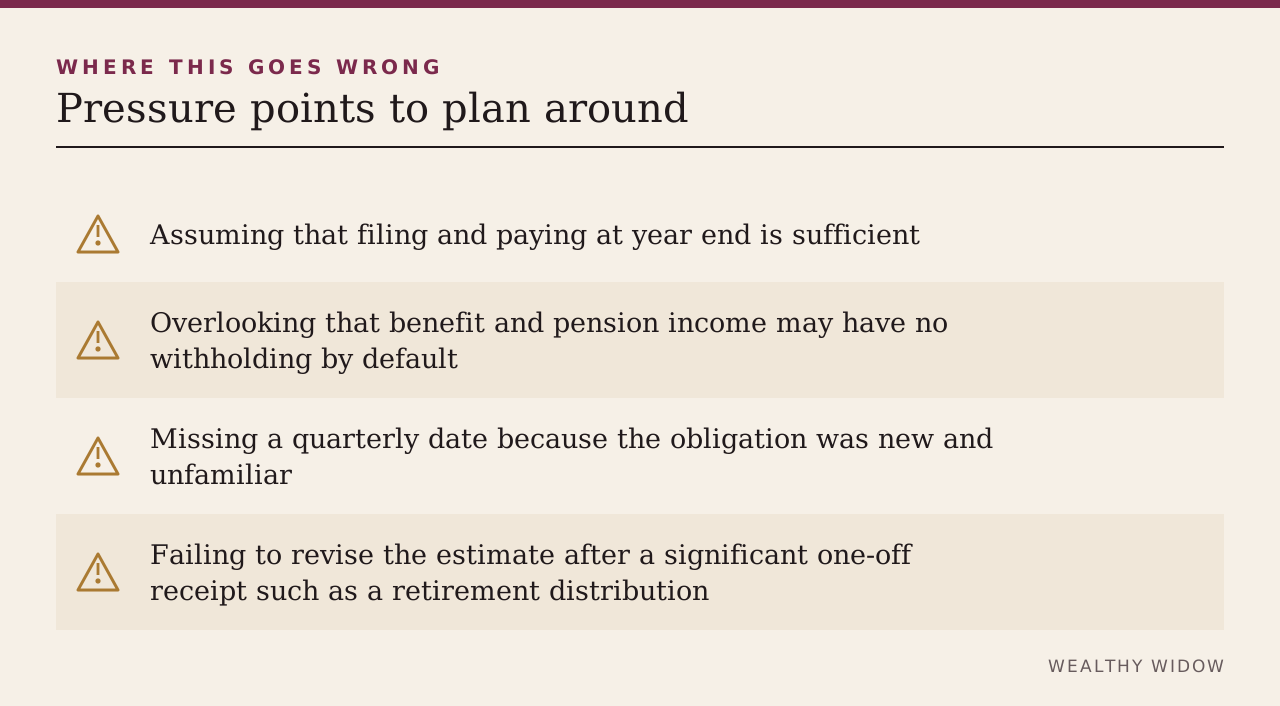
Watch for the following, and treat each as a reason to slow down. Assuming that filing and paying at year end is sufficient, and incurring an underpayment penalty.
Overlooking that benefit and pension income may have no withholding by default. Missing a quarterly date because the obligation was new and unfamiliar. Failing to revise the estimate after a significant one-off receipt such as a retirement distribution.
Assemble the file
Having the file complete before the first call removes most of the back and forth that follows.
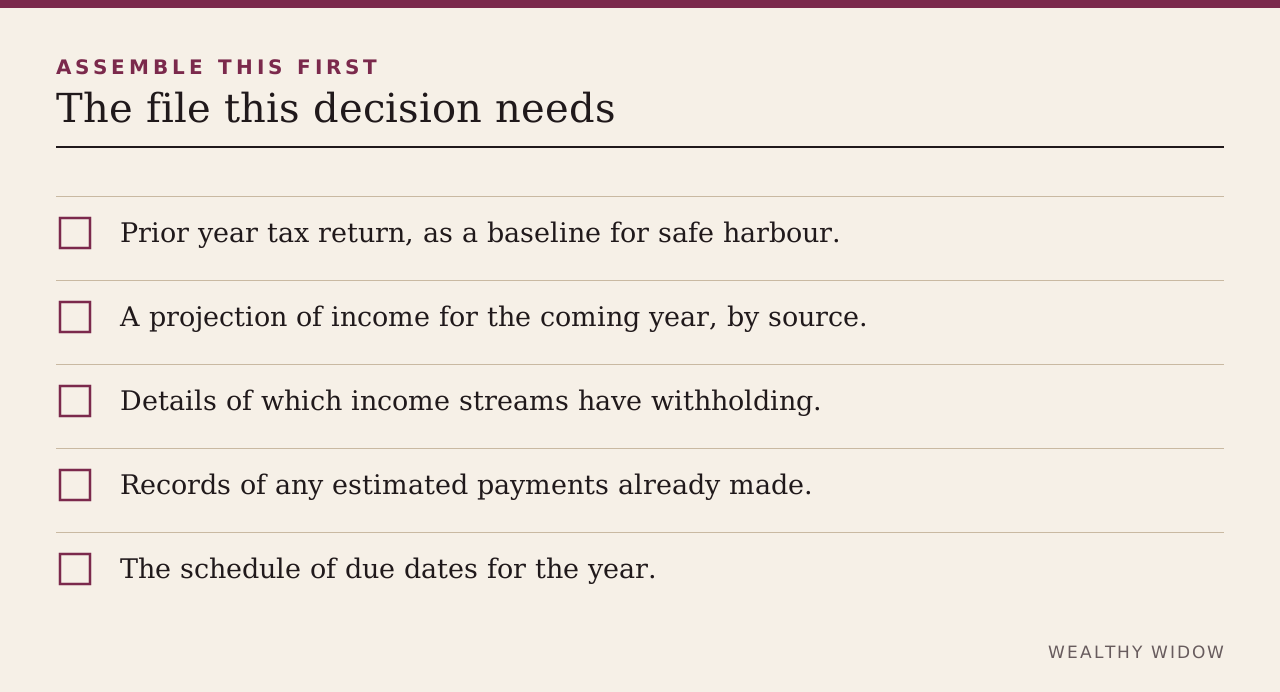
- Prior year tax return, as a baseline for safe harbour.
- A projection of income for the coming year, by source.
- Details of which income streams have withholding.
- Records of any estimated payments already made.
- The schedule of due dates for the year.
The written record you should hold
Hold written confirmation of each of these points before you rely on any of them to make a decision.
- Whether you have an estimated payment obligation.
- Whether a safe harbour based on the prior year is available.
- Which income streams can have withholding applied instead.
- The due dates for the year.
What a good adviser will answer plainly
Whoever advises you should be able to answer each of these plainly and in writing.
- Do I need to make estimated payments this year, and how much?
- Can I request withholding on my pension or benefit income instead?
- Does a prior year safe harbour apply to me?
- What happens if my income changes substantially mid-year?
Check this against the source
These are the primary sources behind this guide. They are the ones that change, and the ones worth checking before you act.
- Internal Revenue Service — Estimated taxes
- Internal Revenue Service — Estimated tax frequently asked questions
- Internal Revenue Service — Tax withholding estimator
- Internal Revenue Service — Publication 505, tax withholding and estimated tax
The questions this cannot reach
No account written for a general readership can reach the following, and it should not pretend to. It cannot state thresholds, penalty rates, or due dates, which are set annually and should be taken from current guidance.
Taking it from here
Work out early whether the obligation applies, and consider withholding as the simpler route where it is available. An underpayment penalty is a wholly avoidable cost and it lands at the worst moment.
Our related guide The Year the Favourable Filing Status Runs Out covers the adjacent problem.
Primary sources
- Internal Revenue Service — Estimated taxes
- Internal Revenue Service — Estimated tax frequently asked questions
- Internal Revenue Service — Tax withholding estimator
- Internal Revenue Service — Publication 505, tax withholding and estimated tax
This article provides general education, not individualized legal, tax, investment, insurance, or benefits advice. Rules and deadlines change; verify the current requirement with the agency and a qualified professional.