Estate
Blended Families: Providing for a Spouse Without Disinheriting Children
Where either partner has children from an earlier relationship, an ordinary will can accidentally disinherit them entirely.

You may be told this is simply a form to sign. It is a decision with consequences. Where either partner has children from an earlier relationship, an ordinary will can accidentally disinherit them entirely.
This is the single most common structural failure in estate planning for second marriages, and it usually only becomes visible on the second death, when nothing can be done.
Leaving everything to a spouse and trusting them to pass it on is a plan that depends entirely on what they choose to do afterwards.
What this is, and what it is not
A handful of accurate points does most of the work here, and the rest is noise generated by other people’s urgency. An outright gift to a spouse becomes their property, to leave as they choose. A subsequent will made by the survivor can direct that property elsewhere entirely. Trust structures can provide for a surviving spouse during their lifetime while preserving capital for children.
Beneficiary designations on retirement accounts and policies operate independently of any of this. State law may give a surviving spouse rights against an estate regardless of a will.
A workable order for this
The order below keeps your options open for as long as possible.
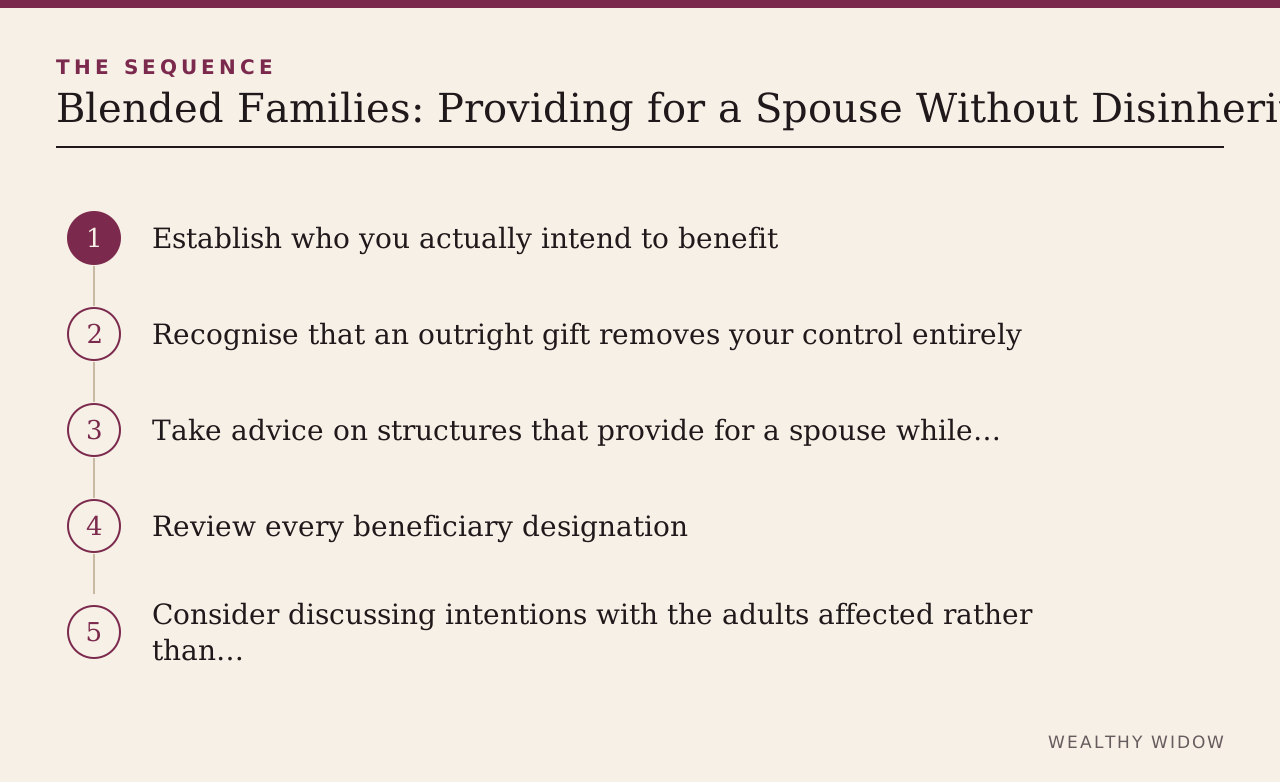
- Establish who you actually intend to benefit, and in what order.
- Recognise that an outright gift removes your control entirely.
- Take advice on structures that provide for a spouse while preserving capital.
- Review every beneficiary designation, since they operate outside the will.
- Consider discussing intentions with the adults affected rather than leaving them to discover it.
Where good intentions go wrong
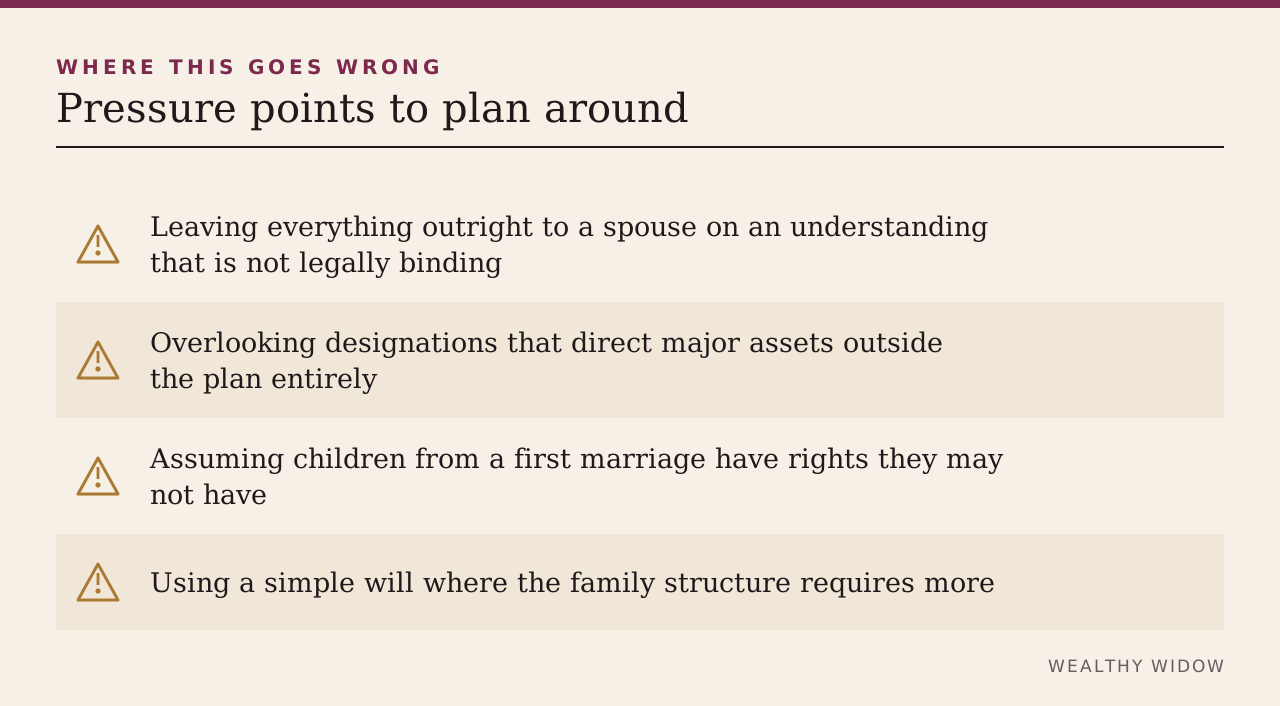
Treat each of the following as a reason to slow down. Leaving everything outright to a spouse on an understanding that is not legally binding.
Overlooking designations that direct major assets outside the plan entirely. Assuming children from a first marriage have rights they may not have. Using a simple will where the family structure requires more.
The file this decision needs
Keep these together in one place, and note where every copy goes and on what date it was sent.
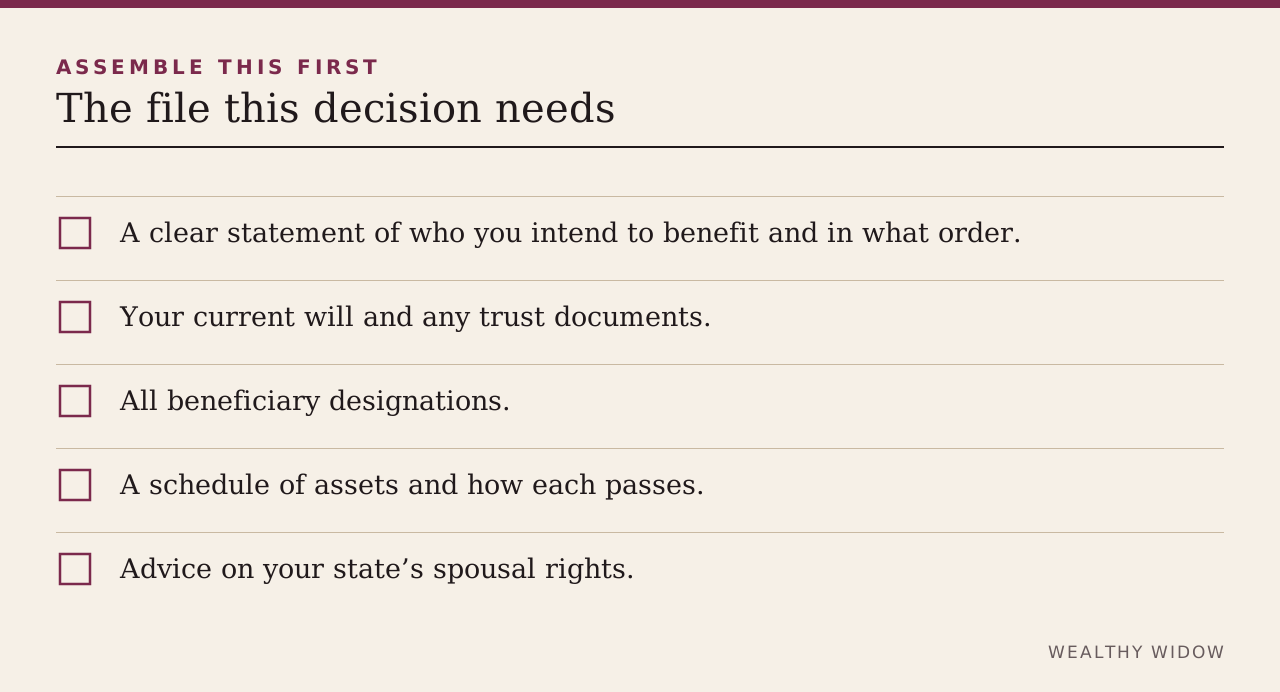
- A clear statement of who you intend to benefit and in what order.
- Your current will and any trust documents.
- All beneficiary designations.
- A schedule of assets and how each passes.
- Advice on your state’s spousal rights.
Confirm these in writing before you act
Written confirmation is not distrust. It is ordinary governance. Ask for each of these.
- What your current documents would actually produce.
- Whether designations conflict with the will.
- What rights a surviving spouse has under state law.
- That the structure chosen achieves the order you intend.
What to put to your adviser
Take these to whoever is advising you, in writing if you can.
- What would my current documents actually produce on the second death?
- What structure provides for my spouse while preserving capital for my children?
- What rights does a surviving spouse have here regardless of my will?
- Which of my assets pass outside the will entirely?
The sources behind this
Anything that will drive a decision should be checked here rather than here-abouts.
- Legal Services Corporation — I need legal help
- American Bar Association — Find legal help
- Internal Revenue Service — Retirement topics, beneficiary
- American Bar Association — Free Legal Answers
Where this guide stops
The boundary matters, because the wrong assumption here is expensive. It cannot design the arrangement, which is technical, state-specific, and needs a lawyer who has seen the family structure.
In practice
An outright gift to a spouse is a gift of control as well as of assets. Where children from an earlier relationship matter to you, that needs a structure rather than an understanding.
If this raised a further question, The Letter That Says What a Will Cannot takes it further.
Primary sources
- Legal Services Corporation — I need legal help
- American Bar Association — Find legal help
- Internal Revenue Service — Retirement topics, beneficiary
- American Bar Association — Free Legal Answers
This article provides general education, not individualized legal, tax, investment, insurance, or benefits advice. Rules and deadlines change; verify the current requirement with the agency and a qualified professional.