Home
Downsizing: Getting the Sequence Right
Moving to something smaller can be the right decision and is frequently made in the wrong order, which is what produces the regret.

Some decisions after a death are reversible. This one deserves more care than most. Moving to something smaller can be the right decision and is frequently made in the wrong order, which is what produces the regret.
Downsizing is often financially sensible and emotionally complicated. Most regret traces to sequence rather than to the decision itself: people commit before testing, and clear the house before deciding what matters.
Try the destination before you commit to it, and never sell into a decision you have not tested.
The decision behind the form
Begin with what can be said with confidence, and treat everything beyond it as still to be established. Transaction costs on both sale and purchase can consume a meaningful share of the equity released. A smaller property is not automatically cheaper to run, particularly where service charges apply. Community, transport, and healthcare access frequently matter more than square footage over time.
IRS Publication 523 says an eligible surviving spouse may claim an exclusion of up to $500,000 when the home is sold within two years of the spouse’s death and the publication’s other conditions are met; otherwise different limits and tests may apply. A tax professional should calculate basis and gain before a sale date is fixed.
Step by step, in this order
A workable order follows. Each step assumes the last one is done.
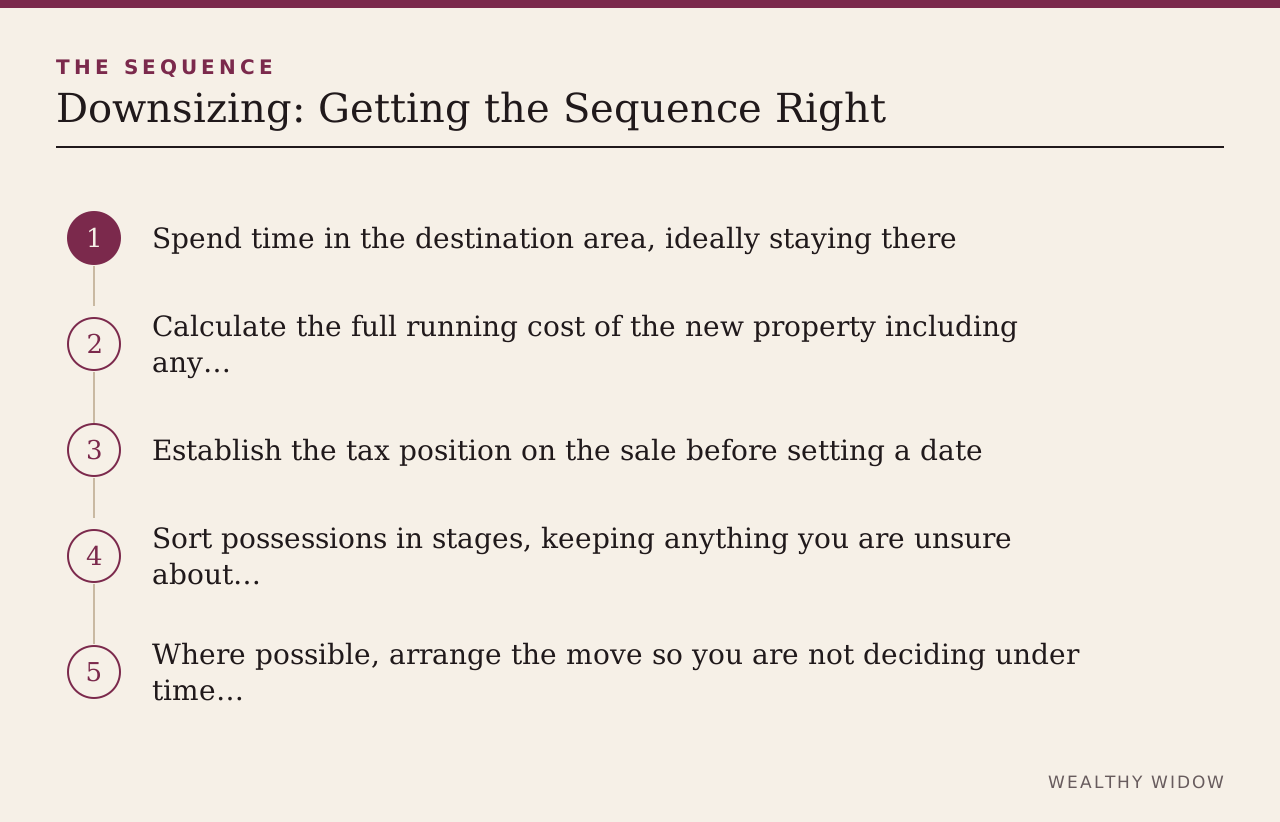
- Spend time in the destination area, ideally staying there, before committing.
- Calculate the full running cost of the new property including any service charges.
- Establish the tax position on the sale before setting a date.
- Sort possessions in stages, keeping anything you are unsure about in storage temporarily.
- Where possible, arrange the move so you are not deciding under time pressure.
The costly misreadings
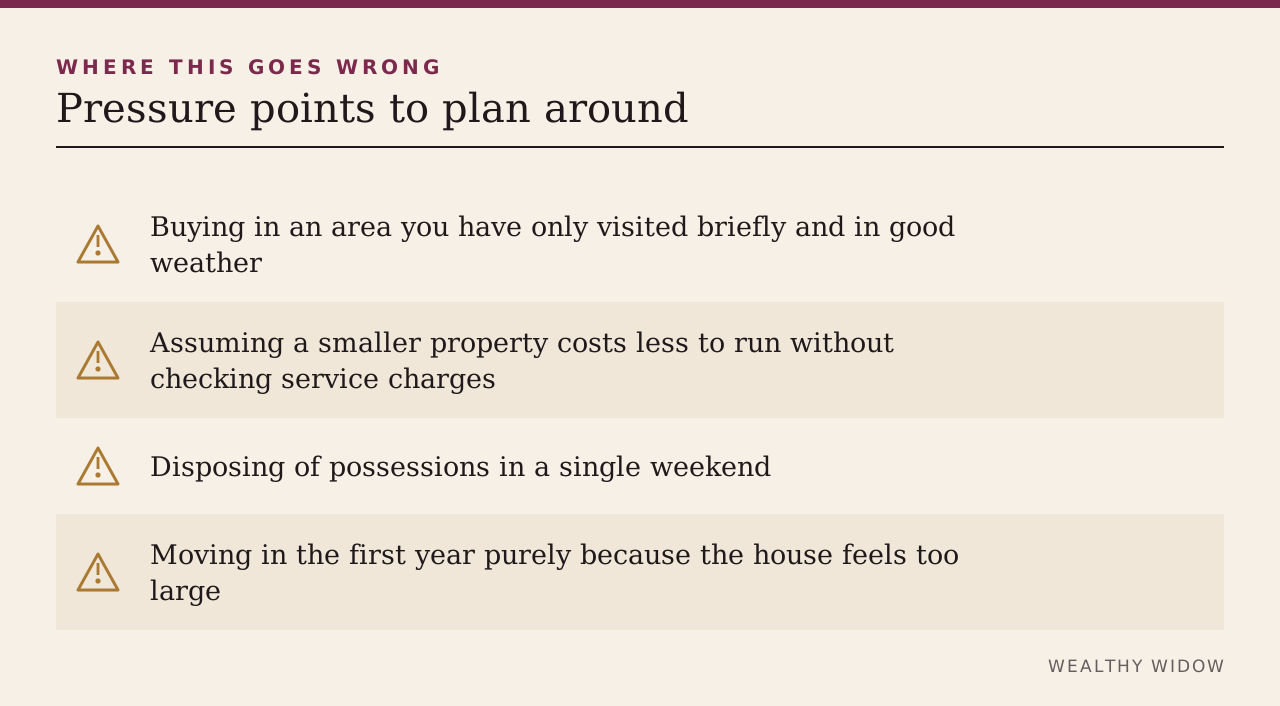
These are the places where readers most often lose ground. Buying in an area you have only visited briefly and in good weather.
Assuming a smaller property costs less to run without checking service charges. Disposing of possessions in a single weekend, which is where regret concentrates. Moving in the first year purely because the house feels too large, which is a feeling that often changes.
Documents this decision needs
Organisations will ask for these repeatedly, so assemble them once and keep them together.
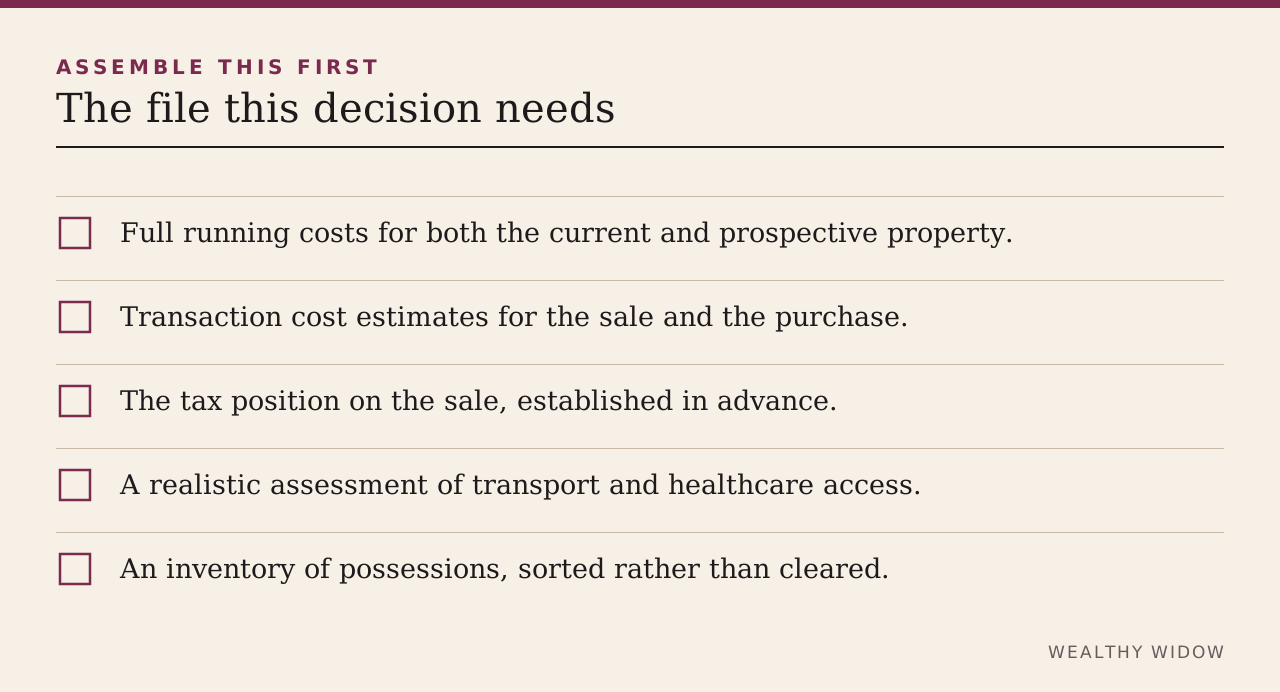
- Full running costs for both the current and prospective property.
- Transaction cost estimates for the sale and the purchase.
- The tax position on the sale, established in advance.
- A realistic assessment of transport and healthcare access.
- An inventory of possessions, sorted rather than cleared.
What to have documented
Put each of these in the file with a date against it.
- The total running cost of the new property, including all charges.
- The full transaction cost of moving.
- The tax treatment of the sale at your intended timing.
- That you have spent real time in the destination.
What to ask before you sign
Ask these before an engagement letter is signed or a product is recommended.
- What are the total transaction costs of this move?
- What are the full running costs of the new property?
- Does the timing of this sale affect the tax treatment?
- What do people most often regret about a move like this?
Where to verify this
Every load-bearing point above traces to one of the following. Where a figure or deadline matters to you, read it there.
- U.S. Department of Housing and Urban Development — Find a housing counselor
- Internal Revenue Service — Publication 523, selling your home
- Administration for Community Living — Long-term care planning
- Administration for Community Living — Eldercare Locator
What a professional still has to decide
The limits of a guide matter as much as its content, because acting past them is where the cost sits. It cannot tell you whether to move. It can insist that you test the destination and price the whole transaction before committing to either.
What good looks like here
Test the destination, price the whole move, and sort possessions in stages rather than in a weekend. Downsizing regret is nearly always about sequence, and sequence is entirely within your control.
Read Repairs and Contractors: A Predictable Target next; the two decisions interact.
Primary sources
- U.S. Department of Housing and Urban Development — Find a housing counselor
- Internal Revenue Service — Publication 523, selling your home
- Administration for Community Living — Long-term care planning
- Administration for Community Living — Eldercare Locator
This article provides general education, not individualized legal, tax, investment, insurance, or benefits advice. Rules and deadlines change; verify the current requirement with the agency and a qualified professional.