Estate
Does This Estate Need Probate At All?
Probate is not automatic. A significant share of estates pass largely outside it, and establishing that early saves months of unnecessary process.

The difficulty here is rarely the paperwork. It is knowing what is actually being asked. Probate is not automatic. A significant share of estates pass largely outside it, and establishing that early saves months of unnecessary process.
Families frequently assume probate is compulsory after any death. Whether it is required depends on what the person owned, how it was titled, and the rules of the relevant state.
Probate governs what the will controls, and in many households that is a smaller share of the assets than anyone expects.
Name the decision before you make it
A handful of accurate points does most of the work here, and the rest is noise generated by other people’s urgency. Probate is the court process for administering property that passes under a will or by intestacy. Assets passing by beneficiary designation, survivorship, or trust generally sit outside probate entirely. Most states offer simplified procedures for smaller estates, with thresholds set by state law.
Whether probate is needed can differ asset by asset rather than for the estate as a whole. Real property in another state may require a separate process there.
How to work through it
The order below keeps your options open for as long as possible.
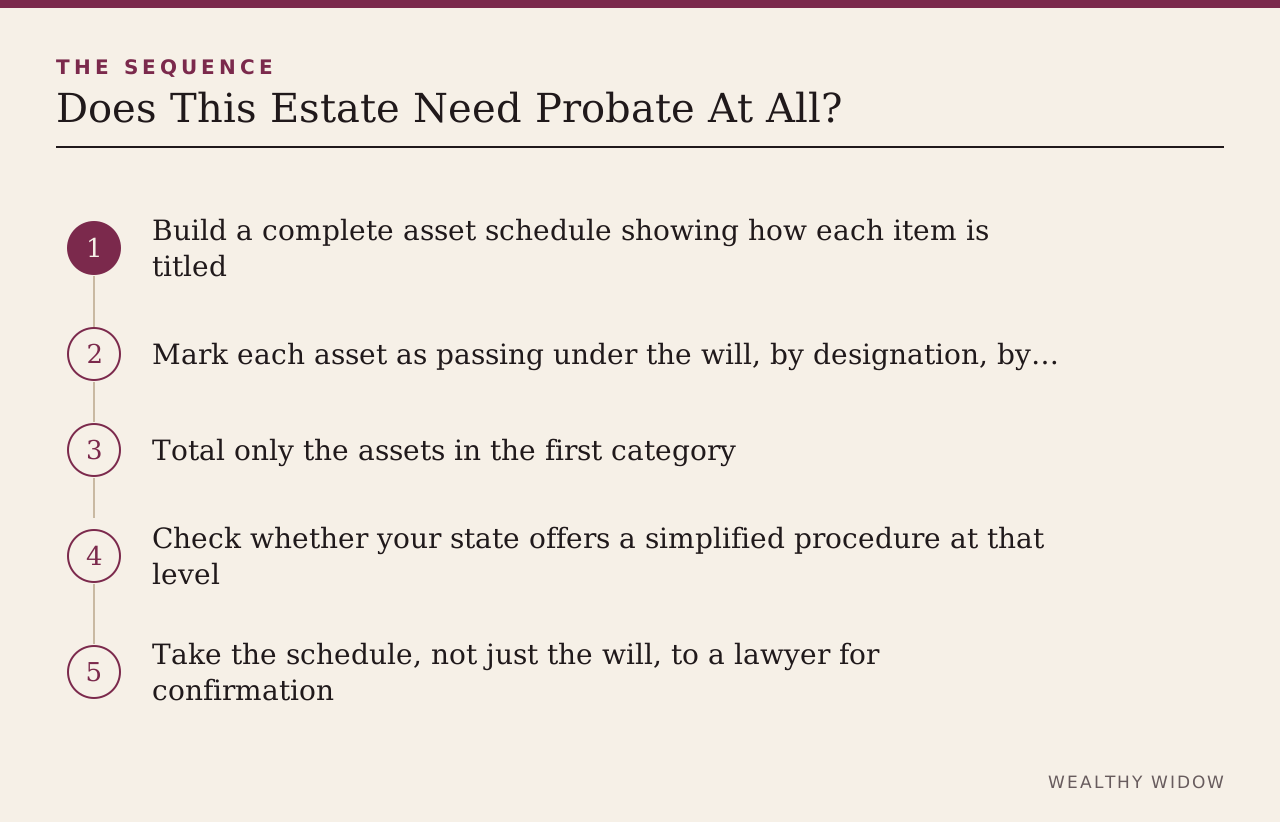
- Build a complete asset schedule showing how each item is titled.
- Mark each asset as passing under the will, by designation, by survivorship, or through a trust.
- Total only the assets in the first category, since those are the probate estate.
- Check whether your state offers a simplified procedure at that level.
- Take the schedule, not just the will, to a lawyer for confirmation.
Known hazards
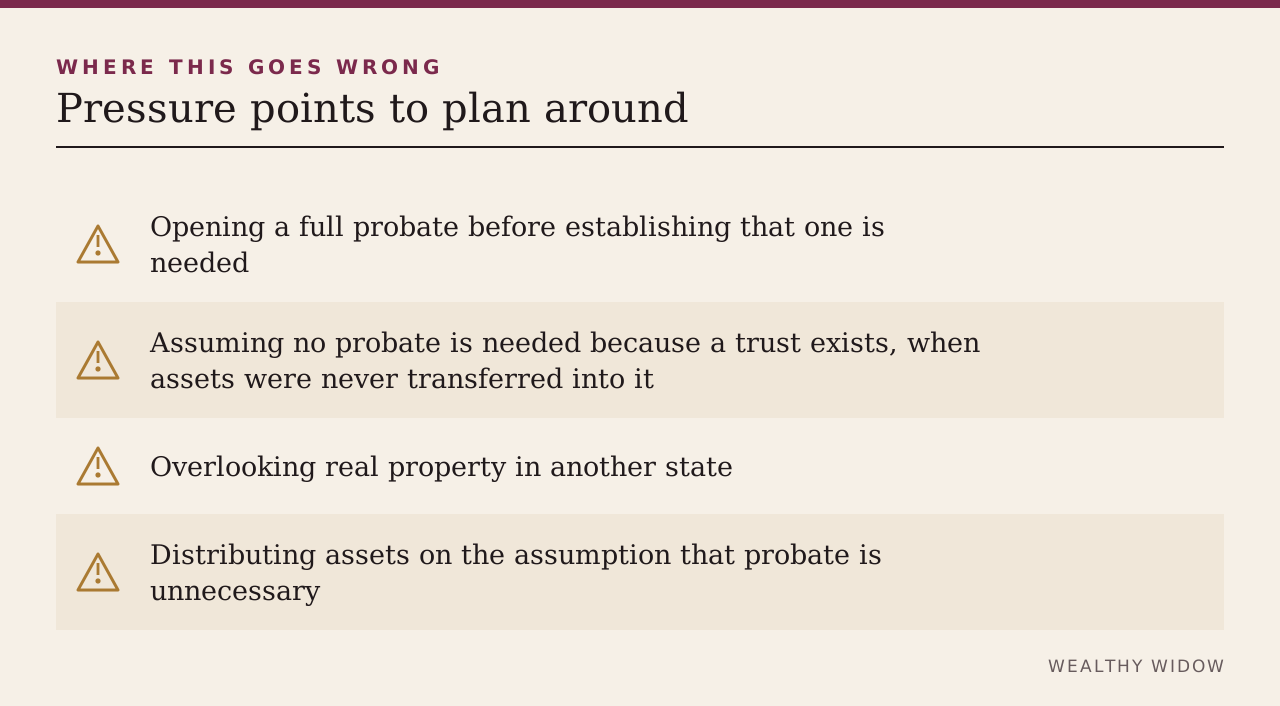
Treat each of the following as a reason to slow down. Opening a full probate before establishing that one is needed, which adds cost and delay.
Assuming no probate is needed because a trust exists, when assets were never transferred into it. Overlooking real property in another state, which can require its own process. Distributing assets on the assumption that probate is unnecessary, before that is confirmed.
The file this decision needs
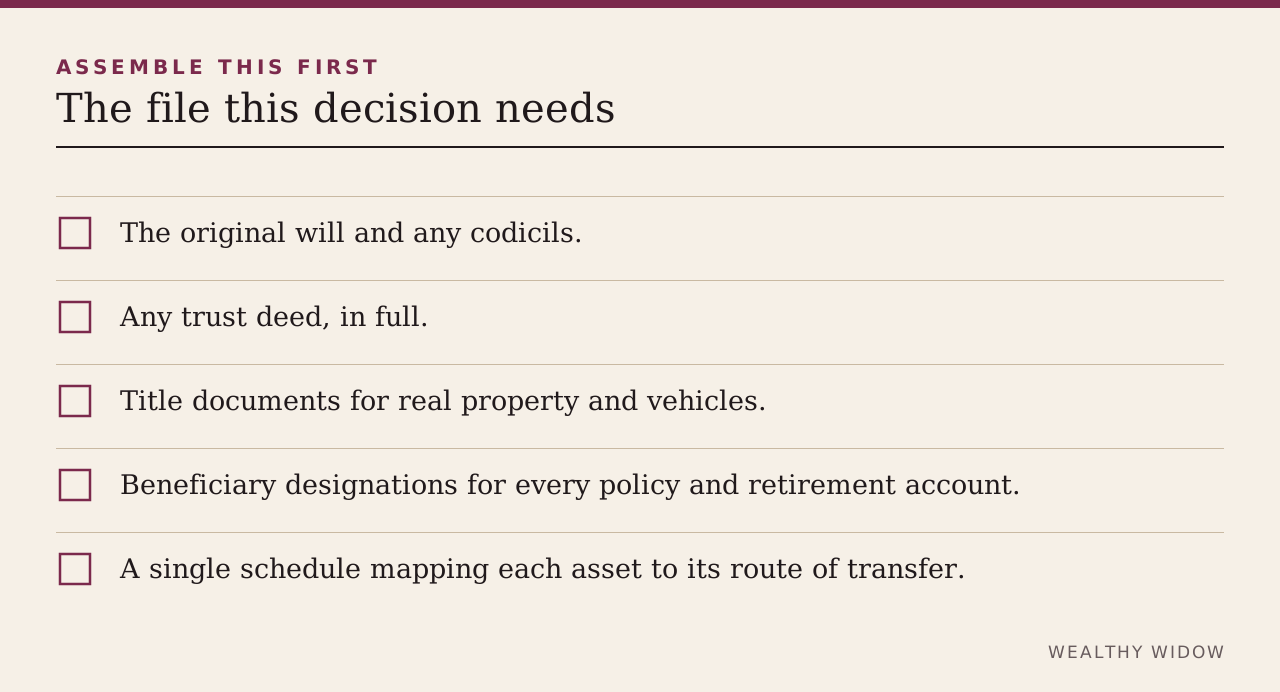
Keep these together in one place, and note where every copy goes and on what date it was sent.
- The original will and any codicils.
- Any trust deed, in full.
- Title documents for real property and vehicles.
- Beneficiary designations for every policy and retirement account.
- A single schedule mapping each asset to its route of transfer.
Nothing here on a verbal answer
None of the following should rest on a phone call alone, however clear the call felt at the time.
- Which assets form the probate estate.
- Whether a simplified procedure is available in your state.
- Whether any out-of-state property requires a separate process.
- What you may do before any appointment is made.
The questions that change the answer
A competent professional answers each of these without hesitation.
- Based on this schedule, is probate required at all?
- Does my state offer a simplified procedure at this level?
- What separate process applies to property held in another state?
- What can I lawfully do in the meantime?
Check this against the source
These are the primary sources behind this guide. They are the ones that change, and the ones worth checking before you act.
- Internal Revenue Service — Information for executors
- USAGov — Dealing with the death of a loved one
- Legal Services Corporation — I need legal help
- American Bar Association — Find legal help
The questions this cannot reach
No account written for a general readership can reach the following, and it should not pretend to. It cannot tell you whether your estate needs probate, because thresholds and procedures are set by state law and depend on the schedule.
Taking it from here
Build the schedule before instructing anyone. Knowing what actually falls into the probate estate frequently converts an intimidating court process into a much smaller administrative one.
Our related guide Appointment: The Difference Between Being Named and Having Authority covers the adjacent problem.
Primary sources
- Internal Revenue Service — Information for executors
- USAGov — Dealing with the death of a loved one
- Legal Services Corporation — I need legal help
- American Bar Association — Find legal help
This article provides general education, not individualized legal, tax, investment, insurance, or benefits advice. Rules and deadlines change; verify the current requirement with the agency and a qualified professional.