Taxes
What to Assemble Before the Return Is Prepared
A complete file produces a better return more cheaply, and the year of a death requires several documents an ordinary year does not.

This guide covers a decision that is easy to make quickly and expensive to make wrongly. A complete file produces a better return more cheaply, and the year of a death requires several documents an ordinary year does not.
The year of a death requires documents beyond the ordinary set. Assembling them in advance shortens the process and reduces the chance of something being missed.
Everything the preparer has to chase is billed at their rate, and most of it you could have gathered yourself.
First, get the category right
Take the ground facts first, because most of the difficulty here dissolves once they are stated plainly. A final return requires income documents split around the date of death. Medical expenses in the final year are frequently substantial and scattered across providers. The estate’s own filings require separate records from the date of death onwards.
Basis and valuation records support both current and future filings. Proof of authority is required before some documents can be obtained at all.
Take the steps in this order
Take these in order. Reversing them tends to create work rather than save it.
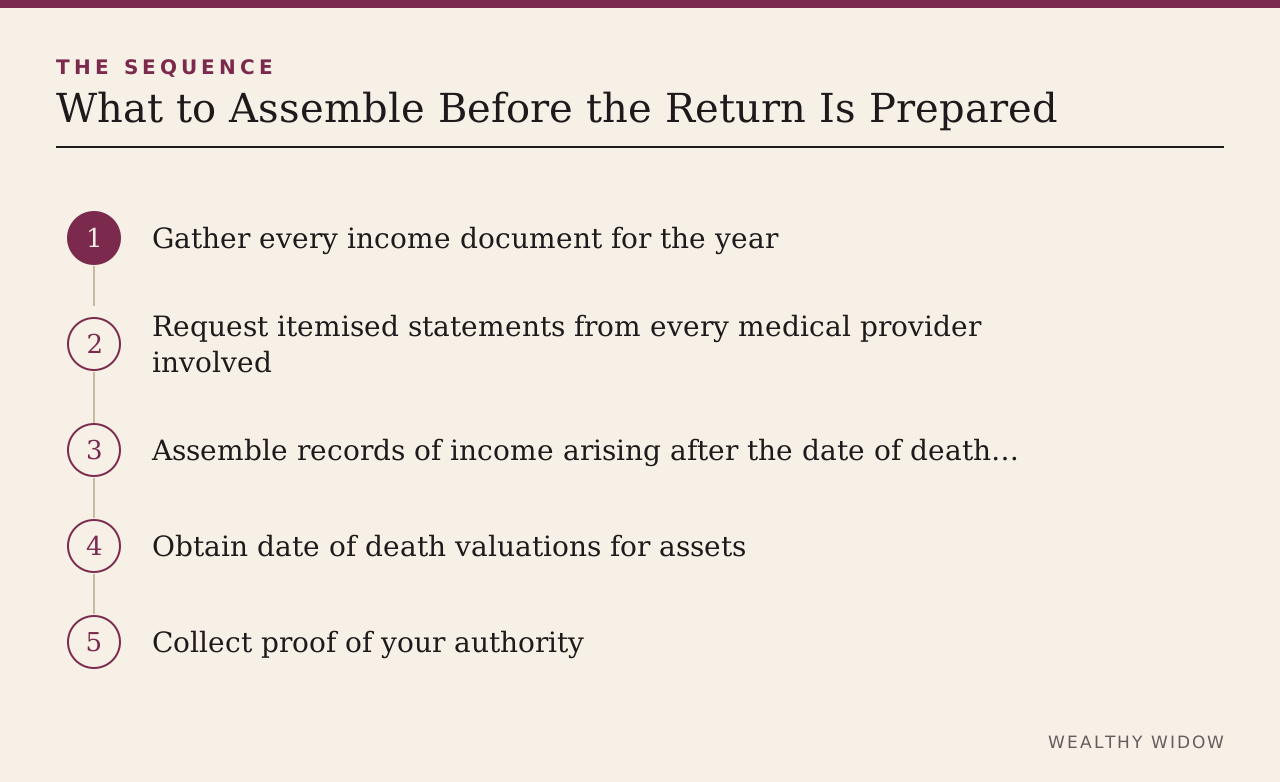
- Gather every income document for the year, and note which relate to the period before death.
- Request itemised statements from every medical provider involved.
- Assemble records of income arising after the date of death separately.
- Obtain date of death valuations for assets, which later filings will need.
- Collect proof of your authority, which several institutions will require first.
What to watch for
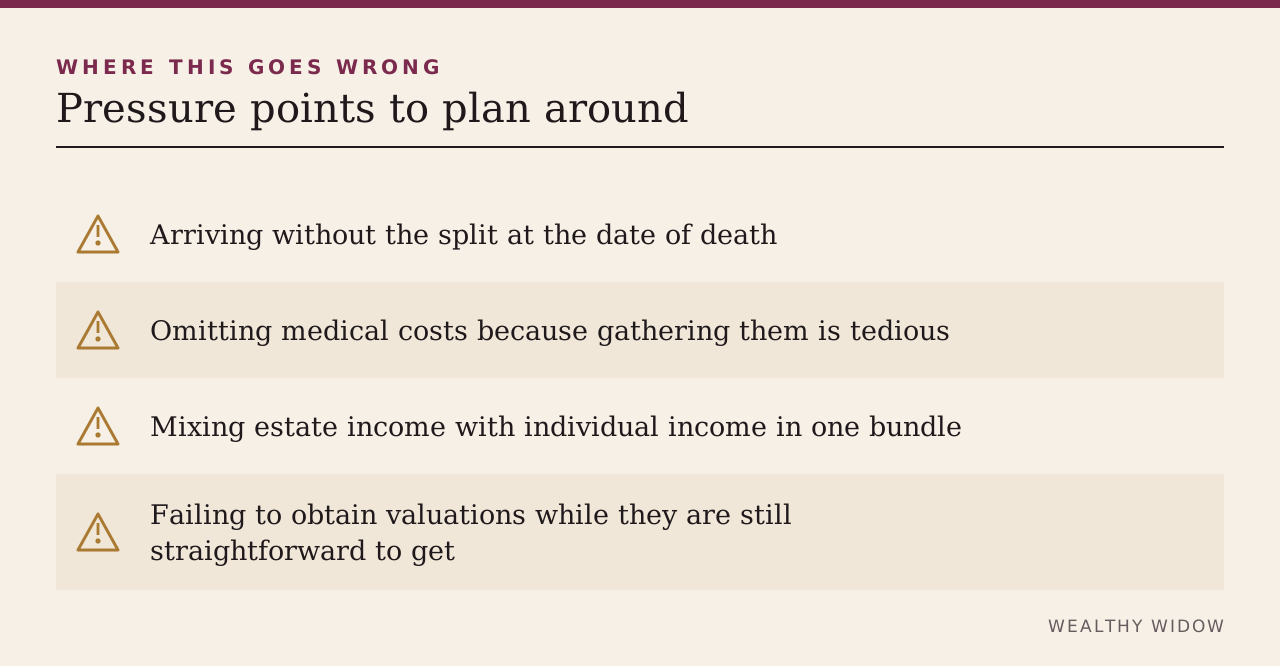
The failure modes below are predictable rather than unlucky, which is precisely what makes them avoidable. Arriving without the split at the date of death, which the preparer then has to construct.
Omitting medical costs because gathering them is tedious. Mixing estate income with individual income in one bundle. Failing to obtain valuations while they are still straightforward to get.
Gather these before the first call
Every organisation involved will want some combination of the following, and several will want it more than once.
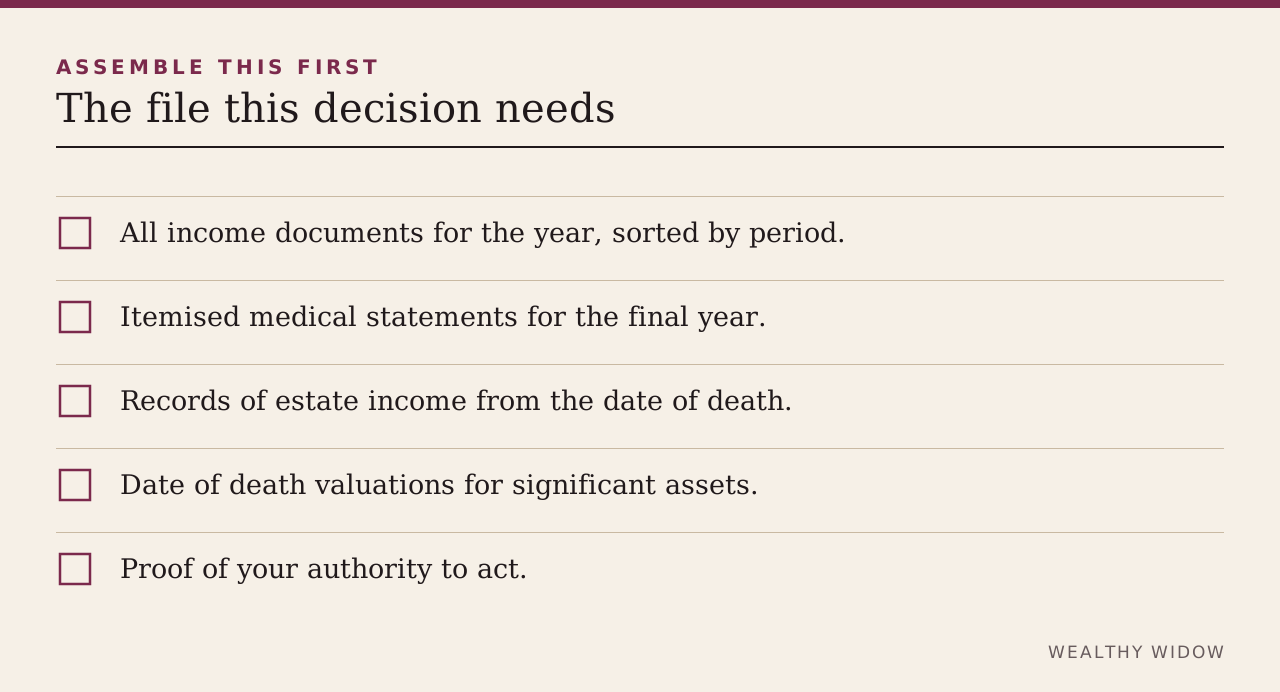
- All income documents for the year, sorted by period.
- Itemised medical statements for the final year.
- Records of estate income from the date of death.
- Date of death valuations for significant assets.
- Proof of your authority to act.
Get these in writing
Put each item below in your file with a date and a named source.
- That income is split correctly at the date of death.
- That medical costs are complete and net of reimbursement.
- That estate income is recorded separately.
- That valuations have been obtained and evidenced.
The questions worth asking
These are the questions whose answers change what you decide, rather than merely confirming what you assumed.
- What do you need from me before we start?
- How should income around the date of death be split?
- What valuations will later filings require?
- What is missing from what I have provided?
Sources worth reading yourself
Where this guide and a source disagree, the source is right.
- Internal Revenue Service — About Publication 559, survivors, executors, and administrators
- Internal Revenue Service — File the final income tax returns of a deceased person
- Internal Revenue Service — Information for executors
- Internal Revenue Service — About Publication 502, medical and dental expenses
The boundary of this guide
Be clear about the boundary; the wrong assumption here is expensive. It cannot produce your documents, and the assembly is precisely the part you can do without paying anyone.
Where this leaves you
Sort by period, gather the medical costs properly, and obtain the valuations while it is easy. A complete file is the single largest influence on both the cost and the quality of the return.
A companion guide, Tax Planning for the Long Run as a Single Filer, covers the decision that sits alongside this one.
Primary sources
- Internal Revenue Service — About Publication 559, survivors, executors, and administrators
- Internal Revenue Service — File the final income tax returns of a deceased person
- Internal Revenue Service — Information for executors
- Internal Revenue Service — About Publication 502, medical and dental expenses
This article provides general education, not individualized legal, tax, investment, insurance, or benefits advice. Rules and deadlines change; verify the current requirement with the agency and a qualified professional.