Estate
Refusing an Inheritance on Purpose: What a Disclaimer Does
Declining an inheritance sounds perverse and is occasionally the right decision, for tax reasons or to redirect assets to the next generation.

Some decisions after a death are reversible. This one deserves more care than most. Declining an inheritance sounds perverse and is occasionally the right decision, for tax reasons or to redirect assets to the next generation.
Disclaimers are a legitimate planning tool with strict formal requirements. The requirements are unforgiving, and a failed disclaimer is treated as a transfer by you rather than by the estate.
A properly made disclaimer passes an asset on as though you had never received it. A badly made one is simply a gift, with all that follows.
What this is, and what it is not
What follows is what is actually true, stripped of the anxiety around it. A disclaimer is a formal refusal to accept an inheritance, made in writing within a defined period. A valid disclaimer generally means the asset passes as if you had predeceased, under the governing document. You cannot direct where a disclaimed asset goes; the document determines that.
Accepting any benefit from the asset first will usually invalidate the disclaimer. Time limits are strict, and missing them removes the option entirely.
A workable order for this
Do these in sequence, and do not skip ahead to the signature.
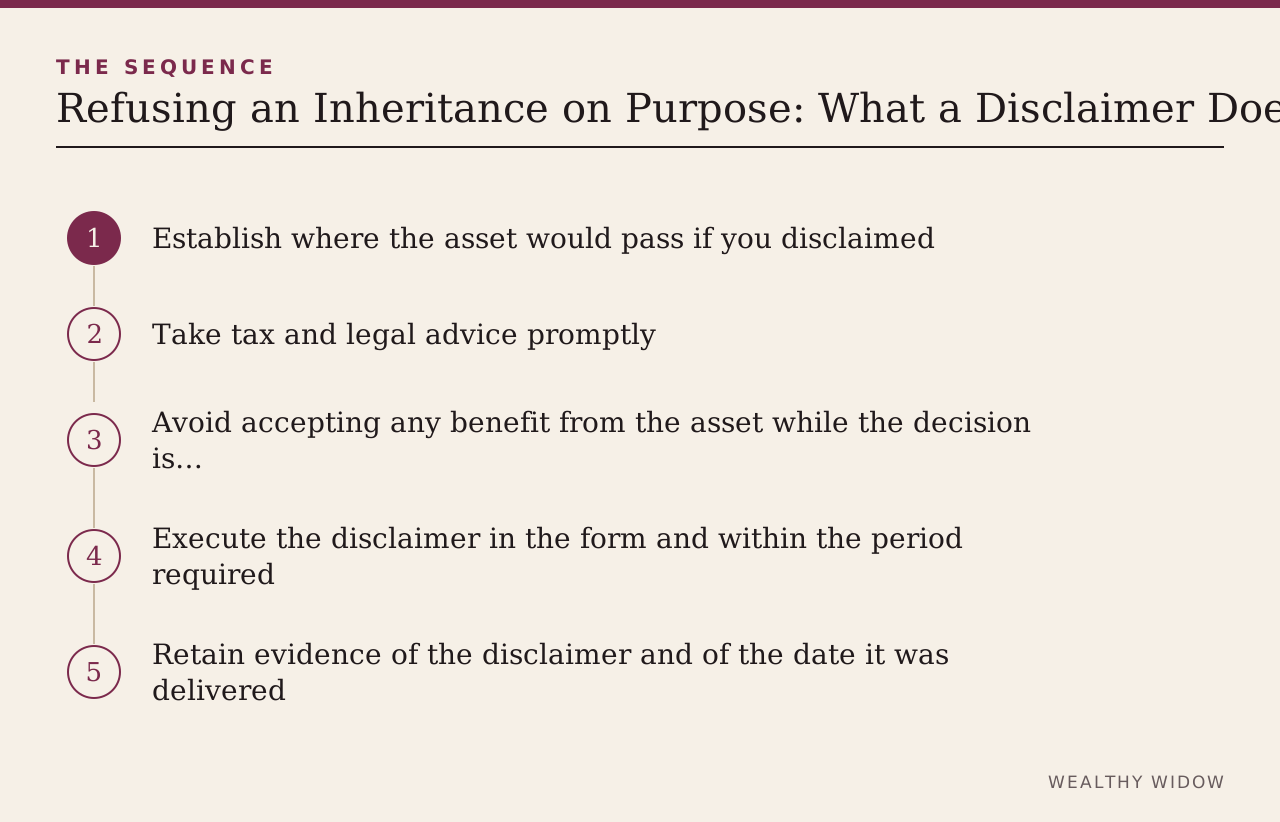
- Establish where the asset would pass if you disclaimed, before considering whether to do so.
- Take tax and legal advice promptly, since the window is short.
- Avoid accepting any benefit from the asset while the decision is open.
- Execute the disclaimer in the form and within the period required.
- Retain evidence of the disclaimer and of the date it was delivered.
Where good intentions go wrong
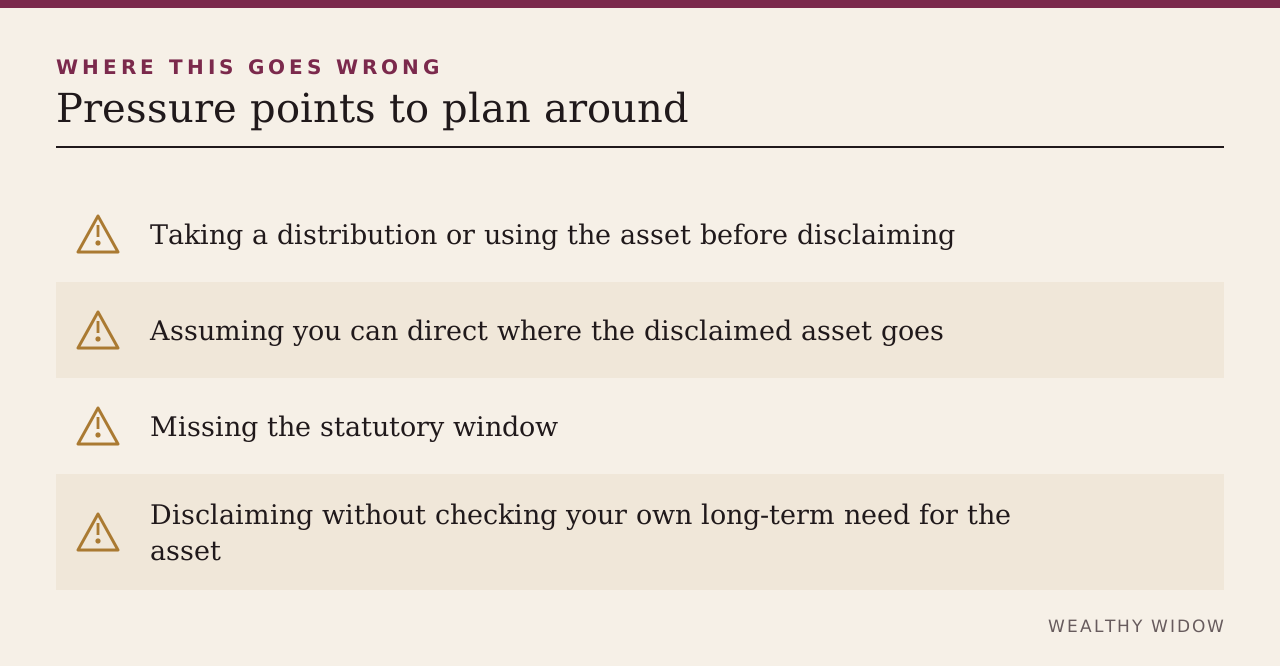
The failures here are predictable, which means they are avoidable. Taking a distribution or using the asset before disclaiming, which invalidates the disclaimer.
Assuming you can direct where the disclaimed asset goes, which you generally cannot. Missing the statutory window, after which the option simply disappears. Disclaiming without checking your own long-term need for the asset.
What to have to hand
The paperwork below is what turns a long process into a short one.
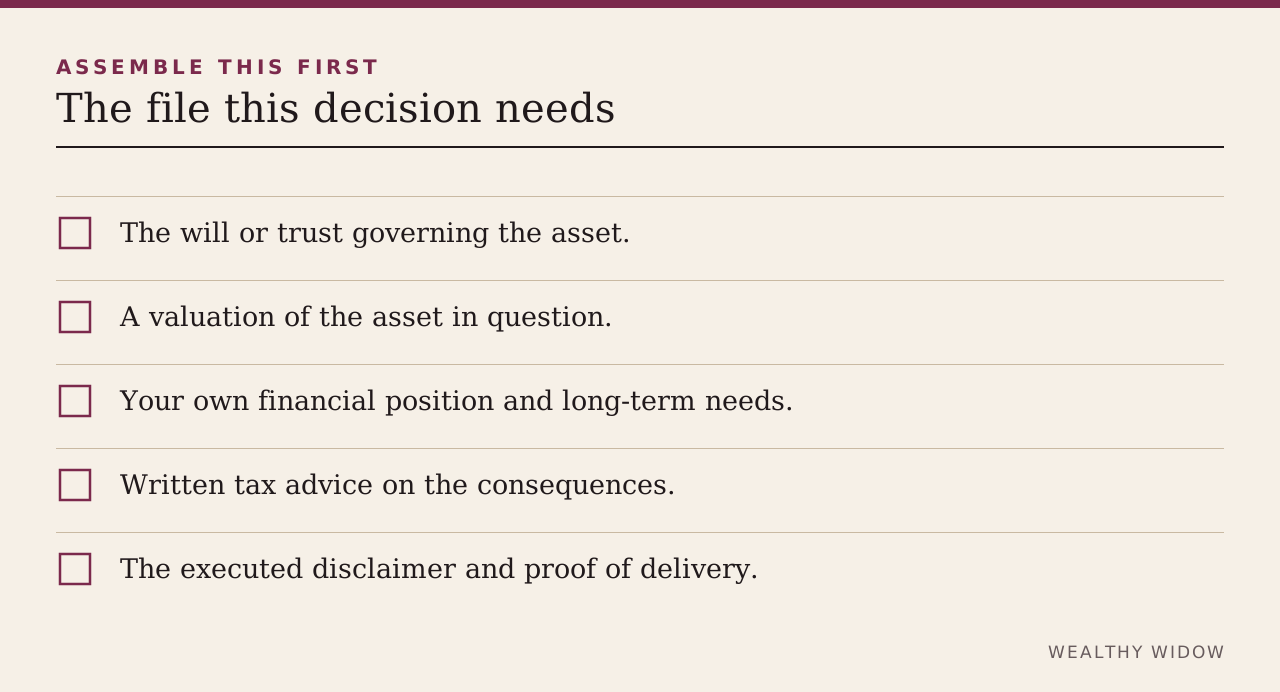
- The will or trust governing the asset.
- A valuation of the asset in question.
- Your own financial position and long-term needs.
- Written tax advice on the consequences.
- The executed disclaimer and proof of delivery.
Ask for this in writing
Each item below should exist somewhere other than your memory, because memory is not evidence in a dispute.
- Where the asset would pass on a disclaimer.
- The deadline for making it.
- That you have taken no benefit from the asset.
- The tax consequences for you and for the recipient.
The questions to bring to the meeting
Take these to the attorney, tax professional, or planner handling this work.
- Where would this asset go if I disclaimed it?
- What is the deadline, and what happens if it passes?
- Have I already done anything that would invalidate a disclaimer?
- What are the tax consequences for me and for the eventual recipient?
The primary material
Each load-bearing point above traces to one of the following, and they are the versions that stay current.
- Internal Revenue Service — About Publication 559, survivors, executors, and administrators
- Internal Revenue Service — Information for executors
- Internal Revenue Service — Forms and publications, estate and gift tax
- Legal Services Corporation — I need legal help
Where general guidance ends
Here is the line between what can usefully be written for a general readership and what cannot be written at all. It cannot advise whether to disclaim. That is a tax and family decision requiring professional advice on your specific position.
What this comes down to
If a disclaimer is under consideration, take advice immediately and touch nothing meanwhile. The window is short, the formalities are strict, and the option cannot be recovered once it lapses.
If this raised a further question, Real Property in Another State: A Second Process takes it further.
Primary sources
- Internal Revenue Service — About Publication 559, survivors, executors, and administrators
- Internal Revenue Service — Information for executors
- Internal Revenue Service — Forms and publications, estate and gift tax
- Legal Services Corporation — I need legal help
This article provides general education, not individualized legal, tax, investment, insurance, or benefits advice. Rules and deadlines change; verify the current requirement with the agency and a qualified professional.