Estate
Digital Assets: Property, Content, and Things That Are Neither
Photographs, domains, loyalty points, and digital currency sit in different legal categories, and only some of them are estate assets.

This guide covers a decision that is easy to make quickly and expensive to make wrongly. Photographs, domains, loyalty points, and digital currency sit in different legal categories, and only some of them are estate assets.
Digital holdings are now a routine part of estates and remain poorly understood. The main errors are treating everything as transferable property and destroying irreplaceable content by closing accounts early.
A digital account may hold property, may hold only a licence, or may hold nothing transferable at all, and the three are handled differently.
What you are really being asked
What follows is what is actually true, stripped of the anxiety around it. Some digital holdings are property with value, such as domains, digital currency, and monetised accounts. Others are licences that end at death and cannot be transferred, including many media libraries. Photographs and correspondence may have no market value and enormous personal value, and are easily lost.
Access is governed by provider terms and by state law on fiduciary access to digital assets. Digital currency held without recorded keys may be permanently unrecoverable.
The sequence that keeps options open
Do these in sequence, and do not skip ahead to the signature.
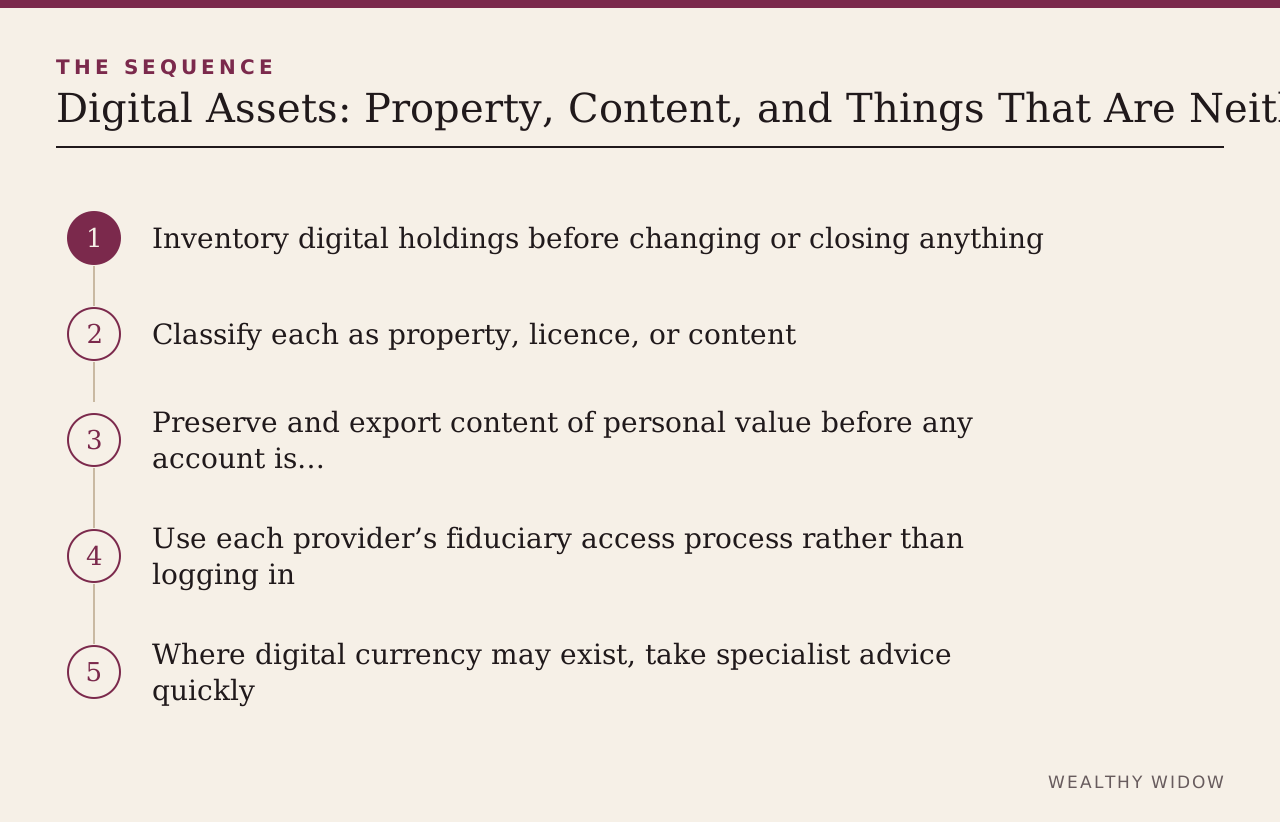
- Inventory digital holdings before changing or closing anything.
- Classify each as property, licence, or content, since each is handled differently.
- Preserve and export content of personal value before any account is closed.
- Use each provider’s fiduciary access process rather than logging in.
- Where digital currency may exist, take specialist advice quickly, since recovery windows can be practical rather than legal.
The failure modes to plan around
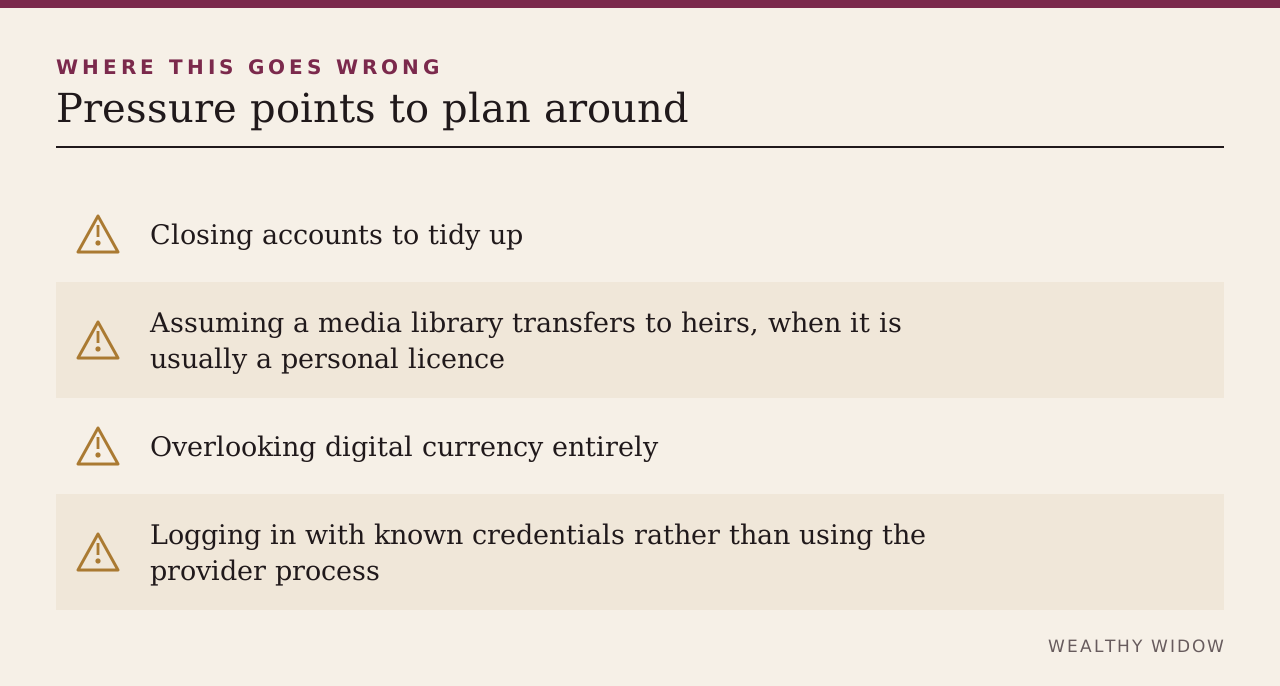
The failures here are predictable, which means they are avoidable. Closing accounts to tidy up, and destroying the only copies of photographs and correspondence.
Assuming a media library transfers to heirs, when it is usually a personal licence. Overlooking digital currency entirely, which is unrecoverable without the keys. Logging in with known credentials rather than using the provider process, which can breach terms.
What to have to hand
The paperwork below is what turns a long process into a short one.
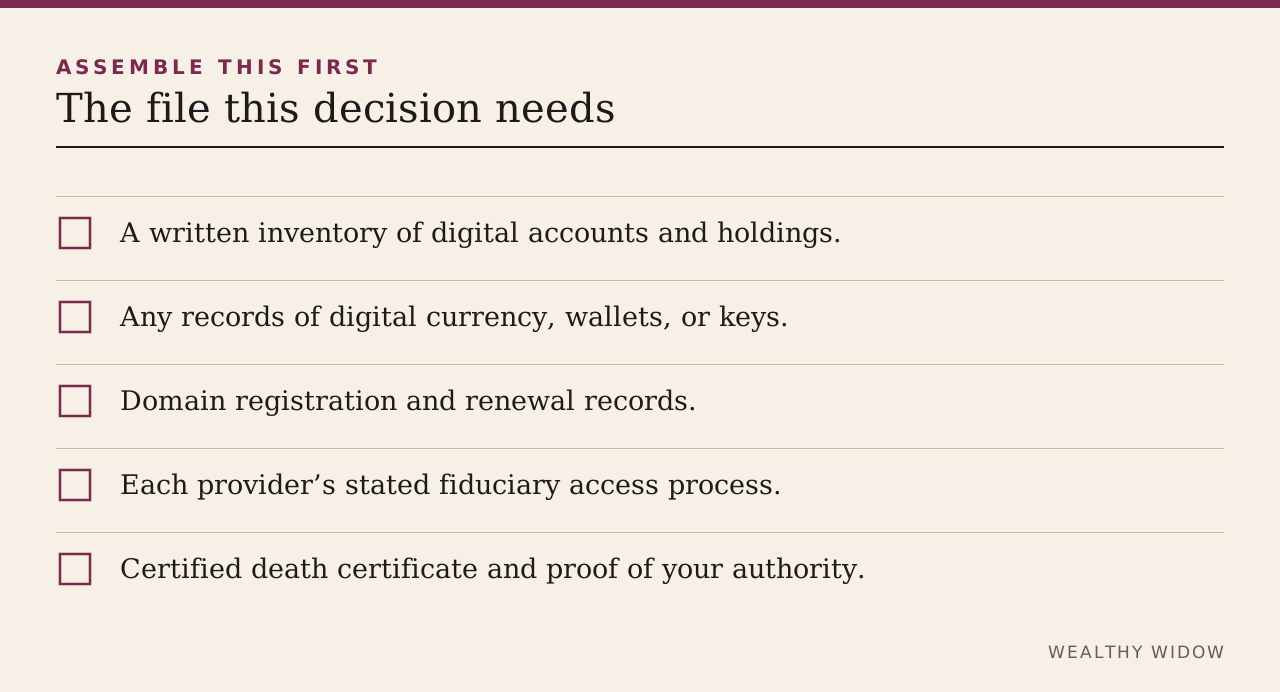
- A written inventory of digital accounts and holdings.
- Any records of digital currency, wallets, or keys.
- Domain registration and renewal records.
- Each provider’s stated fiduciary access process.
- Certified death certificate and proof of your authority.
Put these in writing, then proceed
A conversation is a starting point. These belong on paper.
- Which holdings are property forming part of the estate.
- Each provider’s access process and its evidence requirements.
- That content of personal value has been preserved before closure.
- Whether your state has adopted fiduciary access legislation.
Before anyone is engaged, ask these
Ask them plainly; the response tells you as much as the answer.
- Which of these holdings are estate property rather than personal licences?
- What does my state law provide about fiduciary access to digital assets?
- What is your process for a personal representative, and what evidence do you need?
- Can content be exported before the account is closed?
The primary sources for this guide
This guide summarises. The sources below govern, and they are updated when the rules are.
- Internal Revenue Service — Information for executors
- Legal Services Corporation — I need legal help
- Federal Trade Commission — Identity theft
- USAGov — Dealing with the death of a loved one
What this leaves open
A guide can set out the structure of a decision. It cannot read your documents, and your documents govern. It cannot tell you what a specific provider permits, and provider terms differ substantially even for similar services.
The part worth remembering
Inventory before you close anything, classify before you claim anything, and export the irreplaceable first. Content lost during tidying is the one category that no later process can recover.
Read No Will: The State Has Already Written One next; the two decisions interact.
Primary sources
- Internal Revenue Service — Information for executors
- Legal Services Corporation — I need legal help
- Federal Trade Commission — Identity theft
- USAGov — Dealing with the death of a loved one
This article provides general education, not individualized legal, tax, investment, insurance, or benefits advice. Rules and deadlines change; verify the current requirement with the agency and a qualified professional.