Money
When a Settlement Lands: Large Cash Balances and Protection Limits
Insurance proceeds and estate distributions frequently arrive as a single large sum, and a single account may not protect all of it.

The pressure to resolve this quickly usually comes from outside you. Insurance proceeds and estate distributions frequently arrive as a single large sum, and a single account may not protect all of it.
A household that never held large cash balances may suddenly hold one, and the protection rules that never mattered before become immediately relevant. This is a temporary problem with a simple solution.
Deposit protection is per depositor, per institution, per ownership category, and a lump sum can quietly exceed it overnight.
What is really being decided here
Start with what is actually true of this decision. Federal deposit insurance covers deposits up to a stated limit per depositor, per insured institution, for each ownership category. Credit union share accounts have a parallel protection scheme with its own administrator. Ownership category matters: individual, joint, and certain trust accounts are treated separately.
Investments such as stocks, bonds, and mutual funds are not deposits and are not covered by deposit insurance. Coverage of an account can change when the ownership of that account changes, which is exactly what a death does.
What to do, and in what order
The sequence below is the one that keeps you in control of the pace.
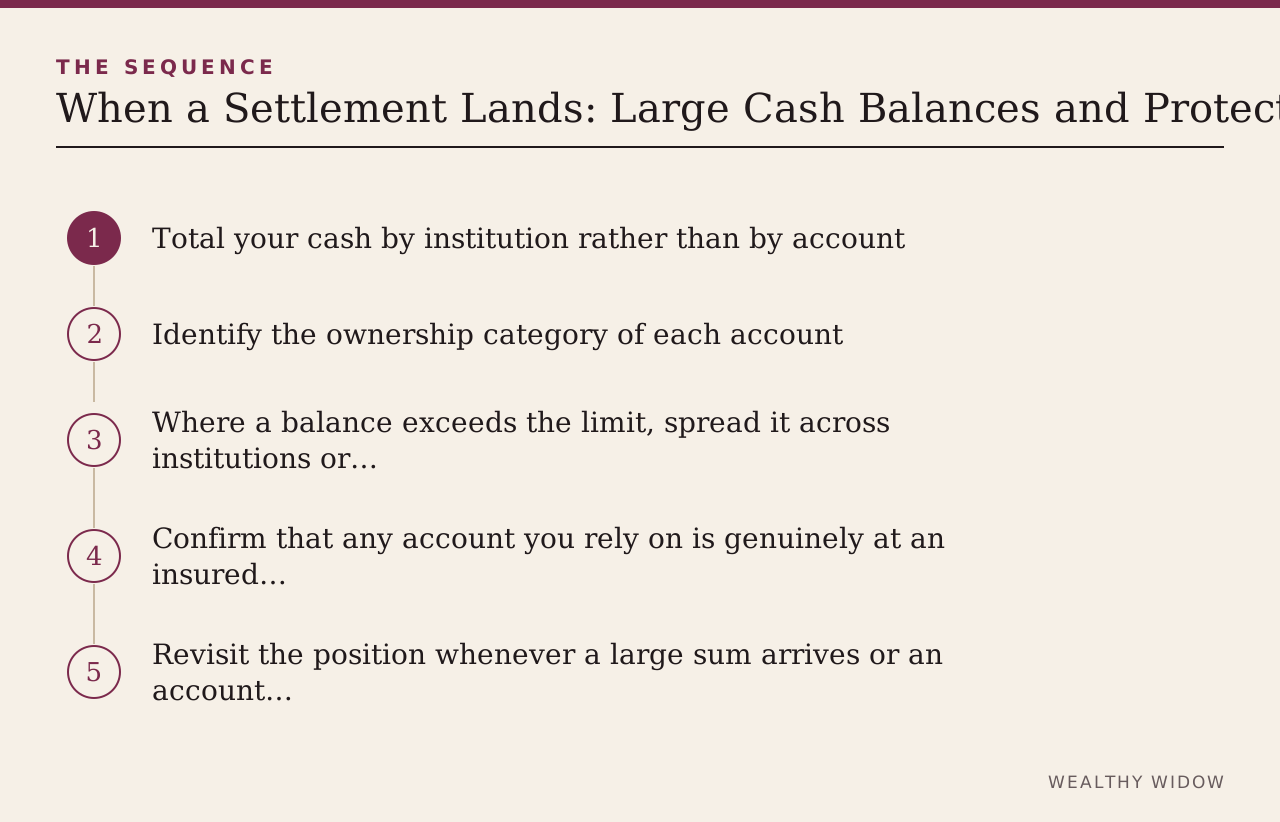
- Total your cash by institution rather than by account, since the limit applies per institution.
- Identify the ownership category of each account, because categories are protected separately.
- Where a balance exceeds the limit, spread it across institutions or categories before doing anything else.
- Confirm that any account you rely on is genuinely at an insured institution.
- Revisit the position whenever a large sum arrives or an account changes ownership.
The mistakes that are hard to reverse
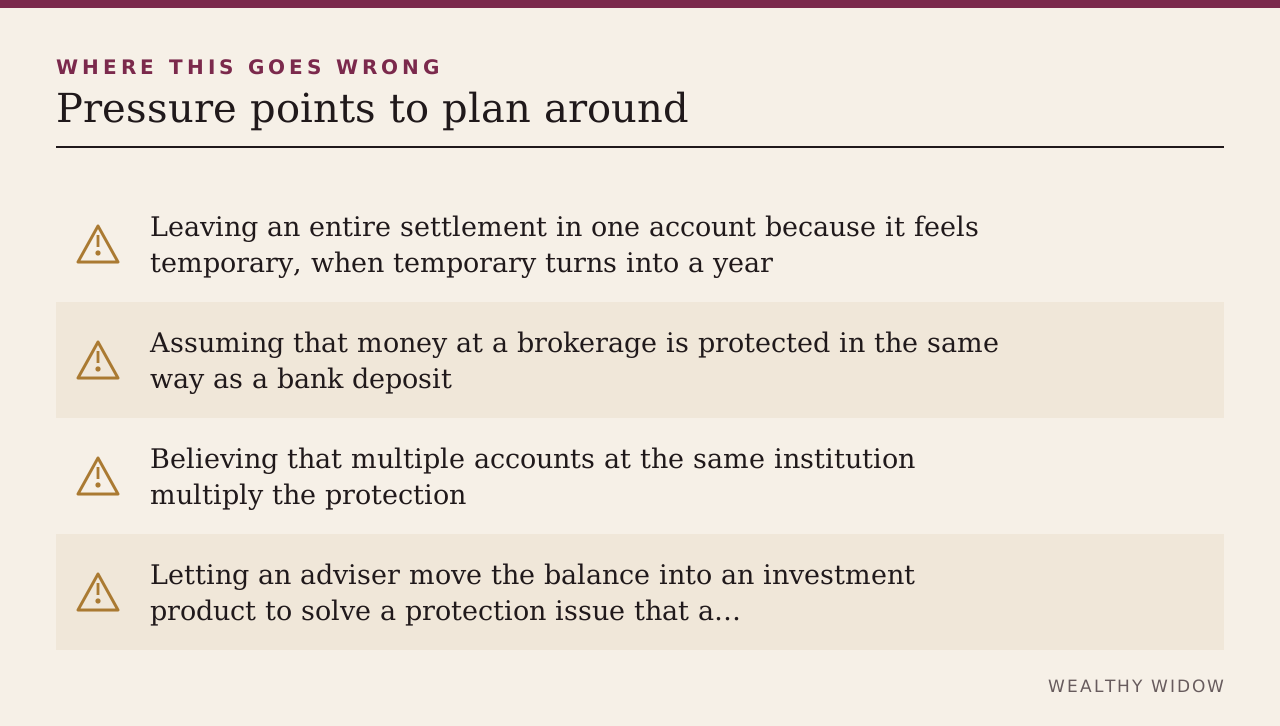
These recur often enough across households to be planned around rather than discovered one at a time. Leaving an entire settlement in one account because it feels temporary, when temporary turns into a year.
Assuming that money at a brokerage is protected in the same way as a bank deposit. Believing that multiple accounts at the same institution multiply the protection, which they generally do not. Letting an adviser move the balance into an investment product to solve a protection issue that a second bank account would solve.
Before the first call, collect these
Gather these first. A call made without them usually has to be made again.
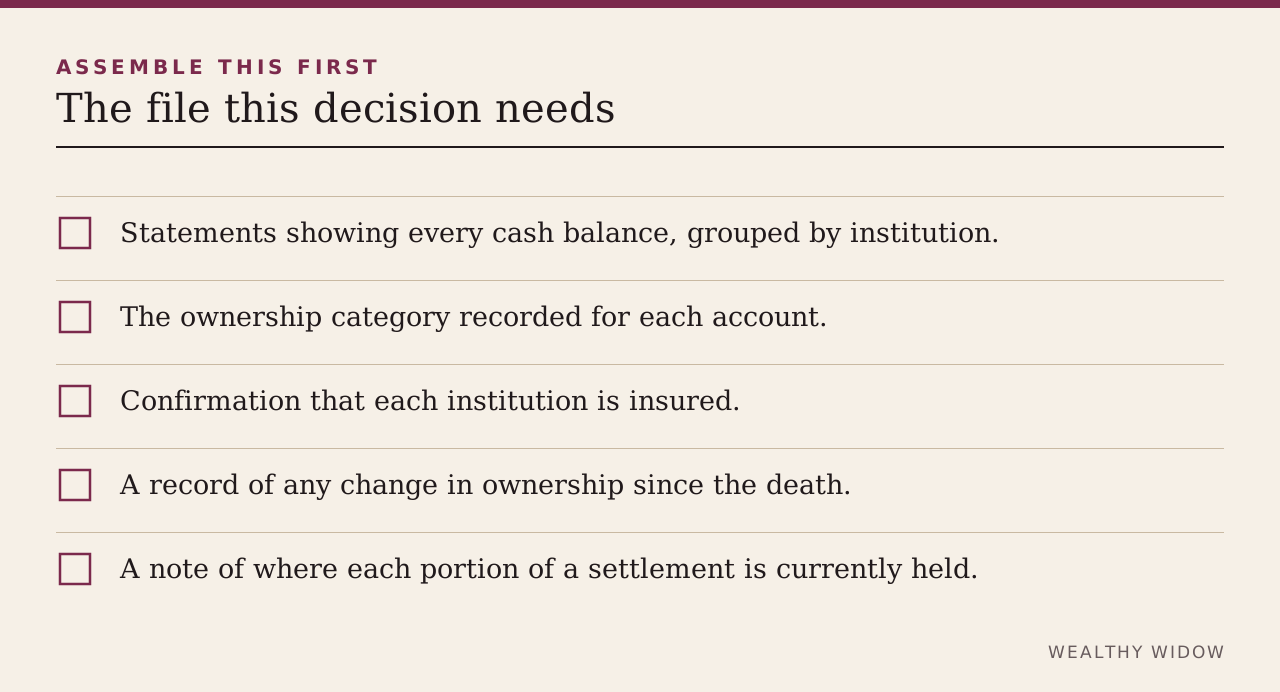
- Statements showing every cash balance, grouped by institution.
- The ownership category recorded for each account.
- Confirmation that each institution is insured.
- A record of any change in ownership since the death.
- A note of where each portion of a settlement is currently held.
Put these in writing, then proceed
A conversation is a starting point. These belong on paper.
- Your total balance at each institution.
- The ownership category applied to each account.
- That each institution is covered by the relevant scheme.
- Whether coverage changed when the account ownership changed.
Before anyone is engaged, ask these
Ask them plainly; the response tells you as much as the answer.
- What ownership category applies to this account, and what does it cover?
- Has my coverage changed now that ownership has changed?
- Which of my holdings here are deposits and which are investments?
- What is the simplest way to bring this balance within the limits?
The primary sources for this guide
This guide summarises. The sources below govern, and they are updated when the rules are.
- Federal Deposit Insurance Corporation — Deposit insurance
- Federal Deposit Insurance Corporation — Understanding deposit insurance
- Federal Deposit Insurance Corporation — Deposit insurance FAQs
- National Credit Union Administration — Share insurance coverage
What this leaves open
A guide can set out the structure of a decision. It cannot read your documents, and your documents govern. It cannot state the current limit, which is set by regulation and changes. Confirm the figure on the regulator’s own page rather than relying on any summary.
The part worth remembering
This is a housekeeping problem with an easy answer, and it is worth solving in the week the money arrives rather than the year after. Spreading a balance costs nothing and removes a risk entirely.
Our related guide Reading a Portfolio Somebody Else Built covers the adjacent problem.
Primary sources
- Federal Deposit Insurance Corporation — Deposit insurance
- Federal Deposit Insurance Corporation — Understanding deposit insurance
- Federal Deposit Insurance Corporation — Deposit insurance FAQs
- National Credit Union Administration — Share insurance coverage
This article provides general education, not individualized legal, tax, investment, insurance, or benefits advice. Rules and deadlines change; verify the current requirement with the agency and a qualified professional.