First 90 Days
Inheriting Professionals You Did Not Choose
The lawyer, accountant, and adviser who acted for your spouse are not automatically yours, and may not be acting in your interest at all.

Institutions will describe this as routine. For you it is not routine, and the stakes are not symmetrical. The lawyer, accountant, and adviser who acted for your spouse are not automatically yours, and may not be acting in your interest at all.
Existing professional relationships continue by momentum after a death. Some are excellent and some were never yours, and the distinction matters most in an estate where interests can diverge.
Establish whose client you are before treating anyone as your adviser.
The question underneath the paperwork
A short set of facts governs this, and they are worth holding on to when the surrounding pressure is not. A professional who acted for your spouse may act for the estate, for you, or for another party. Continuing an existing relationship is convenient and not automatically appropriate. Conflicts can arise where you are both representative and beneficiary, and a professional acting for the estate is not acting for you personally in that conflict.
A written engagement letter establishes who the client is and what the scope covers. Changing professional is ordinary, happens frequently, and does not require you to justify the decision to anyone.
Sequence the work deliberately
This order is designed to keep your choices open for as long as possible.
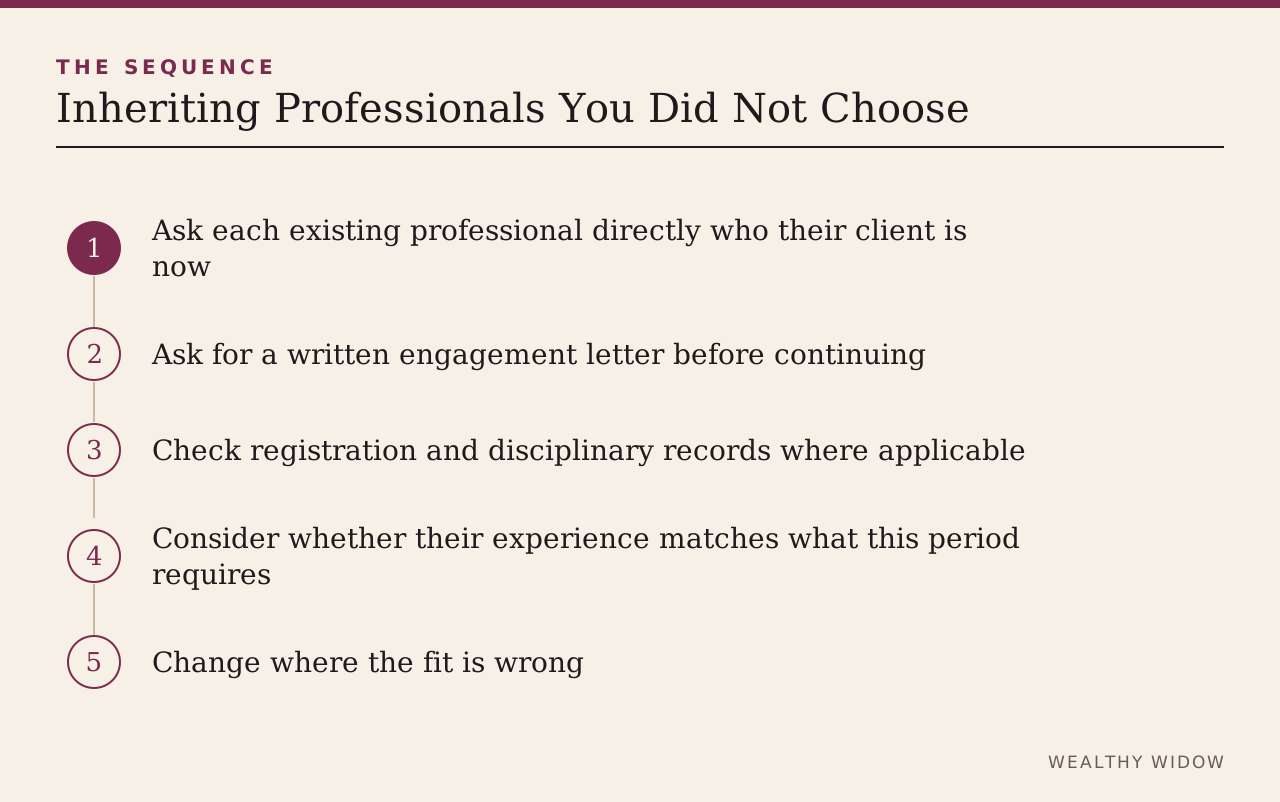
- Ask each existing professional directly who their client is now.
- Ask for a written engagement letter before continuing.
- Check registration and disciplinary records where applicable.
- Consider whether their experience matches what this period requires.
- Change where the fit is wrong, and do so without apology.
What to refuse, and why
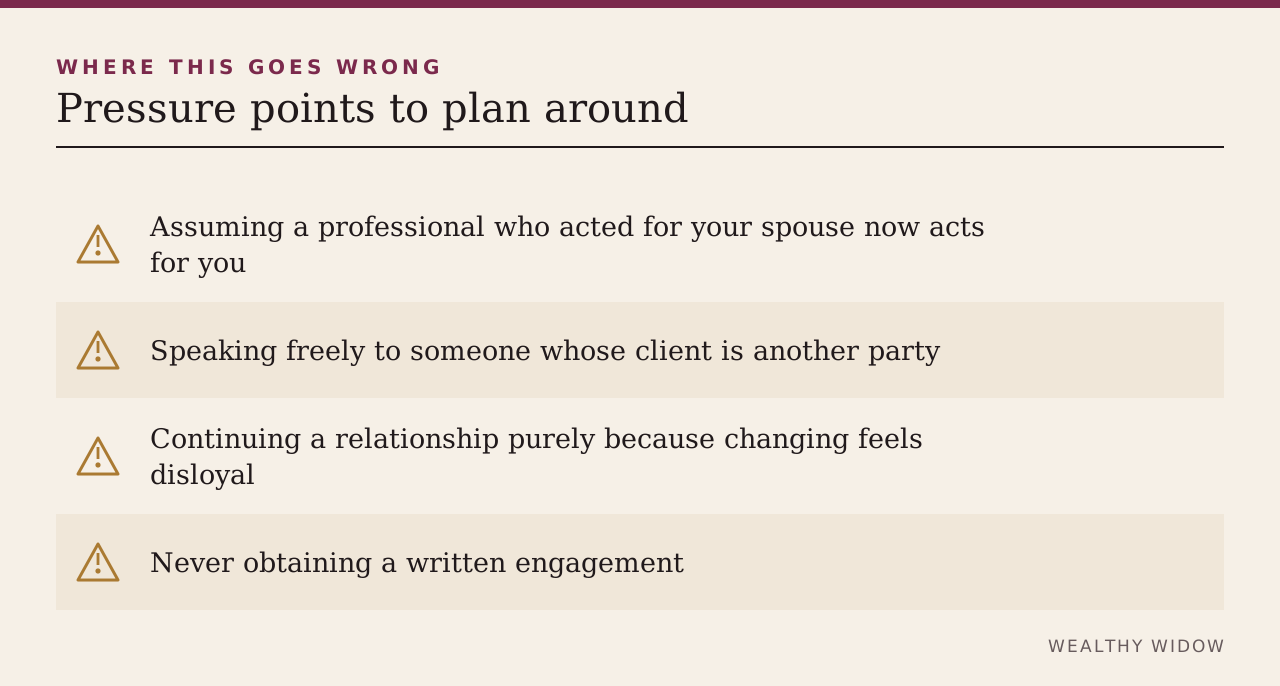
The problems below recur often enough to be planned for. Assuming a professional who acted for your spouse now acts for you.
Speaking freely to someone whose client is another party. Continuing a relationship purely because changing feels disloyal. Never obtaining a written engagement, so the scope is undefined.
What every organisation will ask for
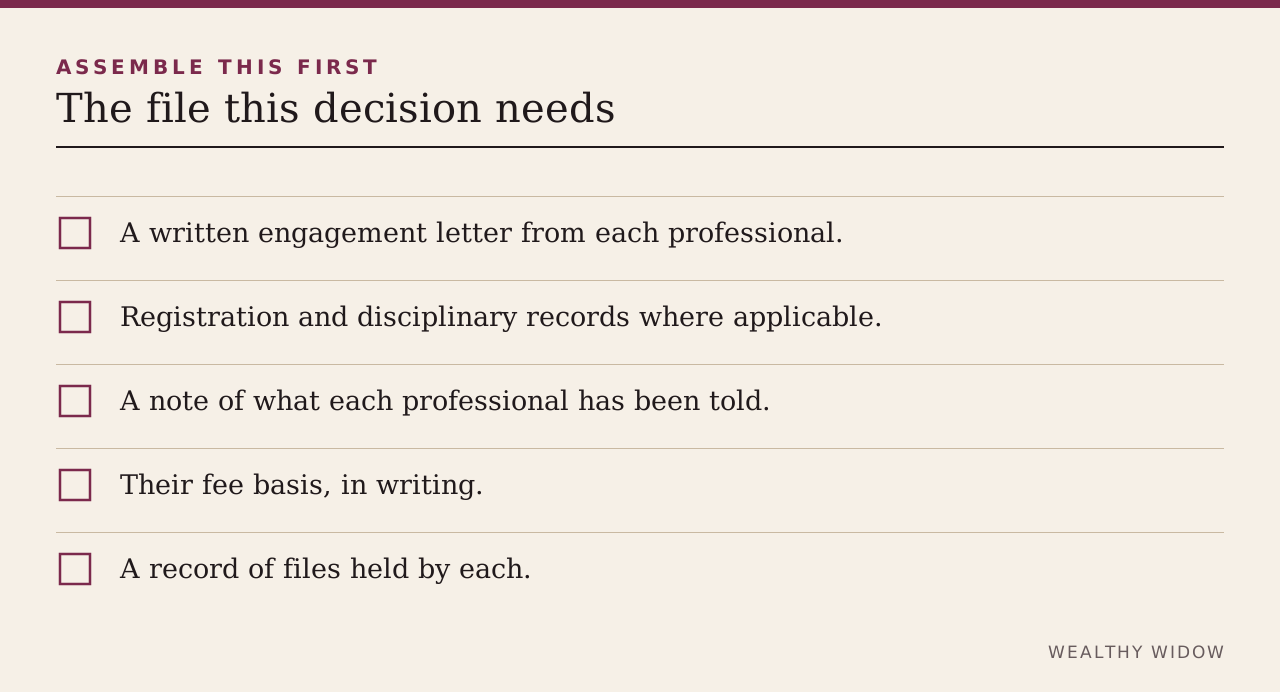
Each item below will be requested more than once. Collect them in one place and log where each copy goes.
- A written engagement letter from each professional.
- Registration and disciplinary records where applicable.
- A note of what each professional has been told.
- Their fee basis, in writing.
- A record of files held by each.
Written confirmation to insist on
Before you act on what you have been told, hold written confirmation of each point.
- Who each professional acts for.
- The scope and fee basis of each engagement.
- How any conflict would be handled.
- What files each holds and how to obtain them.
Take these questions to your adviser
Ask these before an engagement letter is signed, while you still have every option open to you.
- Who is your client in this matter now?
- Will you provide an engagement letter setting out scope and fees?
- How would you handle a conflict between me and another beneficiary?
- What files do you hold, and how do I obtain them?
Read the rule yourself
The sources below govern. This guide only summarises them.
- U.S. Securities and Exchange Commission — Check out your investment professional
- Legal Services Corporation — I need legal help
- American Bar Association — Find legal help
- U.S. Securities and Exchange Commission — Ask and check
The limits of this guide
This is where general guidance ends and your own paperwork takes over. It cannot assess any professional, and the client question is the one that should be settled before anything else.
What to hold on to
Ask who their client is, get it in writing, and change where the answer is not you. Momentum is a poor reason to continue a professional relationship in an estate.
Read Some Things Will Be Missed, and Most Are Recoverable next; the two decisions interact.
Primary sources
- U.S. Securities and Exchange Commission — Check out your investment professional
- Legal Services Corporation — I need legal help
- American Bar Association — Find legal help
- U.S. Securities and Exchange Commission — Ask and check
This article provides general education, not individualized legal, tax, investment, insurance, or benefits advice. Rules and deadlines change; verify the current requirement with the agency and a qualified professional.