Money
Credit in Your Own Name: A Problem That Surfaces Late
Where accounts and borrowing sat in a spouse’s name, a surviving widow can find her own credit history is thinner than she expected.

There is a version of this decision that takes ten minutes and a version that takes a season. Where accounts and borrowing sat in a spouse’s name, a surviving widow can find her own credit history is thinner than she expected. The difference is whether the facts were assembled first.
This is a structural issue rather than a personal failing, and it is common in households where one spouse handled borrowing. It becomes visible at the moment you need credit, which is usually the worst moment to discover it.
Credit history is individual, and a lifetime of shared prudence does not automatically appear on your file.
Name the decision before you make it
A handful of accurate points does most of the work here, and the rest is noise generated by other people’s urgency. Credit files are held individually, and being married does not merge them. Authorised user status on a card may appear differently on a file from being a joint account holder. Closing long-standing accounts can shorten the average age of accounts, which affects scoring.
A thin file is not the same as a poor file, but lenders may treat both cautiously. Errors on a credit file are common and can be disputed through a defined process.
How to work through it
The order below keeps your options open for as long as possible.
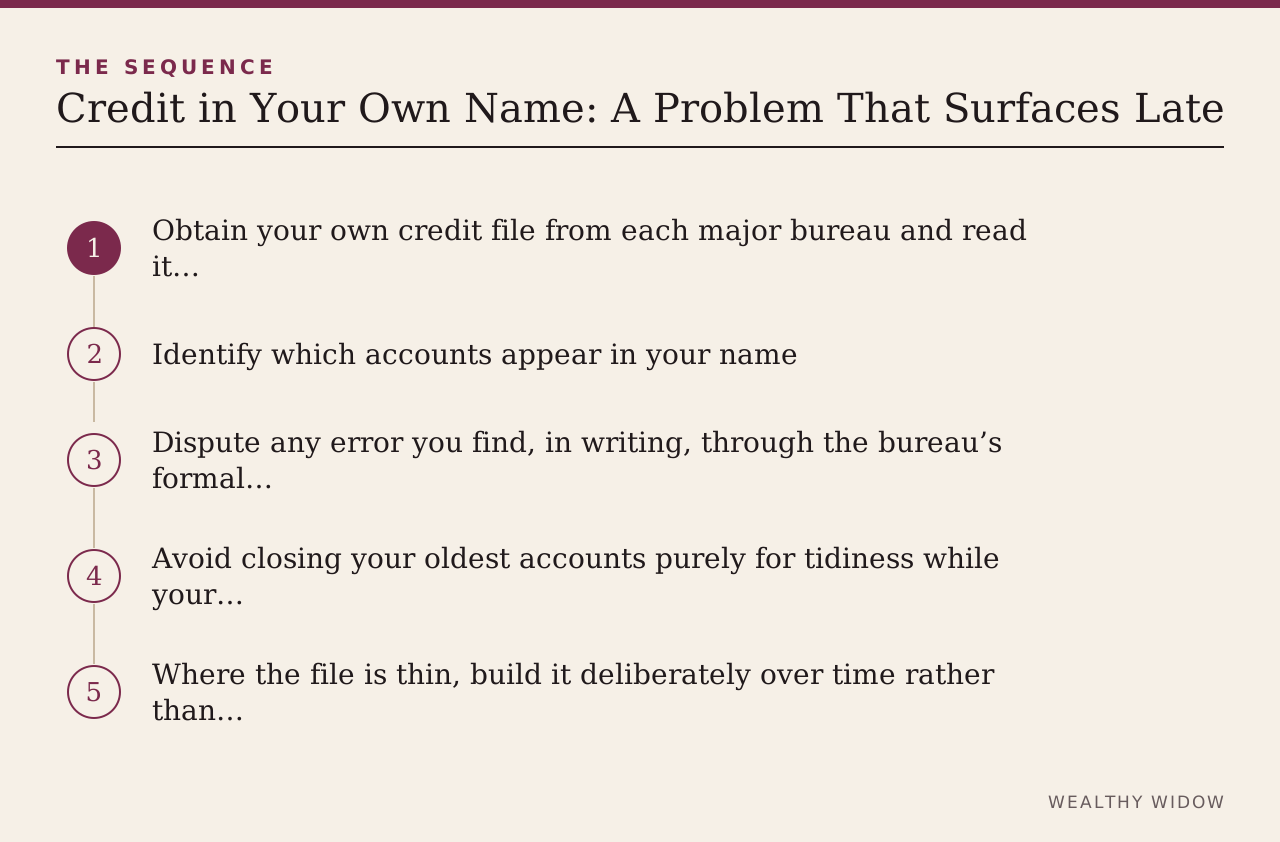
- Obtain your own credit file from each major bureau and read it before assuming anything.
- Identify which accounts appear in your name, and in what capacity.
- Dispute any error you find, in writing, through the bureau’s formal process.
- Avoid closing your oldest accounts purely for tidiness while your file is thin.
- Where the file is thin, build it deliberately over time rather than by taking on unnecessary borrowing.
Known hazards
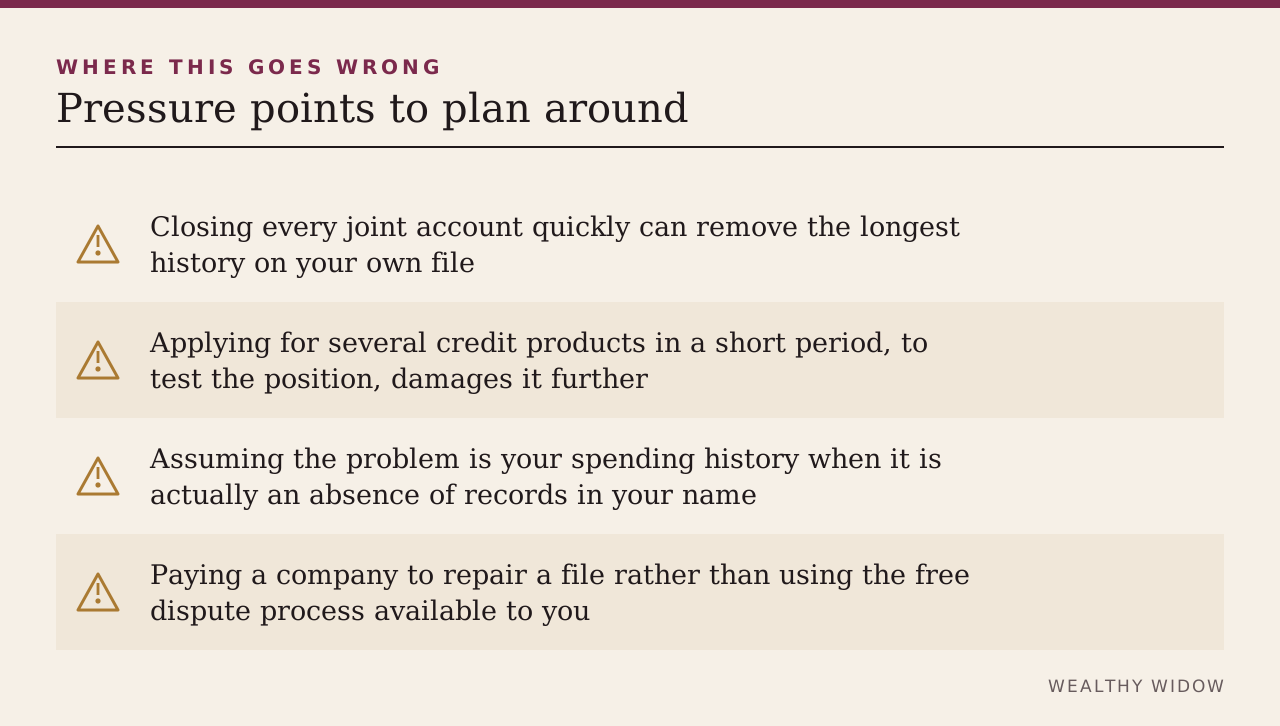
Treat each of the following as a reason to slow down. Closing every joint account quickly can remove the longest history on your own file.
Applying for several credit products in a short period, to test the position, damages it further. Assuming the problem is your spending history when it is actually an absence of records in your name. Paying a company to repair a file rather than using the free dispute process available to you.
The file this decision needs
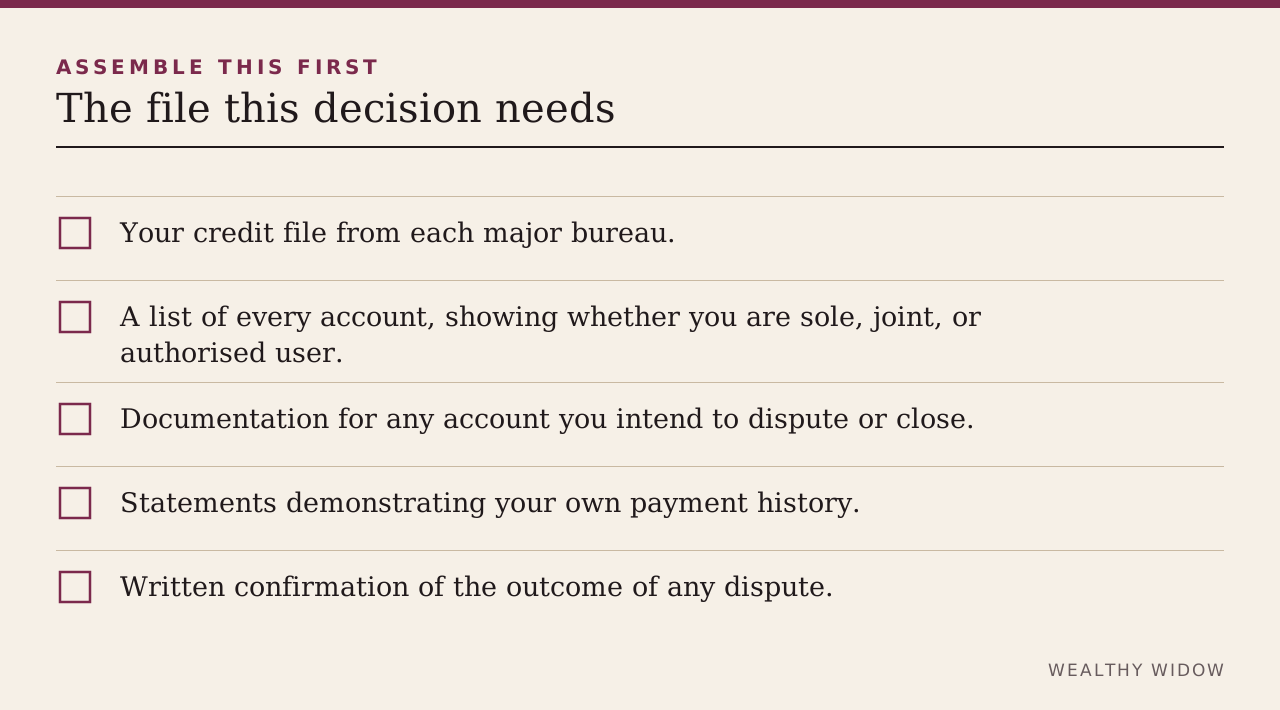
Keep these together in one place, and note where every copy goes and on what date it was sent.
- Your credit file from each major bureau.
- A list of every account, showing whether you are sole, joint, or authorised user.
- Documentation for any account you intend to dispute or close.
- Statements demonstrating your own payment history.
- Written confirmation of the outcome of any dispute.
Put these in writing, then proceed
A conversation is a starting point. These belong on paper.
- What appears on your own file, in your own name.
- The capacity in which you are recorded on each shared account.
- The outcome of any dispute, in writing.
- The effect on your file before closing any long-standing account.
Before anyone is engaged, ask these
Ask them plainly; the response tells you as much as the answer.
- What is the effect on my file of closing this particular account?
- How is an authorised user recorded compared with a joint holder?
- What is the free route to disputing an error on my file?
- What would you recommend to build a thin file without unnecessary borrowing?
Where the current rule lives
Read the source directly for any figure, date, or threshold that will actually drive a decision you make.
- Federal Trade Commission — Credit and debt
- Consumer Financial Protection Bureau — Help for surviving spouses
- Federal Trade Commission — Identity theft
What this cannot decide for you
General guidance sets out the shape of a decision. Your documents settle it. It cannot tell you what is on your file. Only the bureaus can, and the first useful step is to read all three rather than to assume.
Before you move on
Read your own file before you need it. Discovering a thin credit history while applying for a mortgage is a materially worse experience than discovering it on a quiet afternoon a year earlier.
Our related guide When a Settlement Lands: Large Cash Balances and Protection Limits covers the adjacent problem.
Primary sources
- Federal Trade Commission — Credit and debt
- Consumer Financial Protection Bureau — Help for surviving spouses
- Federal Trade Commission — Identity theft
This article provides general education, not individualized legal, tax, investment, insurance, or benefits advice. Rules and deadlines change; verify the current requirement with the agency and a qualified professional.