Money
Consolidation: Simpler Is Usually Better, But Not Always
Widows commonly hold accounts across many institutions. Consolidating helps, but a few accounts are worth keeping separate on purpose.

This guide covers a decision that is easy to make quickly and expensive to make wrongly. Widows commonly hold accounts across many institutions. Consolidating helps, but a few accounts are worth keeping separate on purpose.
Managing many accounts is genuinely burdensome, and consolidation is usually sound. The exceptions matter, because a few account structures carry protections or tax treatments that merging would destroy.
Simplify for clarity, not for the convenience of whoever is proposing the consolidation.
The question underneath the paperwork
What follows is what is actually true, stripped of the anxiety around it. Deposit protection applies per institution, so consolidating cash can reduce total protection. Inherited retirement accounts frequently have distinct rules and should not be merged with your own. Combining accounts can change cost basis records, which are needed for tax when assets are sold.
Account age can matter for credit history and for certain product terms. An adviser proposing consolidation onto their own platform has a commercial interest in the outcome.
Sequence the work deliberately
Do these in sequence, and do not skip ahead to the signature.
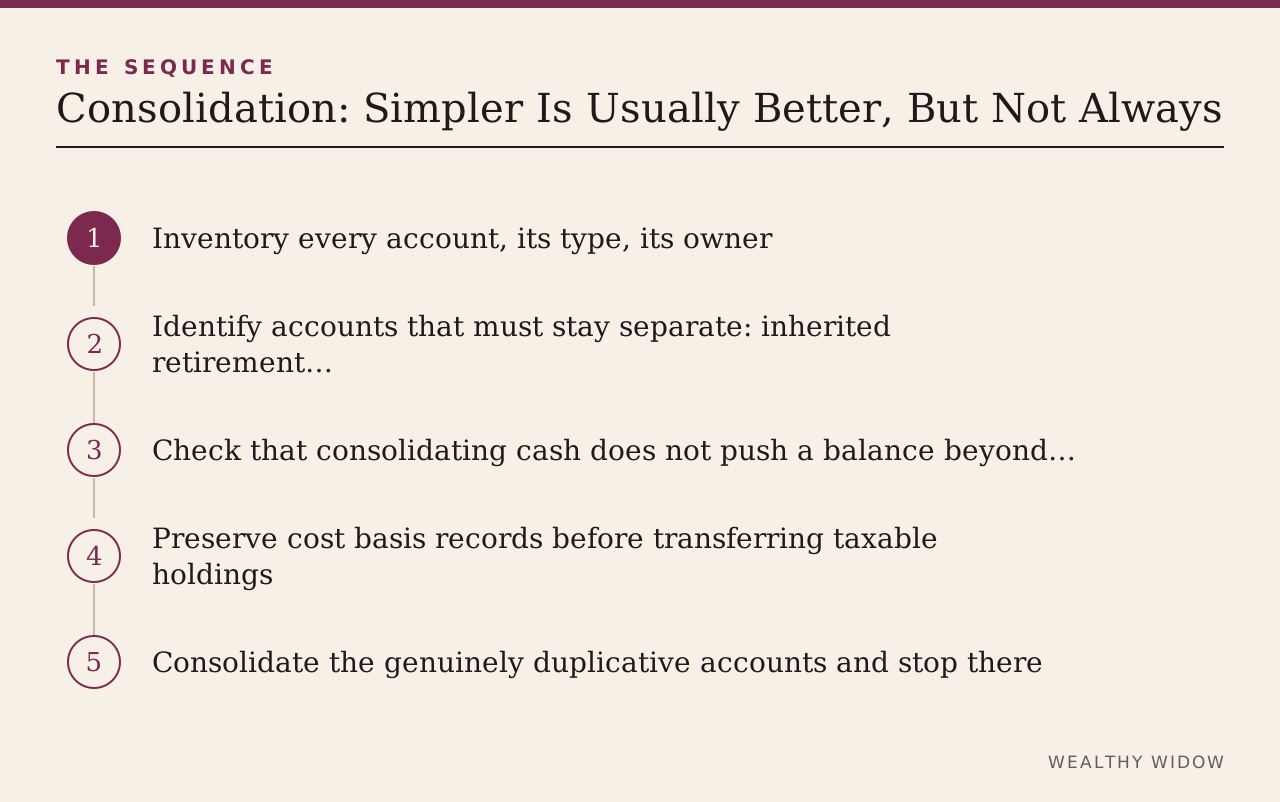
- Inventory every account, its type, its owner, and its purpose.
- Identify accounts that must stay separate: inherited retirement accounts and anything with distinct tax treatment.
- Check that consolidating cash does not push a balance beyond deposit protection at one institution.
- Preserve cost basis records before transferring taxable holdings.
- Consolidate the genuinely duplicative accounts and stop there.
What to refuse, and why
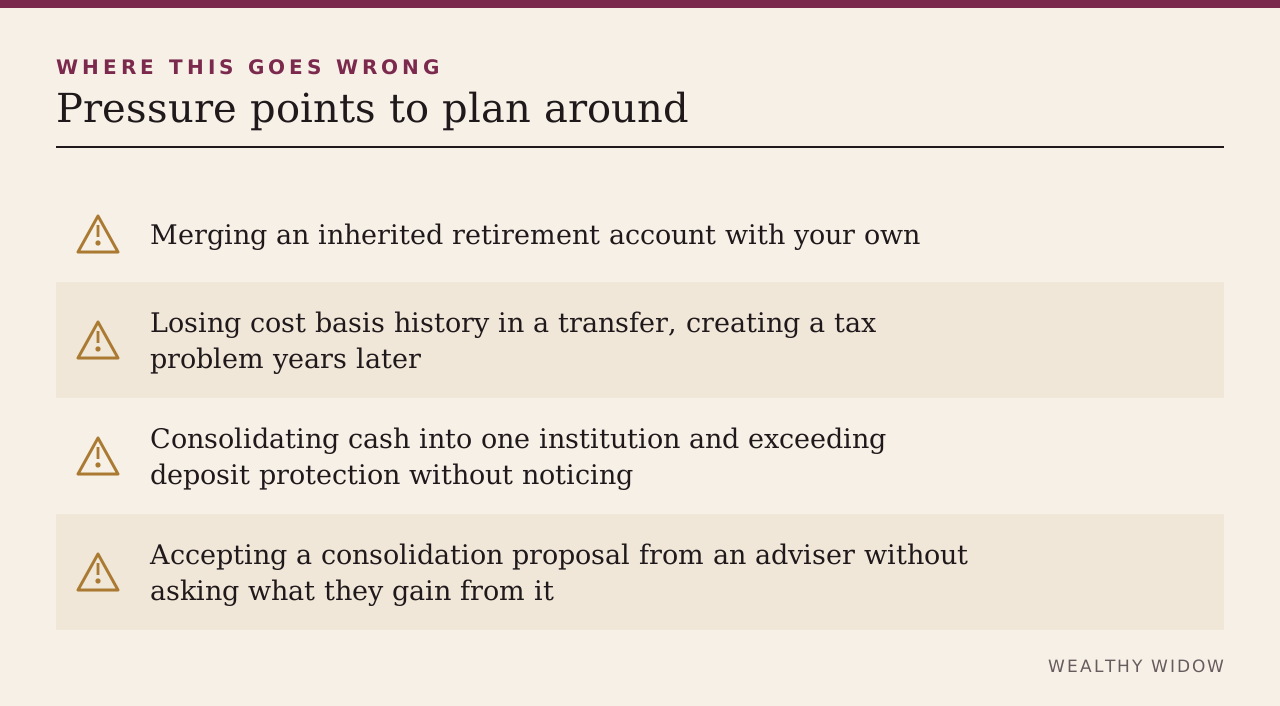
The failures here are predictable, which means they are avoidable. Merging an inherited retirement account with your own, which can be difficult or impossible to correct.
Losing cost basis history in a transfer, creating a tax problem years later. Consolidating cash into one institution and exceeding deposit protection without noticing. Accepting a consolidation proposal from an adviser without asking what they gain from it.
What to have to hand
The paperwork below is what turns a long process into a short one.
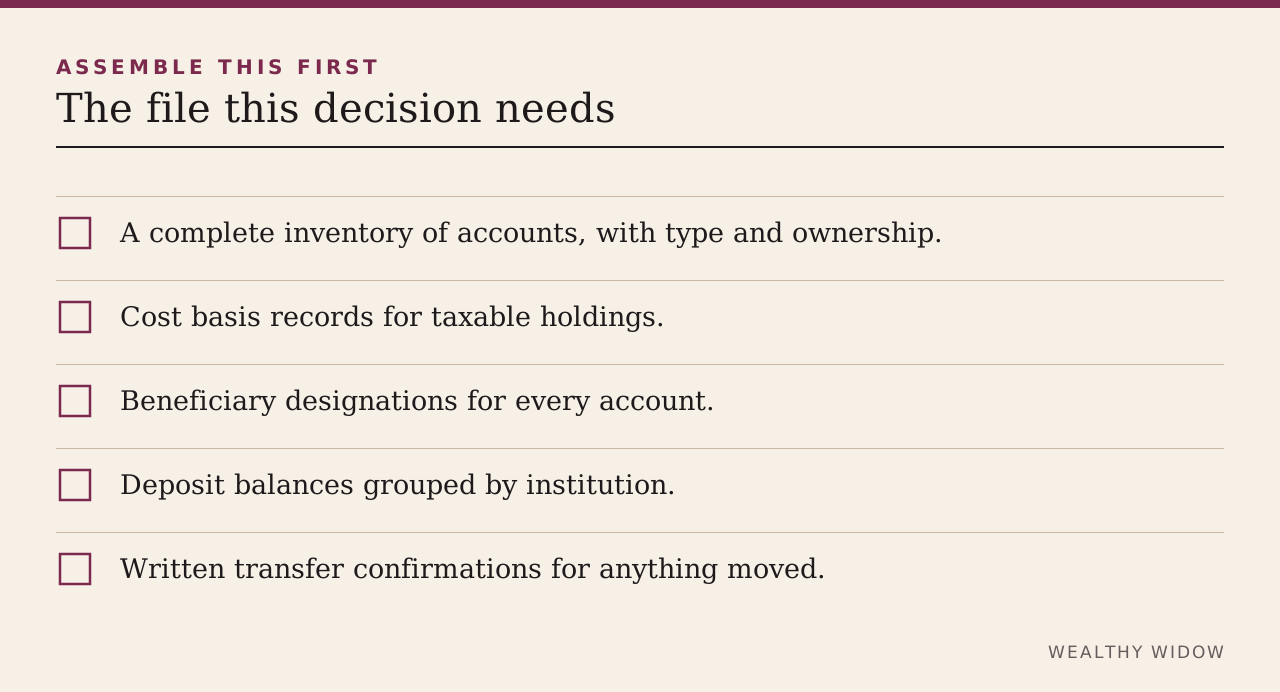
- A complete inventory of accounts, with type and ownership.
- Cost basis records for taxable holdings.
- Beneficiary designations for every account.
- Deposit balances grouped by institution.
- Written transfer confirmations for anything moved.
What to have documented
Put each of these in the file with a date against it.
- Which accounts must remain separate, and why.
- That cost basis records transfer with the assets.
- That deposit protection is not reduced by the consolidation.
- That beneficiary designations are re-established on any new account.
What to ask before you sign
Ask these before an engagement letter is signed or a product is recommended.
- Which of these accounts should not be merged, and why?
- What happens to cost basis records on transfer?
- What do you gain if I consolidate onto your platform?
- What protection or tax treatment would I lose by combining these?
Sources worth reading yourself
Where this guide and a source disagree, the source is right.
- Federal Deposit Insurance Corporation — Deposit insurance
- U.S. Securities and Exchange Commission — Investor.gov
- Internal Revenue Service — Retirement topics, beneficiary
- National Credit Union Administration — Share insurance coverage
The boundary of this guide
Be clear about the boundary; the wrong assumption here is expensive. It cannot tell you which of your accounts are duplicative. That requires seeing the inventory, and the inventory is the first piece of work.
Where this leaves you
Consolidate the genuine duplicates and protect the deliberate exceptions. Fewer accounts is a good objective; fewer accounts bought at the cost of deposit protection, cost basis records, or the distinct treatment of an inherited retirement account is not. Do the inventory first, and the consolidation almost always turns out to be smaller and safer than the one being proposed to you.
Read Returning to Work: The Interactions Nobody Mentions next; the two decisions interact.
Primary sources
- Federal Deposit Insurance Corporation — Deposit insurance
- U.S. Securities and Exchange Commission — Investor.gov
- Internal Revenue Service — Retirement topics, beneficiary
- National Credit Union Administration — Share insurance coverage
This article provides general education, not individualized legal, tax, investment, insurance, or benefits advice. Rules and deadlines change; verify the current requirement with the agency and a qualified professional.