Home
Comparing Housing Options Without Being Sold One
Independent living, assisted living, and continuing care communities differ enormously in cost structure and in what happens when needs change.

There is a version of this decision that takes ten minutes and a version that takes a season. Independent living, assisted living, and continuing care communities differ enormously in cost structure and in what happens when needs change. The difference is whether the facts were assembled first.
These are complex financial products as much as housing choices, and they are marketed accordingly. The differences that matter are usually in the contract rather than in the brochure.
The important question is not what it costs now but what happens, and what it costs, when your needs change.
What is really being decided here
The position is narrower than it looks once it is stated plainly. Options range from independent living through assisted living to continuing care and nursing care. Fee structures differ substantially, including entry fees, monthly fees, and refundability. What happens when care needs increase is set by contract and differs between providers.
Some arrangements involve a substantial upfront payment with conditional refund terms. Local aging services can advise independently of any provider.
What to do, and in what order
This is the working order most readers find keeps them in control.
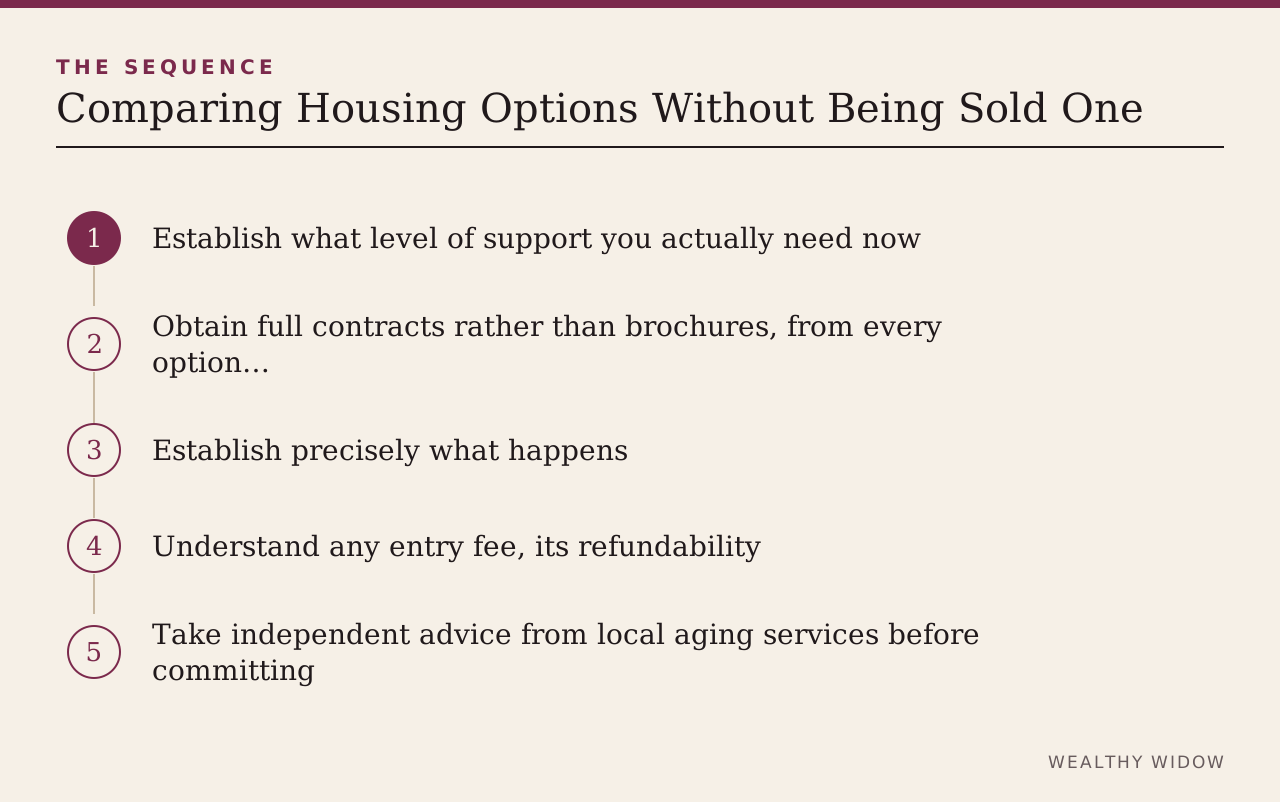
- Establish what level of support you actually need now, and what you might need later.
- Obtain full contracts rather than brochures, from every option under consideration.
- Establish precisely what happens, and what it costs, when care needs increase.
- Understand any entry fee, its refundability, and the conditions attached.
- Take independent advice from local aging services before committing.
The mistakes that are hard to reverse
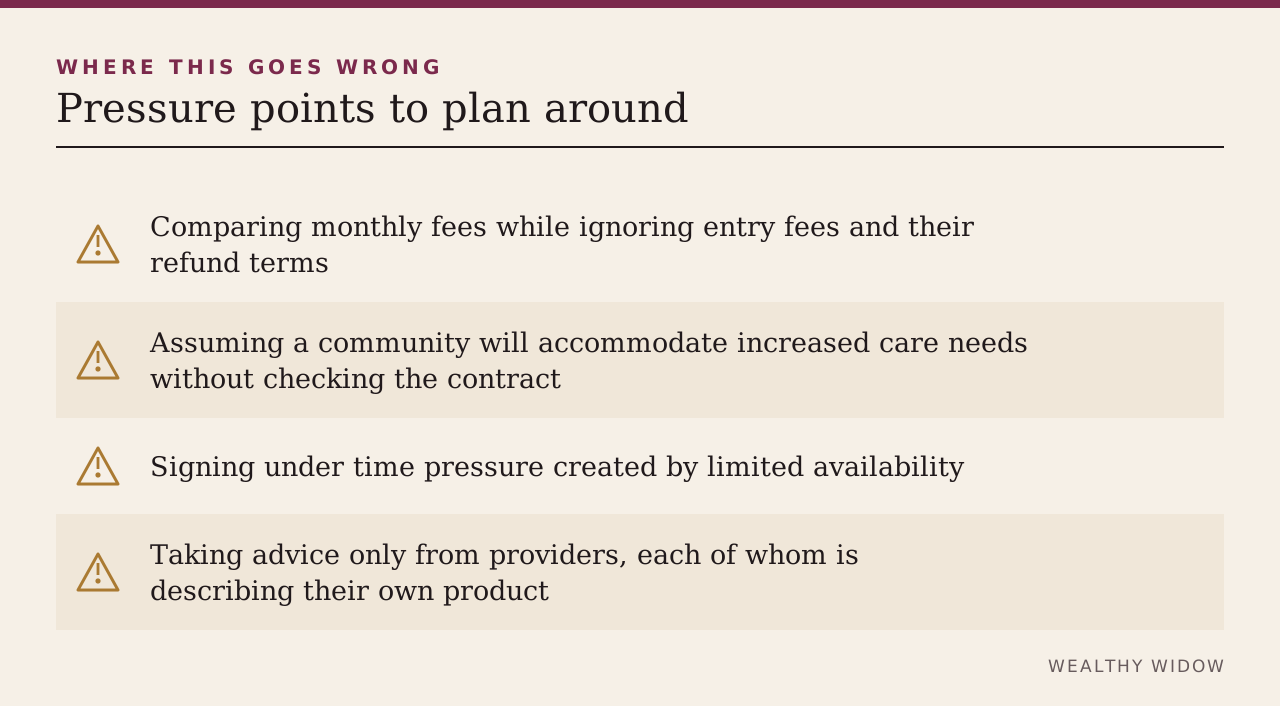
Knowing the failure modes in advance is most of the protection. Comparing monthly fees while ignoring entry fees and their refund terms.
Assuming a community will accommodate increased care needs without checking the contract. Signing under time pressure created by limited availability. Taking advice only from providers, each of whom is describing their own product.
The paperwork to collect first
Gather these first and the rest of the process moves considerably faster, because most delays are missing paperwork.
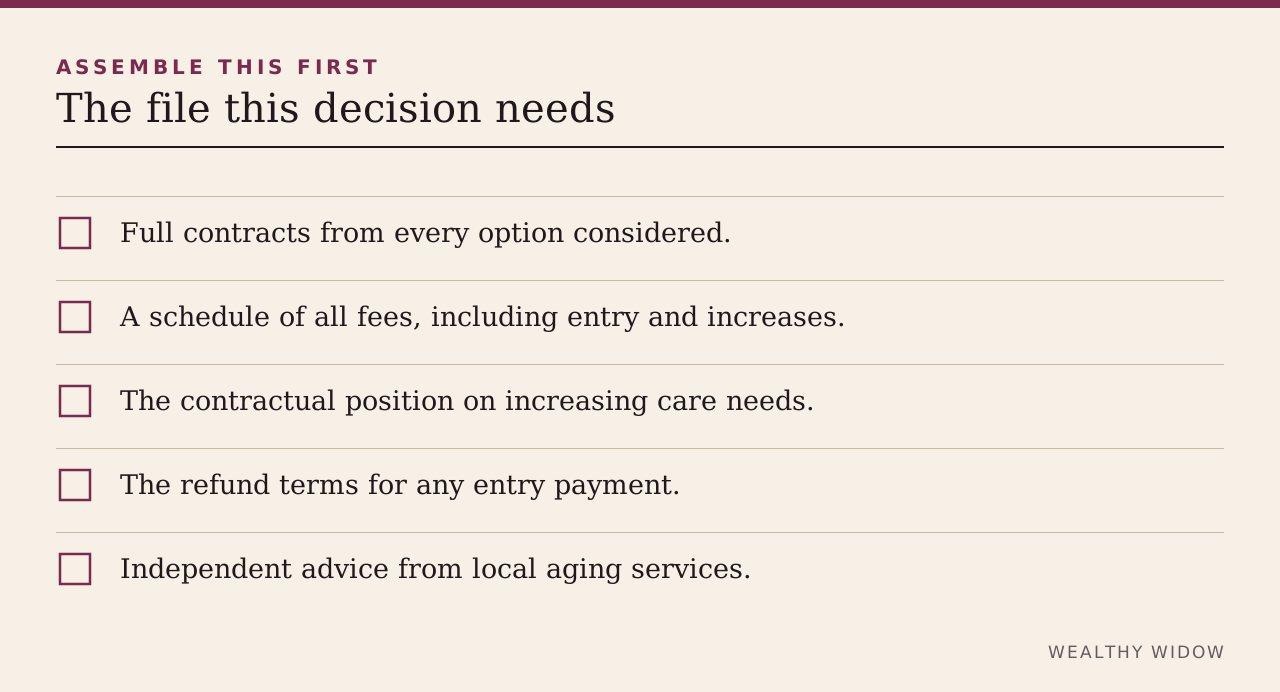
- Full contracts from every option considered.
- A schedule of all fees, including entry and increases.
- The contractual position on increasing care needs.
- The refund terms for any entry payment.
- Independent advice from local aging services.
Nothing here on a verbal answer
None of the following should rest on a phone call alone, however clear the call felt at the time.
- What happens contractually when care needs increase.
- The full fee structure, including entry fees and increases.
- The refund terms and conditions attached to them.
- The provider’s financial standing, where a large entry fee is involved.
The questions that change the answer
A competent professional answers each of these without hesitation.
- What happens, contractually, when my care needs increase?
- What is the entry fee, and under what conditions is it refunded?
- How much have fees increased over the last five years?
- What would cause you to ask a resident to leave?
Confirm this against the rule
Do not take this guide as the authority. Each source below states the current rule for the part of this decision it covers.
- Administration for Community Living — Assisted living
- Administration for Community Living — Long-term care planning
- Administration for Community Living — Eldercare Locator
What is outside this
What follows is outside anything written for a general readership. It cannot compare specific communities, and the contracts differ enough that only reading them answers the question.
The short version
Ask for the contract, not the brochure, and focus on what happens when needs change. That single question separates these options more sharply than anything in the marketing.
Our related guide Timing a Move Around the Rest of the First Years covers the adjacent problem.
Primary sources
- Administration for Community Living — Assisted living
- Administration for Community Living — Long-term care planning
- Administration for Community Living — Eldercare Locator
This article provides general education, not individualized legal, tax, investment, insurance, or benefits advice. Rules and deadlines change; verify the current requirement with the agency and a qualified professional.