Estate
Beneficiaries: What They Are Owed, and What They Are Not
Most estate disputes begin as communication failures. Beneficiaries have real entitlements to information, and meeting them early prevents most conflict.

Some decisions after a death are reversible. This one deserves more care than most. Most estate disputes begin as communication failures. Beneficiaries have real entitlements to information, and meeting them early prevents most conflict.
A personal representative is usually managing grief, administration, and family expectations simultaneously. Communication is the piece most often dropped, and it is the piece whose absence most reliably produces litigation.
Silence is read as concealment, even when it is only exhaustion, and the reading is what causes the dispute.
The substance beneath the process
These are the load-bearing facts. Beneficiaries generally have a right to information about the estate and to an eventual accounting. The extent and timing of that right is set by state law and by the terms of the will or trust. A representative is not obliged to negotiate distributions, only to administer them properly.
Delay is normal in estate administration and is much better received when it is explained. Disputes are substantially more expensive than the communication that would have prevented them.
The order that protects you
Sequence matters, because some steps close options that later steps need.
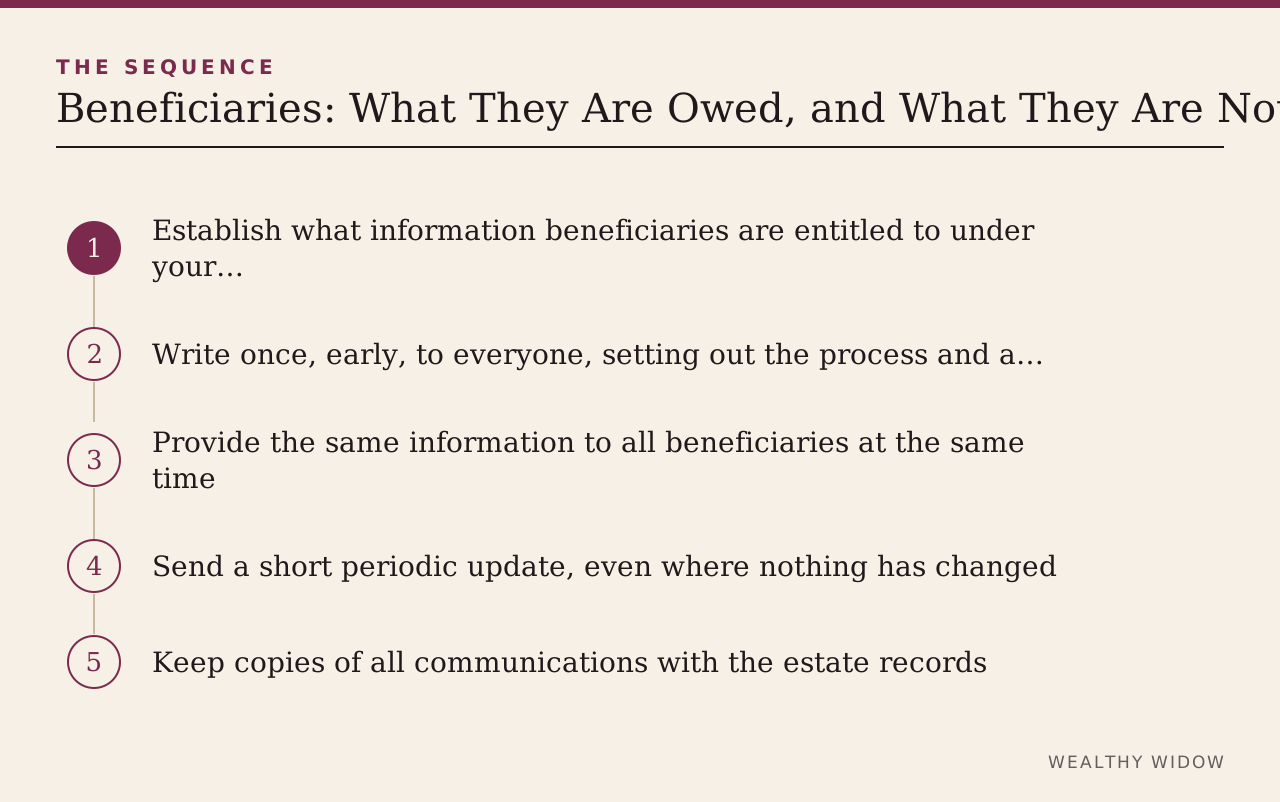
- Establish what information beneficiaries are entitled to under your state law and the governing document.
- Write once, early, to everyone, setting out the process and a realistic timetable.
- Provide the same information to all beneficiaries at the same time.
- Send a short periodic update, even where nothing has changed.
- Keep copies of all communications with the estate records.
What tends to go wrong here
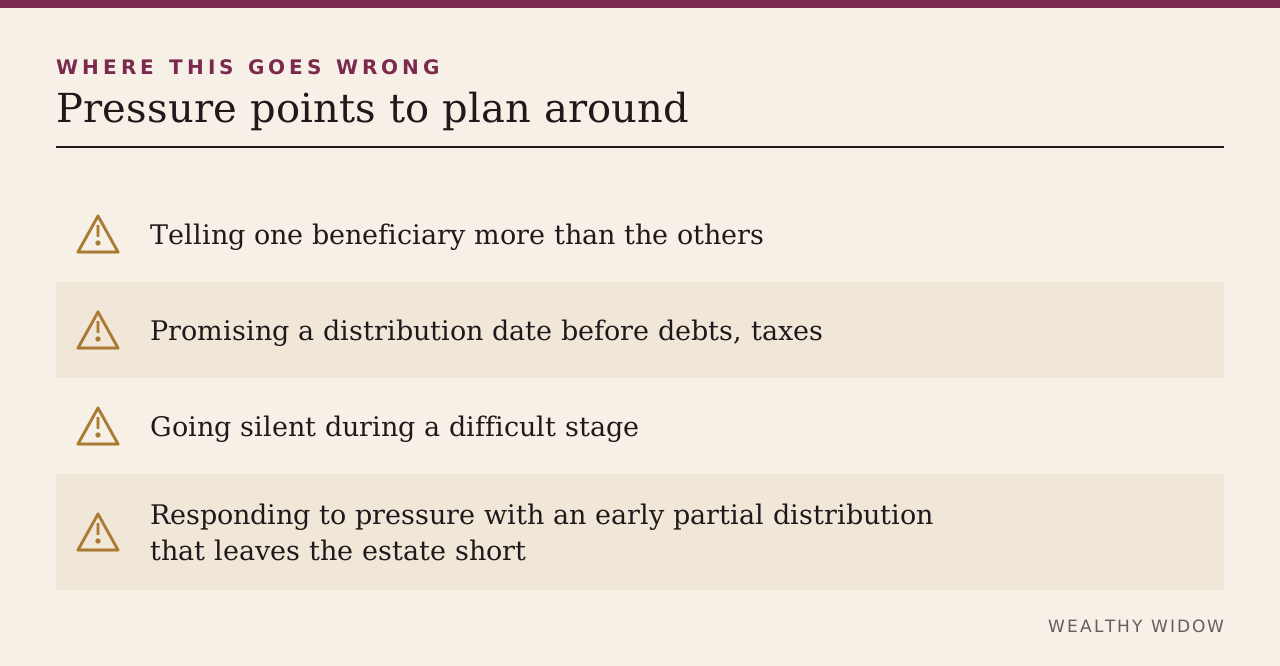
What follows is where readers most reliably lose ground. Telling one beneficiary more than the others, which reliably creates suspicion among the rest.
Promising a distribution date before debts, taxes, and the creditor period are settled. Going silent during a difficult stage, which is when explanation matters most. Responding to pressure with an early partial distribution that leaves the estate short.
The paperwork this actually requires
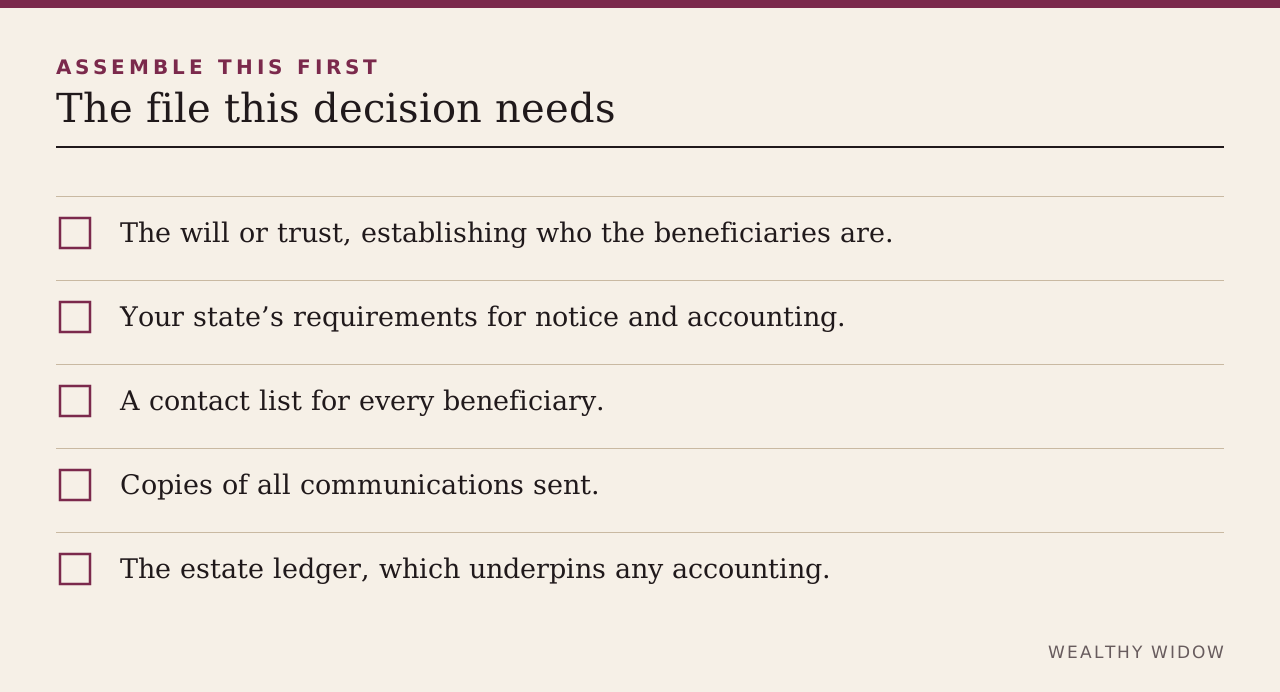
The file below does most of the work of establishing who you are.
- The will or trust, establishing who the beneficiaries are.
- Your state’s requirements for notice and accounting.
- A contact list for every beneficiary.
- Copies of all communications sent.
- The estate ledger, which underpins any accounting.
Ask for this in writing
Each item below should exist somewhere other than your memory, because memory is not evidence in a dispute.
- What each beneficiary is legally entitled to receive, and when.
- What notice your state requires, and its deadline.
- The realistic timetable for administration.
- That communications have gone to everyone equally.
The questions to bring to the meeting
Take these to the attorney, tax professional, or planner handling this work.
- What information are beneficiaries entitled to at this stage?
- What formal notice must I give, and by when?
- Can I make a partial distribution safely, and what would I need first?
- What should I not say while the estate is still open?
Where to verify this
Every load-bearing point above traces to one of the following. Where a figure or deadline matters to you, read it there.
- Internal Revenue Service — Information for executors
- Legal Services Corporation — I need legal help
- American Bar Association — Find legal help
- Consumer Financial Protection Bureau — Taking control of your finances, help for surviving spouses
What a professional still has to decide
The limits of a guide matter as much as its content, because acting past them is where the cost sits. It cannot resolve a dispute that has already started. Where positions have hardened, that needs a lawyer rather than a better letter.
What good looks like here
Write once, early, to everyone, with a realistic timetable and a commitment to periodic updates. It is the cheapest insurance available in estate administration.
Our related guide Your Own Will Now Names Someone Who Has Died covers the adjacent problem.
Primary sources
- Internal Revenue Service — Information for executors
- Legal Services Corporation — I need legal help
- American Bar Association — Find legal help
- Consumer Financial Protection Bureau — Taking control of your finances, help for surviving spouses
This article provides general education, not individualized legal, tax, investment, insurance, or benefits advice. Rules and deadlines change; verify the current requirement with the agency and a qualified professional.