Estate
Closing the Estate: The Step That Ends Your Liability
Distributing the assets is not the end. A formal closing releases the representative, and skipping it leaves an open-ended exposure.

You may be told this is simply a form to sign. It is a decision with consequences. Distributing the assets is not the end. A formal closing releases the representative, and skipping it leaves an open-ended exposure.
Representatives frequently distribute the assets, feel the job is done, and never complete the formal closing. That final step is what converts a continuing responsibility into a finished one.
An estate that is emptied but never closed leaves the representative exposed to claims with no formal end point.
What this decision actually is
Start from the reliable ground, before anyone asks you to act on anything less certain than it. Closing generally requires a final accounting to beneficiaries and often to the court. The creditor claim period must have expired before an estate is safely closed. Final tax returns for both the individual and the estate may be required.
Beneficiaries are typically asked to approve the accounting or receive court notice of it. A discharge, where available, formally releases the representative from further liability.
Work it in this order
Work through it deliberately rather than all at once, and stop at any point where an answer is missing.
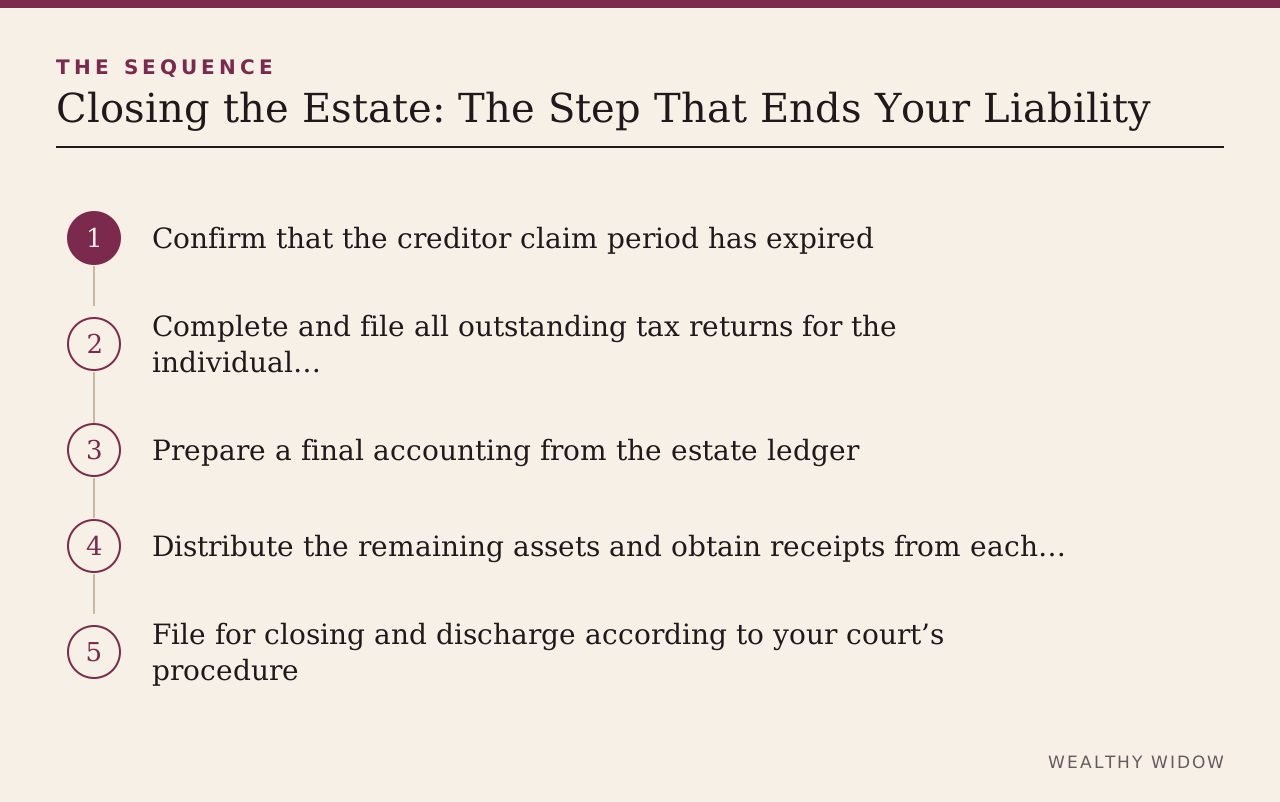
- Confirm that the creditor claim period has expired.
- Complete and file all outstanding tax returns for the individual and the estate.
- Prepare a final accounting from the estate ledger.
- Distribute the remaining assets and obtain receipts from each beneficiary.
- File for closing and discharge according to your court’s procedure.
The pressure points to watch
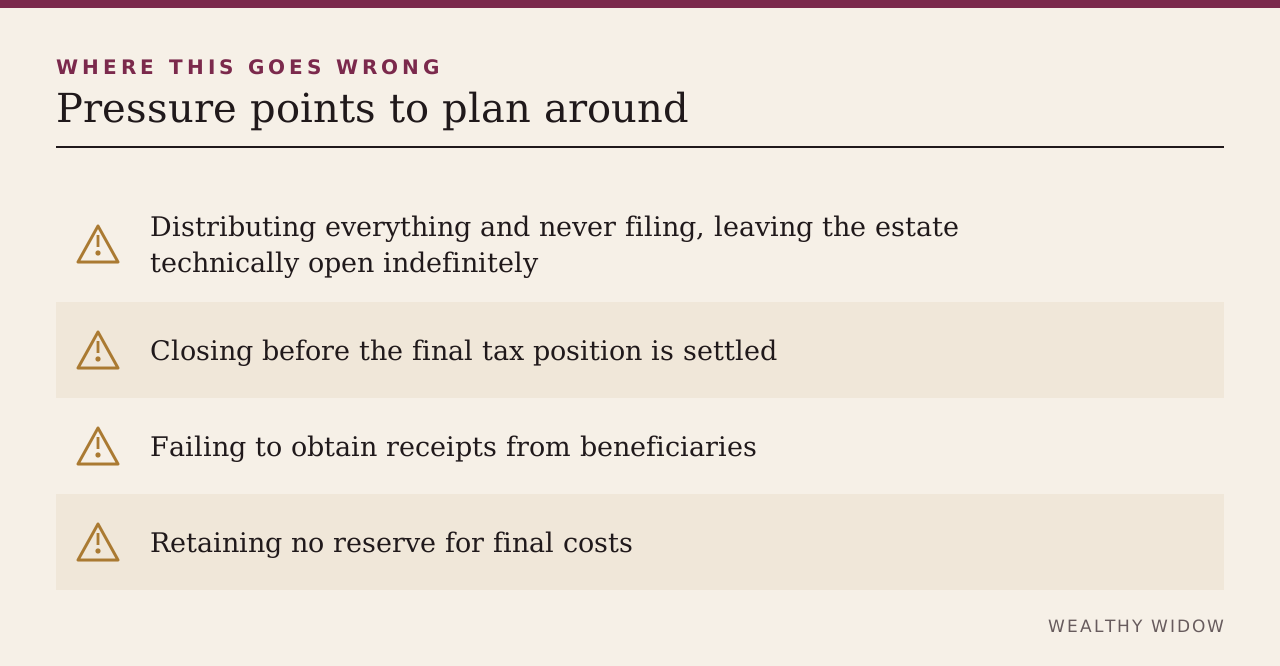
Each of these is a signal to stop and confirm rather than proceed. Distributing everything and never filing, leaving the estate technically open indefinitely.
Closing before the final tax position is settled, which can require reopening. Failing to obtain receipts from beneficiaries, which weakens the accounting. Retaining no reserve for final costs, then having to ask beneficiaries to return funds.
The evidence to gather
You will be asked for these in some combination by almost everyone involved.
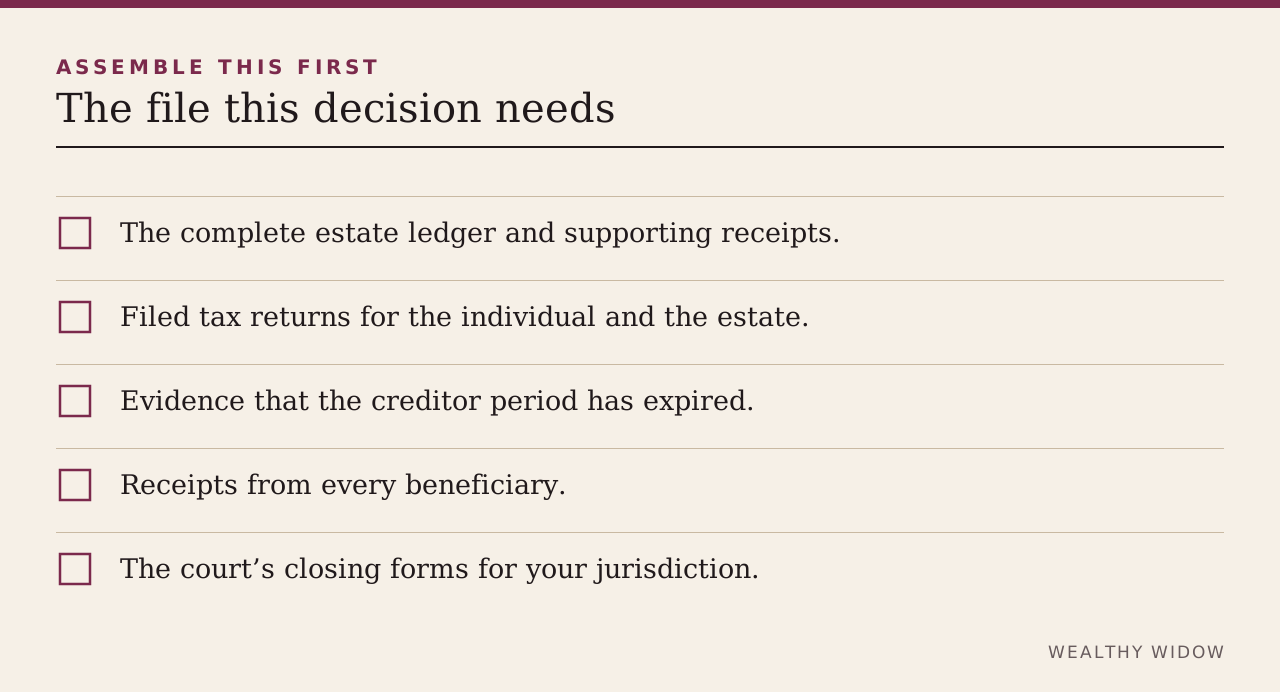
- The complete estate ledger and supporting receipts.
- Filed tax returns for the individual and the estate.
- Evidence that the creditor period has expired.
- Receipts from every beneficiary.
- The court’s closing forms for your jurisdiction.
The written trail to keep
Written confirmation is ordinary practice, not suspicion.
- That all tax filings are complete and any liability settled.
- That the creditor claim period has expired.
- That every beneficiary has receipted their distribution.
- That the court has formally closed the estate and discharged you.
Questions to take to a professional
If an answer to any of these is vague, that is your answer about the adviser.
- What is required to close this estate and discharge me?
- Are all tax filings complete for both the individual and the estate?
- What reserve should I hold back for final costs?
- What happens if an asset surfaces after the estate is closed?
The sources behind this
Anything that will drive a decision should be checked here rather than here-abouts.
- Internal Revenue Service — Information for executors
- Internal Revenue Service — About Publication 559, survivors, executors, and administrators
- Internal Revenue Service — File an estate tax income tax return
- Legal Services Corporation — I need legal help
Where this guide stops
The boundary matters, because the wrong assumption here is expensive. It cannot describe your court’s closing procedure or confirm your tax position, both of which need local professional confirmation.
In practice
Finish the job formally. Settle the taxes, wait out the creditor period, account to the beneficiaries, and obtain the discharge. That last document is the one that ends your responsibility.
A companion guide, Choosing Who Will Do This For You, covers the decision that sits alongside this one.
Primary sources
- Internal Revenue Service — Information for executors
- Internal Revenue Service — About Publication 559, survivors, executors, and administrators
- Internal Revenue Service — File an estate tax income tax return
- Legal Services Corporation — I need legal help
This article provides general education, not individualized legal, tax, investment, insurance, or benefits advice. Rules and deadlines change; verify the current requirement with the agency and a qualified professional.