Taxes
Claiming a Refund Owed to Someone Who Has Died
A refund due on a final return is not paid automatically. Who may claim it, and what evidence is required, depends on your position.

Some decisions after a death are reversible. This one deserves more care than most. A refund due on a final return is not paid automatically. Who may claim it, and what evidence is required, depends on your position.
Refund claims after a death are routine but frequently delayed by missing evidence. Establishing the requirement before filing avoids a cycle of correspondence.
The refund is owed to the estate or to the survivor depending on the circumstances, and the evidence required differs for each.
What this decision actually is
Hold on to a small number of accurate points. A specific form exists for a person claiming a refund due to a deceased taxpayer. A surviving spouse filing a joint return is generally not required to file that form. A court-appointed representative filing the return with a copy of the appointment may also be excepted.
Anyone else claiming a refund generally must file the form to support the claim. Refund cheques issued in the name of a person who has died can be difficult to negotiate, so the claim details matter.
Work it in this order
This is the order that avoids closing doors you may still need.
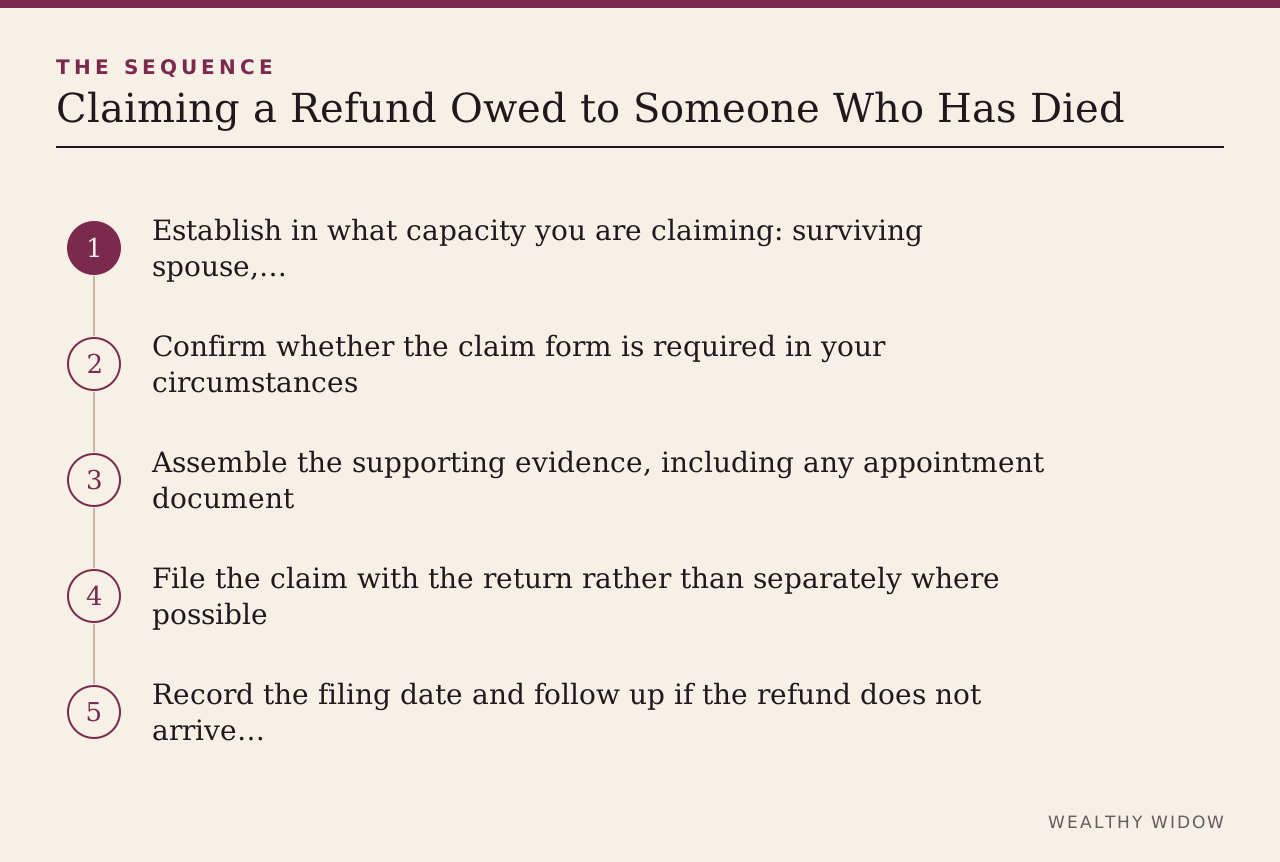
- Establish in what capacity you are claiming: surviving spouse, appointed representative, or other.
- Confirm whether the claim form is required in your circumstances.
- Assemble the supporting evidence, including any appointment document.
- File the claim with the return rather than separately where possible.
- Record the filing date and follow up if the refund does not arrive within the stated period.
The pressure points to watch
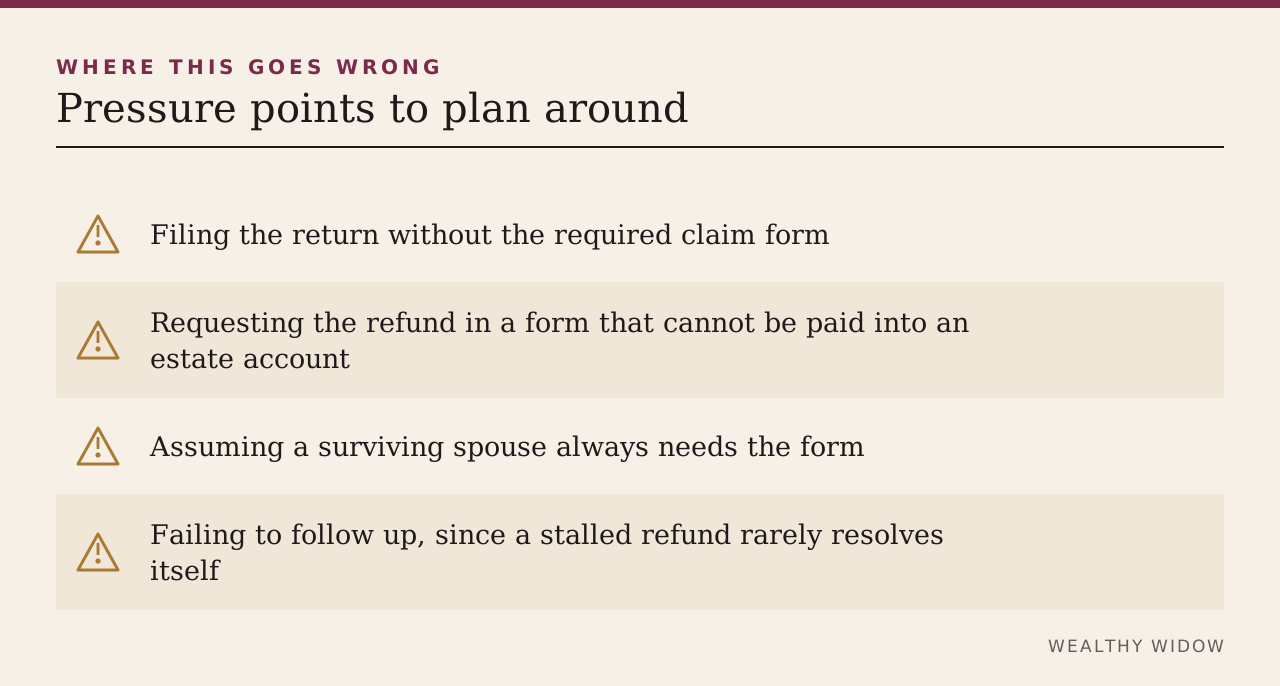
The errors here are well worn, which makes them avoidable. Filing the return without the required claim form, which delays the refund substantially.
Requesting the refund in a form that cannot be paid into an estate account. Assuming a surviving spouse always needs the form, and adding unnecessary paperwork. Failing to follow up, since a stalled refund rarely resolves itself.
What to have in front of you
Collect these once and keep them together, because you will be asked for them repeatedly over the coming months.
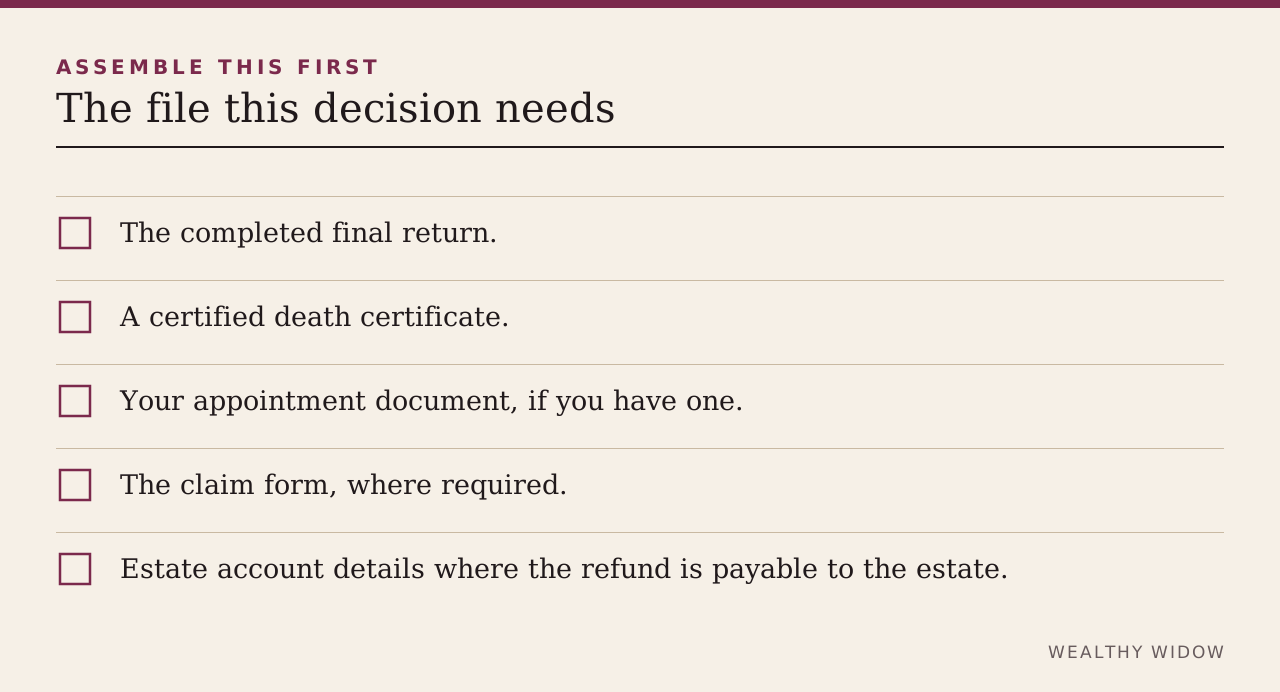
- The completed final return.
- A certified death certificate.
- Your appointment document, if you have one.
- The claim form, where required.
- Estate account details where the refund is payable to the estate.
What belongs in your decision log
Get each of the following documented rather than described.
- Whether the claim form is required in your case.
- Who the refund is payable to.
- How the refund can be received, and into what account.
- The expected processing time.
Questions that reveal the answer
Each of the following is both a fair question and a revealing one, and no competent adviser will resent it.
- Is the claim form required given my capacity?
- Should this refund be payable to me or to the estate?
- How long should processing take, and how do I follow up?
- What happens if a refund cheque is issued in the name of the person who died?
The primary material
Each load-bearing point above traces to one of the following, and they are the versions that stay current.
- Internal Revenue Service — Form 1310, statement of person claiming refund due a deceased taxpayer
- Internal Revenue Service — About Publication 559, survivors, executors, and administrators
- Internal Revenue Service — File the final income tax returns of a deceased person
- Internal Revenue Service — Deceased person
Where general guidance ends
Here is the line between what can usefully be written for a general readership and what cannot be written at all. It cannot complete the claim for you, and the requirement differs by capacity, which is worth confirming before filing.
What this comes down to
Establish your capacity first, then the evidence that capacity requires. A refund claim filed complete is routine; one filed short of evidence becomes months of correspondence.
A companion guide, The Estate’s Own Return: A Second, Separate Filing, covers the decision that sits alongside this one.
Primary sources
- Internal Revenue Service — Form 1310, statement of person claiming refund due a deceased taxpayer
- Internal Revenue Service — About Publication 559, survivors, executors, and administrators
- Internal Revenue Service — File the final income tax returns of a deceased person
- Internal Revenue Service — Deceased person
This article provides general education, not individualized legal, tax, investment, insurance, or benefits advice. Rules and deadlines change; verify the current requirement with the agency and a qualified professional.