Estate
Instructing an Estate Lawyer: Scope, Fees, and Who They Act For
The lawyer who drafted the will may not be the right lawyer to administer the estate, and may not be acting for you at all.

The difficulty here is rarely the paperwork. It is knowing what is actually being asked. The lawyer who drafted the will may not be the right lawyer to administer the estate, and may not be acting for you at all.
In estate administration a lawyer may act for the estate, for the personal representative, or for a beneficiary, and those are not the same client. Clarifying it at the outset prevents a genuinely difficult situation later.
Establish whose interests the lawyer represents before you tell them anything you would not want a beneficiary to hear.
What this decision actually is
These are the points the rest of the decision rests on, so it is worth being sure of them before going further. A lawyer instructed on an estate may represent the representative, the estate, or a beneficiary, depending on the engagement. The lawyer who drafted the will has useful background but is not obliged to act on the administration. Fees may be charged hourly, as a fixed sum, or as a percentage, and state rules may constrain the basis.
Free and low-cost legal help exists for those who qualify, and eligibility is worth checking. A conflict can arise where the representative is also a beneficiary and other beneficiaries object.
Work it in this order
Take it in this sequence. Reversing the order tends to create work rather than save it, and occasionally forecloses a choice.
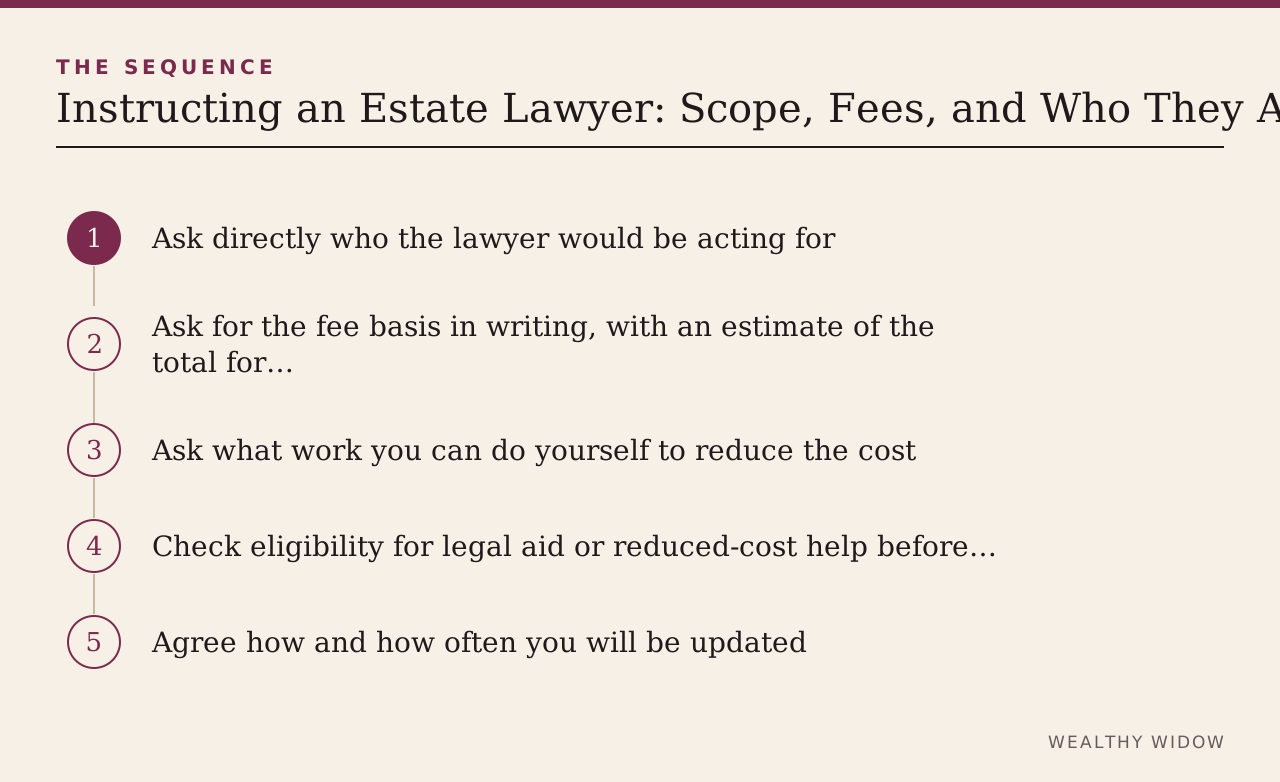
- Ask directly who the lawyer would be acting for, and get the answer in the engagement letter.
- Ask for the fee basis in writing, with an estimate of the total for an estate of this type.
- Ask what work you can do yourself to reduce the cost, since much of it is assembly.
- Check eligibility for legal aid or reduced-cost help before assuming it is unavailable.
- Agree how and how often you will be updated, and put that in the engagement letter.
The pressure points to watch
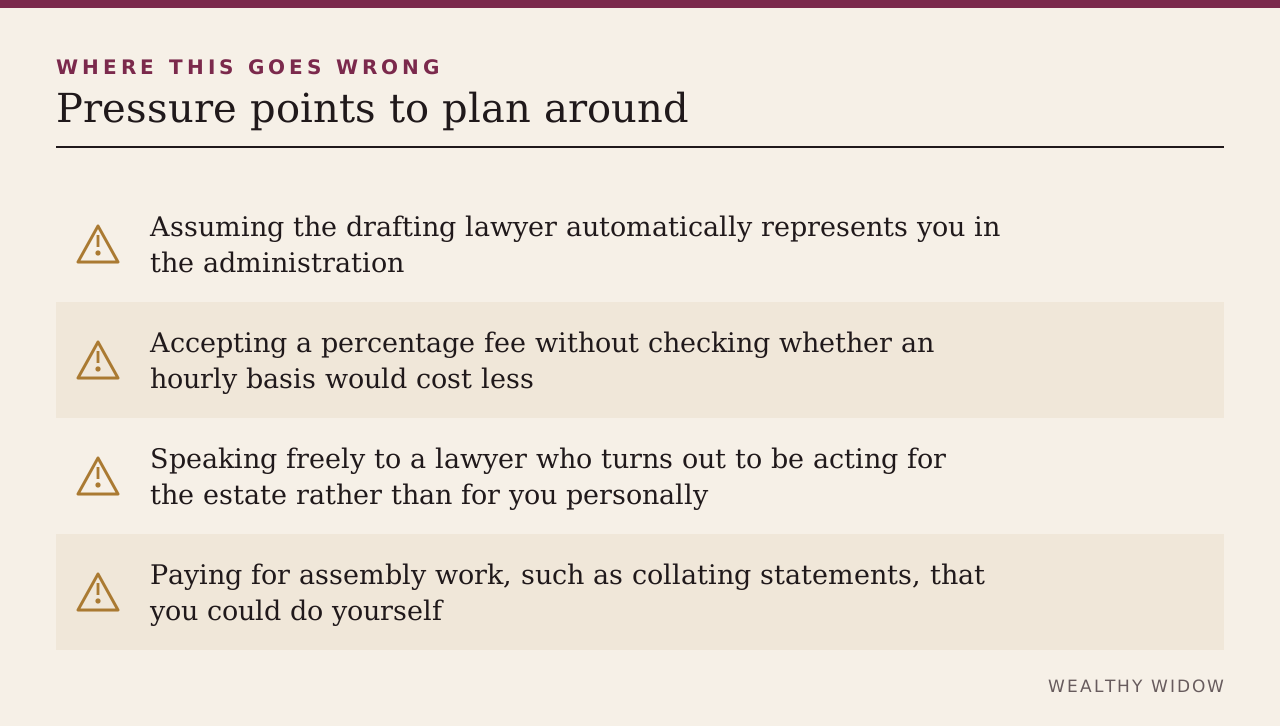
Watch for the following, and treat each as a reason to slow down. Assuming the drafting lawyer automatically represents you in the administration.
Accepting a percentage fee without checking whether an hourly basis would cost less. Speaking freely to a lawyer who turns out to be acting for the estate rather than for you personally. Paying for assembly work, such as collating statements, that you could do yourself.
Assemble the file
Having the file complete before the first call removes most of the back and forth that follows.
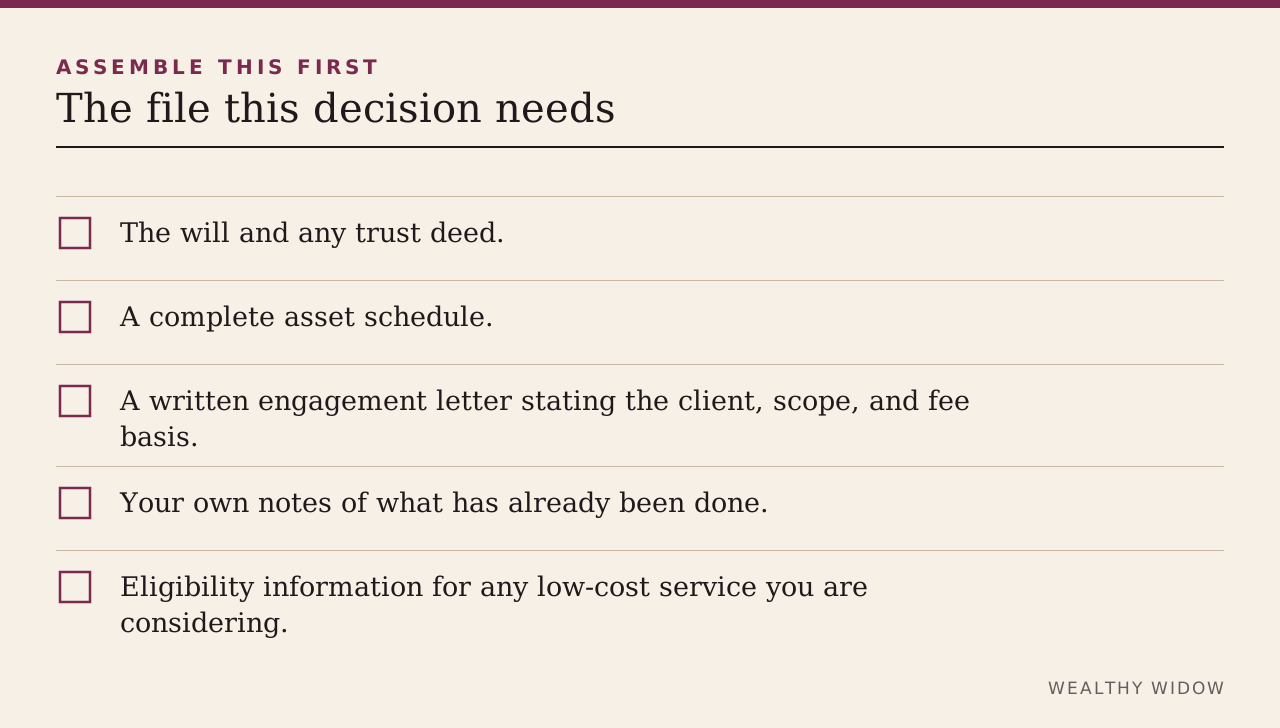
- The will and any trust deed.
- A complete asset schedule.
- A written engagement letter stating the client, scope, and fee basis.
- Your own notes of what has already been done.
- Eligibility information for any low-cost service you are considering.
Get these in writing
Put each item below in your file with a date and a named source.
- Who the lawyer is acting for.
- The fee basis and an estimated total.
- The scope of the engagement, and what falls outside it.
- How conflicts would be handled if beneficiaries disagree.
The questions worth asking
These are the questions whose answers change what you decide, rather than merely confirming what you assumed.
- Who is your client in this matter: me personally, the estate, or the beneficiaries?
- What is your fee basis, and what would you estimate in total?
- What can I do myself to reduce the bill?
- What happens if a beneficiary and I come into conflict?
The sources behind this
Anything that will drive a decision should be checked here rather than here-abouts.
- American Bar Association — Find legal help
- Legal Services Corporation — I need legal help
- LawHelp.org — Find free legal help by state
- American Bar Association — Free Legal Answers
Where this guide stops
The boundary matters, because the wrong assumption here is expensive. It cannot recommend a lawyer or state fee norms, which vary by state and by the complexity of the estate.
In practice
Settle the client question and the fee basis in writing before the first substantive conversation. Both are ordinary questions, and a lawyer who answers them crisply is usually the one worth instructing.
A companion guide, Creditor Notice: The Step That Closes the Door, covers the decision that sits alongside this one.
Primary sources
- American Bar Association — Find legal help
- Legal Services Corporation — I need legal help
- LawHelp.org — Find free legal help by state
- American Bar Association — Free Legal Answers
This article provides general education, not individualized legal, tax, investment, insurance, or benefits advice. Rules and deadlines change; verify the current requirement with the agency and a qualified professional.