Taxes
Why Your Charitable Giving May No Longer Reduce Your Tax
A change in filing status can move a household from itemising to the standard deduction, at which point giving stops producing a deduction.

You may be told this is simply a form to sign. It is a decision with consequences. A change in filing status can move a household from itemising to the standard deduction, at which point giving stops producing a deduction.
Households that itemised while married frequently do not once filing singly. The giving remains valuable; the tax treatment changes, and there are ways to respond to that.
Giving is worth doing regardless. Whether it reduces your tax is a separate question with a different answer than it had before.
The question underneath the paperwork
Most of the confusion here clears once a few things are stated plainly. A charitable deduction is generally available only where you itemise rather than take the standard deduction. A change in filing status can move you from one to the other. Concentrating several years of giving into one year can make itemising worthwhile in that year.
Giving appreciated assets rather than cash can be more efficient where a deduction is available. Only gifts to qualifying organisations count, and status is publicly searchable.
Sequence the work deliberately
Work deliberately, one step at a time, and treat each as complete before the next one starts.
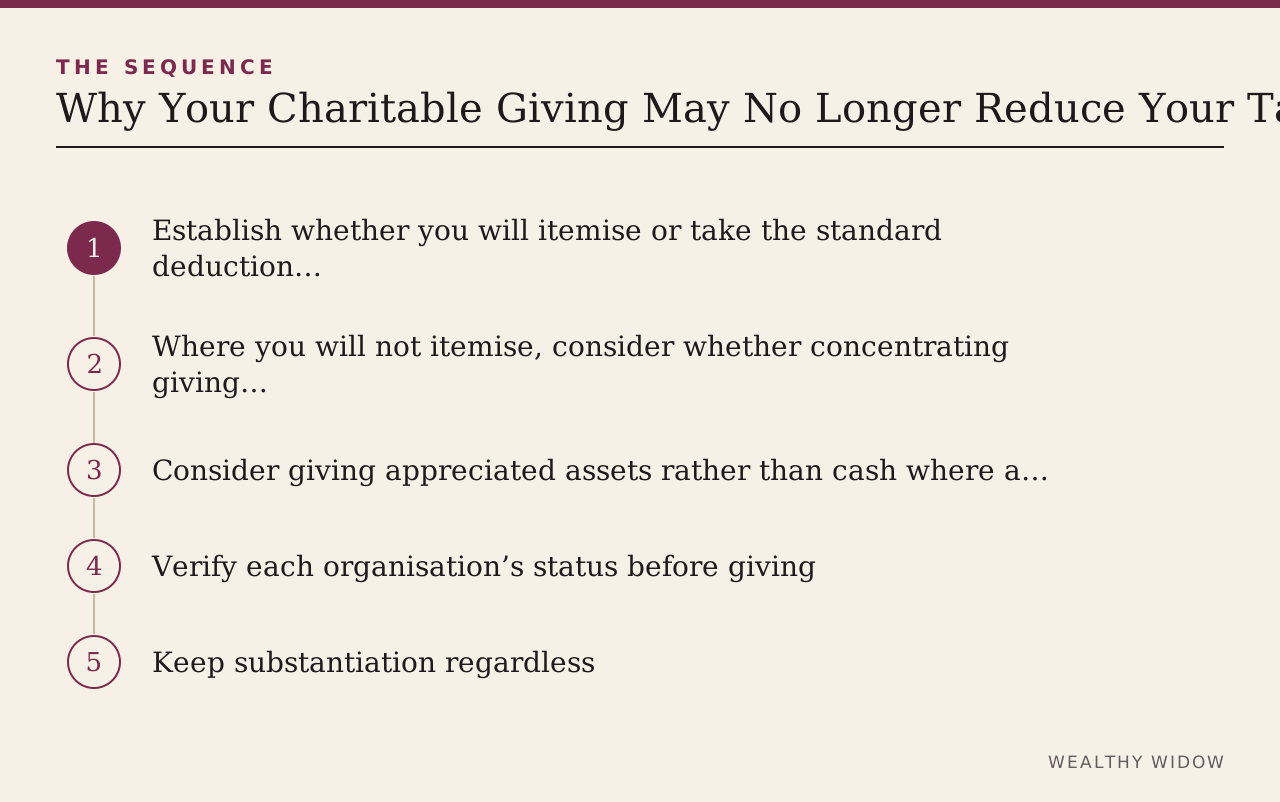
- Establish whether you will itemise or take the standard deduction this year.
- Where you will not itemise, consider whether concentrating giving into alternate years helps.
- Consider giving appreciated assets rather than cash where a deduction is available.
- Verify each organisation’s status before giving.
- Keep substantiation regardless, since it costs nothing and may be needed.
What to refuse, and why
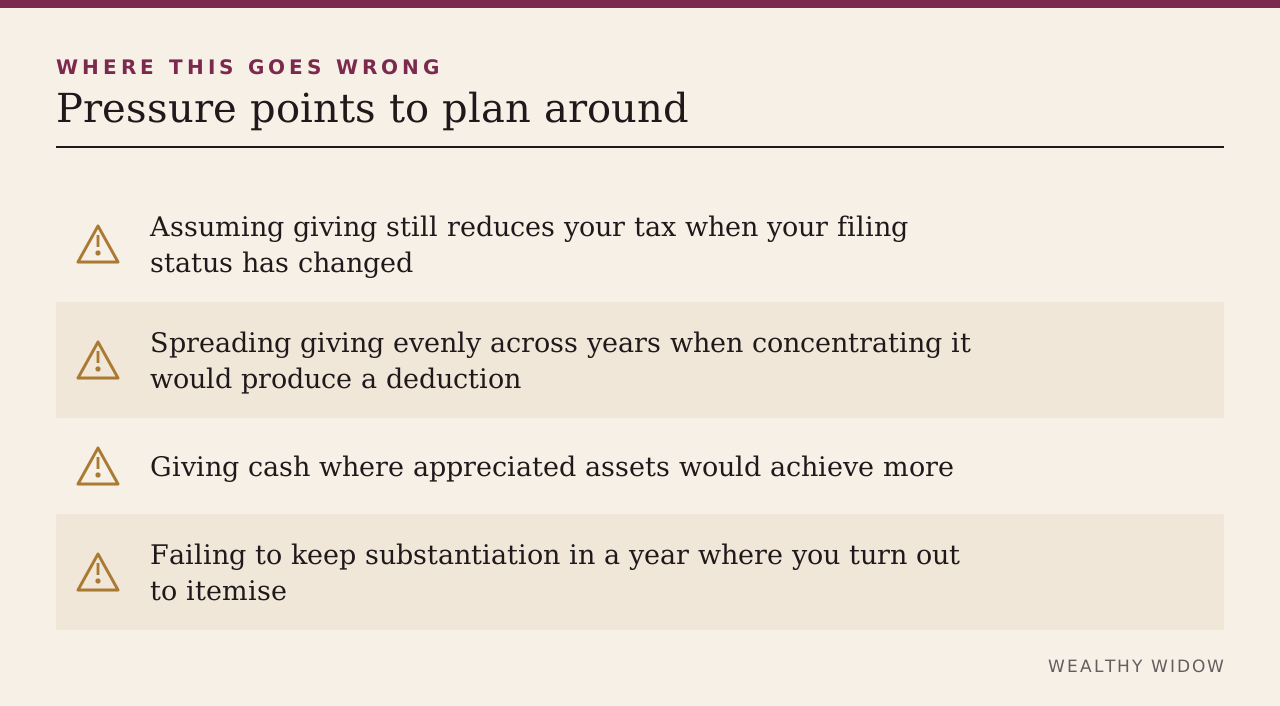
Knowing the failure modes is half of it; the following are the usual ways this goes wrong. Assuming giving still reduces your tax when your filing status has changed.
Spreading giving evenly across years when concentrating it would produce a deduction. Giving cash where appreciated assets would achieve more. Failing to keep substantiation in a year where you turn out to itemise.
Assemble this evidence before you start
A call made without these usually has to be made again.
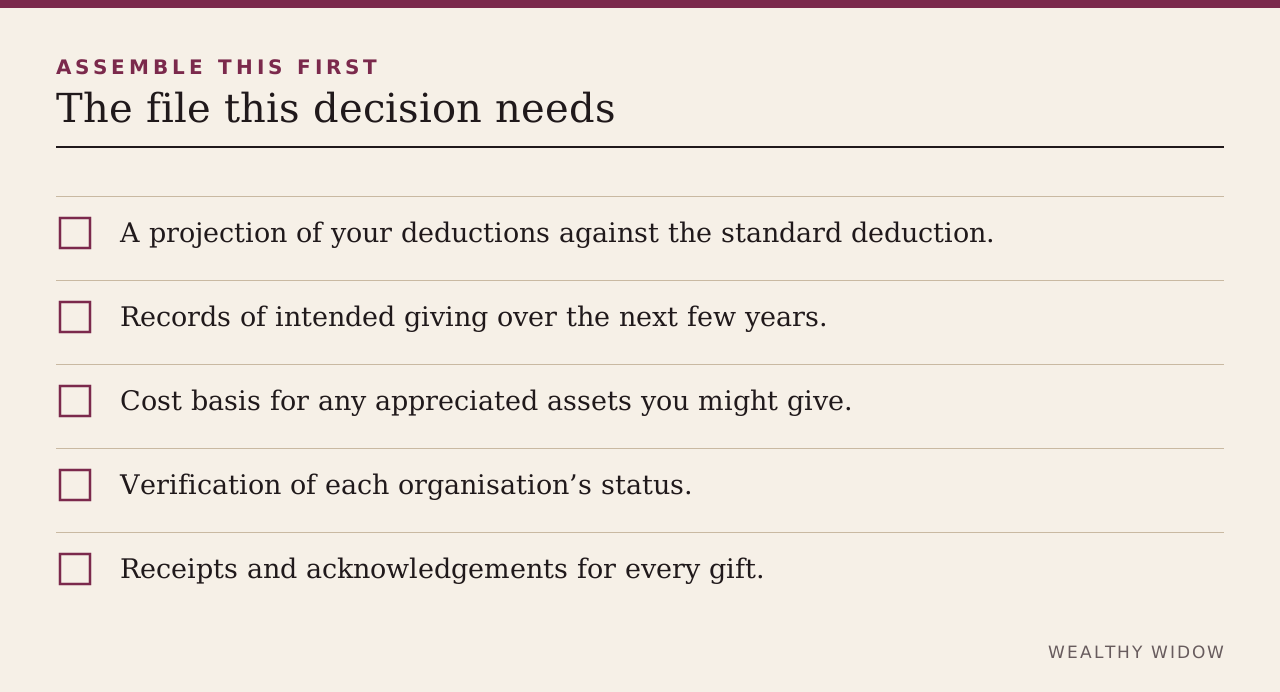
- A projection of your deductions against the standard deduction.
- Records of intended giving over the next few years.
- Cost basis for any appreciated assets you might give.
- Verification of each organisation’s status.
- Receipts and acknowledgements for every gift.
Get these in writing
Put each item below in your file with a date and a named source.
- Whether you will itemise this year.
- Whether concentrating giving would produce a deduction.
- That each organisation qualifies.
- That substantiation is being kept.
The questions worth asking
These are the questions whose answers change what you decide, rather than merely confirming what you assumed.
- Will I itemise this year, and what would change that?
- Would concentrating my giving into alternate years help?
- Should I give appreciated assets rather than cash?
- What substantiation do I need for gifts of this size?
Check this against the source
These are the primary sources behind this guide. They are the ones that change, and the ones worth checking before you act.
- Internal Revenue Service — Topic no. 506, charitable contributions
- Internal Revenue Service — Publication 526, charitable contributions
- Internal Revenue Service — Charitable contribution deductions
- Internal Revenue Service — Tax exempt organization search
The questions this cannot reach
No account written for a general readership can reach the following, and it should not pretend to. It cannot state deduction amounts or thresholds, which are set annually and must come from current guidance.
Taking it from here
Check whether you will itemise before assuming the giving is deductible. The generosity is unaffected; the timing and the form of it are where the remaining tax efficiency sits.
Read An Inherited Rental Property: Basis, Depreciation, and a Fresh Start next; the two decisions interact.
Primary sources
- Internal Revenue Service — Topic no. 506, charitable contributions
- Internal Revenue Service — Publication 526, charitable contributions
- Internal Revenue Service — Charitable contribution deductions
- Internal Revenue Service — Tax exempt organization search
This article provides general education, not individualized legal, tax, investment, insurance, or benefits advice. Rules and deadlines change; verify the current requirement with the agency and a qualified professional.