Estate
Leaving Something to a Charity, Effectively
A charitable bequest is straightforward to make and easy to draft in a way that fails, particularly where an organisation later changes.

Institutions will describe this as routine. For you it is not routine, and the stakes are not symmetrical. A charitable bequest is straightforward to make and easy to draft in a way that fails, particularly where an organisation later changes.
Charitable bequests are common and frequently drafted loosely. Organisations merge, rename, and close, and a gift to a body that no longer exists creates work and uncertainty.
Name the organisation precisely and say what should happen if it no longer exists, because over a long life it may not.
What is actually on the table
These are the load-bearing facts. A charitable bequest should identify the organisation precisely, including its registered identity. Organisations merge, rename, and dissolve, and a gift may fail if the named body no longer exists. A substitution clause can direct what happens where the named organisation has gone.
A gift can be a fixed sum, a share of the residue, or a specific asset, and the three behave differently. Charitable status can be verified through an official search tool.
The path through this
Sequence matters, because some steps close options that later steps need.
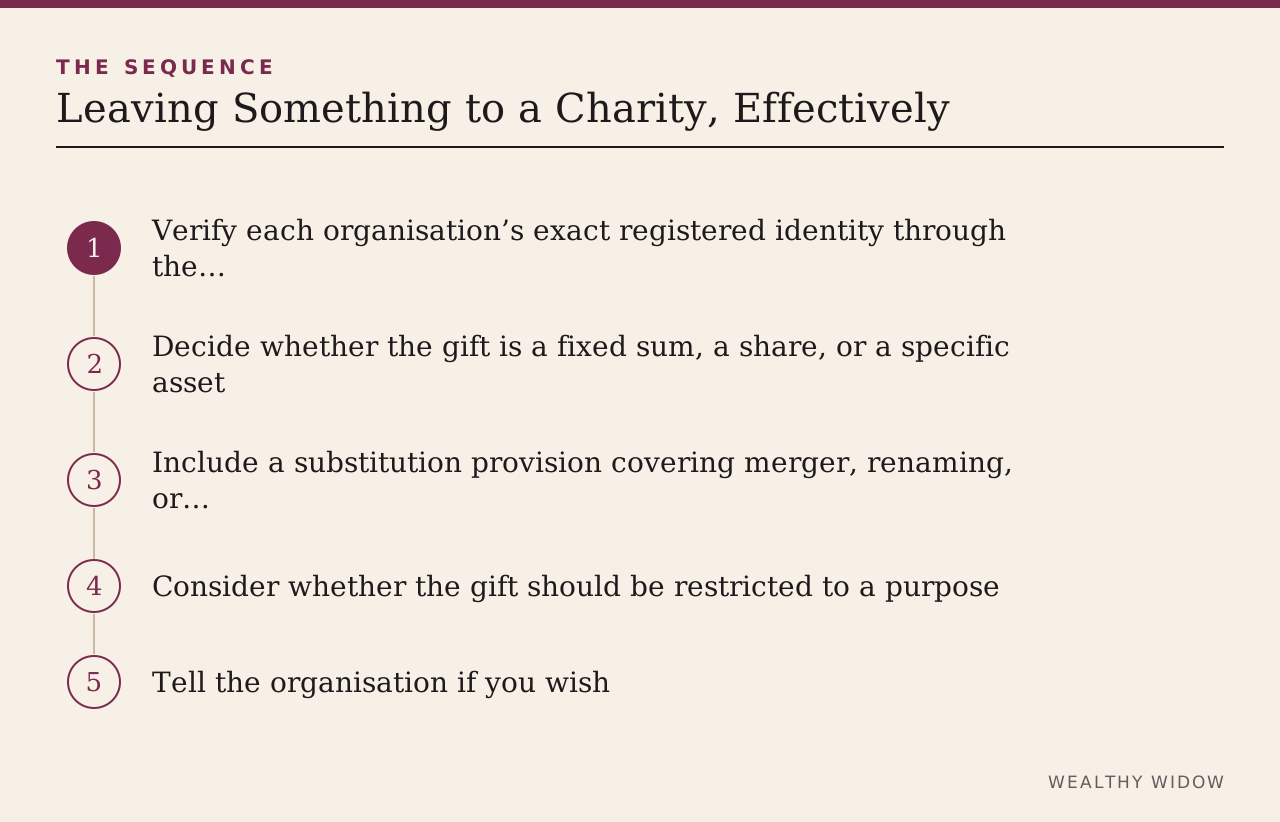
- Verify each organisation’s exact registered identity through the official search tool.
- Decide whether the gift is a fixed sum, a share, or a specific asset.
- Include a substitution provision covering merger, renaming, or dissolution.
- Consider whether the gift should be restricted to a purpose, and how narrowly.
- Tell the organisation if you wish, though you are not obliged to.
What tends to catch people out
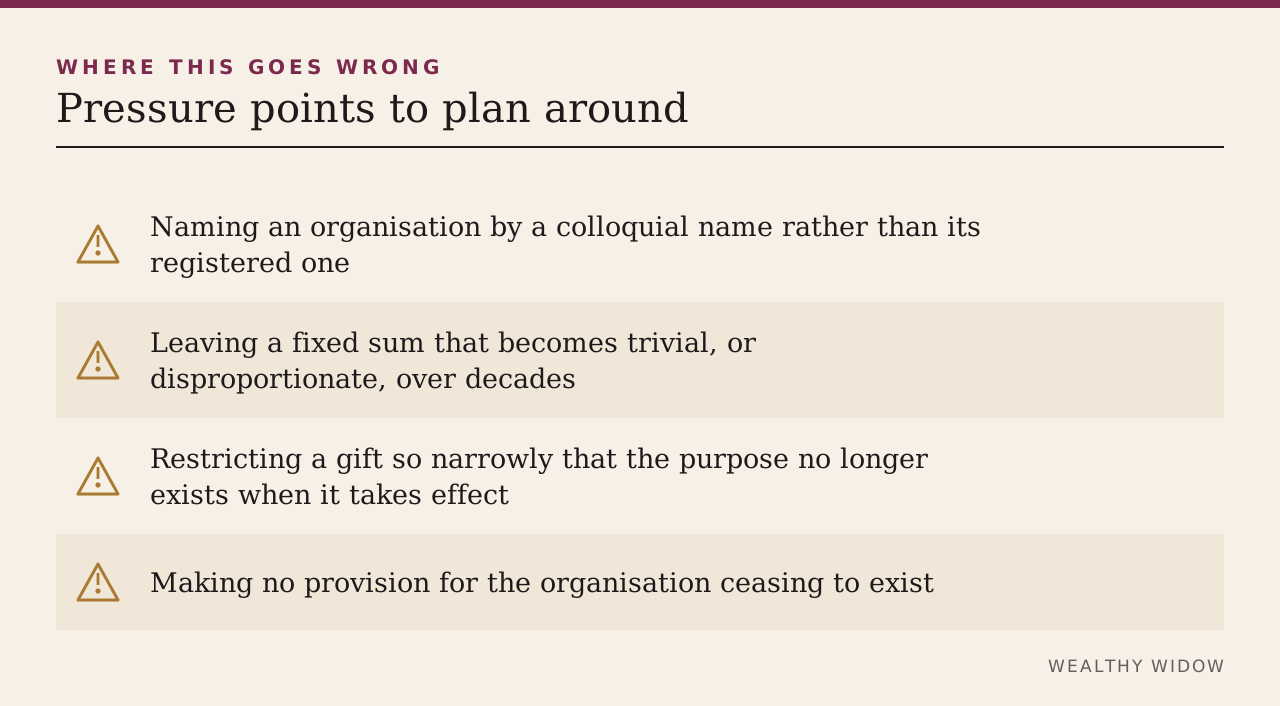
What follows is where readers most reliably lose ground. Naming an organisation by a colloquial name rather than its registered one.
Leaving a fixed sum that becomes trivial, or disproportionate, over decades. Restricting a gift so narrowly that the purpose no longer exists when it takes effect. Making no provision for the organisation ceasing to exist.
The paperwork this actually requires
The file below does most of the work of establishing who you are.
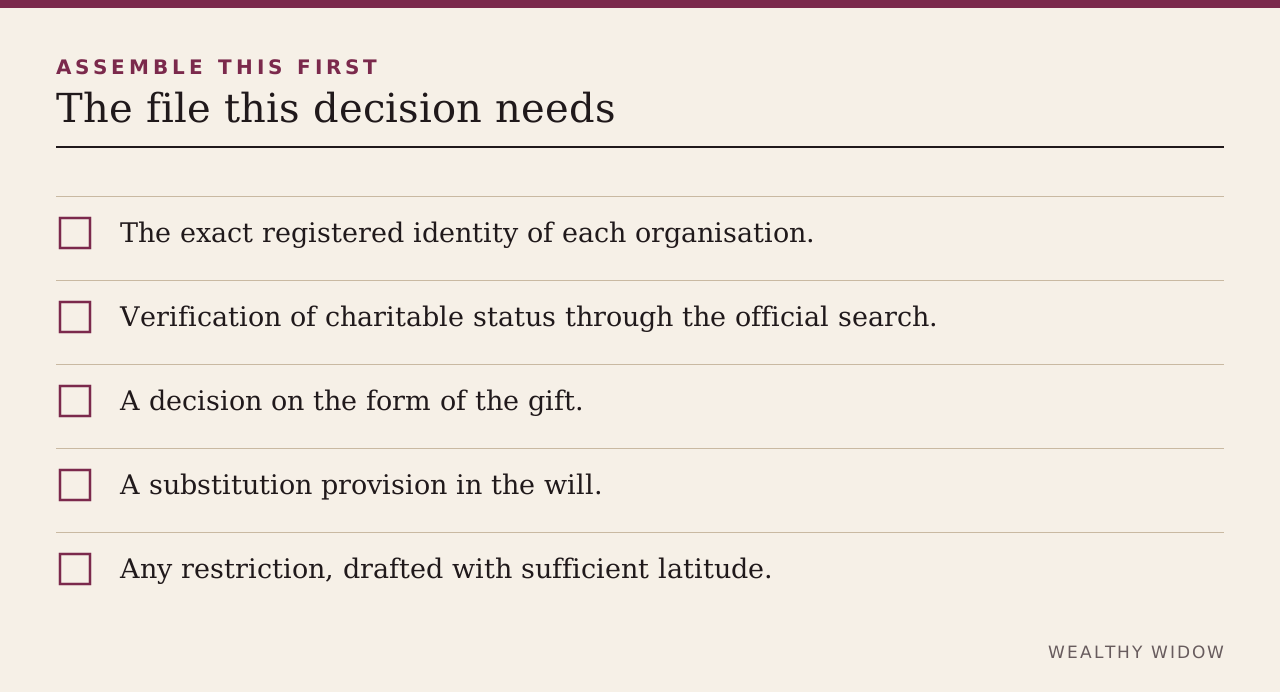
- The exact registered identity of each organisation.
- Verification of charitable status through the official search.
- A decision on the form of the gift.
- A substitution provision in the will.
- Any restriction, drafted with sufficient latitude.
Do not proceed on a verbal answer
Ask for each of these in a form you can save, date, and produce again months later if it is questioned.
- The organisation’s precise registered identity.
- That its status is currently verified.
- That a substitution provision is included.
- That any restriction remains workable over time.
Put these questions directly
A competent professional will welcome these questions. Hesitation is itself information.
- How should this organisation be identified in the will?
- What happens if it merges or ceases to exist?
- Is a fixed sum or a share of the residue more appropriate here?
- How narrowly should any restriction be drafted?
The primary material
Each load-bearing point above traces to one of the following, and they are the versions that stay current.
- Internal Revenue Service — Tax exempt organization search
- Internal Revenue Service — Charitable contribution deductions
- Internal Revenue Service — Information for executors
- Legal Services Corporation — I need legal help
Where general guidance ends
Here is the line between what can usefully be written for a general readership and what cannot be written at all. It cannot draft your will, and the substitution and restriction wording is exactly where drafting expertise earns its cost.
What this comes down to
Identify the organisation precisely and provide for its disappearance. A charitable gift is simple to make and disproportionately easy to draft in a way that creates work rather than benefit.
For the step that usually comes next, read Blended Families: Providing for a Spouse Without Disinheriting Children.
Primary sources
- Internal Revenue Service — Tax exempt organization search
- Internal Revenue Service — Charitable contribution deductions
- Internal Revenue Service — Information for executors
- Legal Services Corporation — I need legal help
This article provides general education, not individualized legal, tax, investment, insurance, or benefits advice. Rules and deadlines change; verify the current requirement with the agency and a qualified professional.