Estate
The Inventory: The Document Everything Else Depends On
Almost every later question in an estate, from probate to tax to distribution, is answered from the inventory. Building it well saves repeating it.

There is a version of this decision that takes ten minutes and a version that takes a season. Almost every later question in an estate, from probate to tax to distribution, is answered from the inventory. Building it well saves repeating it. The difference is whether the facts were assembled first.
The inventory is usually treated as a court formality. Treated instead as the master record, it answers the tax questions, the distribution questions, and the beneficiary questions without repeated work.
Build the inventory once, properly, and every subsequent question becomes a lookup rather than an investigation.
Start by naming the decision correctly
Start from the reliable ground, before anyone asks you to act on anything less certain than it. The inventory should record what was owned at the date of death, and how each item was titled. Values are generally taken at the date of death, which also matters for later tax calculations. Both probate and non-probate assets are worth recording, even where only some go to the court.
Debts and liabilities belong in the record alongside assets. Assets frequently surface months later, so the inventory needs to be a living document.
The order of operations
Work through it deliberately rather than all at once, and stop at any point where an answer is missing.
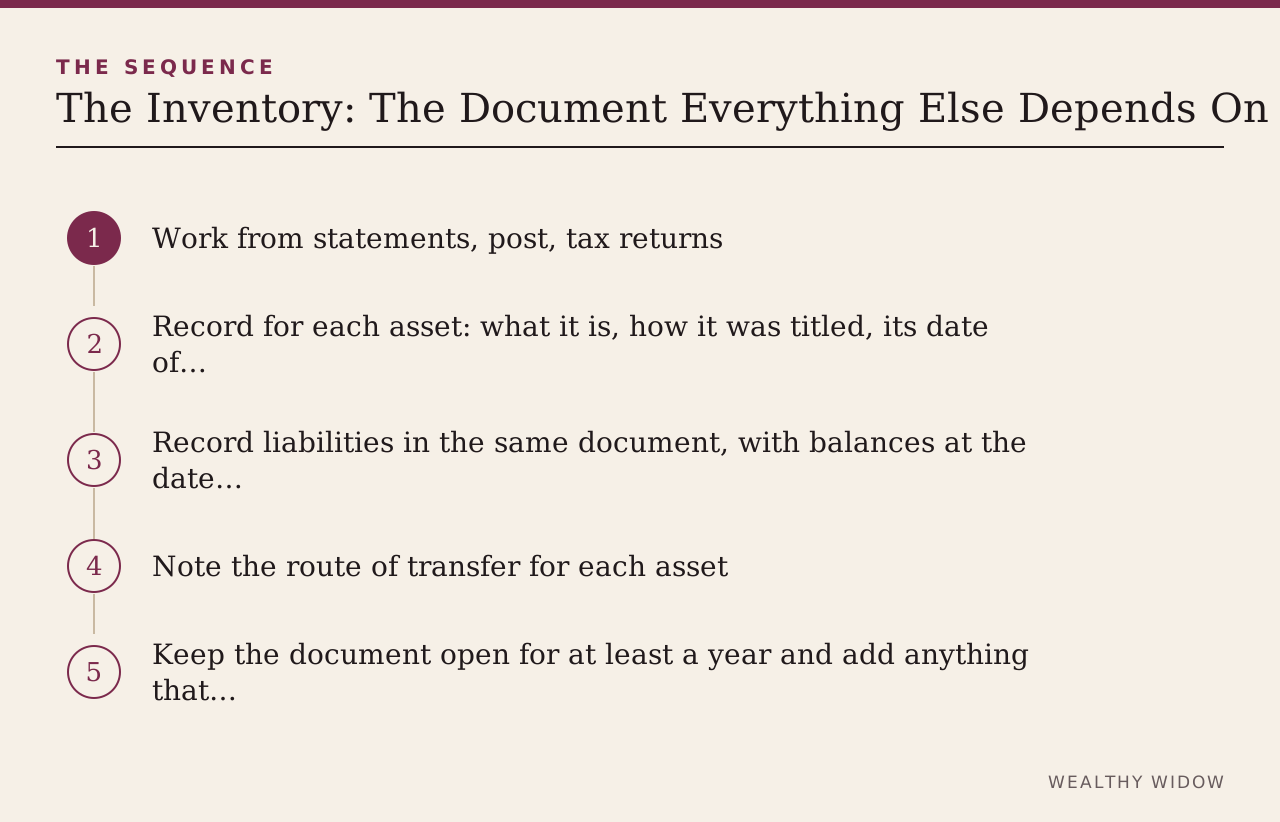
- Work from statements, post, tax returns, and the recurring payment list rather than from memory.
- Record for each asset: what it is, how it was titled, its date of death value, and how the value was established.
- Record liabilities in the same document, with balances at the date of death.
- Note the route of transfer for each asset, since that determines what the court sees.
- Keep the document open for at least a year and add anything that surfaces.
Where readers most often get hurt
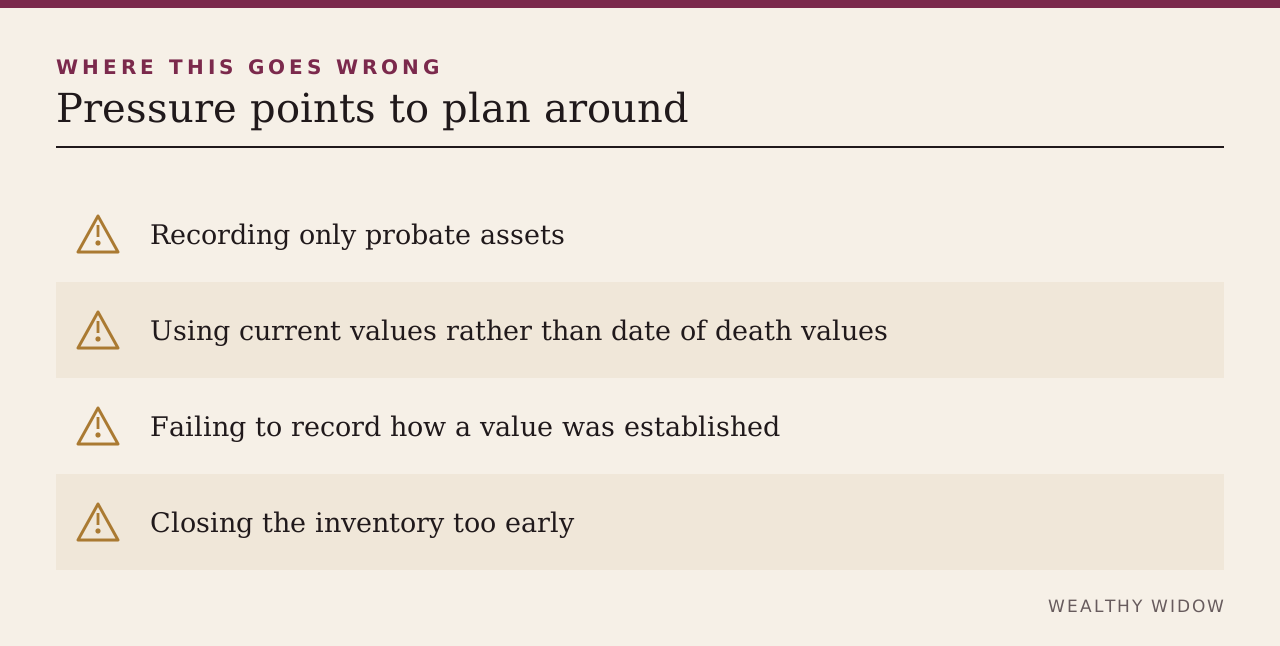
Each of these is a signal to stop and confirm rather than proceed. Recording only probate assets, which leaves the tax and distribution picture incomplete.
Using current values rather than date of death values, which creates problems later. Failing to record how a value was established, which matters if it is ever questioned. Closing the inventory too early, before later post has revealed the remaining accounts.
The evidence to gather
You will be asked for these in some combination by almost everyone involved.
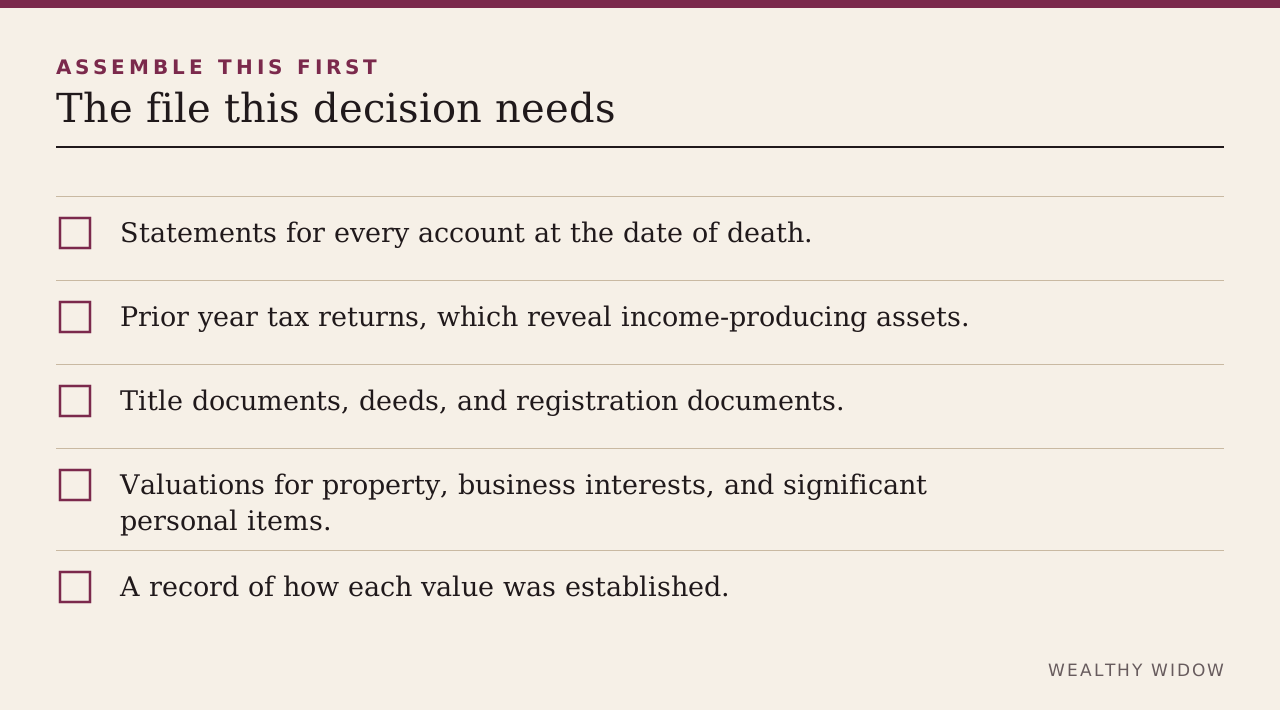
- Statements for every account at the date of death.
- Prior year tax returns, which reveal income-producing assets.
- Title documents, deeds, and registration documents.
- Valuations for property, business interests, and significant personal items.
- A record of how each value was established.
The written trail to keep
Written confirmation is ordinary practice, not suspicion.
- The date of death value of each asset, and its source.
- How each asset was titled.
- The balance of each liability at the date of death.
- What the court requires to be filed, and by when.
Questions to take to a professional
If an answer to any of these is vague, that is your answer about the adviser.
- What must be included in the inventory filed with the court?
- What valuation evidence is acceptable for each asset type?
- Which assets require a formal appraisal rather than a statement?
- What is the deadline for filing, and can it be extended?
Verify each point at source
Check anything that will drive a decision against the source itself, not against this summary of it.
- Internal Revenue Service — Information for executors
- Internal Revenue Service — About Publication 559, survivors, executors, and administrators
- Internal Revenue Service — Publication 551, basis of assets
- National Association of Unclaimed Property Administrators — Search beyond your state
What this guide does not settle
What follows is the shape of the problem, not an answer to your version of it. It cannot value your assets. Property, business interests, and unusual items need qualified appraisal, and the court may specify what it will accept.
Closing the loop
Treat the inventory as the master document rather than a form to be filed. Everything downstream, including the tax position and the eventual distribution, is read from it.
If this raised a further question, The Estate Account: Never Mix Estate Money With Your Own takes it further.
Primary sources
- Internal Revenue Service — Information for executors
- Internal Revenue Service — About Publication 559, survivors, executors, and administrators
- Internal Revenue Service — Publication 551, basis of assets
- National Association of Unclaimed Property Administrators — Search beyond your state
This article provides general education, not individualized legal, tax, investment, insurance, or benefits advice. Rules and deadlines change; verify the current requirement with the agency and a qualified professional.