Money
The Fee Audit: Finding the Costs That Do Not Appear on a Statement
Investment costs sit in layers, and most statements show only the top one. The total is frequently two or three times what a client believes.

Some decisions after a death are reversible. This one deserves more care than most. Investment costs sit in layers, and most statements show only the top one. The total is frequently two or three times what a client believes.
Cost is one of the few reliable predictors of long-run investment outcomes and one of the few things entirely within your control. It is also deliberately difficult to total.
A fee expressed as a small percentage becomes a large number when it is charged annually against a growing balance for twenty years.
What is actually on the table
What follows is what is actually true, stripped of the anxiety around it. Costs typically sit in at least three layers: the adviser fee, the product or fund charges, and transaction costs. Fund charges are deducted within the fund and so do not appear as a line on a client statement. Regulators publish tools that let you compare the long-run effect of different charge levels on the same portfolio.
Some products carry charges that apply only on exit, which do not show up in an annual cost figure at all. A percentage fee on a growing balance means the amount paid rises even where the service does not change.
The path through this
Do these in sequence, and do not skip ahead to the signature.
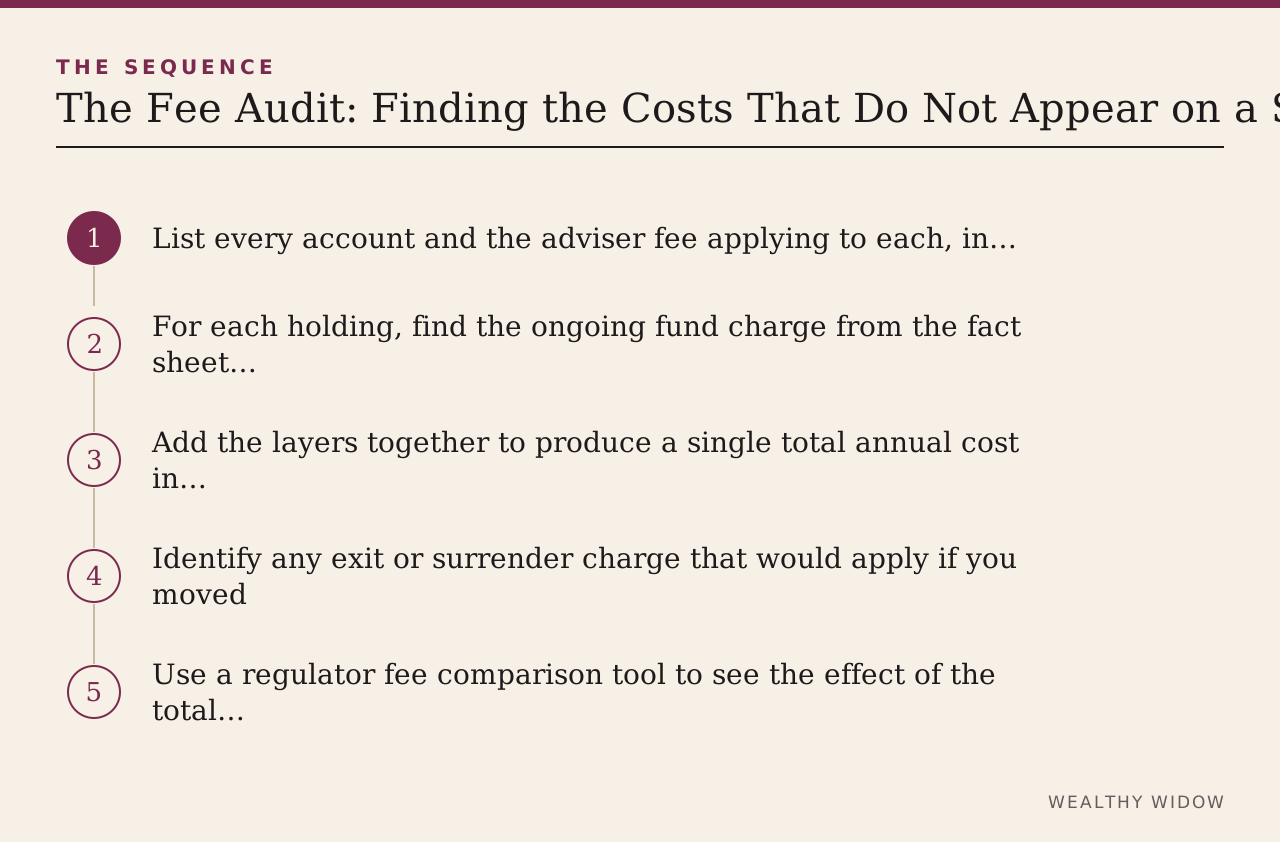
- List every account and the adviser fee applying to each, in percentage and in dollars.
- For each holding, find the ongoing fund charge from the fact sheet or prospectus.
- Add the layers together to produce a single total annual cost in dollars.
- Identify any exit or surrender charge that would apply if you moved.
- Use a regulator fee comparison tool to see the effect of the total over your actual time horizon.
What tends to catch people out
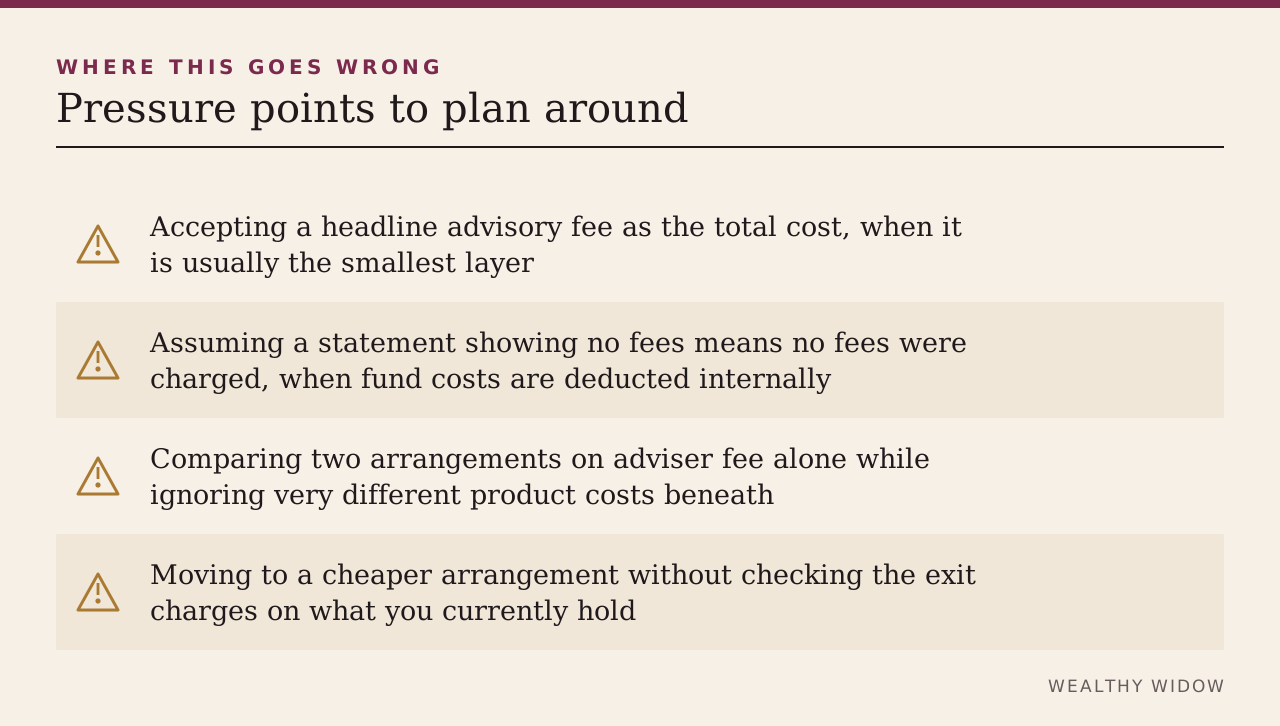
The failures here are predictable, which means they are avoidable. Accepting a headline advisory fee as the total cost, when it is usually the smallest layer.
Assuming a statement showing no fees means no fees were charged, when fund costs are deducted internally. Comparing two arrangements on adviser fee alone while ignoring very different product costs beneath. Moving to a cheaper arrangement without checking the exit charges on what you currently hold.
What to have to hand
The paperwork below is what turns a long process into a short one.
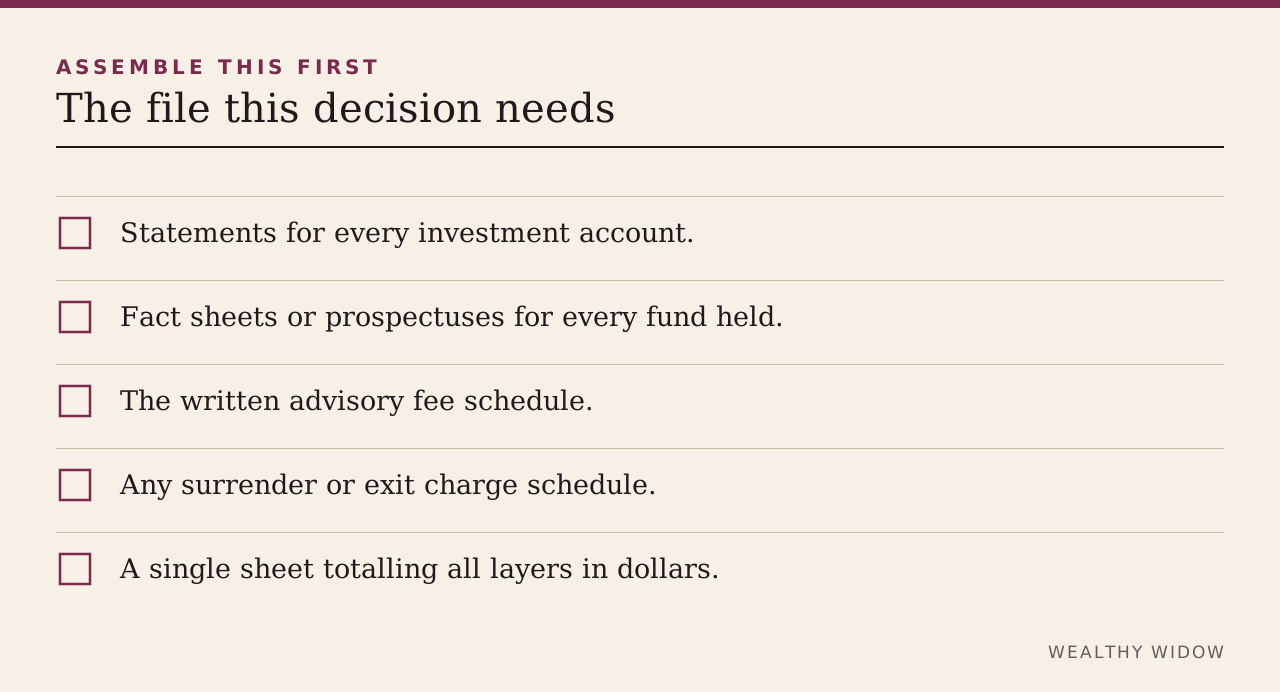
- Statements for every investment account.
- Fact sheets or prospectuses for every fund held.
- The written advisory fee schedule.
- Any surrender or exit charge schedule.
- A single sheet totalling all layers in dollars.
Do not proceed on a verbal answer
Ask for each of these in a form you can save, date, and produce again months later if it is questioned.
- Total annual cost, in dollars, across all layers.
- Any charge applying on exit, and for how long.
- Whether any charge is paid to the adviser by a product provider.
- What service is actually provided in return for the advisory fee.
Put these questions directly
A competent professional will welcome these questions. Hesitation is itself information.
- What is my all-in annual cost in dollars, including fund charges?
- What would I pay to move this portfolio elsewhere?
- Which of these charges are paid to you, and which to a third party?
- What specifically do I receive for the advisory fee each year?
The primary material
Each load-bearing point above traces to one of the following, and they are the versions that stay current.
- U.S. Securities and Exchange Commission — Understanding fees
- U.S. Securities and Exchange Commission — How fees and expenses affect your investment portfolio
- U.S. Securities and Exchange Commission — Mutual fund and ETF fees and expenses
- U.S. Securities and Exchange Commission — Mutual fund analyzer
Where general guidance ends
Here is the line between what can usefully be written for a general readership and what cannot be written at all. It cannot tell you whether a cost is worth paying. It can ensure you know the number before you decide, which is more than most clients do.
What this comes down to
Do the addition once. A single figure in dollars, covering every layer, converts an abstract percentage into a decision you can actually make.
For the step that usually comes next, read Consolidation: Simpler Is Usually Better, But Not Always.
Primary sources
- U.S. Securities and Exchange Commission — Understanding fees
- U.S. Securities and Exchange Commission — How fees and expenses affect your investment portfolio
- U.S. Securities and Exchange Commission — Mutual fund and ETF fees and expenses
- U.S. Securities and Exchange Commission — Mutual fund analyzer
This article provides general education, not individualized legal, tax, investment, insurance, or benefits advice. Rules and deadlines change; verify the current requirement with the agency and a qualified professional.