Taxes
Annuity Payments: Which Part Is Taxable
Payments from an annuity mix a return of what was invested with earnings, and only one part is generally taxable.

The difficulty here is rarely the paperwork. It is knowing what is actually being asked. Payments from an annuity mix a return of what was invested with earnings, and only one part is generally taxable.
Inherited or continuing annuity payments are common after a death, and the split between return of capital and earnings determines the tax. The contract and the issuer determine that split.
An annuity payment is not all income, and treating it as though it were overstates both the tax and the value.
What you are really being asked
The position is narrower than it looks once it is stated plainly. Annuity payments generally comprise a return of investment and an earnings element. The earnings element is typically taxable; the return of investment generally is not. The proportion depends on the contract and on how it was funded.
Annuities held inside a retirement account are generally treated differently from those held outside. Withholding may or may not be applied by default, which affects any estimated payment obligation.
The sequence that keeps options open
This is the working order most readers find keeps them in control.
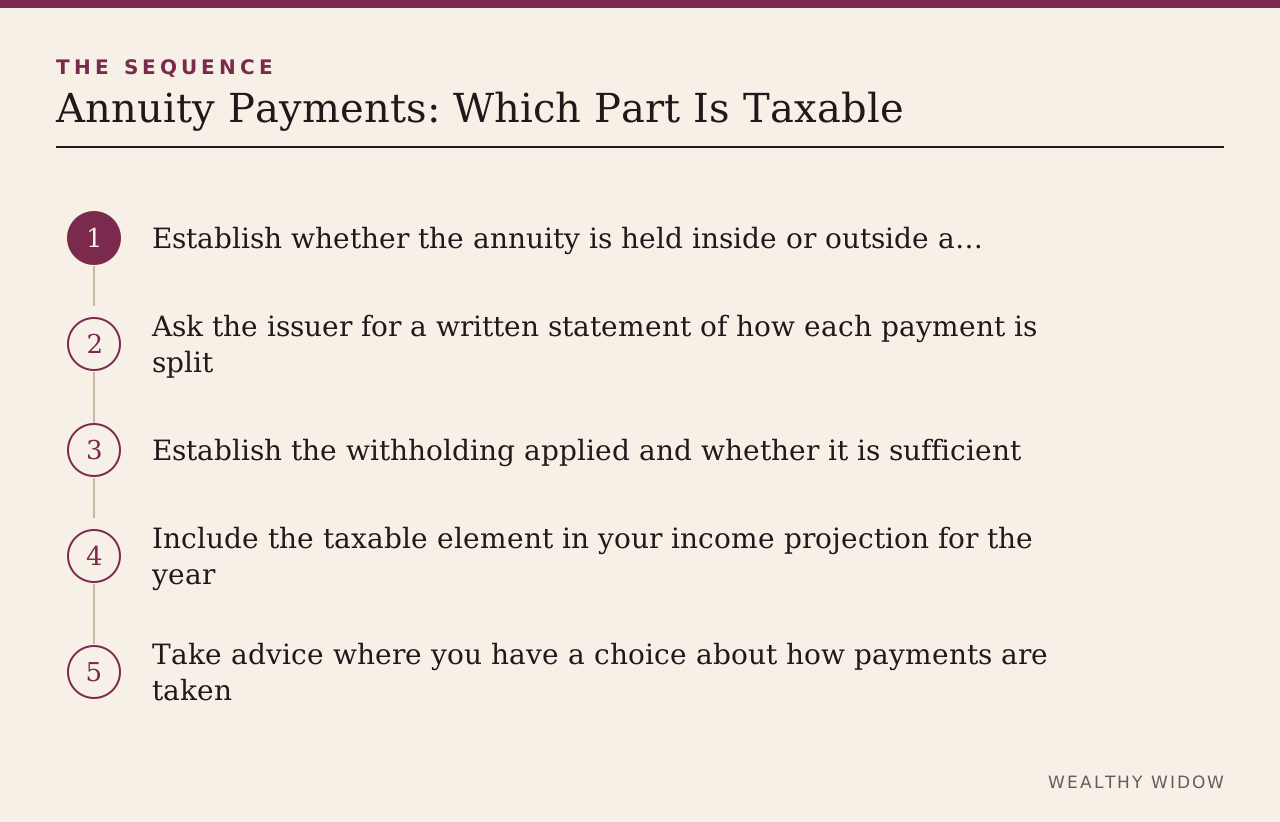
- Establish whether the annuity is held inside or outside a retirement account.
- Ask the issuer for a written statement of how each payment is split.
- Establish the withholding applied and whether it is sufficient.
- Include the taxable element in your income projection for the year.
- Take advice where you have a choice about how payments are taken.
The failure modes to plan around
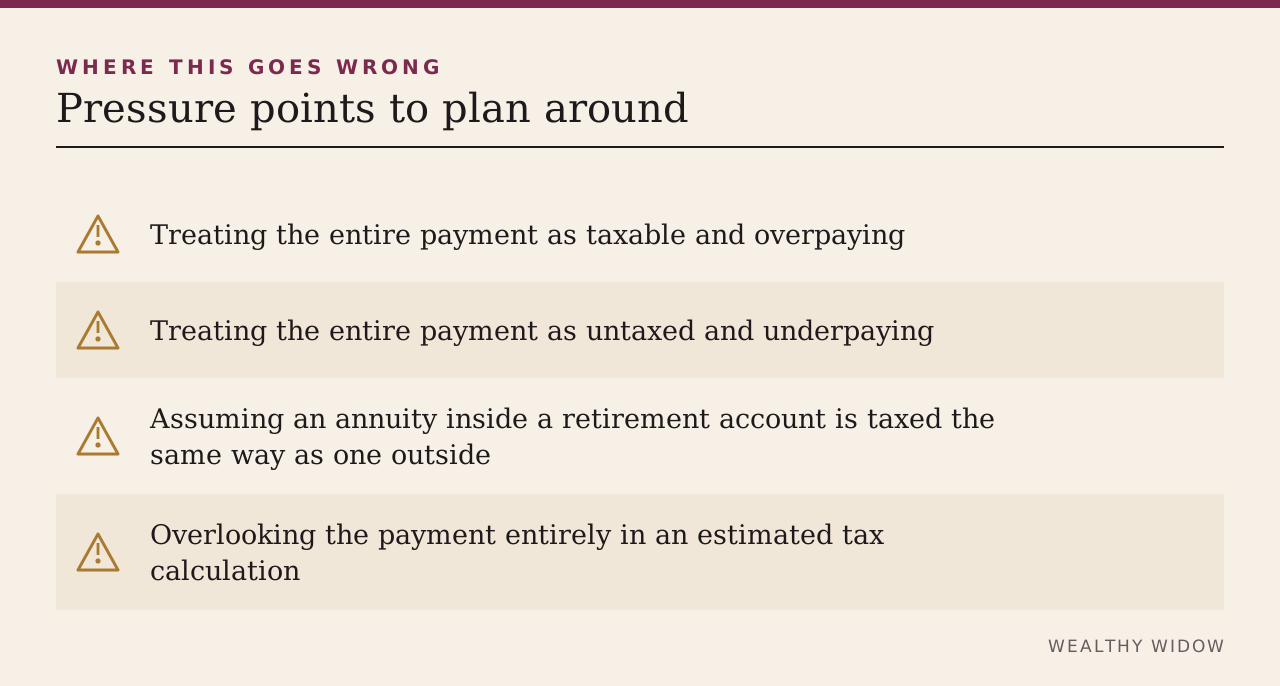
Knowing the failure modes in advance is most of the protection. Treating the entire payment as taxable and overpaying.
Treating the entire payment as untaxed and underpaying. Assuming an annuity inside a retirement account is taxed the same way as one outside. Overlooking the payment entirely in an estimated tax calculation.
The paperwork to collect first
Gather these first and the rest of the process moves considerably faster, because most delays are missing paperwork.
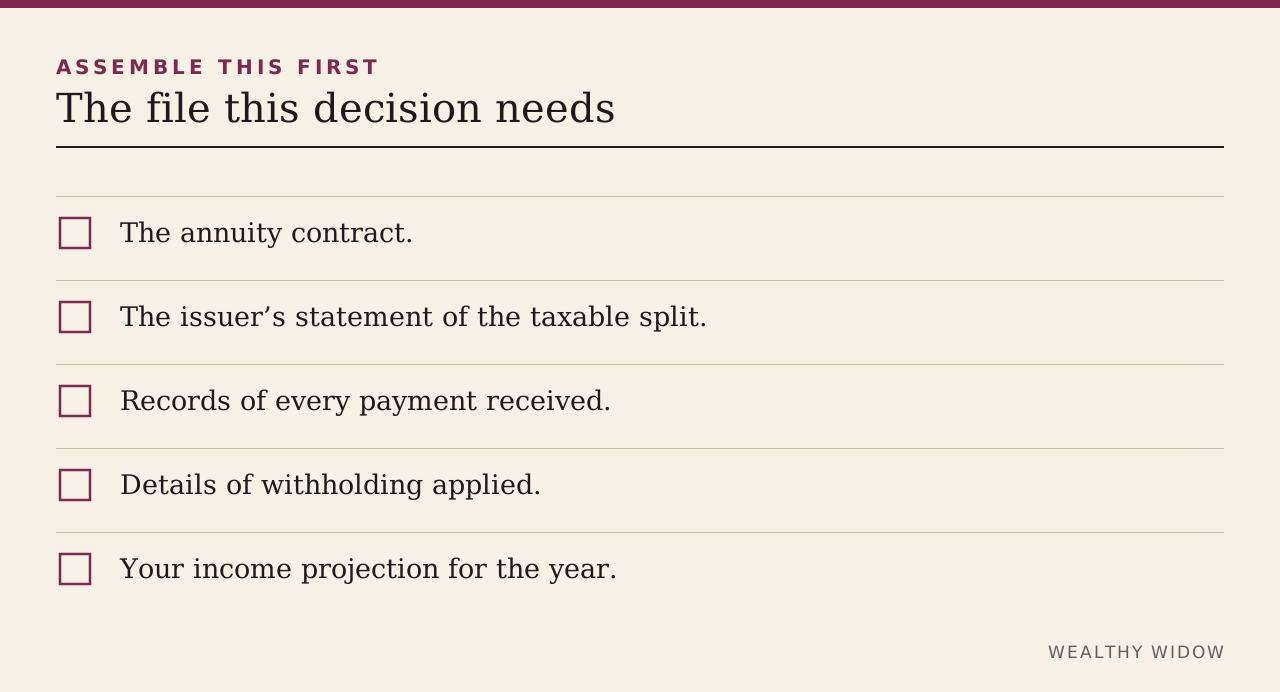
- The annuity contract.
- The issuer’s statement of the taxable split.
- Records of every payment received.
- Details of withholding applied.
- Your income projection for the year.
Nothing here on a verbal answer
None of the following should rest on a phone call alone, however clear the call felt at the time.
- How each payment is split between capital and earnings.
- Whether the contract sits inside or outside a retirement account.
- The withholding applied, and whether it is adequate.
- How the payments are reported to the tax authority.
The questions that change the answer
A competent professional answers each of these without hesitation.
- How is each payment split for tax purposes?
- Is this contract inside or outside a retirement account?
- What withholding is applied, and can I change it?
- Do I have any choice about how these payments are taken?
The sources behind this
Anything that will drive a decision should be checked here rather than here-abouts.
- U.S. Securities and Exchange Commission — Annuities
- Internal Revenue Service — About Publication 559, survivors, executors, and administrators
- Internal Revenue Service — Tax withholding estimator
- Internal Revenue Service — Estimated taxes
Where this guide stops
The boundary matters, because the wrong assumption here is expensive. It cannot determine the split, which depends on the contract and on how it was funded, and which the issuer should state.
In practice
Ask the issuer to state the split in writing and include only the taxable part in your projection. Both errors, treating it as all taxable and treating it as none, are common and both cost money.
Read When Something Was Missed: Asking for Relief next; the two decisions interact.
Primary sources
- U.S. Securities and Exchange Commission — Annuities
- Internal Revenue Service — About Publication 559, survivors, executors, and administrators
- Internal Revenue Service — Tax withholding estimator
- Internal Revenue Service — Estimated taxes
This article provides general education, not individualized legal, tax, investment, insurance, or benefits advice. Rules and deadlines change; verify the current requirement with the agency and a qualified professional.