Taxes
A Three-Year Tax Map, Built Once
The tax questions after a death arrive across three years rather than one, and mapping them prevents each from being a surprise.

Institutions will describe this as routine. For you it is not routine, and the stakes are not symmetrical. The tax questions after a death arrive across three years rather than one, and mapping them prevents each from being a surprise.
The filings, elections, and status changes that follow a death are spread across several years. Mapping them once, early, converts a sequence of surprises into a schedule.
Almost every tax surprise after a death is a known event that nobody put in a calendar.
The decision behind the form
A short set of facts governs this, and they are worth holding on to when the surrounding pressure is not. The year of death involves a final individual return and possibly the start of an estate return. An estate election, where relevant, generally has a deadline running from the death. Filing status changes on a known timetable, which alters the bill in a predictable way.
Estimated payment obligations may begin where withholding no longer covers the liability. Basis and valuation records established early are used for years afterwards.
Step by step, in this order
This order is designed to keep your choices open for as long as possible.
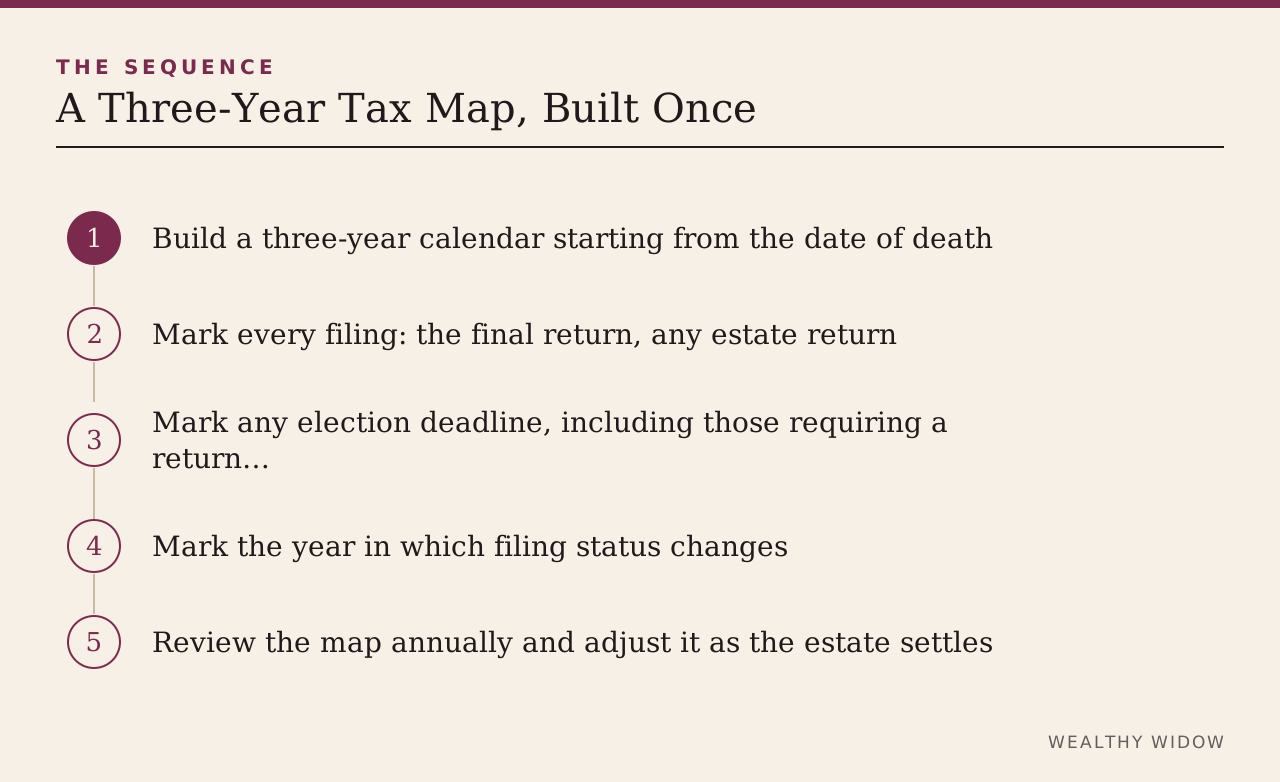
- Build a three-year calendar starting from the date of death.
- Mark every filing: the final return, any estate return, and each subsequent year.
- Mark any election deadline, including those requiring a return where no tax is due.
- Mark the year in which filing status changes.
- Review the map annually and adjust it as the estate settles.
The costly misreadings
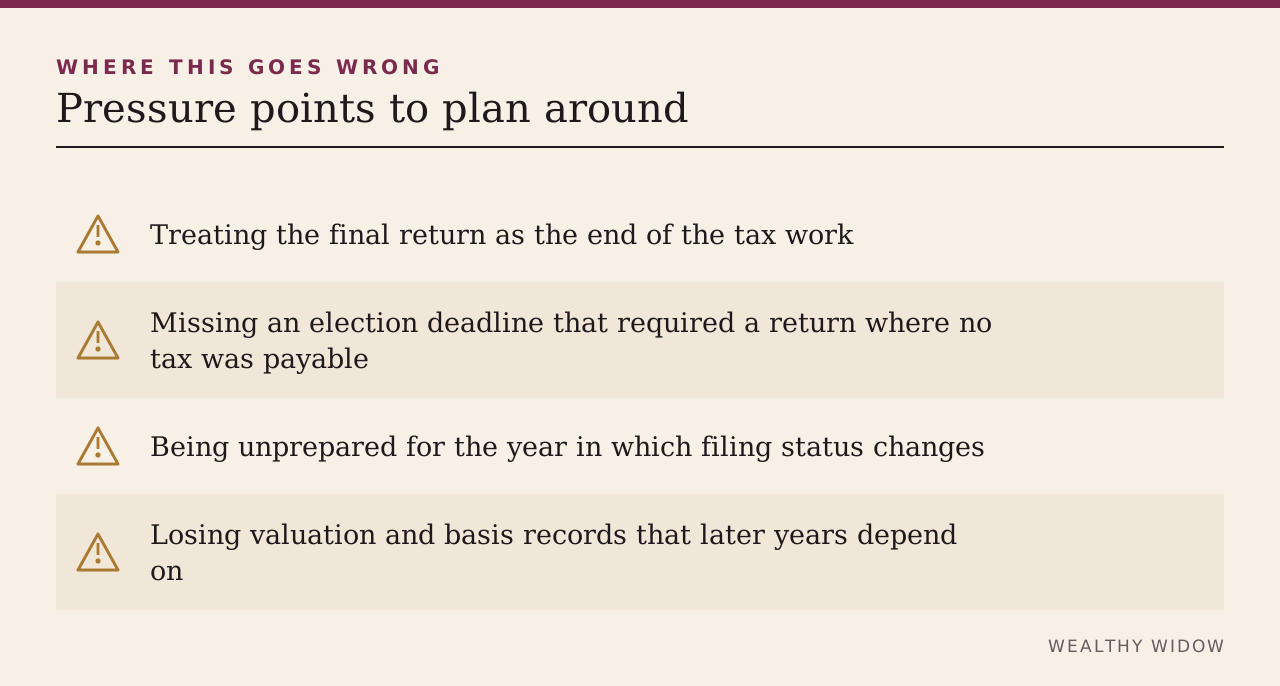
The problems below recur often enough to be planned for. Treating the final return as the end of the tax work.
Missing an election deadline that required a return where no tax was payable. Being unprepared for the year in which filing status changes. Losing valuation and basis records that later years depend on.
What every organisation will ask for
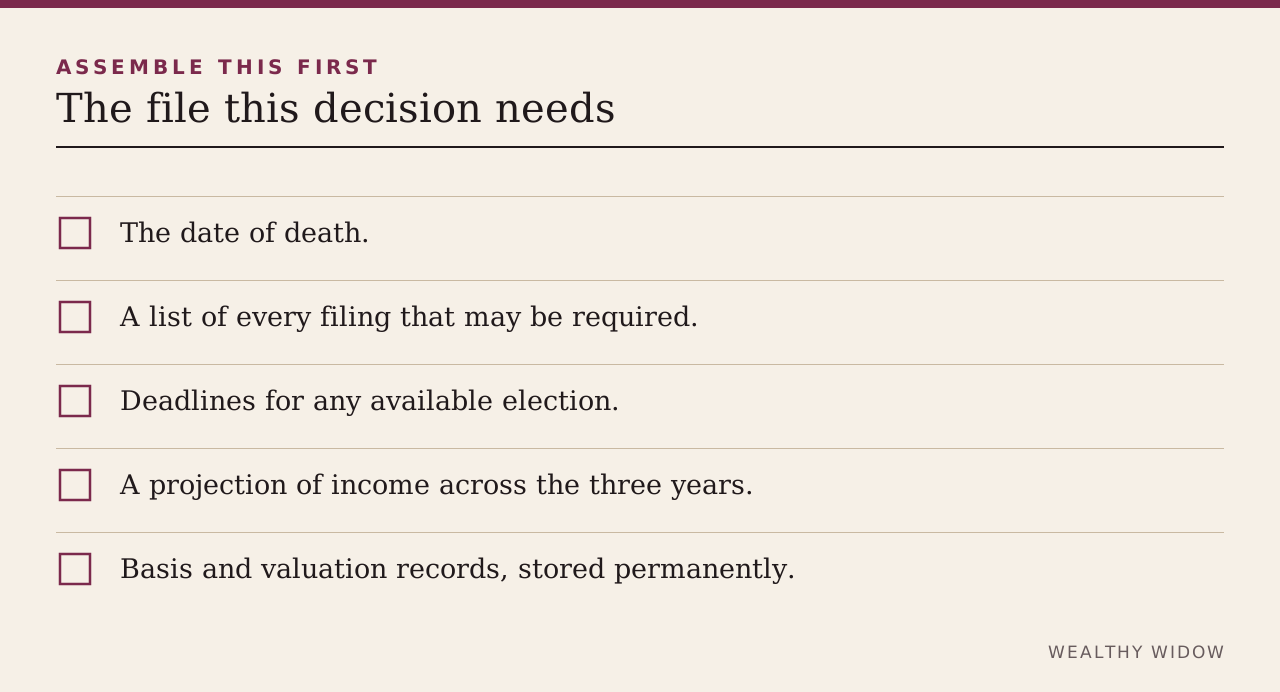
Each item below will be requested more than once. Collect them in one place and log where each copy goes.
- The date of death.
- A list of every filing that may be required.
- Deadlines for any available election.
- A projection of income across the three years.
- Basis and valuation records, stored permanently.
Put these in writing, then proceed
A conversation is a starting point. These belong on paper.
- Every filing required, and its deadline.
- Any election deadline running from the death.
- The year in which filing status changes.
- Whether estimated payments are needed, and from when.
Before anyone is engaged, ask these
Ask them plainly; the response tells you as much as the answer.
- What filings will be required across the next three years?
- Which elections have deadlines running from the death?
- In which year does my filing status change?
- What records must I preserve for later years?
Where to verify this
Every load-bearing point above traces to one of the following. Where a figure or deadline matters to you, read it there.
- Internal Revenue Service — About Publication 559, survivors, executors, and administrators
- Internal Revenue Service — File the final income tax returns of a deceased person
- Internal Revenue Service — File an estate tax income tax return
- Internal Revenue Service — Estimated taxes
What a professional still has to decide
The limits of a guide matter as much as its content, because acting past them is where the cost sits. It cannot build your map, which depends on the estate, the elections available, and your own circumstances.
What good looks like here
Build the three-year calendar once, early, with a professional. Nearly every unpleasant tax surprise in this period is an item that was always going to happen and was never written down.
Read Why Your Charitable Giving May No Longer Reduce Your Tax next; the two decisions interact.
Primary sources
- Internal Revenue Service — About Publication 559, survivors, executors, and administrators
- Internal Revenue Service — File the final income tax returns of a deceased person
- Internal Revenue Service — File an estate tax income tax return
- Internal Revenue Service — Estimated taxes
This article provides general education, not individualized legal, tax, investment, insurance, or benefits advice. Rules and deadlines change; verify the current requirement with the agency and a qualified professional.