Home
The Second Property: Keeping Something You Now Manage Alone
A holiday home or investment property that worked as a couple can become a burden managed at distance by one person.

There is a version of this decision that takes ten minutes and a version that takes a season. A holiday home or investment property that worked as a couple can become a burden managed at distance by one person. The difference is whether the facts were assembled first.
Second properties are frequently held for reasons that no longer apply, and the ongoing burden falls disproportionately on a single owner. The decision deserves the same treatment as the main home rather than being deferred indefinitely.
The question is not whether the property has value but whether managing it is something you want to continue doing alone.
Getting the question right first
A handful of accurate points does most of the work here, and the rest is noise generated by other people’s urgency. A second property carries ongoing costs, maintenance, and management regardless of use. The tax treatment on sale differs from that of a main residence. A property in another state may involve a separate estate process on your own death.
Insurance for a property that stands empty for long periods has its own conditions. Family expectations about a shared holiday property are frequently unspoken and strongly held.
Where to start, and what follows
The order below keeps your options open for as long as possible.
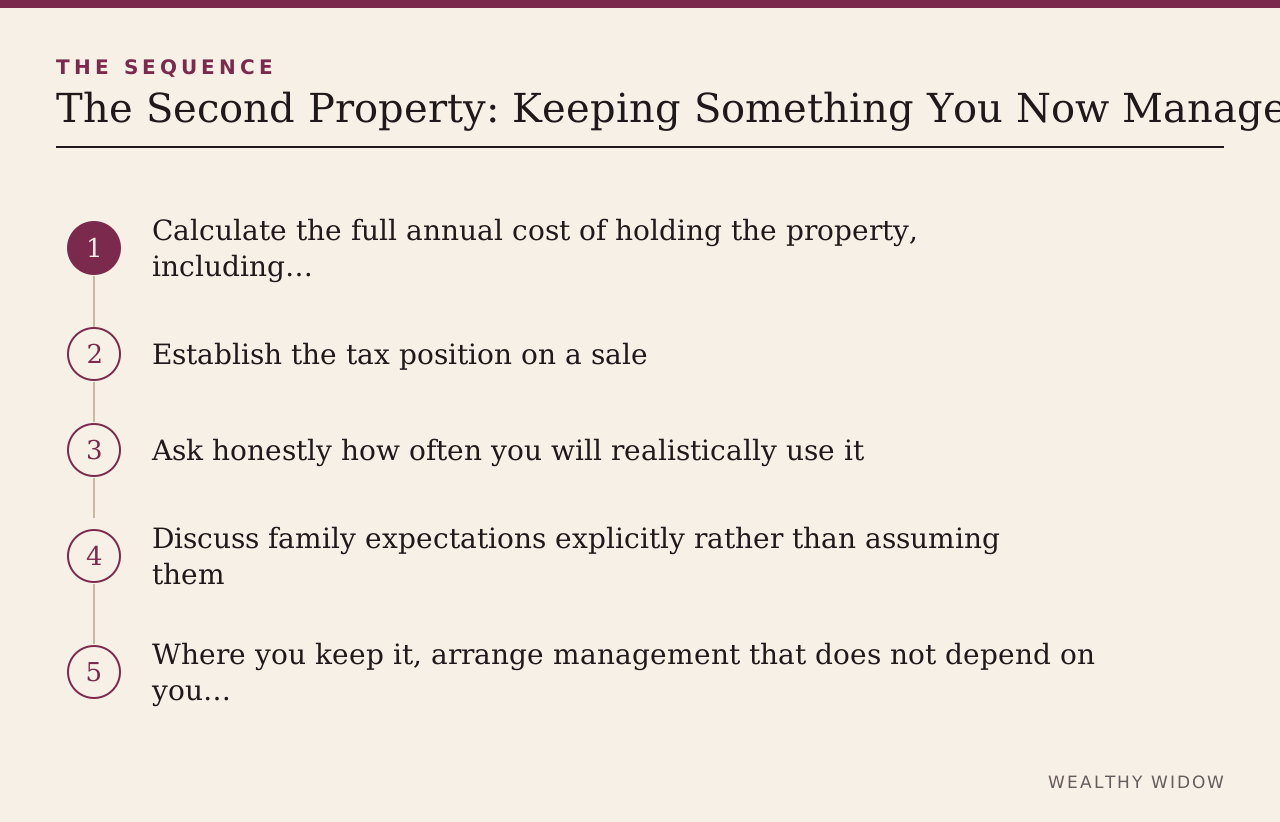
- Calculate the full annual cost of holding the property, including everything.
- Establish the tax position on a sale, which differs from a main home.
- Ask honestly how often you will realistically use it.
- Discuss family expectations explicitly rather than assuming them.
- Where you keep it, arrange management that does not depend on you being present.
Where this commonly goes wrong
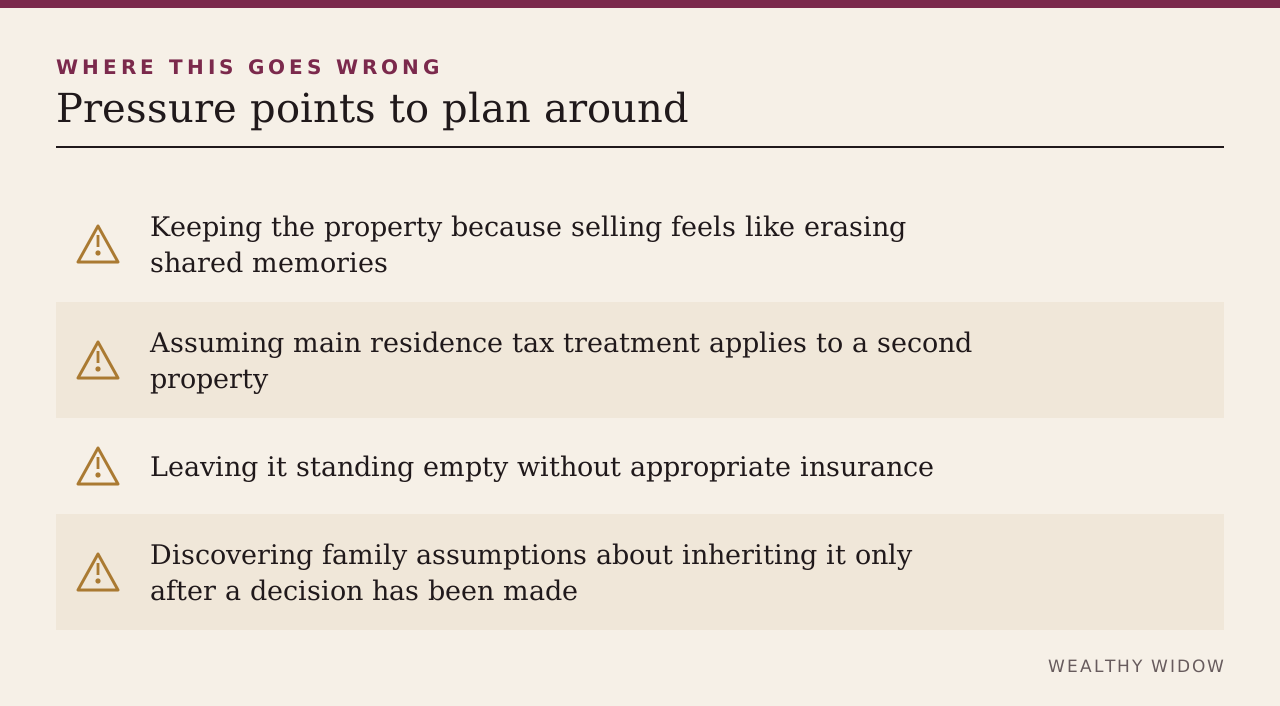
Treat each of the following as a reason to slow down. Keeping the property because selling feels like erasing shared memories.
Assuming main residence tax treatment applies to a second property. Leaving it standing empty without appropriate insurance. Discovering family assumptions about inheriting it only after a decision has been made.
The file this decision needs
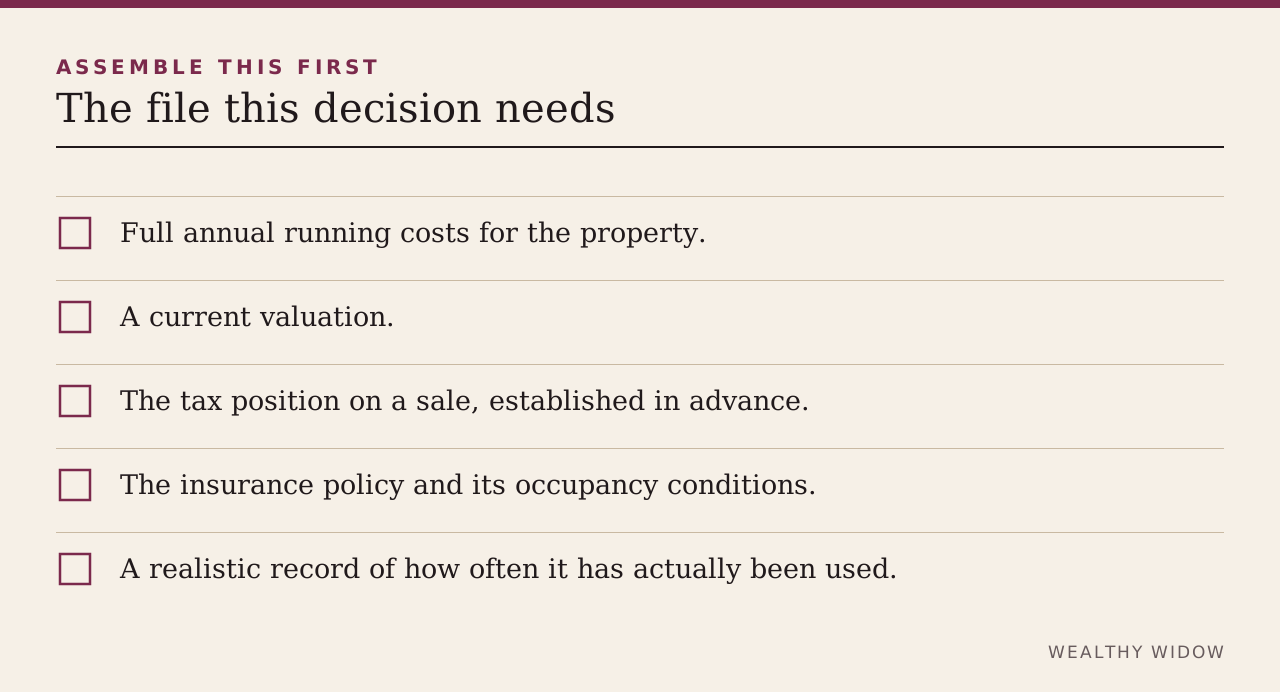
Keep these together in one place, and note where every copy goes and on what date it was sent.
- Full annual running costs for the property.
- A current valuation.
- The tax position on a sale, established in advance.
- The insurance policy and its occupancy conditions.
- A realistic record of how often it has actually been used.
Confirm these in writing before you act
Written confirmation is not distrust. It is ordinary governance. Ask for each of these.
- The full annual cost of retaining the property.
- The tax treatment on a sale.
- The insurance position given actual occupancy.
- What would be involved in managing it without you being present.
What to put to your adviser
Take these to whoever is advising you, in writing if you can.
- What is the tax position if I sell this rather than my main home?
- What insurance conditions apply given how often it is occupied?
- What would management cost if I did not do it myself?
- What happens to this property on my own death, given where it is?
Where the current rule lives
Read the source directly for any figure, date, or threshold that will actually drive a decision you make.
- Internal Revenue Service — Sale of residence, real estate tax tips
- Internal Revenue Service — Publication 523, selling your home
- National Association of Insurance Commissioners — Consumer resources
- Legal Services Corporation — I need legal help
What this cannot decide for you
General guidance sets out the shape of a decision. Your documents settle it. It cannot tell you whether to keep it, and the sentimental value is genuinely part of the calculation rather than a distortion of it.
Before you move on
Price the full cost of holding it, establish the tax position, and be honest about use. Then decide on the merits, including the sentimental ones, rather than by deferring the question for another year.
If this raised a further question, Associations and Shared Ownership: Rules That Bind the Estate takes it further.
Primary sources
- Internal Revenue Service — Sale of residence, real estate tax tips
- Internal Revenue Service — Publication 523, selling your home
- National Association of Insurance Commissioners — Consumer resources
- Legal Services Corporation — I need legal help
This article provides general education, not individualized legal, tax, investment, insurance, or benefits advice. Rules and deadlines change; verify the current requirement with the agency and a qualified professional.