Home
A Reverse Mortgage on the Home: What Happens Next
Where the home carries a reverse mortgage, the death of a borrower can trigger repayment, and the position of a surviving spouse depends on the details.

This guide covers a decision that is easy to make quickly and expensive to make wrongly. Where the home carries a reverse mortgage, the death of a borrower can trigger repayment, and the position of a surviving spouse depends on the details.
Reverse mortgages have specific rules on what happens when a borrower dies. The outcome for a surviving spouse depends heavily on whether they were a borrower, and on the vintage and terms of the loan.
Whether a surviving spouse can remain depends on how the loan was documented, and that needs establishing quickly rather than assumed.
The shape of this decision
Take the ground facts first, because most of the difficulty here dissolves once they are stated plainly. A reverse mortgage generally becomes due when the last surviving borrower dies or permanently leaves the home. A spouse who was a co-borrower is in a different position from one who was not. Protections for certain non-borrowing spouses exist, subject to conditions and to the loan documentation.
The federally insured product has counselling requirements and its own rules distinct from other loans. Deadlines can run quickly once the lender is notified, so early advice matters.
Order of play
Take these in order. Reversing them tends to create work rather than save it.
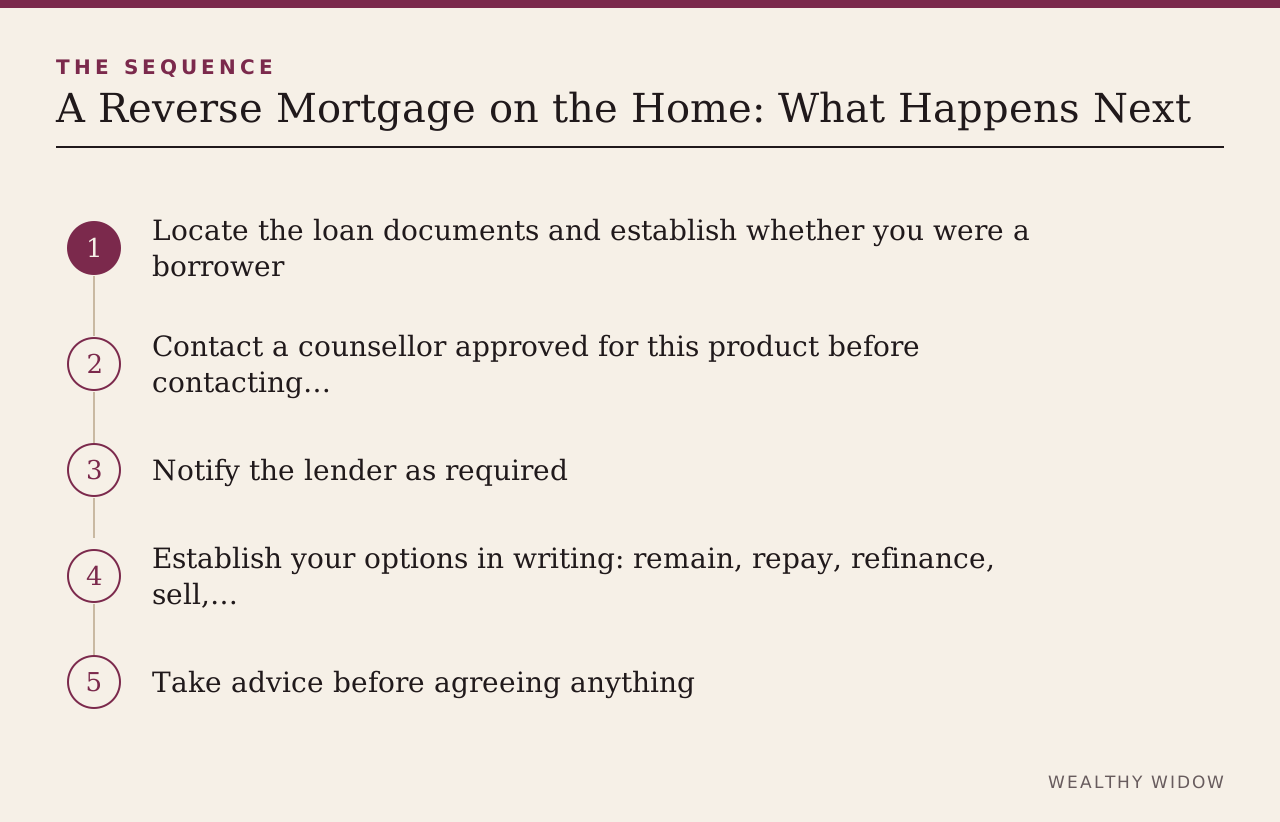
- Locate the loan documents and establish whether you were a borrower.
- Contact a counsellor approved for this product before contacting the lender, if possible.
- Notify the lender as required, and ask in writing what deadlines now apply.
- Establish your options in writing: remain, repay, refinance, sell, or surrender.
- Take advice before agreeing anything, since the timescales can be short.
The errors worth naming in advance
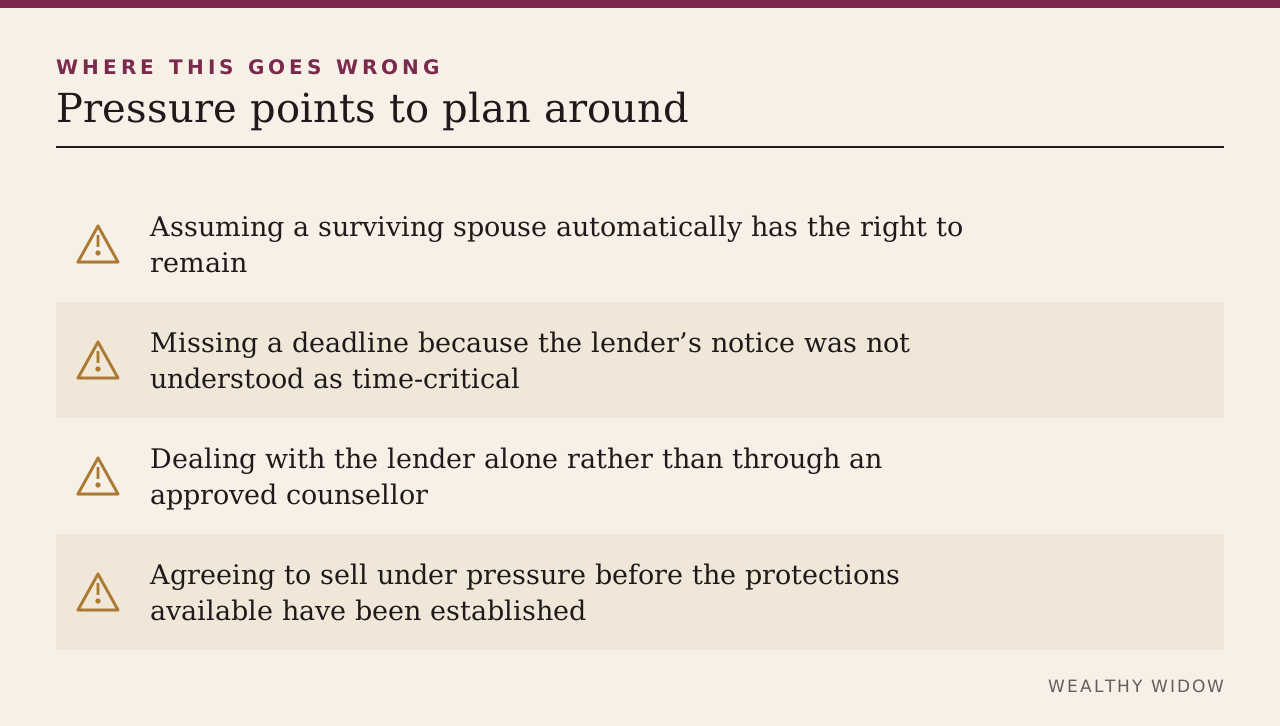
The failure modes below are predictable rather than unlucky, which is precisely what makes them avoidable. Assuming a surviving spouse automatically has the right to remain.
Missing a deadline because the lender’s notice was not understood as time-critical. Dealing with the lender alone rather than through an approved counsellor. Agreeing to sell under pressure before the protections available have been established.
Gather these before the first call
Every organisation involved will want some combination of the following, and several will want it more than once.
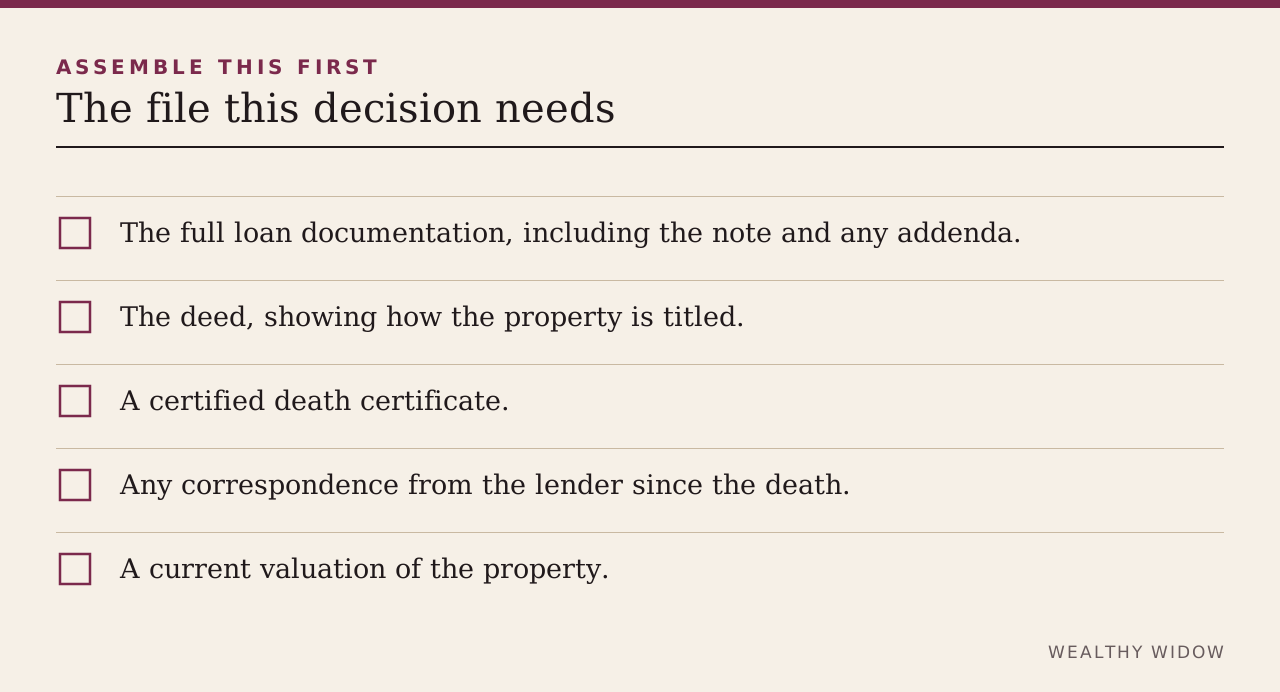
- The full loan documentation, including the note and any addenda.
- The deed, showing how the property is titled.
- A certified death certificate.
- Any correspondence from the lender since the death.
- A current valuation of the property.
The written record you should hold
Hold written confirmation of each of these points before you rely on any of them to make a decision.
- Whether you were a borrower or a non-borrowing spouse.
- What protections apply to you under this specific loan.
- Every deadline now running, in writing.
- The full range of options available to you.
What a good adviser will answer plainly
Whoever advises you should be able to answer each of these plainly and in writing.
- Was I a borrower on this loan, and what difference does that make?
- What deadlines apply now, and where are they stated in my documents?
- What protections are available to a non-borrowing spouse under this loan?
- What are all my options, including ones you would not normally mention?
Check it at source
These are the pages that change when the rules change, which is why they and not this guide are the authority.
- U.S. Department of Housing and Urban Development — FHA reverse mortgage for seniors (HECM)
- U.S. Department of Housing and Urban Development — Find a housing counselor
- U.S. Department of Housing and Urban Development — HECM counselor search
- Consumer Financial Protection Bureau — Mortgage lending rules to assist surviving family members
What still needs a professional
Be clear about what remains outside anything written for a general readership. It cannot tell you your position, which depends entirely on the loan documents and on which protections applied when the loan was made.
The working conclusion
Find the documents and speak to an approved counsellor before the lender. This is a genuinely time-sensitive area where the available protections depend on details nobody remembers without reading them.
A companion guide, The Insurance Policy Still Names Someone Who Has Died, covers the decision that sits alongside this one.
Primary sources
- U.S. Department of Housing and Urban Development — FHA reverse mortgage for seniors (HECM)
- U.S. Department of Housing and Urban Development — Find a housing counselor
- U.S. Department of Housing and Urban Development — HECM counselor search
- Consumer Financial Protection Bureau — Mortgage lending rules to assist surviving family members
This article provides general education, not individualized legal, tax, investment, insurance, or benefits advice. Rules and deadlines change; verify the current requirement with the agency and a qualified professional.