Home
An Empty House: The Risks That Accumulate Quietly
A property left vacant during estate administration attracts insurance restrictions, maintenance failures, and unwelcome attention.

The difficulty here is rarely the paperwork. It is knowing what is actually being asked. A property left vacant during estate administration attracts insurance restrictions, maintenance failures, and unwelcome attention.
Estate administration frequently leaves a property empty for months. The risks are cumulative and mostly invisible until something has already gone wrong.
A house deteriorates faster empty than occupied, and the insurance that would have covered the damage is often the first thing to lapse.
Name the decision before you make it
Before any advice, the ground facts. Most property insurance restricts or excludes cover after a stated period of vacancy. Water damage from a failed system is the most common and most expensive risk in an empty property. Visible vacancy, including accumulated post, attracts opportunistic attention.
Utilities may need to remain connected to protect the property, even where nobody is living there. Some jurisdictions impose obligations or charges on vacant property.
How to work through it
Work through this deliberately. Each step assumes the one before it is done.
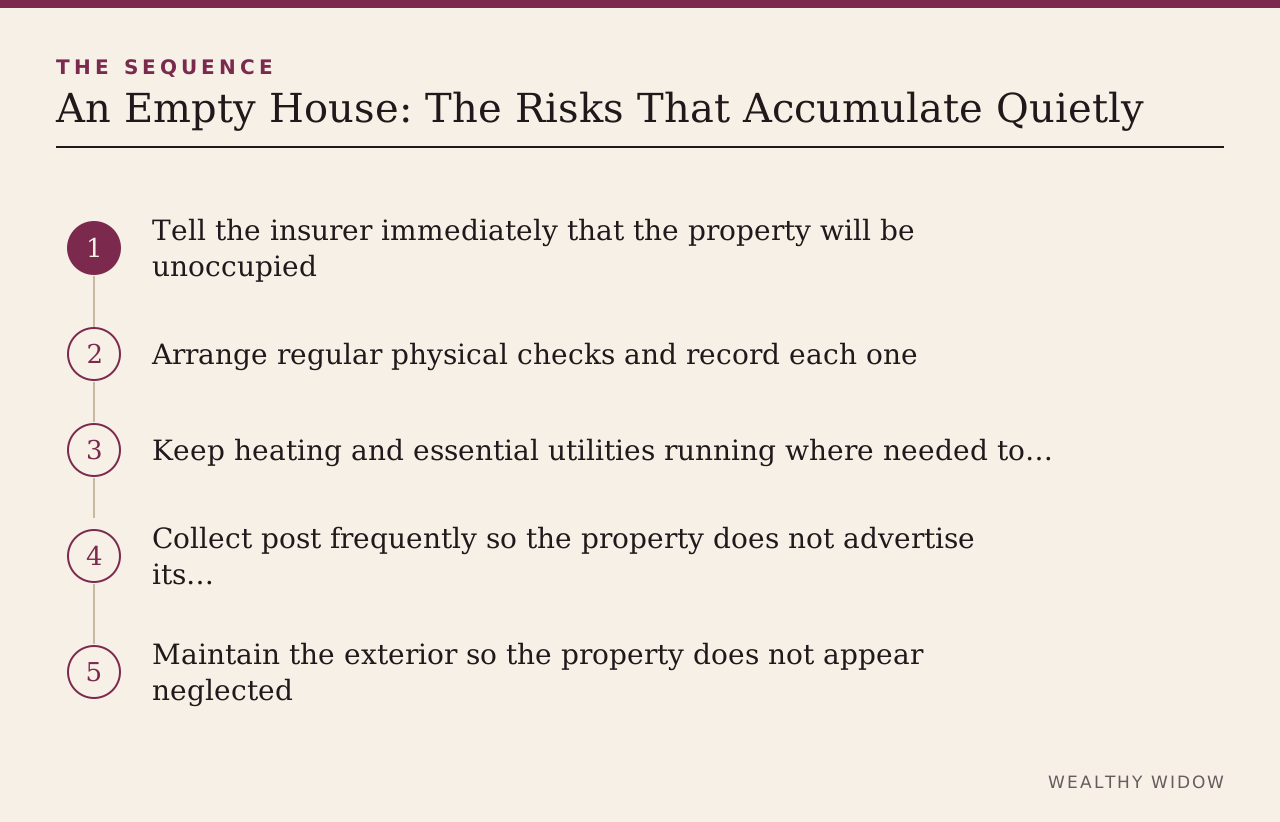
- Tell the insurer immediately that the property will be unoccupied, and confirm the terms.
- Arrange regular physical checks and record each one.
- Keep heating and essential utilities running where needed to prevent damage.
- Collect post frequently so the property does not advertise its vacancy.
- Maintain the exterior so the property does not appear neglected.
Known hazards
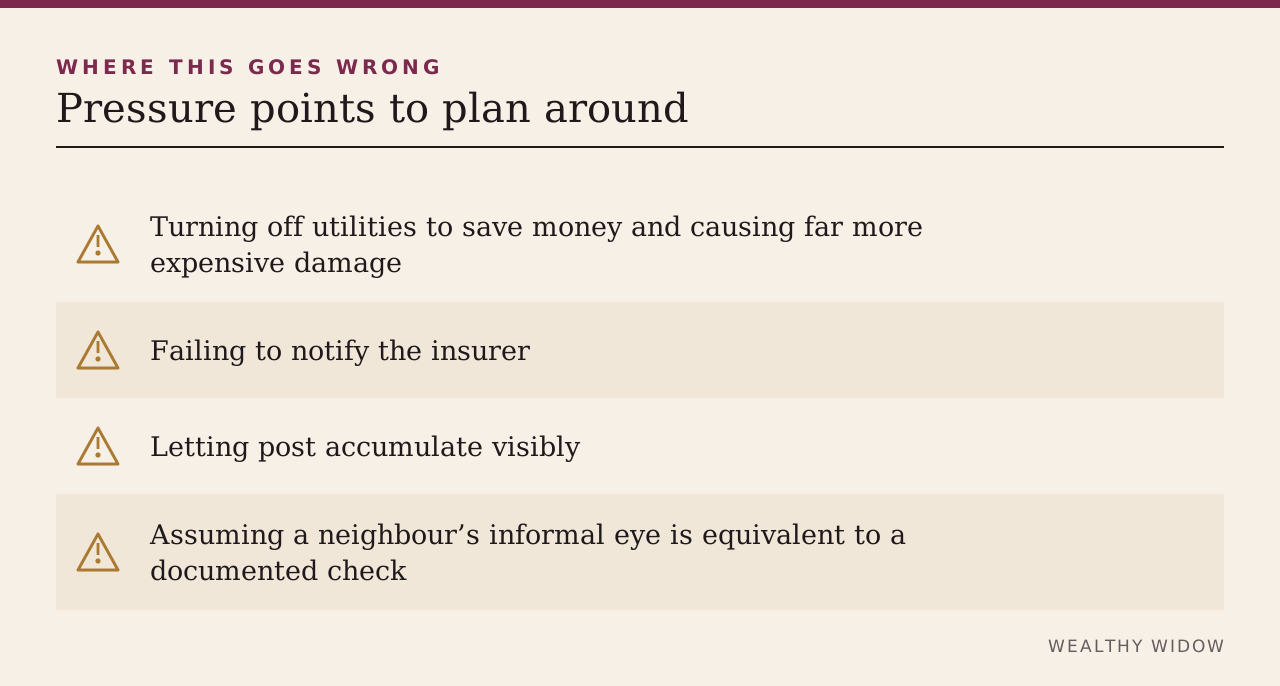
Anticipating these is most of the protection available to you, and it costs nothing but attention. Turning off utilities to save money and causing far more expensive damage.
Failing to notify the insurer, and discovering the exclusion only when claiming. Letting post accumulate visibly, which signals vacancy to everyone passing. Assuming a neighbour’s informal eye is equivalent to a documented check.
What you will be asked to produce
Assemble this before the first conversation rather than during it.
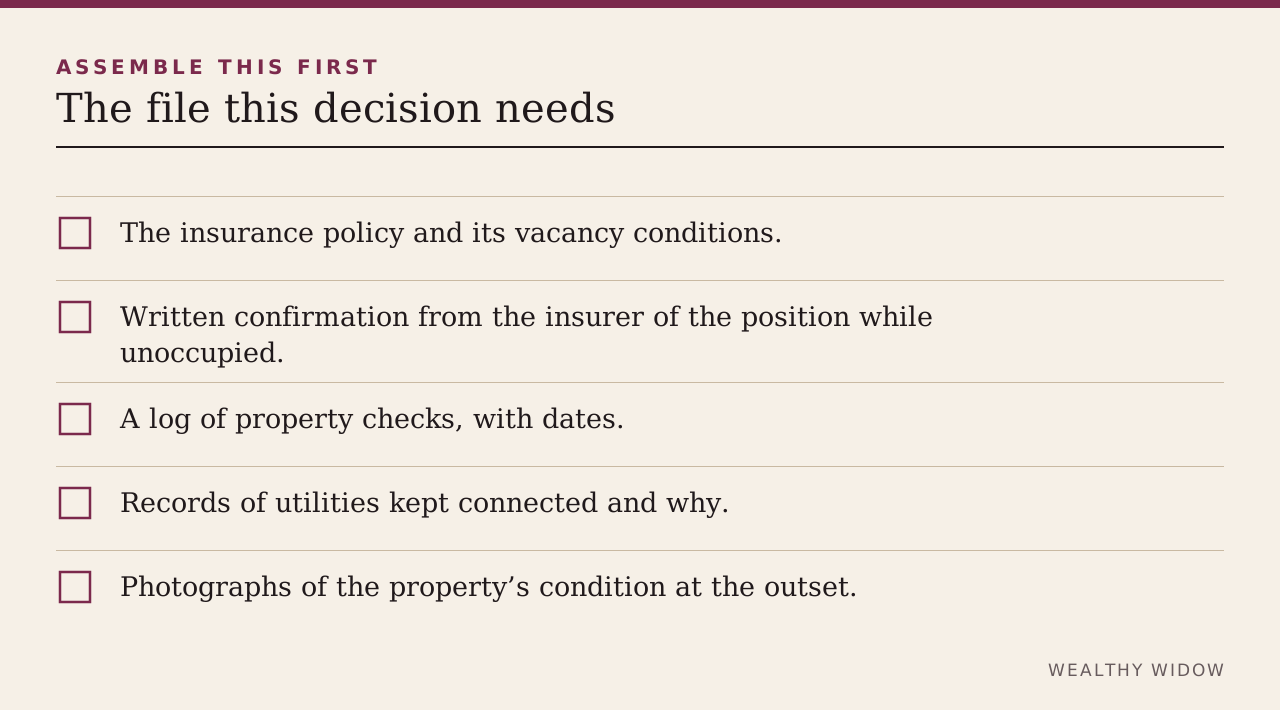
- The insurance policy and its vacancy conditions.
- Written confirmation from the insurer of the position while unoccupied.
- A log of property checks, with dates.
- Records of utilities kept connected and why.
- Photographs of the property’s condition at the outset.
What to have documented
Put each of these in the file with a date against it.
- The insurer’s vacancy conditions and the period allowed.
- What checks the insurer requires, and how often.
- Which utilities must remain connected.
- Any local obligation relating to vacant property.
What to ask before you sign
Ask these before an engagement letter is signed or a product is recommended.
- What are your conditions for an unoccupied property, and what do you require of me?
- How often must the property be inspected for cover to continue?
- What is excluded once the vacancy period is exceeded?
- Is specialist unoccupied property cover available?
Check this against the source
These are the primary sources behind this guide. They are the ones that change, and the ones worth checking before you act.
- National Association of Insurance Commissioners — Consumer resources
- U.S. Department of Housing and Urban Development — Find a housing counselor
- Federal Trade Commission — Scams and identity theft
- Consumer Financial Protection Bureau — Help for surviving spouses
The questions this cannot reach
No account written for a general readership can reach the following, and it should not pretend to. It cannot state your policy conditions or local requirements, both of which need checking directly.
Taking it from here
Tell the insurer first, keep the heating on, collect the post, and log every check with a date. The costs of doing this are small, predictable, and chargeable to the estate; the cost of not doing it arrives all at once, usually as water damage discovered weeks after it began and declined by an insurer who was never told the house was empty.
Our related guide Downsizing: Getting the Sequence Right covers the adjacent problem.
Primary sources
- National Association of Insurance Commissioners — Consumer resources
- U.S. Department of Housing and Urban Development — Find a housing counselor
- Federal Trade Commission — Scams and identity theft
- Consumer Financial Protection Bureau — Help for surviving spouses
This article provides general education, not individualized legal, tax, investment, insurance, or benefits advice. Rules and deadlines change; verify the current requirement with the agency and a qualified professional.