Estate
The Letter That Says What a Will Cannot
A letter of wishes carries the explanation, the reasoning, and the personal instruction that a will has no room for.

The difficulty here is rarely the paperwork. It is knowing what is actually being asked. A letter of wishes carries the explanation, the reasoning, and the personal instruction that a will has no room for.
A will is a legal instrument and reads like one. A letter alongside it can explain decisions, guide a trustee’s discretion, and address the things families actually argue about.
Most family disputes after a death are about why rather than what, and a will answers only the second question.
Start by naming the decision correctly
The position is narrower than it looks once it is stated plainly. A letter of wishes is generally not legally binding, which is part of its usefulness. It can explain why an estate has been divided in a particular way. It can guide a trustee exercising discretion, without constraining them.
It can address personal items, funeral preferences, and messages that a will cannot carry. Because it is not binding, it can be updated easily and often.
The order of operations
This is the working order most readers find keeps them in control.
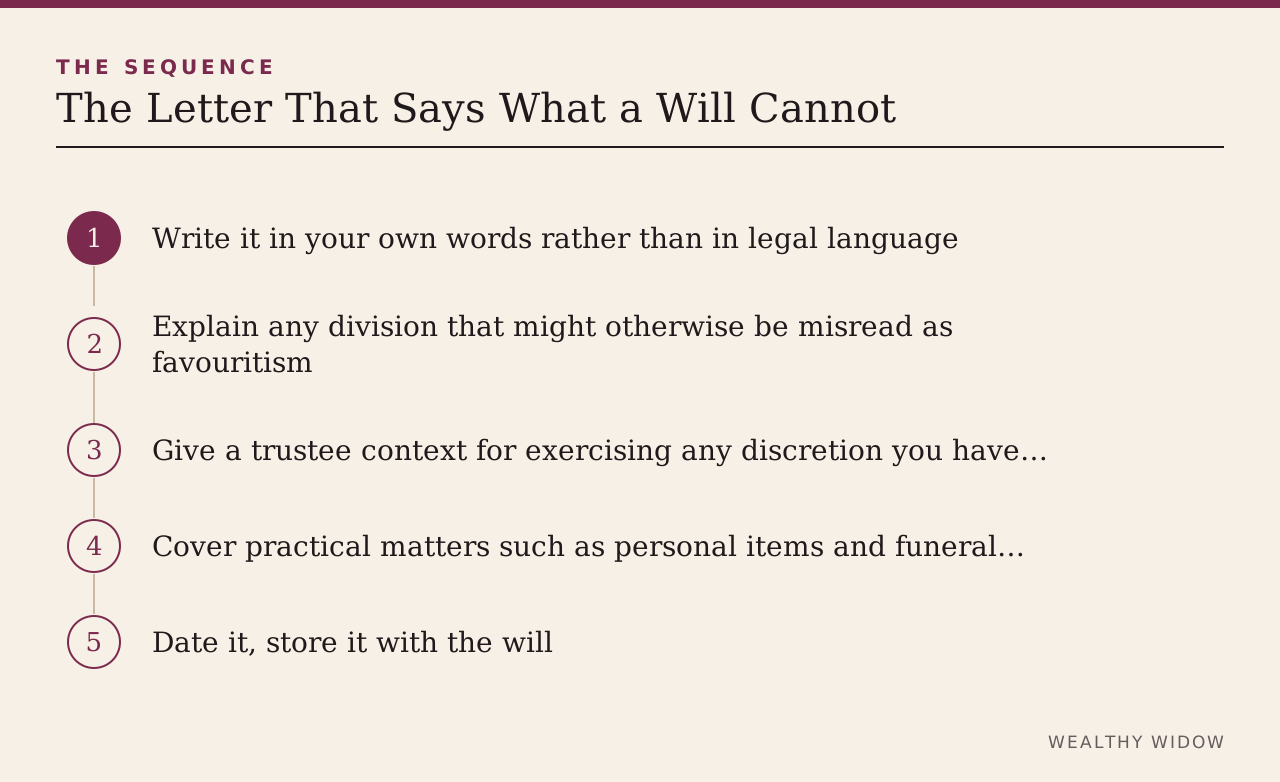
- Write it in your own words rather than in legal language.
- Explain any division that might otherwise be misread as favouritism.
- Give a trustee context for exercising any discretion you have granted.
- Cover practical matters such as personal items and funeral preferences.
- Date it, store it with the will, and update it when circumstances change.
Where readers most often get hurt
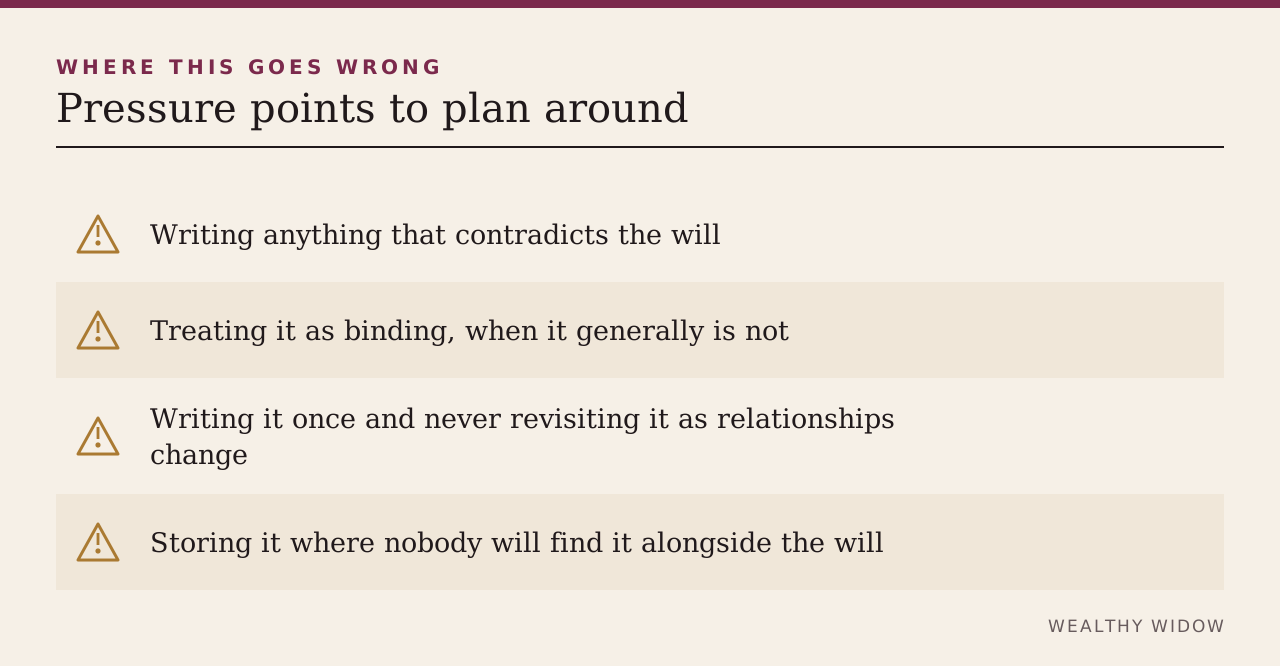
Knowing the failure modes in advance is most of the protection. Writing anything that contradicts the will, which creates confusion rather than clarity.
Treating it as binding, when it generally is not. Writing it once and never revisiting it as relationships change. Storing it where nobody will find it alongside the will.
The paperwork to collect first
Gather these first and the rest of the process moves considerably faster, because most delays are missing paperwork.
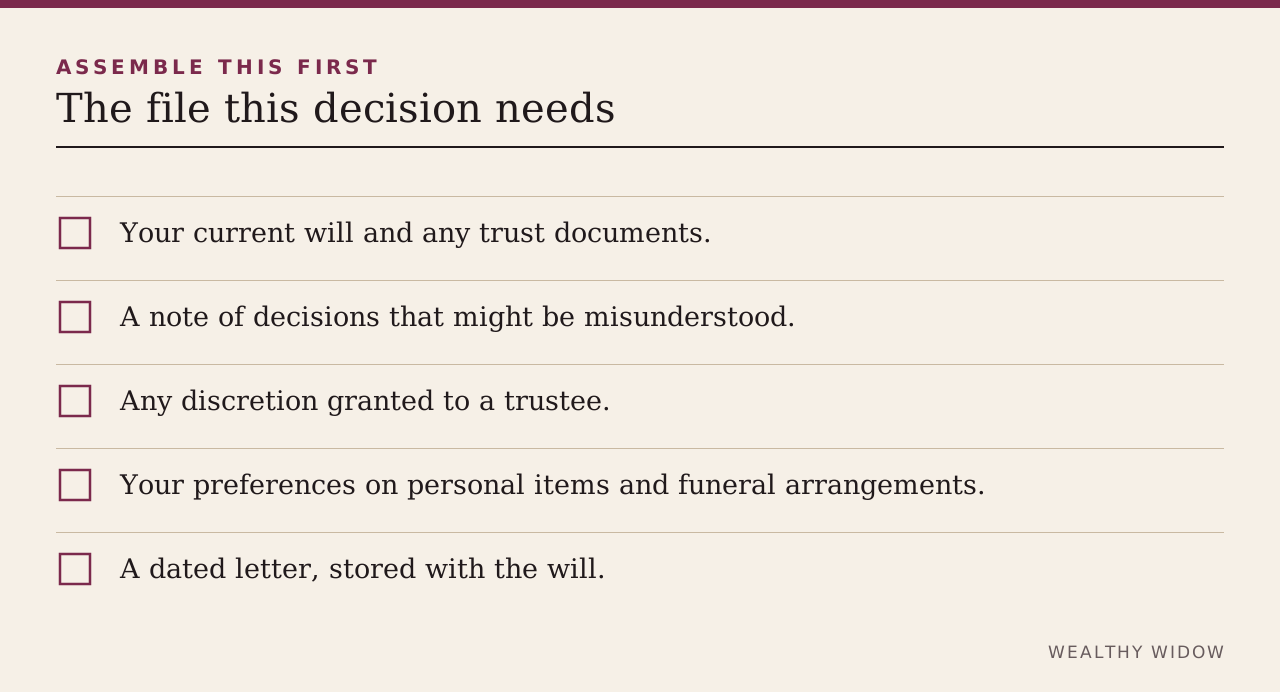
- Your current will and any trust documents.
- A note of decisions that might be misunderstood.
- Any discretion granted to a trustee.
- Your preferences on personal items and funeral arrangements.
- A dated letter, stored with the will.
Do not proceed on a verbal answer
Ask for each of these in a form you can save, date, and produce again months later if it is questioned.
- That the letter does not contradict the will.
- That it is understood not to be binding.
- That it is stored where it will be found.
- The date it was last updated.
Put these questions directly
A competent professional will welcome these questions. Hesitation is itself information.
- What should go in a letter of wishes rather than in the will itself?
- How binding is this in practice?
- Would this help or hinder a trustee exercising discretion?
- Where should it be stored?
Read the agency, not this summary
Treat these as the authority and this guide as an index to them.
- Internal Revenue Service — Information for executors
- Legal Services Corporation — I need legal help
- National Institute on Aging — Advance care planning and advance directives
- Consumer Financial Protection Bureau — Taking control of your finances, help for surviving spouses
What only your documents can answer
This is where a guide stops being useful and your own paperwork takes over. It is not a will and cannot direct anything. Its value is entirely in explanation and context.
The last word on this
Write it in your own voice, explain the decisions that might be misread, and update it as things change. It is the document that answers the question a will leaves open.
If this raised a further question, Simplified Procedures for Smaller Estates takes it further.
Primary sources
- Internal Revenue Service — Information for executors
- Legal Services Corporation — I need legal help
- National Institute on Aging — Advance care planning and advance directives
- Consumer Financial Protection Bureau — Taking control of your finances, help for surviving spouses
This article provides general education, not individualized legal, tax, investment, insurance, or benefits advice. Rules and deadlines change; verify the current requirement with the agency and a qualified professional.