Money
One Large Holding: Concentration You Inherited Rather Than Chose
Where a spouse held a large position in one company, often an employer, the risk is real but selling carelessly creates a tax bill.

Widowhood arrives with a queue of decisions that all look equally urgent. Where a spouse held a large position in one company, often an employer, the risk is real but selling carelessly creates a tax bill. They are not the same task, and treating them as one is how good decisions get made badly.
Large single holdings frequently arise from employment, loyalty, or simple inertia rather than from a considered decision. Reducing them is usually right; reducing them in one transaction rarely is.
Concentration is a risk worth reducing and a tax event worth planning, and doing the second badly can cost more than the first.
What this is, and what it is not
Start from the reliable ground, before anyone asks you to act on anything less certain than it. A single holding representing a large share of a portfolio concentrates both market and employer risk. Where the company was also the employer, income and investment risk were correlated, and one of them has now ended. Selling appreciated assets can create a taxable gain, and the cost basis position determines how large.
Assets inherited from a spouse may receive different basis treatment, which can materially change the tax cost of selling. Reducing a position over time, rather than at once, spreads both the tax and the timing risk.
A workable order for this
Work through it deliberately rather than all at once, and stop at any point where an answer is missing.
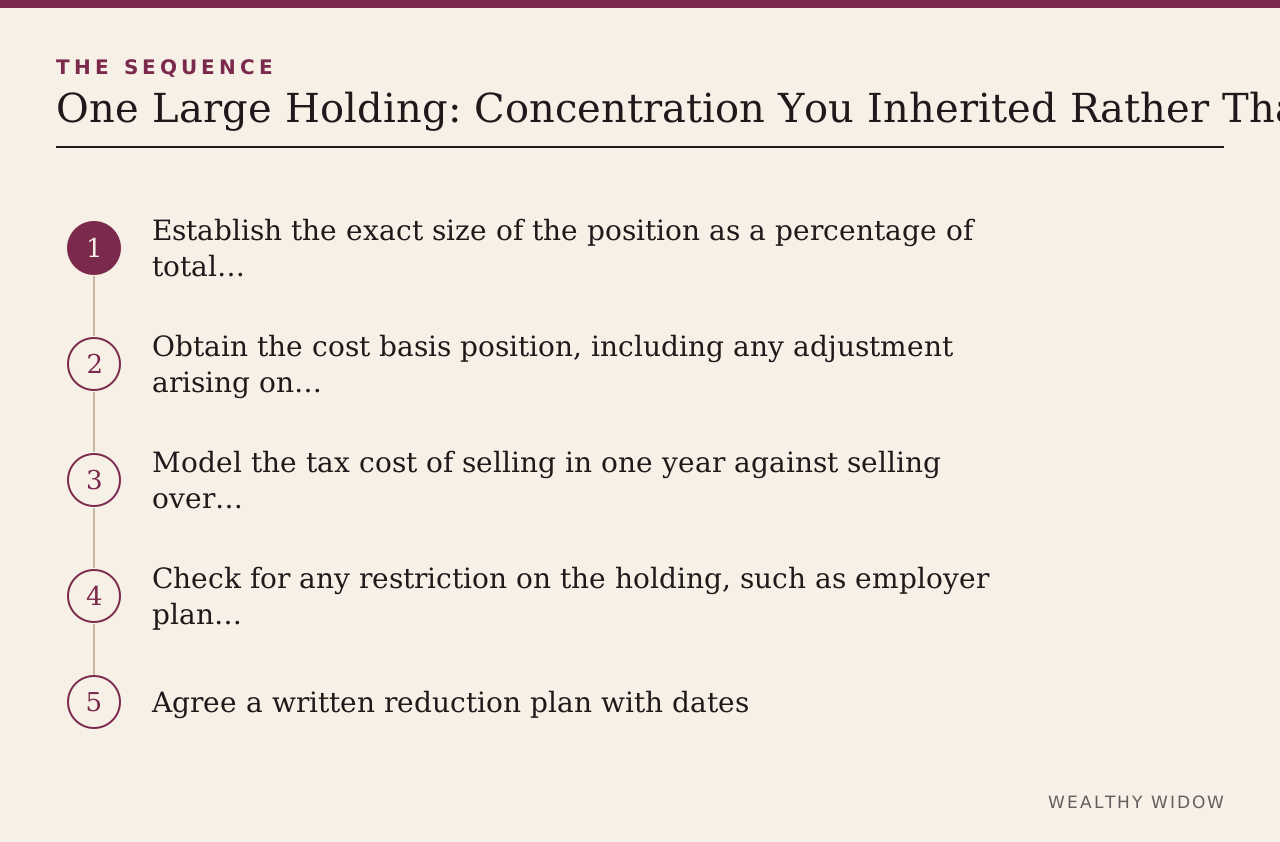
- Establish the exact size of the position as a percentage of total investable assets.
- Obtain the cost basis position, including any adjustment arising on inheritance.
- Model the tax cost of selling in one year against selling over several.
- Check for any restriction on the holding, such as employer plan rules or trading windows.
- Agree a written reduction plan with dates, rather than deciding transaction by transaction.
Where good intentions go wrong
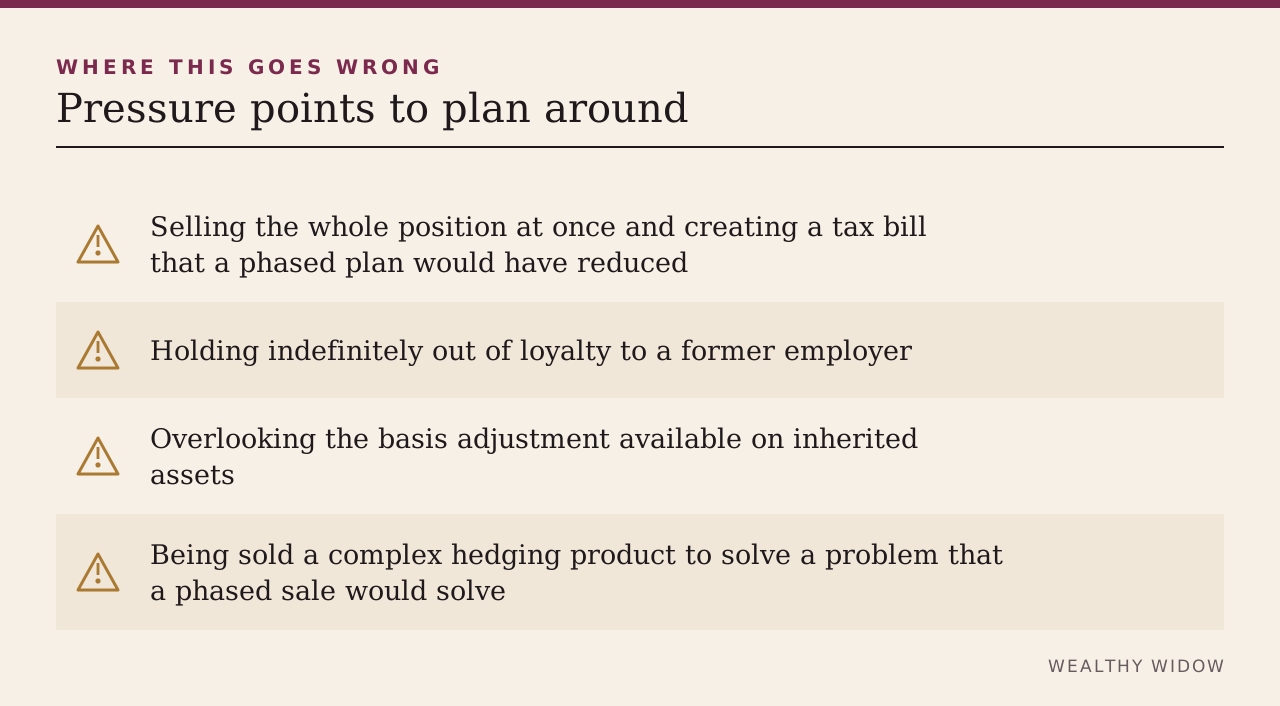
Each of these is a signal to stop and confirm rather than proceed. Selling the whole position at once and creating a tax bill that a phased plan would have reduced.
Holding indefinitely out of loyalty to a former employer, which is a common and expensive attachment. Overlooking the basis adjustment available on inherited assets, and paying tax that was not due. Being sold a complex hedging product to solve a problem that a phased sale would solve.
The evidence to gather
You will be asked for these in some combination by almost everyone involved.
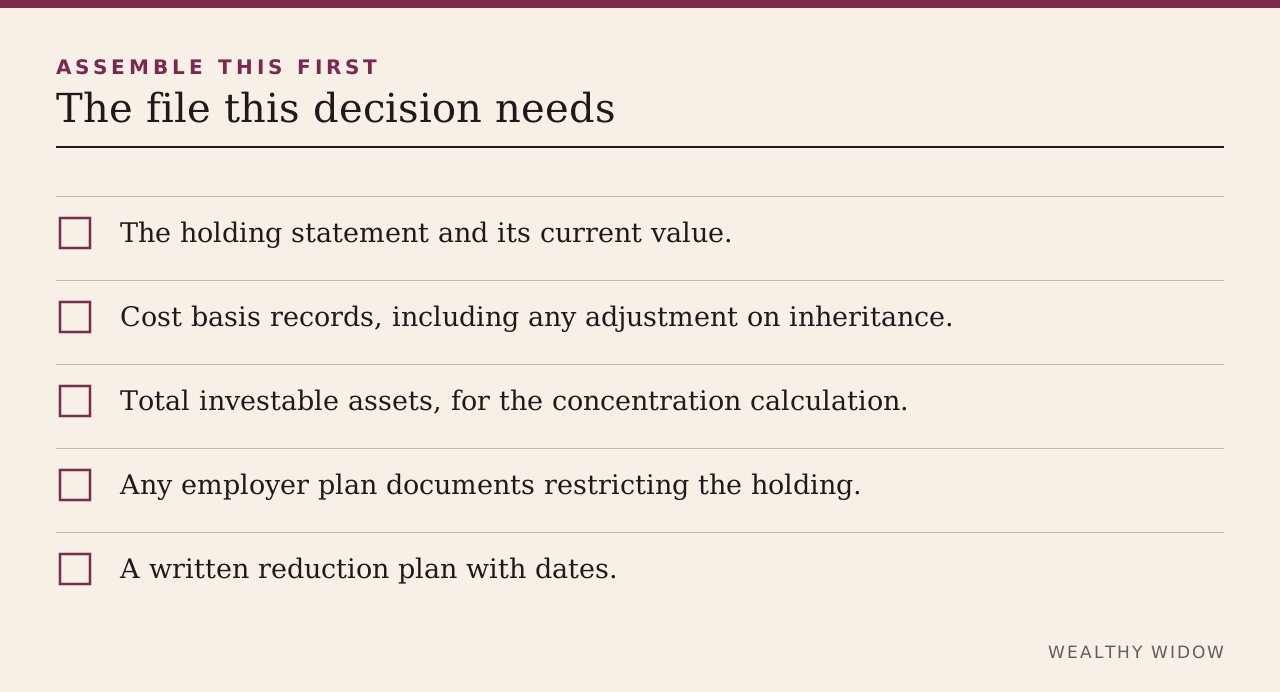
- The holding statement and its current value.
- Cost basis records, including any adjustment on inheritance.
- Total investable assets, for the concentration calculation.
- Any employer plan documents restricting the holding.
- A written reduction plan with dates.
Nothing here on a verbal answer
None of the following should rest on a phone call alone, however clear the call felt at the time.
- The position as a percentage of total investable assets.
- The cost basis applying, after any inheritance adjustment.
- The tax cost of each disposal scenario.
- Any restriction on when and how you may sell.
The questions that change the answer
A competent professional answers each of these without hesitation.
- What basis applies to these shares now that I have inherited them?
- What is the tax cost of selling all of this in one year rather than over several?
- What percentage of my assets would you consider an acceptable single holding?
- What restrictions apply to selling these shares?
Confirm this against the rule
Do not take this guide as the authority. Each source below states the current rule for the part of this decision it covers.
- U.S. Securities and Exchange Commission — Investor.gov
- Internal Revenue Service — Topic no. 409, capital gains and losses
- Internal Revenue Service — Publication 551, basis of assets
- U.S. Securities and Exchange Commission — Mutual fund analyzer
What is outside this
What follows is outside anything written for a general readership. It cannot tell you how fast to reduce. That depends on your tax position, your other income, and how much of the risk you are prepared to carry meanwhile.
The short version
Establish the basis first, then the tax cost of each pace of sale, then commit to a written plan. Concentration is worth fixing, and fixing it in a single transaction is usually the most expensive way to do it.
If this raised a further question, Charitable Giving: Doing It Deliberately Rather Than Reactively takes it further.
Primary sources
- U.S. Securities and Exchange Commission — Investor.gov
- Internal Revenue Service — Topic no. 409, capital gains and losses
- Internal Revenue Service — Publication 551, basis of assets
- U.S. Securities and Exchange Commission — Mutual fund analyzer
This article provides general education, not individualized legal, tax, investment, insurance, or benefits advice. Rules and deadlines change; verify the current requirement with the agency and a qualified professional.